Autism | AskSheldon
Autism

What is Autism?

Autism involves stronger local brain connections — explaining your child's intense detail perception and deep focus — but different long-range wiring, which changes how sensory input, social dynamics, and emotions are processed. It's present in roughly 1 in 45 people (2.2%) and is 60-90% heritable.

1 in 45people affected
2.2%prevalence
Normal IQ range

How does Autism present?

  • Avoiding eye contact
  • Talking extensively about specific topics
  • Repetitive movements (stimming)
  • Taking things literally
  • Needing strict routines

Types of Autism

  • Level 1 Support Needs(~40%)
  • Level 2 Support Needs(~35%)
  • Level 3 Support Needs(~25%)

Common questions about Autism

At what age can autism be diagnosed?

Autism can be reliably diagnosed from around 18-24 months, though many children aren't diagnosed until age 4-5 or later. Girls and children who mask well are often identified much later. If you have concerns at any age, seek assessment — there's no 'too early' for professional observation.

Should I stop my child from stimming?

No. Stimming (rocking, hand-flapping, spinning) is how the autistic nervous system regulates itself. Suppressing it increases anxiety and takes away a crucial coping tool. Only redirect if a specific stim is causing physical harm — and then redirect to a safer alternative, don't suppress the need entirely.

Content reviewed against DSM-5 criteria and current clinical literature. This page is for educational purposes and does not constitute medical advice. Consult a qualified healthcare professional for diagnosis or treatment.

AutismAutism — perceived
Click to see their world

Autism

What signs should I look for?

Did I Cause This?

If you're wondering whether something you did or didn't do caused your child's autism — you didn't. Here's what the science actually says.

You did not cause your child's autism. You are not to blame. The fact that you're here, learning about how their brain works, is exactly the kind of support that makes the biggest difference.

What actually is it?

Autism involves stronger local brain connections — explaining your child's intense detail perception and deep focus — but different long-range wiring, which changes how sensory input, social dynamics, and emotions are processed. It's present in roughly 1 in 45 people (2.2%) and is 60-90% heritable. Here's what often surprises parents most: no two autistic people look alike. A 2023 analysis of the Autism Symptom Dimensions Questionnaire identified 39 distinct traits across 10 completely independent dimensions. Your child's specific constellation is unique to them. When someone compares your child to 'other autistic people they know', or implies they don't seem autistic enough, they're working from a narrow mental model that ignores this reality. Autistic people are not only different from neurotypical people — they are profoundly different from each other. Your child is one of a kind. If you're reading this as a parent — you're doing exactly the right thing by learning how your child's brain works.

It's a difference in how the brain is wired, not a character flaw.

Quick Guess

How many people out of 45 do you think have this?

Tap the icons to make your estimate.

Autism is 60-90% heritable — a neurodevelopmental condition shaped by genetics, not parenting style.

Tick et al. (2016), JAMA Psychiatry
Tap to Start Myth Busting

Signs by Age

Every child develops differently, and autism looks different at every stage. These are common patterns — not checklists. If several resonate, it's worth talking to your paediatrician.

Signs alone don't tell the full story

Many children display some of these signs. What distinguishes Autism is the FIRE pattern: Frequency (how often), Intensity (how strongly), Range (across how many areas), and Effect on daily functioning. It's the overall pattern — not individual signs.

Communication

  • Doesn't respond to their name by 12 months
  • Limited or no babbling by 12 months
  • No single words by 16 months or two-word phrases by 24 months
  • Loss of previously acquired words or skills (regression)

Social

  • Limited eye contact or doesn't follow your gaze
  • Doesn't point to share interest (e.g., showing you a plane)
  • Prefers playing alone; limited interest in other children
  • Doesn't smile back when you smile at them

Sensory & Play

  • Lines up toys rather than playing imaginatively
  • Focuses intensely on spinning wheels or moving parts
  • Distressed by certain sounds, textures, or lights
  • Repetitive movements (rocking, hand-flapping, toe-walking)

How it looks vs. How it feels

The lived experience behind the observed behavior

Avoiding eye contact — Sensory Overload Prevention
Tap to see inside

What others see

Avoiding eye contact

Sensory Overload Prevention
Tap to flip back

On the inside

Sensory Overload Prevention

Eye contact can feel like staring into the sun while trying to solve maths problems. Your child isn't being rude — they're trying to actually hear what you're saying. Processing your face and your words at the same time is genuinely overwhelming.

Talking extensively about specific topics — Sharing Their Joy
Tap to see inside

What others see

Talking extensively about specific topics

Sharing Their Joy
Tap to flip back

On the inside

Sharing Their Joy

When your child talks endlessly about their favourite topic, they're offering you the most precious part of themselves. This is how they connect — it's their love language. The intensity is the gift.

Repetitive movements (stimming) — Self-Regulation System
Tap to see inside

What others see

Repetitive movements (stimming)

Self-Regulation System
Tap to flip back

On the inside

Self-Regulation System

Your child's stimming — rocking, flapping, spinning — is their nervous system's thermostat. It helps them think, cope, and stay regulated. Stopping it doesn't remove the need; it just takes away their tool for managing it.

Taking things literally — Precise Communication
Tap to see inside

What others see

Taking things literally

Precise Communication
Tap to flip back

On the inside

Precise Communication

Your child isn't being difficult — their brain processes language directly. When you say 'break a leg,' they may genuinely worry about your safety for a moment. This is precision, not defiance.

Needing strict routines — Creating Predictability
Tap to see inside

What others see

Needing strict routines

Creating Predictability
Tap to flip back

On the inside

Creating Predictability

Routines aren't rigidity — they're your child's operating system. They free up cognitive resources so they can handle the unpredictable parts of the day. When routines break, it's like their mental map disappears.

Shutdowns or meltdowns — System Overload Response
Tap to see inside

What others see

Shutdowns or meltdowns

System Overload Response
Tap to flip back

On the inside

System Overload Response

This isn't a tantrum or bad behaviour. Your child's nervous system has hit its limit — every input became too much. They need space and compassion, not consequences. They're often more frightened by it than you are.

Many autistic people experience intense affective empathy — feeling others' emotions overwhelmingly rather than lacking empathy.

Damian Milton (2012); Fletcher-Watson & Bird (2020)
Tap to Start Myth Busting

Types of Autism

Level 1 Support Needs: Often told 'but you don't look autistic.' Strong verbal skills, frequently excellent at masking, but social reciprocity requires constant conscious effort. Needs flexibility accommodations — not due to fragility, but because standard environments weren't designed for this wiring.
Type 1~40%

Level 1 Support Needs

Often told 'but you don't look autistic.' Strong verbal skills, frequently excellent at masking, but social reciprocity requires constant conscious effort. Needs flexibility accommodations — not due to fragility, but because standard environments weren't designed for this wiring.

Social communication differences
May mask extensively
Strong verbal abilities
Needs flexibility accommodations
Level 2 Support Needs: Substantial daily support is essential, not optional. May communicate through AAC or alternative means — which is still communication. Sensory accommodations are a baseline requirement, not a perk.
Type 2~35%

Level 2 Support Needs

Substantial daily support is essential, not optional. May communicate through AAC or alternative means — which is still communication. Sensory accommodations are a baseline requirement, not a perk.

Substantial support needs
Sensory accommodations essential
May use AAC devices
Routine-dependent
Level 3 Support Needs: Extensive, often 24/7 support. Frequently co-occurs with intellectual disability and significant motor differences. Often underrepresented in 'autism is a superpower' narratives — deserving of better recognition and support.
Type 3~25%

Level 3 Support Needs

Extensive, often 24/7 support. Frequently co-occurs with intellectual disability and significant motor differences. Often underrepresented in 'autism is a superpower' narratives — deserving of better recognition and support.

Extensive daily support
Significant communication differences
Motor planning challenges
24/7 support often needed

Autism is a lifelong neurological difference — brain wiring does not change. Skills, coping strategies, and self-understanding develop across the lifespan.

National Autistic Society
Tap to Start Myth Busting

Autism isn't one thing

4 biologically distinct subtypes — different genetics, different trajectories.

37%
34%
19%
10%
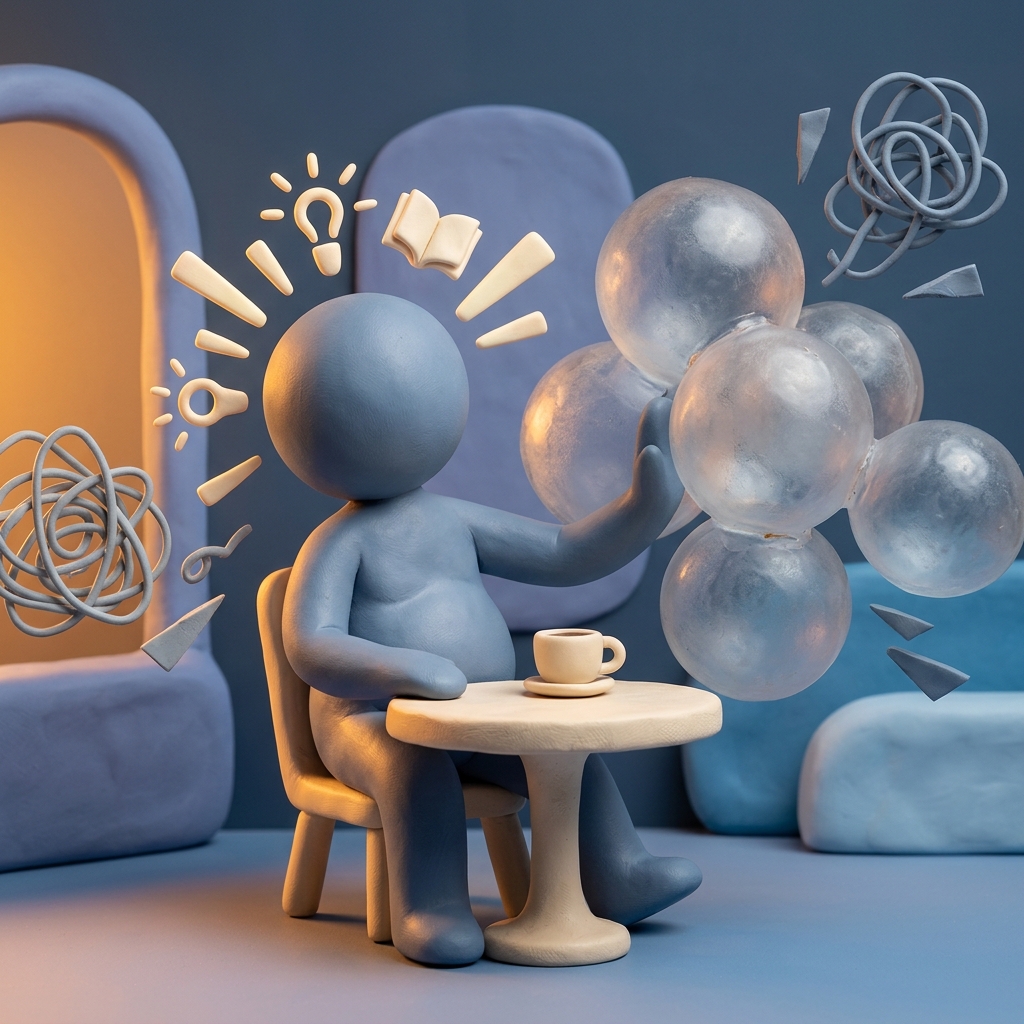
Clay figurine at a café table surrounded by floating bubbles representing social cues
Social & Behavioural37%

Typical development, but social situations cost enormous energy.

"Seems fine — but exhausted by the end of every day."

ADHDAnxietyOCD
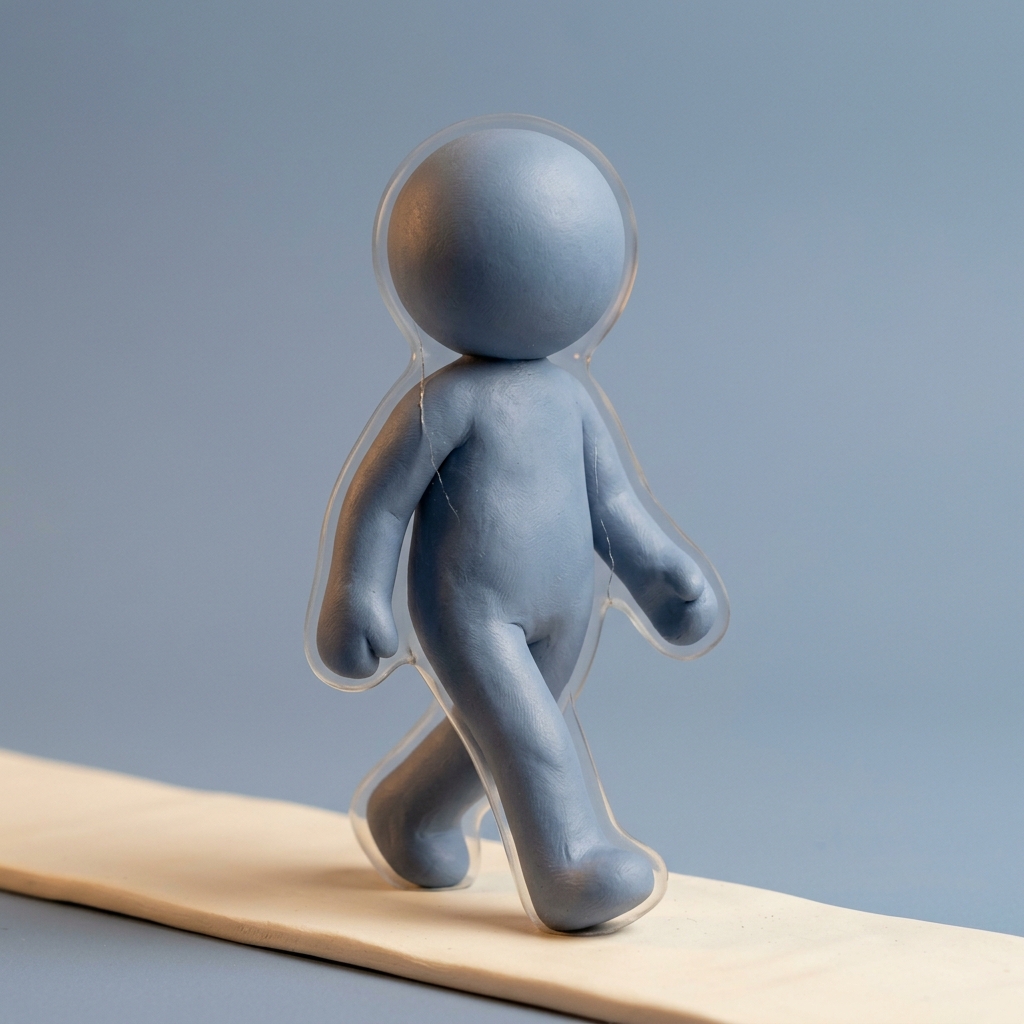
Clay figurine walking normally with a barely-visible cracked translucent shell around it
Moderate Challenges34%

Milder traits, best outcomes — often diagnosed in their 30s or later.

"Always felt different. Read about autism. Everything clicked."

MaskingLate diagnosis
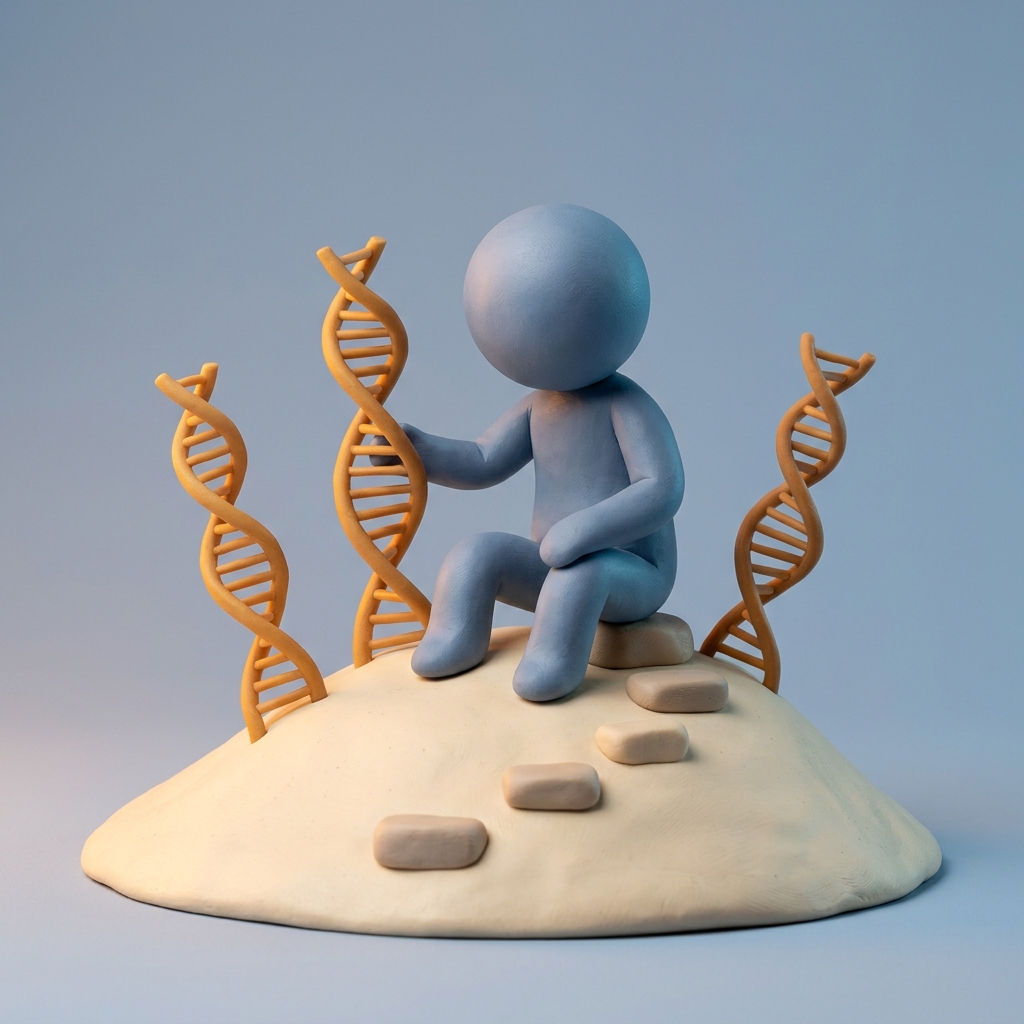
Clay figurine sitting beside DNA helices with stepping stones at different heights
Mixed + Developmental19%

Core autism traits plus developmental delays. Inherited genetic variants.

"Parents noticed differences early — speech and motor delays alongside social patterns."

LanguageMotor
Clay figurine cradled in a glowing warm nest with smaller support figurines around it
Broadly Affected10%

Most significant presentation across all domains. De novo mutations.

"Identified in early childhood with significant communication and sensory needs."

CommunicationSensoryMotor

Princeton / Simons Foundation (2025). Individuals may share traits across groups.

The Science of AUTISM

The Why Behind The What

Understanding how autistic brains process the world differently

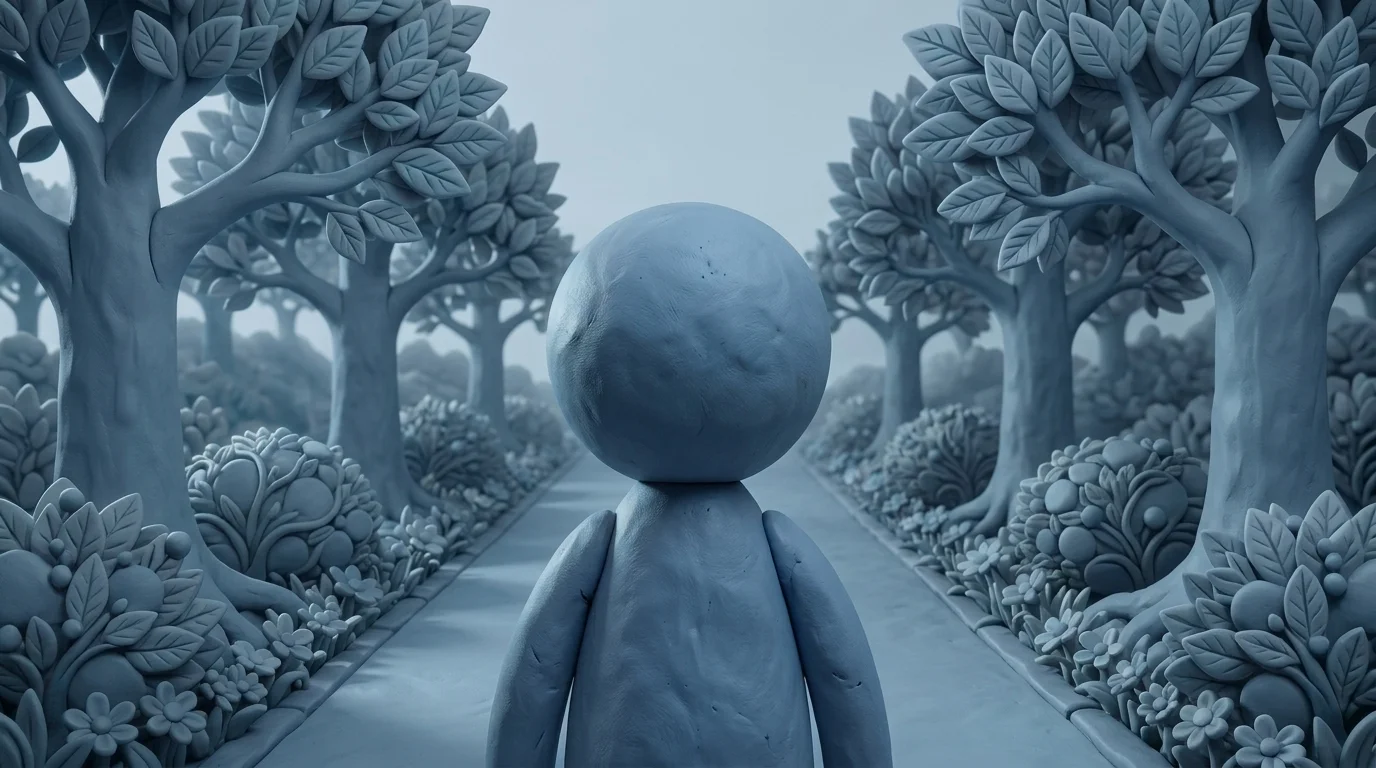
Different Pruning, Different Wiring: Think of a garden hedge maze. During childhood, neurotypical brains prune roughly half their synaptic connections — trimming the hedges to create clear, efficient pathways. Autistic brains retain significantly more connections, like a hedge maze left to grow lush and dense. Every corner is richly detailed and alive with growth, but the pathways between sections are narrower. More connections doesn't mean better or worse — it means denser local networks, which contribute to the detail perception, pattern recognition, and also why busy environments feel more intense.
Development

Different Pruning, Different Wiring

Think of a garden hedge maze. During childhood, neurotypical brains prune roughly half their synaptic connections — trimming the hedges to create clear, efficient pathways. Autistic brains retain significantly more connections, like a hedge maze left to grow lush and dense. Every corner is richly detailed and alive with growth, but the pathways between sections are narrower. More connections doesn't mean better or worse — it means denser local networks, which contribute to the detail perception, pattern recognition, and also why busy environments feel more intense.

Local vs Global Brain Connectivity: Imagine a crowded room where small groups are having intense, brilliant conversations — but two people on opposite sides can barely hear each other through the noise. Autistic brains show stronger short-range connections within local processing hubs, but weaker long-distance highways between distant brain regions. This is why detail perception and pattern recognition can be extraordinary, while integrating information across different domains — like combining someone's tone of voice with their facial expression and the social context — can require conscious effort.
Neurology

Local vs Global Brain Connectivity

Imagine a crowded room where small groups are having intense, brilliant conversations — but two people on opposite sides can barely hear each other through the noise. Autistic brains show stronger short-range connections within local processing hubs, but weaker long-distance highways between distant brain regions. This is why detail perception and pattern recognition can be extraordinary, while integrating information across different domains — like combining someone's tone of voice with their facial expression and the social context — can require conscious effort.

Sensory Processing Differences: 90% of autistic people experience sensory differences. Not 'a bit sensitive' — the brain's noise gate is wide open. Fluorescent lights, background conversations, clothing tags: it all comes through at full volume. Exhausting, but also the reason for noticing what others miss.
Neurology

Sensory Processing Differences

90% of autistic people experience sensory differences. Not 'a bit sensitive' — the brain's noise gate is wide open. Fluorescent lights, background conversations, clothing tags: it all comes through at full volume. Exhausting, but also the reason for noticing what others miss.

Monotropism: A laser, not a floodlight. While neurotypical attention spreads across many things, autistic attention goes deep on fewer — explaining both the rapid expertise and why task-switching can feel like rebooting an entire system.
Attention Style

Monotropism

A laser, not a floodlight. While neurotypical attention spreads across many things, autistic attention goes deep on fewer — explaining both the rapid expertise and why task-switching can feel like rebooting an entire system.

The Double Empathy Problem: Neurotypical people struggle to understand autistic people just as much as the reverse. Damian Milton's research demonstrated this clearly. Autistic people communicate effectively with each other — the breakdown happens at the cross-neurotype border, and it goes both ways.
Social Cognition

The Double Empathy Problem

Neurotypical people struggle to understand autistic people just as much as the reverse. Damian Milton's research demonstrated this clearly. Autistic people communicate effectively with each other — the breakdown happens at the cross-neurotype border, and it goes both ways.

A Diagnosis Still Being Written: For decades, autism was only diagnosed in children who couldn't speak, had intellectual disabilities, and needed substantial daily support. The criteria were built around the most visible presentations — a tiny fraction of the full picture. We now know that millions of autistic people were missed: professionals who 'seemed fine' but were exhausted, women who had learned to perform neurotypicality so well they didn't recognise it themselves, people whose challenges showed up as burnout, anxiety, or depression rather than the 'classic' signs anyone was looking for.
History & Identity

A Diagnosis Still Being Written

For decades, autism was only diagnosed in children who couldn't speak, had intellectual disabilities, and needed substantial daily support. The criteria were built around the most visible presentations — a tiny fraction of the full picture. We now know that millions of autistic people were missed: professionals who 'seemed fine' but were exhausted, women who had learned to perform neurotypicality so well they didn't recognise it themselves, people whose challenges showed up as burnout, anxiety, or depression rather than the 'classic' signs anyone was looking for.

Two Lenses That Changed Everything: Two major frameworks now shape how researchers, clinicians, and autistic people themselves understand autism. The Neurodiversity Paradigm: autism is a natural variation in human cognition, not a malfunction. The Biopsychosocial Model: challenges emerge from the interaction of biology, psychology, and social environment — not from the autism alone. Together they explain why the same autistic person can thrive in one context and struggle profoundly in another.
Frameworks

Two Lenses That Changed Everything

Two major frameworks now shape how researchers, clinicians, and autistic people themselves understand autism. The Neurodiversity Paradigm: autism is a natural variation in human cognition, not a malfunction. The Biopsychosocial Model: challenges emerge from the interaction of biology, psychology, and social environment — not from the autism alone. Together they explain why the same autistic person can thrive in one context and struggle profoundly in another.

The Intensity Dial: Every sense has its own volume knob. For most people, they sit around 5-6. In autism, several are cranked to 11, a few stuck on 2, and none have an 'auto-adjust' feature. Not oversensitivity — hardware running at higher resolution than the environment was designed for.
The Mechanics

The Intensity Dial

Every sense has its own volume knob. For most people, they sit around 5-6. In autism, several are cranked to 11, a few stuck on 2, and none have an 'auto-adjust' feature. Not oversensitivity — hardware running at higher resolution than the environment was designed for.

These differences are neurological, not behavioral choices. Brain imaging consistently shows distinct patterns in connectivity, sensory processing, and attention allocation.

Find My Neural Archetype

Deep DivingDeep DivingMovement & RhythmMovement & RhythmEmotional RadarEmotional RadarSocial ShapeshiftingSocial ShapeshiftingSensory WorldSensory WorldRhythm & RitualRhythm & RitualTime FluidityTime FluidityPattern FindingPattern FindingEmotional DepthEmotional DepthSocial BatterySocial Battery

Tap axes or use sliders to begin

Over 40 studies involving 5.6 million+ participants have found zero causal link between vaccines and autism. The WHO reaffirmed this in December 2025.

WHO Global Advisory Committee on Vaccine Safety (2025)
Tap to Start Myth Busting

Autistic girls are diagnosed on average 1.5 years later than boys due to masking and diagnostic bias, not lower prevalence.

Loomes et al. (2017), JADD
Tap to Start Myth Busting

What Happens During Assessment

The diagnostic process can feel daunting when you don't know what to expect. Here's a step-by-step guide to help you prepare — written for the Indian healthcare system.

1

Talk to a Developmental Paediatrician

In India, you can go directly to a developmental paediatrician — you don't need a GP referral first. Share your observations with specific examples: 'They don't respond to their name,' 'They avoid eye contact,' 'They repeat the same phrases.' A good developmental paediatrician can refer you to a child psychologist or psychiatrist for formal assessment. Finding the right practitioner matters — platforms like TheMindClan can help you find neuro-affirming professionals who see autism as a difference to understand, not a defect to fix.

1 appointmentWrite down your observations before the appointment — it's easy to forget things in the room. Videos of your child's behaviour at home are especially helpful
2

Navigate Access & Cost

The real barrier in India isn't a waitlist — it's finding qualified professionals and affording private assessment. Many cities have only a handful of trained assessors. Government hospitals (like NIMHANS in Bengaluru, AIIMS in Delhi) offer subsidized assessment, but quality and wait times vary. Private assessment typically costs ₹15,000–50,000+ depending on your city and clinic. Centres like Cadabams (Bengaluru/Hyderabad), Children First (Delhi), and India Autism Center (Kolkata) are well-regarded, but availability can be limited.

Varies — private is faster, government may take weeks to monthsAsk other parents in your city for practitioner recommendations — word of mouth is often the most reliable guide in India
3

The Assessment Itself

A clinician will observe your child, interview you about developmental history, and use standardized tools. In India, the ISAA (Indian Scale for Assessment of Autism) is commonly used alongside international tools like the ADOS-2 and ADI-R. Some assessors in smaller cities may use screening tools rather than gold-standard diagnostic instruments — this is okay for an initial evaluation, but if you're uncertain, ask what tools they're using. The assessor will look at communication, social interaction, sensory responses, and behavioural patterns. Your child won't be asked to 'perform' — good assessors observe natural behaviour.

1–3 sessions over days or weeksBring examples: school reports, videos of behaviours at home, observations from teachers. If your child masks at school but struggles at home, those home videos are crucial evidence
4

Feedback & Diagnosis

The clinician will share their findings, explain the diagnosis (or why they didn't diagnose), and recommend next steps. This conversation can be deeply emotional — it's okay to ask for a follow-up session to discuss recommendations once you've had time to process. Important: in India, some practitioners give only verbal feedback. Actively ask for a written diagnostic report — you will need it for school accommodations, the UDID card, and any government benefits.

Usually at the final assessment session or 1–2 weeks afterBring someone you trust for emotional support. And don't hesitate to ask: 'Can I get this in writing?' A written report is your child's passport to support
5

After Diagnosis: Building Support

A diagnosis opens doors to real support in India. Under the Rights of Persons with Disabilities (RPwD) Act 2016, your child is entitled to accommodations in education and public services. Apply for the UDID card (Unique Disability ID) — this is needed for government benefits, concessions, and school accommodations. Under NEP 2020, schools must provide inclusive education. For CBSE and ICSE board exams, your child can receive extra time, a scribe, and other accommodations with the right documentation. Many parents describe diagnosis as a turning point — from confusion to clarity, from blame to understanding.

Connect with Action for Autism (Delhi) or the Autism Society of India — they can guide you through the UDID process and school accommodation requests

What helps while you wait

  • Learn about sensory differences — observe what overwhelms your child and what calms them
  • Create predictable routines with visual schedules (pictures or written lists)
  • Reduce unnecessary sensory demands at home (softer lighting, quiet spaces, comfortable clothing)
  • Protect their special interests — these are regulation tools, not indulgences
  • Talk to their school about informal accommodations (quiet space, movement breaks, transition warnings) — you don't need a diagnosis to ask
  • Connect with Indian parent communities — Action for Autism, Autism Society of India, and local WhatsApp groups can be lifelines
  • If extended family members are blaming your parenting, know this: autism is a neurodevelopmental condition present from before birth. It is not caused by parenting. You did nothing wrong
  • Research UDID card and RPwD Act benefits early — the paperwork takes time, and getting started now saves stress later

What to Do Right Now

You don't need a diagnosis to start helping your child. These steps are useful whether or not they turn out to be autistic.

Do now

Start a Behaviour Diary

Note what triggers meltdowns, what calms them, what they avoid, and what they're drawn to. Patterns will emerge that help you understand their sensory and emotional landscape. Record videos when possible — Indian clinicians find home videos especially valuable because many children behave very differently at home versus in a clinic.

Find a Developmental Specialist

You have several paths: ask your paediatrician for a referral to a developmental specialist, search on TheMindClan or Amaha for neuro-affirming professionals in your city, or contact established centres like Cadabams (Bengaluru/Hyderabad), Children First (Delhi), or India Autism Center (Kolkata). Be specific when you call: 'I want an autism assessment for my child' — this helps them direct you to the right clinician.

This week

Audit Their Sensory Environment

Walk through their day and identify sensory pain points: fans and generators humming, crowded school buses, scratchy uniform fabric, noisy classrooms, bright fluorescent lights. Small accommodations — softer clothing, a quieter corner at home, noise-cancelling headphones — make an outsized difference.

Talk to Their Teacher

Ask what they observe in the classroom. Teachers see your child in a social and sensory environment you don't — their observations are valuable pieces of the puzzle. If your child's school isn't receptive, know that under NEP 2020, schools are required to support inclusive education. You have rights here.

Build Predictable Routines

Visual schedules, consistent mealtimes, transition warnings ('in 5 minutes we're leaving'). These reduce anxiety and free up cognitive resources for everything else. In joint families, getting everyone on the same page with routines matters — consistency across caregivers is key.

This month

Connect with Indian Parent Communities

Join Action for Autism (actionforautism.co.in), the Autism Society of India, or local parent WhatsApp groups in your city. Other parents who've navigated the Indian system — finding the right doctor, getting UDID cards, securing school accommodations — are your most practical source of advice and emotional support.

Learn About Autism from Autistic People

Read books, blogs, and social media by autistic adults — including Indian autistic voices. They can tell you what your child might not yet have the words to express — what sensory overload actually feels like, why eye contact can be painful, why routines feel like safety. Understanding the inside experience changes everything.

Restricted Access

Scientific Deep Dive

Explore Myths to Unlock

Earn 5 Insight Points

Illustration for Deep Dive fact 1
1 / 5

Why does my child see every detail but miss the big picture?

fMRI studies show the autistic visual cortex fires with 40% greater activation — processing visual information at higher resolution. Your child notices what others walk past. This is a genuine strength, though it means summarising and 'getting the gist' can be harder.

Unlock Answer
Two Sides of the Coin

Two Sides of the Coin

Every neurological difference comes with trade-offs. The same trait that causes struggle in one context creates brilliance in another.

Sensory Overload

School assemblies, shopping centres, birthday parties — environments that other children navigate automatically can be genuinely painful. Your child's nervous system doesn't have a 'mute' button for sensory input.

Unexpected Changes

A cancelled playdate or a substitute teacher can derail an entire day. Their brain pre-loads the schedule — rewriting it on the fly is cognitively expensive, not dramatic.

Social Exhaustion

Your child may come home from school utterly spent — not from learning, but from running a real-time social translation layer all day. Masking is invisible and exhausting.

Executive Function Demands

Homework without clear structure, open-ended projects, 'just figure it out' instructions — these can feel paralysing. The scaffolding most children build automatically needs to be made explicit.

Meltdown After Masking

The 'fine at school, falls apart at home' pattern is classic autism. Home is where the mask comes off. The meltdown isn't caused by you — it's the day's accumulated load being released in the only safe place.

Interoception Challenges

Your child may not recognise hunger, thirst, fatigue, or illness until they're acute. The body sends signals, but their brain doesn't always process them in time — regular check-ins help.

About 70% of autistic people have average or above-average IQ. Communication differences should not be confused with intelligence differences.

CDC Autism Data (2024)
Tap to Start Myth Busting

Community Voices

Real experiences

The diagnosis didn't change who my child is. It changed how well I could support them. That made all the difference.

Parent of a 6-year-old, diagnosed at 4
22

I spent years blaming myself. Learning it was neurological, not parenting, was the most freeing thing I've ever heard.

Parent of twins, one autistic
39

My child sees details I completely miss. They've shown me the beauty in the small things I used to rush past.

Kai S.
16

The biggest shift was when I stopped trying to change my child and started changing the environment around them.

Parent of a teenager, diagnosed at 9
33

Other autism parents saved my sanity. They knew exactly what I was going through before I could put it into words.

New to the autism parent community
50

My son is non-verbal and needs full-time support. People don't always include us in the autism conversation. But he communicates joy in ways that floor me every day — and he deserves the same understanding as anyone else on the spectrum.

Father of a Level 3 autistic teenager
27

Think you might have Autism?

Take our clinical-grade screening assessment. It takes less than 5 minutes and gives you instant insights.

Rewiring for Success

Stop trying to fix yourself. Start building a support system that works with your brain, not against it.

Therapy

  • Occupational Therapy
    Helps your child develop sensory regulation strategies — weighted blankets, swings, and tactile tools that match their nervous system's needs.
  • Speech & Language Therapy
    Supports communication development, including AAC devices for non-verbal children. Also helps with pragmatic language skills for social contexts.
  • Floortime/DIR
    A play-based approach that follows your child's interests to build engagement and two-way communication — you can learn to do this at home.
  • CBT (adapted)
    Modified cognitive therapy that uses concrete, visual approaches to help your child identify and manage anxiety and overwhelming emotions.

At Home

  • Sensory Diet
    Scheduled sensory activities throughout the day — deep pressure, swinging, chewy snacks — to keep your child's nervous system regulated before overwhelm hits.
  • Special Interest Time
    Protected, uninterrupted time for their passions. This isn't a reward to earn — it's how their brain recharges. Treat it as essential as sleep.
  • Visual Schedules
    Picture or written schedules showing what happens next. Reduces the 'what's coming?' anxiety and makes transitions smoother for the whole family.
  • Transition Warnings
    Give advance notice before changes: 'In 5 minutes we're leaving the park.' A timer they can see helps even more than verbal warnings.

At School

  • Quiet Space Access
    A designated place your child can go when overwhelmed — not as punishment, but as a regulation tool they can request themselves.
  • Movement Breaks
    Regular opportunities to move, stim, or decompress between lessons. Sitting still for extended periods increases sensory and cognitive load.
  • Clear Instructions
    Written or visual instructions alongside verbal ones. 'Open your books to page 12 and answer questions 1-5' is clearer than 'carry on with the work.'
  • Social Support
    Structured social opportunities (lunch clubs, buddy systems) rather than unstructured playground time, which can be the hardest part of the day.

Environment

  • Sensory-Safe Bedroom
    Dim lighting, soft textures, noise-reducing curtains. Their bedroom should be the most regulated space in the house — a sensory refuge.
  • Clothing Choices
    Cut out tags, choose soft fabrics, let them wear the same comfortable clothes repeatedly. Clothing battles are often sensory battles.
  • Lighting Control
    Replace fluorescent bulbs with warm or natural lighting. Dimmer switches in key rooms give your child control over their visual environment.
  • Noise Management
    Noise-cancelling headphones for overwhelming environments. Not antisocial — protective. Many autistic children find these life-changing.

Family Life

  • Talking to Siblings
    Explain differences openly: 'Their brain works differently, so some things are harder/easier for them.' Siblings who understand are allies, not resentful.
  • Managing Relatives
    Some family members won't 'get it' immediately. A simple, factual explanation and a book recommendation go further than emotional arguments.
  • Self-Care for Parents
    You cannot pour from an empty cup. Parent burnout is real and legitimate. Respite, support groups, and therapy for yourself are not selfish — they're essential.
  • Celebrating Strengths
    Actively notice and name what your child does brilliantly. In a world focused on deficits, your recognition of their strengths shapes their identity.
FAQ

Frequently Asked Questions

Glossary of Terms

Co-occurring Conditions

Neurodivergent conditions often travel together. Understanding co-occurrence helps build a complete picture.

Click any condition to learn more. Co-occurrence percentages are from peer-reviewed research.

Scientific References

  1. Mayo Clinic. (2018). Autism spectrum disorder - Symptoms and causes. https://www.mayoclinic.org
  2. Autism Speaks. (2023). Sensory issues. https://www.autismspeaks.org
  3. Connected Speech Pathology. (2024). Autism communication in adults. https://connectedspeechpathology.com
  4. CDC. (2025). Autism Spectrum Disorder. https://www.cdc.gov
  5. National Institutes of Health. (2023). Sensory processing in autism. https://www.ncbi.nlm.nih.gov
  6. Neurolaunch. (2024). Neural connectivity research. https://neurolaunch.com
  7. Cleveland Clinic. (2023). Autism overview. https://my.clevelandclinic.org
  8. Journal of Autism and Developmental Disorders. (2023). Gender differences in autism presentation. https://link.springer.com/journal/10803
  9. National Autistic Society. (2024). Autism statistics and prevalence. https://www.autism.org.uk
  10. American Journal of Occupational Therapy. (2023). Sensory integration therapy outcomes. https://ajot.aota.org

Your child's brain was built for depth, detail, and intensity. They may need a different map than the one you expected — but the destination is the same: a life where they are understood, supported, and free to be exactly who they are.

Why Autistic People Avoid Eye Contact

If eye contact has ever felt uncomfortable, intrusive, or simply like too much — you are not being rude, and you are not broken. For many autistic people, making eye contact doesn't feel like a casual social gesture. It feels intensely exposing, like someone is looking directly into your thoughts. That experience is real, and it has a neurological basis.

Research using eye-tracking technology has shown that autistic people tend to focus on the mouth region rather than the eyes during conversation — partly because the mouth carries more information for speech, and partly because the eyes can be overwhelming to process. A 2017 study found that when autistic people do make eye contact, their amygdala (the brain's threat-detection centre) shows heightened activation. In other words, for many autistic people, eye contact triggers the same kind of alert response as a physical threat. No wonder it feels hard.

Some autistic people learn to perform eye contact — they look near the eyes, or glance briefly and look away — because they've been taught that not looking is seen as rude. This kind of masking takes enormous cognitive energy, and often comes at the cost of actually listening to what the other person is saying. You can look someone in the eyes, or you can understand what they're saying. For many autistic brains, doing both at once is genuinely not possible.

The social rule that eye contact equals respect is a neurotypical convention, not a universal truth. Many cultures around the world actually consider sustained eye contact to be disrespectful or aggressive. The idea that avoiding eye contact signals dishonesty or disinterest is a myth — and one that has caused enormous shame for autistic people who communicate and connect just as meaningfully without it.

If you find eye contact difficult, that is not a flaw in your character. It is a difference in how your nervous system processes social stimuli. You are not less present, less caring, or less engaged. You may simply be listening more deeply than anyone realises.

  • Eye contact activates the amygdala (threat centre) in many autistic brains — discomfort is neurological, not a social choice
  • Autistic people often focus on the mouth instead, which actually carries more speech information
  • Performing eye contact through masking costs significant cognitive energy and can reduce comprehension
  • Avoiding eye contact is not dishonesty or disinterest — it's a different (often more attentive) way of being present

Info Dumping: When Sharing Knowledge Is Love

You've just discovered something fascinating — maybe it's the migratory patterns of Arctic terns, or the exact chemistry of why bread rises, or the entire filmography of a director you found last week. And suddenly you need to share all of it. Not some of it. All of it. Right now. To whoever is nearby.

This is called info dumping, and if you do it, you may have spent years feeling embarrassed about it — apologising for talking too much, sensing eyes glaze over, telling yourself to stop. But here's what's worth understanding: for many autistic people, info dumping isn't a failure of social awareness. It is one of the purest expressions of love and excitement that they have.

Special interests — the topics autistic people pursue with deep, sustained focus — are often tied to identity and emotional regulation. When something matters to you deeply and brings you joy, sharing it with another person is an act of intimacy. You are inviting them into the part of your mind that lights up. That is connection, not monologue.

There's also a cognitive dimension to info dumping that rarely gets talked about. Autistic thinking often links concepts in dense, associative webs. When you start explaining something, you're not just conveying facts — you're tracing a map of how ideas connect for you. Cutting that short can feel like being asked to stop mid-sentence. The brain wants to complete the circuit.

Research on autistic communication styles shows that autistic people often communicate with high precision, high detail, and a strong preference for accuracy. These are valuable qualities in many contexts — science, engineering, teaching, storytelling. The challenge tends to be that neurotypical conversation norms prioritise brevity and turn-taking over depth and completeness.

You are not broken for wanting to share what you love. You may just need people in your life who appreciate the gift of being talked to, not at — and who understand that when you share your special interest, you're sharing a piece of yourself.

  • Info dumping is often how autistic people express excitement, love, and connection — not social obliviousness
  • Special interests are deeply tied to identity and emotional regulation in autistic people
  • Autistic communication tends toward precision and depth, which conflicts with neurotypical norms for brevity
  • Sharing a special interest is an act of intimacy — an invitation into the part of you that lights up most

What Is Stimming? Self-Regulation in Autism

Rocking back and forth. Flapping hands. Tapping fingers in a pattern. Spinning a pen. Chewing on a sleeve. Running fingers over a textured surface again and again. These are all forms of stimming — short for self-stimulatory behaviour — and they are one of the most misunderstood aspects of autism.

For decades, stimming was treated as something to be stopped. Applied Behaviour Analysis (ABA) therapy built entire programmes around eliminating stimming behaviours, based on the idea that they were strange, disruptive, or held autistic people back socially. What that approach missed entirely was the function stimming actually serves: it is the nervous system regulating itself.

The autistic nervous system often processes sensory information at a higher intensity than neurotypical systems. Sounds, lights, textures, social demands — they can add up faster, and the system needs tools to manage that load. Stimming provides rhythmic, predictable input that soothes the nervous system when it's overwhelmed. It can also amplify positive emotions — many autistic people stim when they're excited or happy, not just when they're stressed. It's a full-spectrum regulation tool.

Neuroscience supports this. Repetitive movements activate the cerebellum and help regulate arousal levels. Some research links stimming to increased activity in the default mode network, the brain's self-referential system — suggesting stimming may also help with internal processing and focus.

When stimming is suppressed — either by external pressure or through the effort of masking — the sensory overwhelm doesn't go away. It builds. Autistic people who mask their stimming report higher levels of anxiety and emotional exhaustion. Suppressing a natural self-regulation behaviour is not neutral. It has a cost.

If you stim, your nervous system is not malfunctioning. It has found a tool that works. You are allowed to regulate your own body in the way that helps you feel safe and present in the world.

  • Stimming is a self-regulation tool — it helps the autistic nervous system manage sensory and emotional load
  • It occurs during both overwhelm and joy — it's a full-spectrum nervous system response, not just a stress signal
  • Suppressing stimming through masking increases anxiety and exhaustion without removing the underlying need
  • Repetitive movement has neurological grounding — it activates the cerebellum and helps regulate arousal

Literal Thinking in Autism

"Break a leg." "It's raining cats and dogs." "Can you give me a hand?" Language is full of phrases that mean something entirely different from what the words actually say. For many autistic people, navigating this hidden layer of meaning is a constant, exhausting translation task — and not always a successful one.

Literal thinking doesn't mean a lack of intelligence or imagination. It means the brain defaults to the most direct, precise interpretation of language — the one where words mean what they say. This is, in many ways, an extremely logical way to process communication. If someone says "I'll be there in five minutes" and arrives fifteen minutes later, that matters. If a rule says one thing but is applied differently in practice, that inconsistency registers as a real problem, not a trivial detail.

The challenge is that much of human communication relies on shared assumptions, implied meaning, sarcasm, irony, and social scripts that nobody ever explicitly taught — they were absorbed through years of neurotypical social immersion. Autistic people often didn't absorb those scripts the same way, or found them confusing even after learning them. This can lead to misunderstandings that feel baffling from both sides.

But consider what literal thinking offers: precision. Clarity. A genuine preference for saying what you mean and meaning what you say. Many autistic people find indirect communication genuinely uncomfortable — not because they lack empathy, but because vagueness feels dishonest or disrespectful. "Just say what you mean" isn't a demand — it's a value.

Research in autistic communication suggests that autistic people tend to prefer explicit, direct communication and often find neurotypical ambiguity frustrating or anxiety-provoking. When the environment matches that preference — clear instructions, honest feedback, no hidden agendas — autistic people often thrive.

Your brain takes language seriously. It holds words to the standard of what they actually mean. That is not a flaw in your thinking. It is a different relationship with language — one that values honesty and precision above social performance.

  • Literal thinking is a different processing style, not a deficit — it reflects a preference for precision and directness
  • Navigating implied meaning, sarcasm, and idioms requires constant cognitive translation that most autistic people were never explicitly taught
  • Autistic people often find indirect communication uncomfortable because it conflicts with a genuine value: say what you mean
  • Environments built on clarity and explicit communication are where literal thinkers tend to thrive

Why Routines Matter So Much in Autism

For many autistic people, routine isn't about being rigid or inflexible. It's about surviving a world that often feels unpredictable, loud, and hard to read. When you know what's coming next — what you'll eat, what the morning will look like, which route you'll take — your nervous system can relax. That cognitive space gets freed up for everything else the day will demand.

This is sometimes called predictability as a coping strategy. The autistic nervous system tends to expend more energy processing sensory input, social dynamics, and unexpected changes than neurotypical nervous systems do. Routine reduces the number of things that need processing. It's not avoidance of life — it's intelligent resource management.

Changes to routine can feel disproportionately distressing from the outside. A meeting moved, a different person covering at the coffee shop, a road closure forcing a new route — these can genuinely destabilise an autistic person's day. This isn't overreaction. When your nervous system is already working harder than average to process the world, unexpected changes create a cognitive pile-on that can quickly tip into overwhelm.

Research shows that autistic people have differences in interoception — the sense of what's happening inside the body — and in predicting upcoming sensory or social events. The brain's predictive processing system works differently, which means the gap between what's expected and what actually happens feels larger and more costly to manage. Routine is one way to narrow that gap.

There's also something important about identity and comfort here. Routines often develop around things that feel genuinely good — a favourite mug, a specific playlist, a reliable walk. These aren't just habits. They are anchors. They create islands of certainty in an uncertain world.

If your routines help you function, feel safe, and show up for your life — they are working exactly as they should. You don't need to be more spontaneous to prove you're fine.

  • Routine reduces the cognitive and sensory load of an unpredictable world — it's resource management, not inflexibility
  • Autistic brains expend more energy on prediction and processing, so unexpected changes can quickly cause overwhelm
  • Differences in predictive processing mean the gap between expected and unexpected feels genuinely larger
  • Routines are anchors — tools for feeling safe and grounded, not evidence of limitation

Meltdowns vs Tantrums: What's Really Happening

A meltdown is not a tantrum. This distinction matters enormously — for autistic people who have experienced them, for the people around them, and for anyone trying to understand what actually happens in the autistic nervous system under extreme stress.

A tantrum is a behavioural strategy. It's used (often consciously, sometimes unconsciously) to get a desired outcome, and it tends to stop when the desired outcome is achieved or when the environment changes in a way that makes it no longer useful. A meltdown is something entirely different. It is a neurological overload response — the moment the nervous system has reached its absolute limit and can no longer regulate itself. There is no strategic intent. There is no choice involved. The person experiencing it is not in control.

Meltdowns happen when sensory input, emotional demands, or cognitive load have accumulated beyond what the nervous system can manage. The brain's threat-response system — already running higher in many autistic people — tips into crisis mode. What follows can look like extreme distress, crying, shouting, self-injurious behaviour, or complete shutdown. From the outside it may appear dramatic. From the inside it is often terrifying and exhausting.

Many autistic people describe the period before a meltdown — sometimes called the rumble stage — as a growing sense of pressure or overwhelm that they can feel building but often cannot stop. After a meltdown, there is usually a recovery phase: deep exhaustion, shame, and sometimes no memory of what happened.

The shame piece is worth pausing on. Many autistic people carry deep shame about their meltdowns, often because they have been told they were behaving badly, being dramatic, or choosing to act out. If that's been your experience, please hear this: you were not choosing. Your nervous system was overwhelmed. That is a physiological event, not a moral failure.

Understanding your triggers, recognising early warning signs, and building recovery time into your life are all strategies that can help. But none of them require you to first accept blame for something that was never a choice.

  • A meltdown is a neurological overload response — not a behaviour strategy or a choice
  • It occurs when the nervous system's capacity to regulate has been exceeded, often after cumulative build-up
  • The shame many autistic people carry about meltdowns is based on a fundamental misunderstanding of what's happening
  • Recognising early warning signs (the rumble stage) and building in recovery time are the most effective long-term strategies

The Unpruned Garden: Synaptic Pruning in Autism

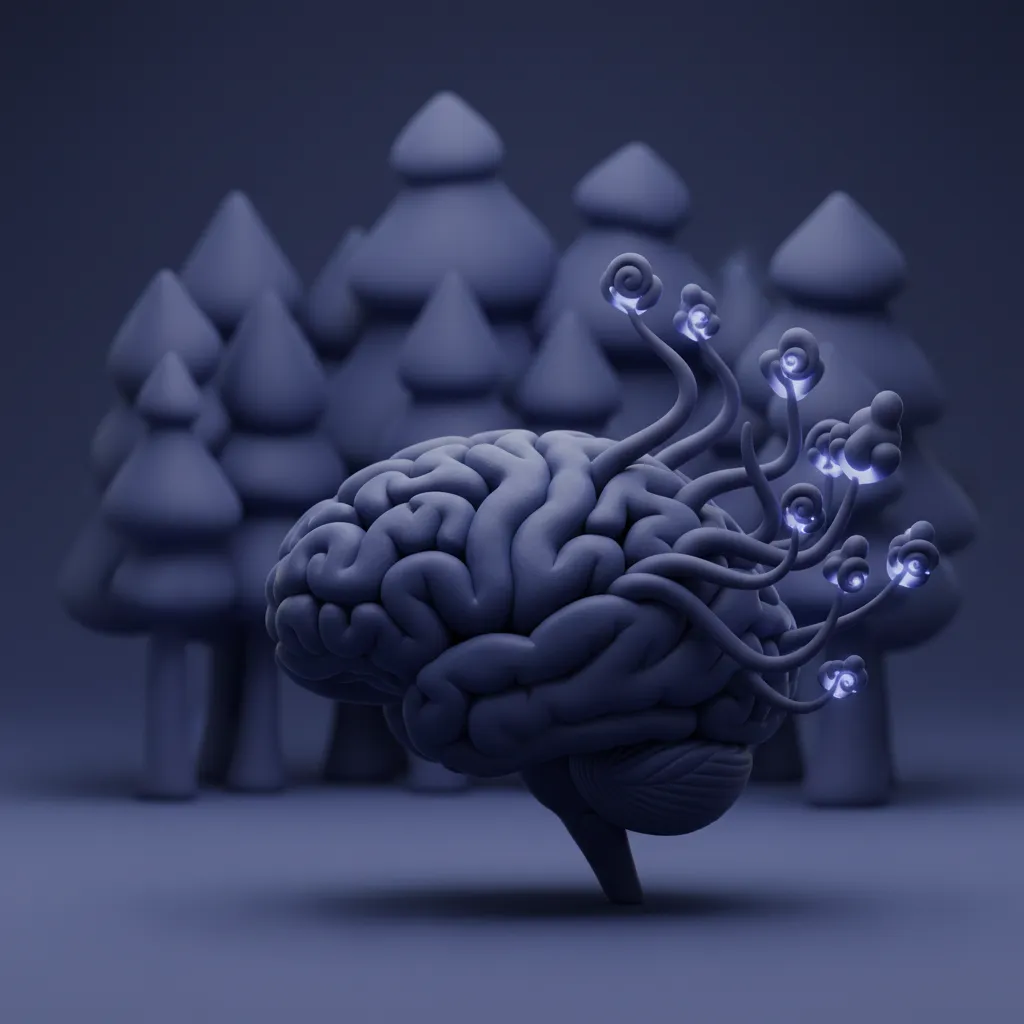
Every human brain starts life with a vast overproduction of synaptic connections — far more than it will ultimately need. During childhood and adolescence, a process called synaptic pruning eliminates roughly 50% of these connections. Think of it as editing: the brain keeps the neural pathways that are used frequently and removes the ones that aren't, creating a more efficient, streamlined network.

In autism, this pruning process works differently. Research led by Guomei Tang at Columbia University in 2014 discovered that autistic brains retain significantly more synapses than neurotypical brains. The study examined post-mortem brain tissue and found that by late childhood, neurotypical brains had pruned about 41% of their cortical synapses — while autistic brains had pruned only about 16%. The difference was traced to a molecular pathway involving mTOR signaling, which regulates autophagy (the cellular 'cleanup crew' that removes unused synapses).

The result is a brain with denser local networks. Imagine two gardens: one carefully pruned with clear pathways between beds, and another left to grow more naturally — lush, dense, every corner bursting with detail. Neither garden is broken. They're just optimised for different things.

The denser connectivity helps explain several core autistic experiences. The extraordinary detail perception and pattern recognition? More synaptic connections in local processing areas means more parallel pathways for detecting fine-grained information. The sensory intensity? More active connections means more neural signal to process — the brain is genuinely receiving more information per second. The difficulty filtering background stimuli? With more connections active, the brain's noise floor is higher — every input competes for attention.

This research also opens therapeutic possibilities. In mouse models, correcting the mTOR signaling pathway restored more typical pruning levels and reduced some autism-associated behaviours. This doesn't mean pruning is 'the answer' — the dense connectivity is also the source of many autistic strengths. But understanding the mechanism helps explain why autistic sensory experience is genuinely different at a cellular level, not just a matter of attitude or effort.

If your brain retained more connections than average, you are not oversensitive or dramatic. You are processing a world that is literally richer in neural detail than what most people experience. The environment wasn't designed for your hardware — but your hardware is remarkable.

  • Autistic brains retain significantly more synaptic connections due to reduced pruning during development — about 16% pruned vs 41% in neurotypical brains
  • This is driven by differences in mTOR signaling, which controls the cellular cleanup process (autophagy) that removes unused synapses
  • Denser connections contribute to both strengths (detail perception, pattern recognition) and challenges (sensory intensity, higher neural noise floor)
  • Understanding synaptic pruning differences validates the autistic sensory experience as genuinely neurological, not a matter of willpower

The Noisy Room: Local vs Global Brain Connectivity

One of the most consistent findings in autism neuroscience is a distinctive pattern of brain connectivity — not less connection overall, but a different distribution of where connections are strongest.

Picture a large room full of people at a networking event. In a neurotypical brain, the room is moderately busy — people chat in small groups, but the noise level is manageable. If someone across the room calls your name, you can hear them. The highways between distant brain regions are wide and well-maintained, allowing information to flow freely between, say, the visual cortex and the prefrontal cortex.

In an autistic brain, the local conversations are extraordinary. Each small group is deeply engaged, sharing rich, detailed information at high bandwidth. The local processing hubs — for vision, for sound, for pattern detection — are running at remarkable capacity. But the room is noisier. The connections between distant regions are narrower, fewer, or less synchronised. When the visual cortex needs to coordinate with the social processing areas and the language centres simultaneously, the signal has to fight through more noise.

This explains a remarkable number of autistic experiences through one lens. The exceptional detail perception? Local visual processing running at high resolution. The difficulty reading social situations in real time? That requires integrating facial expression (visual cortex) with tone of voice (auditory cortex), social context (prefrontal cortex), and emotional response (amygdala) — all distant regions that need to communicate simultaneously. The intense focus on special interests? Local networks running in beautiful synchrony without needing to coordinate with unrelated systems.

Importantly, this isn't a deficit — it's a trade-off. Stronger local connectivity gives autistic people genuine cognitive advantages in pattern recognition, detail detection, and sustained deep focus. The cost is paid in situations that demand rapid integration across many brain systems at once — which, not coincidentally, describes most social interactions.

This is why social situations can be exhausting even when you understand them intellectually. Your brain is doing more computational work to achieve the same integration that neurotypical brains do more automatically — not because it's less capable, but because the architecture is optimised for a different kind of processing.

  • Autistic brains show stronger local connections within processing hubs but weaker long-range connections between distant brain regions
  • This explains both the cognitive strengths (detail perception, pattern recognition, deep focus) and the costs (difficulty with rapid multi-system integration)
  • Social processing is particularly affected because it requires simultaneous coordination between many distant brain regions
  • This is an architectural difference, not a deficit — the brain is optimised for depth over breadth

Sensory Processing in Autism

Every moment of every day, your nervous system is receiving an enormous amount of information from the world around you — light, sound, texture, temperature, smell, proprioception, the hum of a refrigerator, the scratch of a label against your skin. Most neurotypical brains apply automatic filtering to this input, dialling down what isn't relevant and letting it recede into the background. Many autistic brains don't filter in the same way. Everything arrives. All at once. At full volume.

This isn't a malfunction. It's a difference in sensory processing architecture — and it has been confirmed across dozens of neuroimaging and behavioural studies. Research shows that autistic people have atypical patterns of neural connectivity in sensory cortices, and that the predictive processing system — which normally helps the brain anticipate and pre-filter expected input — works differently in autism. The result is a nervous system that is often more responsive to sensory information, not less capable of detecting it.

Sensory differences in autism can go in multiple directions. Hypersensitivity means sounds, lights, or textures register as more intense than they do for most people. A fluorescent light isn't just slightly annoying — it can be painful. A room full of conversations doesn't fade into background noise — every thread is audible and demands processing. Hyposensitivity goes the other way: some autistic people seek out strong sensory input — deep pressure, loud music, intense flavours — because their nervous system needs more input to register sensation clearly. Many autistic people experience both, in different sensory channels.

Sensory experiences shape daily life in ways that are often invisible to others. Clothing choices, food preferences, the ability to function in open-plan offices, the need for quiet after a busy day — these are not quirks or preferences in the casual sense. They are the direct expression of a nervous system that processes the physical world at a different intensity.

Understanding this doesn't just explain past experiences — it opens up a different kind of self-care. Sensory regulation isn't indulgence. It's maintenance. Noise-cancelling headphones, preference for dim lighting, needing to leave a party before everyone else — these are not antisocial impulses. They are intelligent adaptations to a world that wasn't designed with your nervous system in mind.

  • Autistic brains often process sensory input without the automatic filtering most neurotypical brains apply — more arrives, more intensely
  • Both hypersensitivity (too much) and hyposensitivity (needing more) are common, and many autistic people experience both across different senses
  • Sensory differences have a neurological basis — differences in neural connectivity and predictive processing are well-documented in research
  • Sensory regulation strategies are not indulgence — they are legitimate, evidence-based self-care for a nervous system processing more than the environment assumes

What Is Monotropism?

Monotropism is a theory of autism developed by autistic researchers — most notably Dinah Murray, Mike Lesser, and Wendy Lawson — that proposes autism is fundamentally a difference in how attention is distributed across the world, rather than a collection of separate deficits.

The core idea is this: neurotypical attention tends to be polytropic — spread across many interests and tasks at once, loosely and flexibly. Autistic attention tends to be monotropic — fewer interests are held in focus at any given time, but with much greater depth and intensity. Like the difference between floodlighting and a laser beam.

This framing explains a remarkable number of autistic experiences that other theories struggle to account for individually. The deep absorption in special interests? That's the monotropic attention system doing what it's built for. The difficulty switching between tasks? Pulling attention out of a monotropic focus is costly — the tunnel needs to be exited before a new one can be entered. The sensory sensitivities? When your attention is intensely focused on one thing, peripheral sensory input doesn't get the same automatic filtering — it arrives with full force.

Monotropism also helps explain what happens in conversation. Following a complex social interaction requires holding many threads simultaneously: the other person's words, their facial expression, the context, your own response, social conventions, and more. For a monotropic mind, this is a demanding multi-channel task — not because of lower intelligence, but because of how attention is structured.

What monotropism offers that deficit-based models don't is a coherent, non-pathologising account of how autistic minds work. It doesn't say the autistic attention system is broken — it says it's different, with its own strengths (depth, focus, sustained engagement) and its own costs (difficulty with transitions, overwhelm in multi-demand environments).

For many autistic people, encountering this theory for the first time is quietly life-changing. It makes sense of a lifetime of being told you're too intense, too focused, too slow to switch — and reframes all of that as a coherent way of being in the world.

  • Monotropism proposes that autism is a difference in attention style — deep and narrow rather than broad and flexible
  • It explains special interests, task-switching difficulty, and sensory sensitivity through one unified lens
  • The theory was developed by autistic researchers and centres autistic experience rather than external deficit observation
  • Monotropic attention has real strengths — depth, sustained focus, and intense engagement — alongside real costs in multi-demand environments

The Double Empathy Problem

For a long time, autism research operated on a simple assumption: autistic people lack empathy. They struggle to understand what others are thinking and feeling. This framework — called Theory of Mind deficit — shaped decades of clinical practice, public perception, and a great deal of personal shame for autistic people who knew, viscerally, that it wasn't the whole story.

In 2012, autistic researcher Damian Milton proposed a different explanation for the social difficulties that autistic people experience. He called it the Double Empathy Problem. The argument is straightforward but transformative: when two people with very different ways of experiencing and communicating the world try to interact, misunderstanding goes both ways. It's not a one-sided deficit. It's a mutual gap.

Studies testing this directly have produced striking results. When autistic people interact with other autistic people, the communication difficulties largely disappear. They share more personal information, feel more rapport, and report more satisfying interactions. The problem isn't an autistic brain — it's the mismatch between two different communication and social styles, one of which (neurotypical) has been treated as the default and the other (autistic) as the deviation.

Autistic people are not less empathetic. Many autistic people experience extremely high empathic responses — including a phenomenon called affective empathy overflow, where they feel others' emotions so intensely it becomes overwhelming. What autistic people may do differently is express that empathy, or express it on a different timeline, or struggle to intuit neurotypical social cues that signal when empathy is expected.

Meanwhile, neurotypical people consistently fail to accurately read autistic social signals — a finding that rarely gets talked about. Research has shown that neurotypical observers rate autistic people as less likeable and trustworthy in first impressions, even when those autistic people are behaving entirely appropriately. The gap is mutual. The framing of it as a one-sided deficit is not.

If you have been told your whole life that you don't understand people, or that you're cold, or that you don't care enough — this research says something important: you were being measured against a template that wasn't built for you, by people who may have understood you less than they assumed.

  • The Double Empathy Problem, proposed by autistic researcher Damian Milton, shows that social misunderstanding between autistic and neurotypical people is mutual — not one-sided
  • Autistic people communicate more successfully with other autistic people — the difficulty is in the cross-neurotype gap, not autistic communication itself
  • Many autistic people experience very high empathy, including emotional overwhelm in response to others' feelings
  • Neurotypical people consistently misread autistic social signals — a finding that is rarely discussed but is well-supported by research

The Expanding Diagnosis: Who Gets Found — and Who Got Missed

The history of autism diagnosis is the history of a slowly widening lens.

When Leo Kanner first described autism in 1943, he was documenting children with profound difficulties communicating, rigid repetitive behaviours, and very limited interaction with the world around them. For decades, that image — the severely affected, nonverbal child — defined public understanding of what autism was. And for equally long, it defined who got diagnosed.

The result was that enormous numbers of people were missed. Not because they didn't struggle, but because their struggles didn't look like the one story anyone was telling.

The expansion happened in stages. Hans Asperger's work — describing people with autistic traits but no language delay or intellectual disability — eventually made its way into Western diagnosis as Asperger Syndrome in 1994. This brought a new wave of recognition, particularly for people who were verbal, academically capable, and had been navigating the world by sheer force of compensation. Then in 2013, the DSM-5 merged all previous subtypes into a single Autism Spectrum Disorder, explicitly recognising that the full range of presentations lived under one broad umbrella.

But the lens is still widening. Autistic women and girls are diagnosed significantly later than men — often not until adulthood — because diagnostic tools were developed primarily from studies of boys, and because the masking strategies many women develop are extraordinarily effective at hiding autistic traits from the outside world. Research now confirms what autistic women have been saying for years: they aren't less autistic. They became fluent in neurotypical performance out of necessity, often at enormous personal cost.

Today, a meaningful proportion of new autism diagnoses happen in adults. People in their 30s, 40s, 50s and beyond, discovering for the first time why certain things were always harder than they seemed to be for everyone else. Why the exhaustion ran deeper than the day could account for. Why they'd always felt, at some level, like they were watching their own life through a slightly different glass.

Diagnosis at any age is not the beginning of a problem. It is the beginning of an explanation. And often, for people who finally receive one, it changes everything — not what they are, but how clearly they can see themselves.

  • Early autism criteria only captured the most visible presentations — most autistic people with subtler or masked profiles were missed entirely
  • Women and girls are diagnosed on average 1.5 years later than men, often misdiagnosed with anxiety, depression, or borderline personality disorder first
  • Adult diagnosis is rising significantly — many people discover their autism in their 30s, 40s, or 50s after a lifetime of compensating
  • A late diagnosis is not a late-onset condition — it is a late recognition of something that was always present

Two Lenses: Neurodiversity and the Biopsychosocial Model

How you understand autism shapes everything — from how autistic people feel about themselves, to how clinicians treat them, to what 'success' is even supposed to mean. Two frameworks have changed this understanding most profoundly.

**The Neurodiversity Paradigm**

Autism is a natural variation in human neurology — not a medical error, not a brain that went wrong during development, not a deficit waiting to be corrected. Just as some humans are left-handed, or have different colour vision, autistic brains are differently wired. The Neurodiversity Paradigm, developed largely by autistic advocates and researchers since the late 1990s, holds that the goal of support should not be to make autistic people less autistic — but to reduce the barriers between autistic people and a world that wasn't designed with them in mind.

This isn't a denial of difficulty. Autistic people face real challenges — in a world built for neurotypical sensory profiles, communication styles, and social expectations, the mismatch creates genuine friction. The neurodiversity framework doesn't say that friction isn't real. It asks: what if the mismatch, not the person, is the thing we're trying to address?

**The Biopsychosocial Model**

The Biopsychosocial (BPS) model proposes that outcomes for any person are shaped by three interacting systems — not one:

• **Biological**: genetics, sensory processing differences, neurological wiring, co-occurring conditions (epilepsy, anxiety, gut issues) • **Psychological**: identity, masking, self-understanding, coping strategies, mental health • **Social**: family support, school environment, workplace accommodation, cultural attitudes toward difference

This means the same autistic person can thrive in one environment and be profoundly overwhelmed in another — not because they changed, but because the social and environmental factors changed. A late-diagnosed professional who 'coped fine' for decades may not have been thriving — they may have been surviving in a set of circumstances that happened to accommodate their needs enough. Change those circumstances, and the cost becomes visible.

**What Recent Research Confirms**

A 2025 Princeton/Simons Foundation study of over 5,000 autistic children identified 4 biologically distinct subtypes — confirming that 'autism' describes genuinely different neurobiologies, not a single condition with more or less severity:

1. **Social/Behavioural** (37%) — primarily social communication differences, relatively low developmental delay 2. **Moderate** (34%) — broadly distributed traits, moderate support needs 3. **Mixed with Developmental Delay** (19%) — social and developmental challenges combined 4. **Broadly Affected** (10%) — widest range of differences across biological and adaptive systems

Separately, the AIM (Autism Impact Model) found that 27-47% of autistic individuals show meaningful improvement in adaptive functioning trajectories over time — especially with appropriate support. This is not 'growing out of autism'. It is the Biopsychosocial model in action: when environment, support, and self-understanding improve, outcomes improve.

The combination of these two frameworks — neurodiversity + biopsychosocial — offers something neither does alone: a way to take autistic experience seriously, reduce unnecessary harm, and genuinely improve lives without requiring anyone to stop being who they are.

  • The Neurodiversity Paradigm frames autism as natural human variation — the goal is reducing environmental barriers, not making autistic people less autistic
  • The Biopsychosocial Model shows that outcomes depend on Biology + Psychology + Social environment together — not the autism alone
  • The Princeton/Simons 2025 SPARK study confirmed 4 biologically distinct autism subtypes in 5,000+ children — same diagnosis, genuinely different neurobiology
  • 27-47% of autistic people show meaningful improvement over time with appropriate support — outcomes are shaped by environment, not fixed at diagnosis
Why Autistic People Avoid Eye Contact

If eye contact has ever felt uncomfortable, intrusive, or simply like too much — you are not being rude, and you are not broken. For many autistic people, making eye contact doesn't feel like a casual social gesture. It feels intensely exposing, like someone is looking directly into your thoughts. That experience is real, and it has a neurological basis.

Research using eye-tracking technology has shown that autistic people tend to focus on the mouth region rather than the eyes during conversation — partly because the mouth carries more information for speech, and partly because the eyes can be overwhelming to process. A 2017 study found that when autistic people do make eye contact, their amygdala (the brain's threat-detection centre) shows heightened activation. In other words, for many autistic people, eye contact triggers the same kind of alert response as a physical threat. No wonder it feels hard.

Some autistic people learn to perform eye contact — they look near the eyes, or glance briefly and look away — because they've been taught that not looking is seen as rude. This kind of masking takes enormous cognitive energy, and often comes at the cost of actually listening to what the other person is saying. You can look someone in the eyes, or you can understand what they're saying. For many autistic brains, doing both at once is genuinely not possible.

The social rule that eye contact equals respect is a neurotypical convention, not a universal truth. Many cultures around the world actually consider sustained eye contact to be disrespectful or aggressive. The idea that avoiding eye contact signals dishonesty or disinterest is a myth — and one that has caused enormous shame for autistic people who communicate and connect just as meaningfully without it.

If you find eye contact difficult, that is not a flaw in your character. It is a difference in how your nervous system processes social stimuli. You are not less present, less caring, or less engaged. You may simply be listening more deeply than anyone realises.

Info Dumping: When Sharing Knowledge Is Love

You've just discovered something fascinating — maybe it's the migratory patterns of Arctic terns, or the exact chemistry of why bread rises, or the entire filmography of a director you found last week. And suddenly you need to share all of it. Not some of it. All of it. Right now. To whoever is nearby.

This is called info dumping, and if you do it, you may have spent years feeling embarrassed about it — apologising for talking too much, sensing eyes glaze over, telling yourself to stop. But here's what's worth understanding: for many autistic people, info dumping isn't a failure of social awareness. It is one of the purest expressions of love and excitement that they have.

Special interests — the topics autistic people pursue with deep, sustained focus — are often tied to identity and emotional regulation. When something matters to you deeply and brings you joy, sharing it with another person is an act of intimacy. You are inviting them into the part of your mind that lights up. That is connection, not monologue.

There's also a cognitive dimension to info dumping that rarely gets talked about. Autistic thinking often links concepts in dense, associative webs. When you start explaining something, you're not just conveying facts — you're tracing a map of how ideas connect for you. Cutting that short can feel like being asked to stop mid-sentence. The brain wants to complete the circuit.

Research on autistic communication styles shows that autistic people often communicate with high precision, high detail, and a strong preference for accuracy. These are valuable qualities in many contexts — science, engineering, teaching, storytelling. The challenge tends to be that neurotypical conversation norms prioritise brevity and turn-taking over depth and completeness.

You are not broken for wanting to share what you love. You may just need people in your life who appreciate the gift of being talked to, not at — and who understand that when you share your special interest, you're sharing a piece of yourself.

What Is Stimming? Self-Regulation in Autism

Rocking back and forth. Flapping hands. Tapping fingers in a pattern. Spinning a pen. Chewing on a sleeve. Running fingers over a textured surface again and again. These are all forms of stimming — short for self-stimulatory behaviour — and they are one of the most misunderstood aspects of autism.

For decades, stimming was treated as something to be stopped. Applied Behaviour Analysis (ABA) therapy built entire programmes around eliminating stimming behaviours, based on the idea that they were strange, disruptive, or held autistic people back socially. What that approach missed entirely was the function stimming actually serves: it is the nervous system regulating itself.

The autistic nervous system often processes sensory information at a higher intensity than neurotypical systems. Sounds, lights, textures, social demands — they can add up faster, and the system needs tools to manage that load. Stimming provides rhythmic, predictable input that soothes the nervous system when it's overwhelmed. It can also amplify positive emotions — many autistic people stim when they're excited or happy, not just when they're stressed. It's a full-spectrum regulation tool.

Neuroscience supports this. Repetitive movements activate the cerebellum and help regulate arousal levels. Some research links stimming to increased activity in the default mode network, the brain's self-referential system — suggesting stimming may also help with internal processing and focus.

When stimming is suppressed — either by external pressure or through the effort of masking — the sensory overwhelm doesn't go away. It builds. Autistic people who mask their stimming report higher levels of anxiety and emotional exhaustion. Suppressing a natural self-regulation behaviour is not neutral. It has a cost.

If you stim, your nervous system is not malfunctioning. It has found a tool that works. You are allowed to regulate your own body in the way that helps you feel safe and present in the world.

Literal Thinking in Autism

"Break a leg." "It's raining cats and dogs." "Can you give me a hand?" Language is full of phrases that mean something entirely different from what the words actually say. For many autistic people, navigating this hidden layer of meaning is a constant, exhausting translation task — and not always a successful one.

Literal thinking doesn't mean a lack of intelligence or imagination. It means the brain defaults to the most direct, precise interpretation of language — the one where words mean what they say. This is, in many ways, an extremely logical way to process communication. If someone says "I'll be there in five minutes" and arrives fifteen minutes later, that matters. If a rule says one thing but is applied differently in practice, that inconsistency registers as a real problem, not a trivial detail.

The challenge is that much of human communication relies on shared assumptions, implied meaning, sarcasm, irony, and social scripts that nobody ever explicitly taught — they were absorbed through years of neurotypical social immersion. Autistic people often didn't absorb those scripts the same way, or found them confusing even after learning them. This can lead to misunderstandings that feel baffling from both sides.

But consider what literal thinking offers: precision. Clarity. A genuine preference for saying what you mean and meaning what you say. Many autistic people find indirect communication genuinely uncomfortable — not because they lack empathy, but because vagueness feels dishonest or disrespectful. "Just say what you mean" isn't a demand — it's a value.

Research in autistic communication suggests that autistic people tend to prefer explicit, direct communication and often find neurotypical ambiguity frustrating or anxiety-provoking. When the environment matches that preference — clear instructions, honest feedback, no hidden agendas — autistic people often thrive.

Your brain takes language seriously. It holds words to the standard of what they actually mean. That is not a flaw in your thinking. It is a different relationship with language — one that values honesty and precision above social performance.

Why Routines Matter So Much in Autism

For many autistic people, routine isn't about being rigid or inflexible. It's about surviving a world that often feels unpredictable, loud, and hard to read. When you know what's coming next — what you'll eat, what the morning will look like, which route you'll take — your nervous system can relax. That cognitive space gets freed up for everything else the day will demand.

This is sometimes called predictability as a coping strategy. The autistic nervous system tends to expend more energy processing sensory input, social dynamics, and unexpected changes than neurotypical nervous systems do. Routine reduces the number of things that need processing. It's not avoidance of life — it's intelligent resource management.

Changes to routine can feel disproportionately distressing from the outside. A meeting moved, a different person covering at the coffee shop, a road closure forcing a new route — these can genuinely destabilise an autistic person's day. This isn't overreaction. When your nervous system is already working harder than average to process the world, unexpected changes create a cognitive pile-on that can quickly tip into overwhelm.

Research shows that autistic people have differences in interoception — the sense of what's happening inside the body — and in predicting upcoming sensory or social events. The brain's predictive processing system works differently, which means the gap between what's expected and what actually happens feels larger and more costly to manage. Routine is one way to narrow that gap.

There's also something important about identity and comfort here. Routines often develop around things that feel genuinely good — a favourite mug, a specific playlist, a reliable walk. These aren't just habits. They are anchors. They create islands of certainty in an uncertain world.

If your routines help you function, feel safe, and show up for your life — they are working exactly as they should. You don't need to be more spontaneous to prove you're fine.

Meltdowns vs Tantrums: What's Really Happening

A meltdown is not a tantrum. This distinction matters enormously — for autistic people who have experienced them, for the people around them, and for anyone trying to understand what actually happens in the autistic nervous system under extreme stress.

A tantrum is a behavioural strategy. It's used (often consciously, sometimes unconsciously) to get a desired outcome, and it tends to stop when the desired outcome is achieved or when the environment changes in a way that makes it no longer useful. A meltdown is something entirely different. It is a neurological overload response — the moment the nervous system has reached its absolute limit and can no longer regulate itself. There is no strategic intent. There is no choice involved. The person experiencing it is not in control.

Meltdowns happen when sensory input, emotional demands, or cognitive load have accumulated beyond what the nervous system can manage. The brain's threat-response system — already running higher in many autistic people — tips into crisis mode. What follows can look like extreme distress, crying, shouting, self-injurious behaviour, or complete shutdown. From the outside it may appear dramatic. From the inside it is often terrifying and exhausting.

Many autistic people describe the period before a meltdown — sometimes called the rumble stage — as a growing sense of pressure or overwhelm that they can feel building but often cannot stop. After a meltdown, there is usually a recovery phase: deep exhaustion, shame, and sometimes no memory of what happened.

The shame piece is worth pausing on. Many autistic people carry deep shame about their meltdowns, often because they have been told they were behaving badly, being dramatic, or choosing to act out. If that's been your experience, please hear this: you were not choosing. Your nervous system was overwhelmed. That is a physiological event, not a moral failure.

Understanding your triggers, recognising early warning signs, and building recovery time into your life are all strategies that can help. But none of them require you to first accept blame for something that was never a choice.

The Unpruned Garden: Synaptic Pruning in Autism

Every human brain starts life with a vast overproduction of synaptic connections — far more than it will ultimately need. During childhood and adolescence, a process called synaptic pruning eliminates roughly 50% of these connections. Think of it as editing: the brain keeps the neural pathways that are used frequently and removes the ones that aren't, creating a more efficient, streamlined network.

In autism, this pruning process works differently. Research led by Guomei Tang at Columbia University in 2014 discovered that autistic brains retain significantly more synapses than neurotypical brains. The study examined post-mortem brain tissue and found that by late childhood, neurotypical brains had pruned about 41% of their cortical synapses — while autistic brains had pruned only about 16%. The difference was traced to a molecular pathway involving mTOR signaling, which regulates autophagy (the cellular 'cleanup crew' that removes unused synapses).

The result is a brain with denser local networks. Imagine two gardens: one carefully pruned with clear pathways between beds, and another left to grow more naturally — lush, dense, every corner bursting with detail. Neither garden is broken. They're just optimised for different things.

The denser connectivity helps explain several core autistic experiences. The extraordinary detail perception and pattern recognition? More synaptic connections in local processing areas means more parallel pathways for detecting fine-grained information. The sensory intensity? More active connections means more neural signal to process — the brain is genuinely receiving more information per second. The difficulty filtering background stimuli? With more connections active, the brain's noise floor is higher — every input competes for attention.

This research also opens therapeutic possibilities. In mouse models, correcting the mTOR signaling pathway restored more typical pruning levels and reduced some autism-associated behaviours. This doesn't mean pruning is 'the answer' — the dense connectivity is also the source of many autistic strengths. But understanding the mechanism helps explain why autistic sensory experience is genuinely different at a cellular level, not just a matter of attitude or effort.

If your brain retained more connections than average, you are not oversensitive or dramatic. You are processing a world that is literally richer in neural detail than what most people experience. The environment wasn't designed for your hardware — but your hardware is remarkable.

The Noisy Room: Local vs Global Brain Connectivity

One of the most consistent findings in autism neuroscience is a distinctive pattern of brain connectivity — not less connection overall, but a different distribution of where connections are strongest.

Picture a large room full of people at a networking event. In a neurotypical brain, the room is moderately busy — people chat in small groups, but the noise level is manageable. If someone across the room calls your name, you can hear them. The highways between distant brain regions are wide and well-maintained, allowing information to flow freely between, say, the visual cortex and the prefrontal cortex.

In an autistic brain, the local conversations are extraordinary. Each small group is deeply engaged, sharing rich, detailed information at high bandwidth. The local processing hubs — for vision, for sound, for pattern detection — are running at remarkable capacity. But the room is noisier. The connections between distant regions are narrower, fewer, or less synchronised. When the visual cortex needs to coordinate with the social processing areas and the language centres simultaneously, the signal has to fight through more noise.

This explains a remarkable number of autistic experiences through one lens. The exceptional detail perception? Local visual processing running at high resolution. The difficulty reading social situations in real time? That requires integrating facial expression (visual cortex) with tone of voice (auditory cortex), social context (prefrontal cortex), and emotional response (amygdala) — all distant regions that need to communicate simultaneously. The intense focus on special interests? Local networks running in beautiful synchrony without needing to coordinate with unrelated systems.

Importantly, this isn't a deficit — it's a trade-off. Stronger local connectivity gives autistic people genuine cognitive advantages in pattern recognition, detail detection, and sustained deep focus. The cost is paid in situations that demand rapid integration across many brain systems at once — which, not coincidentally, describes most social interactions.

This is why social situations can be exhausting even when you understand them intellectually. Your brain is doing more computational work to achieve the same integration that neurotypical brains do more automatically — not because it's less capable, but because the architecture is optimised for a different kind of processing.

Sensory Processing in Autism

Every moment of every day, your nervous system is receiving an enormous amount of information from the world around you — light, sound, texture, temperature, smell, proprioception, the hum of a refrigerator, the scratch of a label against your skin. Most neurotypical brains apply automatic filtering to this input, dialling down what isn't relevant and letting it recede into the background. Many autistic brains don't filter in the same way. Everything arrives. All at once. At full volume.

This isn't a malfunction. It's a difference in sensory processing architecture — and it has been confirmed across dozens of neuroimaging and behavioural studies. Research shows that autistic people have atypical patterns of neural connectivity in sensory cortices, and that the predictive processing system — which normally helps the brain anticipate and pre-filter expected input — works differently in autism. The result is a nervous system that is often more responsive to sensory information, not less capable of detecting it.

Sensory differences in autism can go in multiple directions. Hypersensitivity means sounds, lights, or textures register as more intense than they do for most people. A fluorescent light isn't just slightly annoying — it can be painful. A room full of conversations doesn't fade into background noise — every thread is audible and demands processing. Hyposensitivity goes the other way: some autistic people seek out strong sensory input — deep pressure, loud music, intense flavours — because their nervous system needs more input to register sensation clearly. Many autistic people experience both, in different sensory channels.

Sensory experiences shape daily life in ways that are often invisible to others. Clothing choices, food preferences, the ability to function in open-plan offices, the need for quiet after a busy day — these are not quirks or preferences in the casual sense. They are the direct expression of a nervous system that processes the physical world at a different intensity.

Understanding this doesn't just explain past experiences — it opens up a different kind of self-care. Sensory regulation isn't indulgence. It's maintenance. Noise-cancelling headphones, preference for dim lighting, needing to leave a party before everyone else — these are not antisocial impulses. They are intelligent adaptations to a world that wasn't designed with your nervous system in mind.

What Is Monotropism?

Monotropism is a theory of autism developed by autistic researchers — most notably Dinah Murray, Mike Lesser, and Wendy Lawson — that proposes autism is fundamentally a difference in how attention is distributed across the world, rather than a collection of separate deficits.

The core idea is this: neurotypical attention tends to be polytropic — spread across many interests and tasks at once, loosely and flexibly. Autistic attention tends to be monotropic — fewer interests are held in focus at any given time, but with much greater depth and intensity. Like the difference between floodlighting and a laser beam.

This framing explains a remarkable number of autistic experiences that other theories struggle to account for individually. The deep absorption in special interests? That's the monotropic attention system doing what it's built for. The difficulty switching between tasks? Pulling attention out of a monotropic focus is costly — the tunnel needs to be exited before a new one can be entered. The sensory sensitivities? When your attention is intensely focused on one thing, peripheral sensory input doesn't get the same automatic filtering — it arrives with full force.

Monotropism also helps explain what happens in conversation. Following a complex social interaction requires holding many threads simultaneously: the other person's words, their facial expression, the context, your own response, social conventions, and more. For a monotropic mind, this is a demanding multi-channel task — not because of lower intelligence, but because of how attention is structured.

What monotropism offers that deficit-based models don't is a coherent, non-pathologising account of how autistic minds work. It doesn't say the autistic attention system is broken — it says it's different, with its own strengths (depth, focus, sustained engagement) and its own costs (difficulty with transitions, overwhelm in multi-demand environments).

For many autistic people, encountering this theory for the first time is quietly life-changing. It makes sense of a lifetime of being told you're too intense, too focused, too slow to switch — and reframes all of that as a coherent way of being in the world.

The Double Empathy Problem

For a long time, autism research operated on a simple assumption: autistic people lack empathy. They struggle to understand what others are thinking and feeling. This framework — called Theory of Mind deficit — shaped decades of clinical practice, public perception, and a great deal of personal shame for autistic people who knew, viscerally, that it wasn't the whole story.

In 2012, autistic researcher Damian Milton proposed a different explanation for the social difficulties that autistic people experience. He called it the Double Empathy Problem. The argument is straightforward but transformative: when two people with very different ways of experiencing and communicating the world try to interact, misunderstanding goes both ways. It's not a one-sided deficit. It's a mutual gap.

Studies testing this directly have produced striking results. When autistic people interact with other autistic people, the communication difficulties largely disappear. They share more personal information, feel more rapport, and report more satisfying interactions. The problem isn't an autistic brain — it's the mismatch between two different communication and social styles, one of which (neurotypical) has been treated as the default and the other (autistic) as the deviation.

Autistic people are not less empathetic. Many autistic people experience extremely high empathic responses — including a phenomenon called affective empathy overflow, where they feel others' emotions so intensely it becomes overwhelming. What autistic people may do differently is express that empathy, or express it on a different timeline, or struggle to intuit neurotypical social cues that signal when empathy is expected.

Meanwhile, neurotypical people consistently fail to accurately read autistic social signals — a finding that rarely gets talked about. Research has shown that neurotypical observers rate autistic people as less likeable and trustworthy in first impressions, even when those autistic people are behaving entirely appropriately. The gap is mutual. The framing of it as a one-sided deficit is not.

If you have been told your whole life that you don't understand people, or that you're cold, or that you don't care enough — this research says something important: you were being measured against a template that wasn't built for you, by people who may have understood you less than they assumed.

The Expanding Diagnosis: Who Gets Found — and Who Got Missed

The history of autism diagnosis is the history of a slowly widening lens.

When Leo Kanner first described autism in 1943, he was documenting children with profound difficulties communicating, rigid repetitive behaviours, and very limited interaction with the world around them. For decades, that image — the severely affected, nonverbal child — defined public understanding of what autism was. And for equally long, it defined who got diagnosed.

The result was that enormous numbers of people were missed. Not because they didn't struggle, but because their struggles didn't look like the one story anyone was telling.

The expansion happened in stages. Hans Asperger's work — describing people with autistic traits but no language delay or intellectual disability — eventually made its way into Western diagnosis as Asperger Syndrome in 1994. This brought a new wave of recognition, particularly for people who were verbal, academically capable, and had been navigating the world by sheer force of compensation. Then in 2013, the DSM-5 merged all previous subtypes into a single Autism Spectrum Disorder, explicitly recognising that the full range of presentations lived under one broad umbrella.

But the lens is still widening. Autistic women and girls are diagnosed significantly later than men — often not until adulthood — because diagnostic tools were developed primarily from studies of boys, and because the masking strategies many women develop are extraordinarily effective at hiding autistic traits from the outside world. Research now confirms what autistic women have been saying for years: they aren't less autistic. They became fluent in neurotypical performance out of necessity, often at enormous personal cost.

Today, a meaningful proportion of new autism diagnoses happen in adults. People in their 30s, 40s, 50s and beyond, discovering for the first time why certain things were always harder than they seemed to be for everyone else. Why the exhaustion ran deeper than the day could account for. Why they'd always felt, at some level, like they were watching their own life through a slightly different glass.

Diagnosis at any age is not the beginning of a problem. It is the beginning of an explanation. And often, for people who finally receive one, it changes everything — not what they are, but how clearly they can see themselves.

Two Lenses: Neurodiversity and the Biopsychosocial Model

How you understand autism shapes everything — from how autistic people feel about themselves, to how clinicians treat them, to what 'success' is even supposed to mean. Two frameworks have changed this understanding most profoundly.

**The Neurodiversity Paradigm**

Autism is a natural variation in human neurology — not a medical error, not a brain that went wrong during development, not a deficit waiting to be corrected. Just as some humans are left-handed, or have different colour vision, autistic brains are differently wired. The Neurodiversity Paradigm, developed largely by autistic advocates and researchers since the late 1990s, holds that the goal of support should not be to make autistic people less autistic — but to reduce the barriers between autistic people and a world that wasn't designed with them in mind.

This isn't a denial of difficulty. Autistic people face real challenges — in a world built for neurotypical sensory profiles, communication styles, and social expectations, the mismatch creates genuine friction. The neurodiversity framework doesn't say that friction isn't real. It asks: what if the mismatch, not the person, is the thing we're trying to address?

**The Biopsychosocial Model**

The Biopsychosocial (BPS) model proposes that outcomes for any person are shaped by three interacting systems — not one:

• **Biological**: genetics, sensory processing differences, neurological wiring, co-occurring conditions (epilepsy, anxiety, gut issues) • **Psychological**: identity, masking, self-understanding, coping strategies, mental health • **Social**: family support, school environment, workplace accommodation, cultural attitudes toward difference

This means the same autistic person can thrive in one environment and be profoundly overwhelmed in another — not because they changed, but because the social and environmental factors changed. A late-diagnosed professional who 'coped fine' for decades may not have been thriving — they may have been surviving in a set of circumstances that happened to accommodate their needs enough. Change those circumstances, and the cost becomes visible.

**What Recent Research Confirms**

A 2025 Princeton/Simons Foundation study of over 5,000 autistic children identified 4 biologically distinct subtypes — confirming that 'autism' describes genuinely different neurobiologies, not a single condition with more or less severity:

1. **Social/Behavioural** (37%) — primarily social communication differences, relatively low developmental delay 2. **Moderate** (34%) — broadly distributed traits, moderate support needs 3. **Mixed with Developmental Delay** (19%) — social and developmental challenges combined 4. **Broadly Affected** (10%) — widest range of differences across biological and adaptive systems

Separately, the AIM (Autism Impact Model) found that 27-47% of autistic individuals show meaningful improvement in adaptive functioning trajectories over time — especially with appropriate support. This is not 'growing out of autism'. It is the Biopsychosocial model in action: when environment, support, and self-understanding improve, outcomes improve.

The combination of these two frameworks — neurodiversity + biopsychosocial — offers something neither does alone: a way to take autistic experience seriously, reduce unnecessary harm, and genuinely improve lives without requiring anyone to stop being who they are.