Sensory Overload? Tools to Help Right Now
If you're in sensory overload right now, start here: breathe in for 4 counts, hold for 4, out for 4, hold for 4. That's box breathing, and it directly activates your parasympathetic nervous system. AskSheldon has four evidence-based breathing techniques and guided grounding exercises you can use immediately.

Start Breathing Exercise
Sheldon will guide you through a breathing technique with a 3D visual pacer. Pick from four evidence-based methods or let him choose based on how you're feeling right now.
Start Breathing NowWhat Happens During Sensory Overload
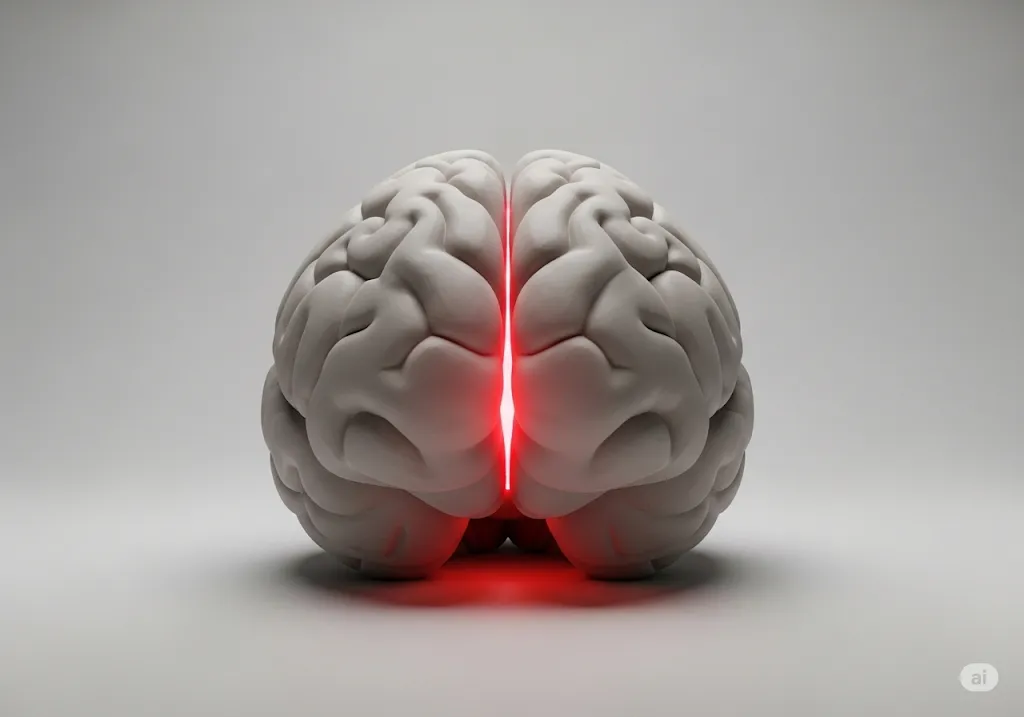
Sensory overload isn't a choice, a weakness, or "being dramatic." It's a measurable neurological event with specific brain mechanisms that differ between autistic and neurotypical brains. Understanding what's happening can make it less frightening — and help you explain it to the people around you. autistic and neurotypical brains. Understanding what's happening can make it less frightening — and help you explain it to the people around you.
Reduced sensory gating. Neurotypical brains automatically filter out irrelevant sensory information before it reaches conscious awareness — the hum of the fridge, the texture of your clothes, background conversations. This is called sensory gating, and it happens in the thalamus. Autistic brains have measurably reduced sensory gating, meaning more raw sensory data reaches your cortex. You're not imagining that the fluorescent lights are unbearable — your brain is literally processing more of that input than a neurotypical brain would.
Thalamic filtering differences. The thalamus acts as a relay station, deciding which sensory signals are important enough to pass to the cortex. EEG studies show that autistic people have different thalamic filtering patterns — some channels are more permissive (letting too much through) while others may be more restrictive.
Amygdala hyperactivation. When sensory input exceeds your processing capacity, the amygdala — your brain's threat detection centre — activates. It doesn't distinguish between "too much noise at a party" and "actual danger" at the neural level. This triggers the same fight-flight-freeze cascade you'd get from a genuine threat: elevated heart rate, cortisol release, muscle tension, racing thoughts or mental blankness.
Cumulative load. Sensory overload isn't just about one loud sound or one bright light. It's cumulative. A slightly too-bright office, plus a colleague's perfume, plus the air conditioning hum, plus an itchy shirt tag, plus social masking — each one is manageable alone, but together they fill your sensory buffer until one more input tips you over.
Four Evidence-Based Breathing Techniques
All four techniques work by activating the vagus nerve and shifting your nervous system from sympathetic (fight-or-flight) to parasympathetic (rest-and-digest). Each one has a different use case. AskSheldon guides you through them with a 3D nebula visualisation that expands and contracts with your breath — giving your eyes something calming to focus on while reducing visual sensory input.
Physiological Sigh
Stanford research. Best for: acute panic or overwhelm.
Double inhale through the nose (regular breath, then a second sharp sniff on top), followed by a long slow exhale through the mouth. The double inhale fully inflates collapsed alveoli in the lungs, maximising CO2 offload on the exhale. Works in just 1-3 breath cycles — the fastest calming technique available.
Slow Paced Breathing
5 seconds in, 5 out. Best for: ongoing regulation.
Breathe in for 5 counts, out for 5 counts, targeting 6 breaths per minute. This rate maximises heart rate variability (HRV), which is the gold-standard measure of parasympathetic activation. Unlike the physiological sigh, this is sustained — use it for 3-5 minutes as a regulation practice, not just emergency response.
4-7-8 Breathing
Weil method. Best for: sleep and deep calm.
Inhale for 4 counts, hold for 7, exhale for 8. The extended hold and extra-long exhale increase CO2 tolerance and strongly activate the vagus nerve. This technique produces deeper relaxation than box breathing but requires more concentration — best used when you're in a safe, quiet space.
Box Breathing
4-4-4-4. Best for: public settings and beginners.
Inhale 4 counts, hold 4, exhale 4, hold 4. The symmetrical pattern makes it easy to remember even when your brain is scrambled by overload. Discreet enough to do at a desk, in a meeting, or on public transport without anyone noticing.
5-4-3-2-1 Grounding

When sensory overload pulls you out of your body and into a spiral of overwhelm, grounding brings you back. The 5-4-3-2-1 technique works by deliberately redirecting your attention to specific sensory channels one at a time, giving your brain a structured task that interrupts the overload cascade.
Identify 5 things you can see, 4 things you can touch, 3 things you can hear, 2 things you can smell, and 1 thing you can taste. The descending count keeps it manageable — you start with the easiest sense (sight) and end with the most specific (taste), by which point most people have reconnected with their physical environment.
Sheldon can guide you through this with voice prompts — naming each sense, waiting for you to respond or simply notice, then moving to the next.
Building a Sensory Emergency Kit
Breathing techniques and grounding exercises are your software tools — they're always available and don't require any equipment. But having a physical sensory emergency kit dramatically improves your ability to manage overload in real-world environments.
- Noise-cancelling headphones or loop earplugs. The single most impactful tool. Reduces auditory input immediately without requiring any cognitive effort. Loop earplugs are discreet enough for social settings.
- Dark or tinted sunglasses. Reduces visual input, especially useful under fluorescent lighting. FL-41 tinted lenses are specifically designed for light sensitivity.
- Stim tools. A quiet fidget, textured stone, or chew necklace provides controlled sensory input that can compete with overwhelming environmental input.
- A pre-planned exit strategy. Before entering any potentially overwhelming environment, know where the exits are and have a script for leaving. Knowing you can leave makes it easier to stay.
- Your phone as a grounding anchor. AskSheldon is accessible from any browser. Having a breathing exercise one tap away turns your phone from a source of overstimulation into a regulation tool. regulation tool.
The goal isn't to avoid all sensory input — it's to have enough control over your sensory environment that you can stay within your window of tolerance.
Try our free neurodivergent toolkit
Timers, sensory tools, and executive function support — designed for how your brain actually works.
Frequently Asked Questions
How do I stop sensory overload?+
You cannot instantly stop sensory overload, but you can activate your parasympathetic nervous system to begin recovery. Start with a breathing technique: box breathing (4 counts in, 4 hold, 4 out, 4 hold) or a physiological sigh (double inhale through the nose, long exhale through the mouth). Reduce sensory input immediately — leave the environment if possible, put on noise-cancelling headphones, or close your eyes.
Is sensory overload the same as a panic attack?+
No, though they can look similar and sometimes co-occur. A panic attack is driven by the brain misinterpreting internal signals as danger, while sensory overload is driven by genuine excessive sensory input overwhelming the brain's filtering capacity. Panic attacks typically peak in 10 minutes; sensory overload can build gradually over hours.
What breathing technique is best for autism?+
The physiological sigh (developed at Stanford) is often the most effective for acute sensory overload because it works in just 1-3 breath cycles and directly activates the parasympathetic nervous system. The technique is simple: take a normal inhale through your nose, then take a second short inhale on top of it, then do a long slow exhale through your mouth.
Can I use these tools at work?+
Yes — all of AskSheldon's breathing and grounding exercises are designed to be usable in public settings. The breathing techniques are silent and can be done at a desk without anyone noticing. The 5-4-3-2-1 grounding exercise can be done mentally without speaking aloud.
How long does sensory overload last?+
Acute sensory overload episodes typically last 20 minutes to 2 hours if you actively manage them (remove triggers, use breathing techniques, reduce stimulation). Without intervention, or if you cannot remove yourself from the triggering environment, overload can persist for hours and cascade into shutdown, meltdown, or autistic burnout.
Related Tools
Last updated: March 2026
Try our free neurodivergent toolkit
Timers, sensory tools, and executive function support — designed for how your brain actually works.
Built by neurodivergent minds. 30+ conditions explored. Always free.