Autism and Empathy — Why the Myth is Wrong
No, autistic people do not lack empathy. Research shows autistic people often experience intense emotional empathy — actually feeling others' emotions. The difference is in cognitive empathy: reading social cues, not caring. The “double empathy problem” shows this is a two-way mismatch, not a one-sided deficit.
For our full guide to autism — including lived experiences, the neuroscience, and interactive empathy simulations — visit our comprehensive autism page.
Where This Myth Comes From
The belief that autistic people lack empathy has deep historical roots, and understanding where it comes from helps explain why it persists despite contradictory evidence.
Leo Kanner, who first described autism in 1943, noted that autistic children appeared “emotionally cold” and described them as having a “profound aloneness.” He observed that these children did not respond to social overtures in expected ways and misinterpreted this as evidence of indifference or emotional detachment. This framing embedded itself in clinical culture and persists in diagnostic training today, despite being largely based on surface observation rather than rigorous measurement of emotional capacity.
A second source of the myth is the confusion between social communication and empathy. Autistic people often have differences in how they express care, maintain eye contact, or respond to social overtures. These communication differences were — and often still are — interpreted as emotional coldness rather than as differences in processing and expression.
Finally, the myth has been reinforced by outdated diagnostic criteria. Until relatively recently, DSM and ICD criteria emphasised deficits in social reciprocity without distinguishing between social awkwardness and emotional indifference. An autistic person who struggles with eye contact or turn-taking in conversation could be coded as having an “impaired ability to recognise emotions,” even if they felt those emotions intensely.
Start your journey with AskSheldon
Free tools to explore, screen, and understand your neurodivergent mind.
What the Research Actually Shows
Modern research using objective measures of empathy reveals a very different picture from Kanner's clinical observations.
Affective empathy (feeling emotions)
Multiple studies using physiological measures (heart rate, skin conductance) and self-report scales show that autistic people experience affective empathy at or above neurotypical levels. A meta-analysis by Moran (2013) found that autistic individuals often score higher on empathic concern and distress subscales, suggesting they may actually feel others' emotions more intensely.
Cognitive empathy (reading social cues)
Autistic people do tend to score lower on tests of cognitive empathy — the ability to quickly infer what someone is thinking or feeling based on facial expressions, tone of voice, or social context. However, this is a processing speed and pattern recognition difference, not a lack of motivation or care. Give an autistic person more time or written information, and they often perform comparably to non-autistic peers.
2024–2025 research findings
Recent meta-analyses continue to show that any differences in empathic concern are small to moderate, and that the majority of autistic people report caring deeply about others' experiences. The notion of a blanket empathy deficit has been largely abandoned by contemporary autism researchers.
The Double Empathy Problem
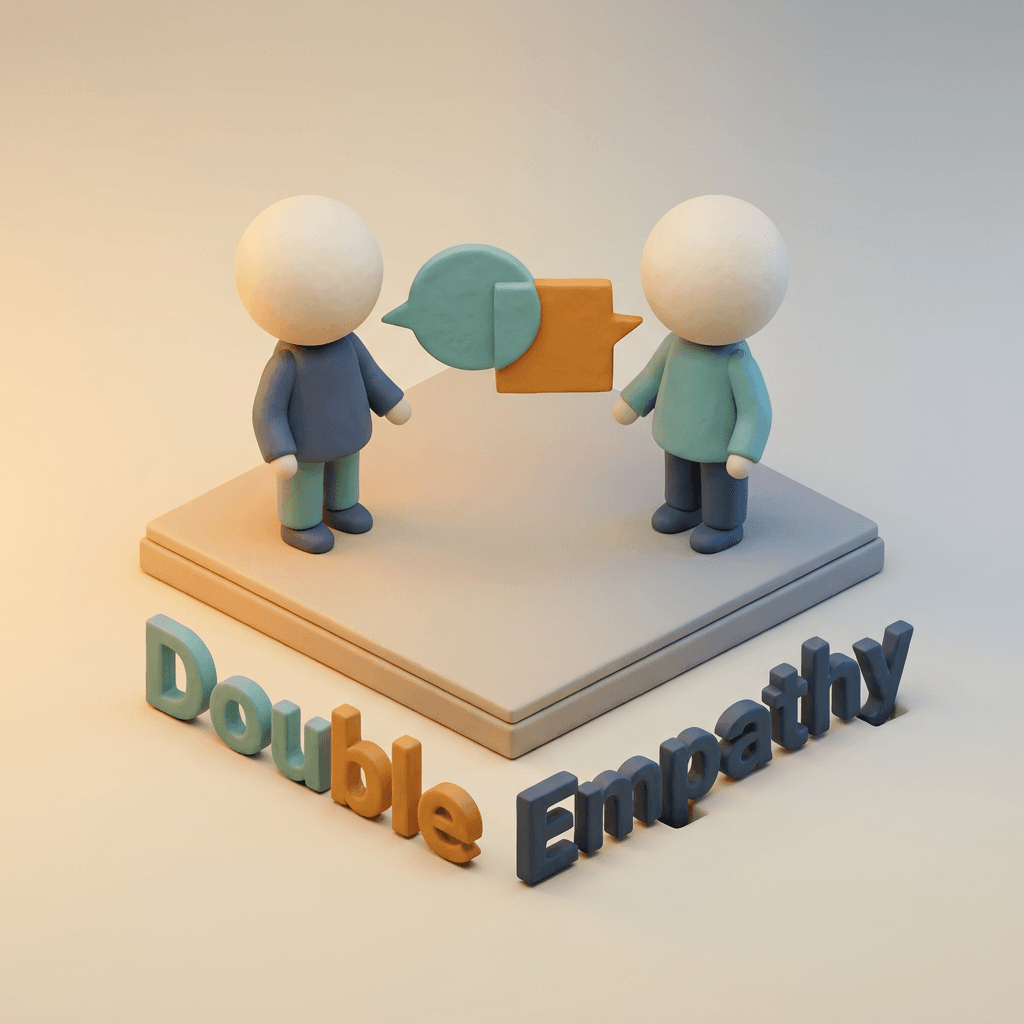
Damian Milton's concept of the “double empathy problem” fundamentally reframes the empathy question. Rather than asking “Why don't autistic people understand non-autistic people?,” it asks: “Why is it harder for different neurotypes to understand each other?”
Bidirectional mismatch
Autistic people struggle to read non-autistic social cues. But non-autistic people equally struggle to recognise autistic emotional expression. An autistic person may show affection through detailed factual discussion or by working on a shared interest — not through eye contact or conventional verbal reassurance. A non-autistic person might interpret this as indifference.
Autistic-autistic interactions
When two autistic people interact, communication often flows more easily. Neither is confused by the other's directness or lack of small talk. Relationships between autistic partners frequently involve high empathy and emotional intimacy — evidence that the problem is not a fundamental lack of empathy in autism, but a mismatch in communication styles.
2024 evidence
Recent studies confirm that non-autistic participants perform worse than baseline when trying to read autistic emotional states from videos. This mutual difficulty is not evidence of autistic coldness — it is evidence of a neurodivergent communication difference that requires mutual adjustment, not one-sided change.
Empathy Overload, Not Absence

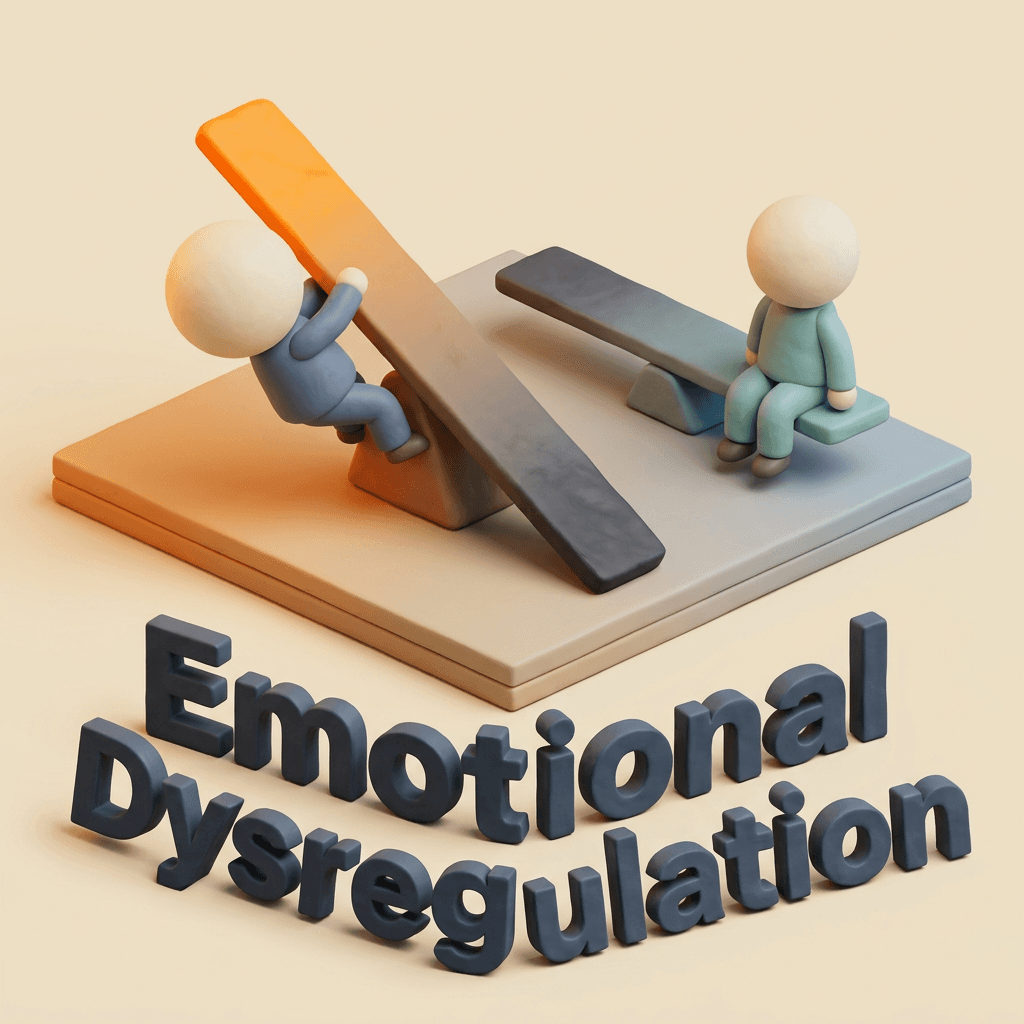
Many autistic people describe not a lack of empathy, but an excess — what researchers call “hyper-empathy.” The challenge is not feeling others' emotions, but managing the intensity of those feelings when they arrive.
When an autistic person is in the presence of someone in emotional distress, they may absorb that person's feelings so completely that they become overwhelmed. This can trigger a shutdown — a protective response where the person withdraws or appears emotionally flat. From the outside, this shutdown can look like indifference. In reality, it is the opposite: the autistic person is experiencing so much empathic distress that their nervous system has triggered a defensive response.
Additionally, sensory overloadcan compound emotional overwhelm. An autistic person in a chaotic or overstimulating environment may struggle to access empathy not because they do not care, but because their sensory and cognitive resources are already maxed out. They literally do not have the bandwidth to process their own distress and someone else's simultaneously.
Understanding this distinction — between reduced capacity to express care in the moment and actual lack of care — is critical for relationships, mental health support, and clinical care.
Why This Matters
The empathy myth is not just an academic question. It has real consequences for autistic people's lives.
Relationships and social isolation
Partners, family members, and friends who believe the myth may interpret autistic people's communication differences as emotional coldness, leading to conflict, rejection, or social exclusion. This causes real harm, even though it is based on a misunderstanding.
Employment and discrimination
Employers may assume autistic workers lack interpersonal skills or emotional intelligence, limiting opportunities in roles requiring teamwork or client interaction. Many autistic people are actually excellent in these roles once the mismatch in communication style is understood and accommodated.
Custody and parental rights
In custody disputes and child protection proceedings, autistic parents have been found unfit based on perceived emotional coldness or social awkwardness, despite being capable and caring. The empathy myth has contributed to loss of custody and family separation.
Clinical care and therapeutic bias
Therapists and healthcare providers who believe the empathy myth may pathologise autistic communication stylesor provide interventions aimed at “normalising” emotional expression, when the real need is for better understanding on both sides.
Frequently Asked Questions
Do autistic people lack empathy?+
No. This is one of the most harmful myths about autism. Research shows that autistic people typically experience affective empathy (feeling others' emotions) at or above neurotypical levels. The difference is in cognitive empathy — the ability to quickly read facial expressions and social cues. This is not the same as not caring; it is a processing difference.
What is the double empathy problem?+
The double empathy problem, introduced by Damian Milton, describes a bidirectional mismatch in how autistic and non-autistic people understand one another. Autistic people struggle to read non-autistic social cues, and non-autistic people struggle to recognise autistic emotional expression. This is not a one-sided deficit in autistic people — it is a communication mismatch between different neurotypes.
Can autistic people experience emotional overload?+
Yes, intensely. Autistic people often experience hyper-empathy — feeling others' emotions so strongly that they become overwhelmed. When someone is in emotional distress, an autistic person may absorb those feelings to the point of shutting down or becoming unable to respond. This shutdown can be mistaken for not caring, when it is actually the opposite.
Why do some autistic people seem cold or indifferent?+
What appears as coldness is usually a combination of factors: difficulty reading and responding to social cues in real time, sensory overload that triggers shutdown (a protective response), or communication differences that make expressing care feel awkward. Autistic people often report caring deeply but struggling to show it in ways others recognise.
Can I be autistic and empathetic?+
Yes, absolutely. Most autistic people report experiencing strong empathy — some describe it as feeling emotions more intensely than non-autistic peers. The challenges are often not with caring, but with showing care in socially expected ways, or with managing the emotional intensity that comes with hyper-empathy.
Related Reading
Autism in Women
Why autism is underdiagnosed in women and how social masking affects mental health.
Autism Burnout
Understand the signs, causes, and recovery from the cumulative exhaustion of masking.
Autism and Intelligence
Exploring the relationship between autism and intelligence, challenging the myth of low IQ.
Am I Autistic?
A guide to recognising autism in adults and navigating assessment.
This page is for informational purposes only and does not constitute medical advice. If you are experiencing significant distress related to relationships or identity, please consider speaking with an autism-informed therapist.
Last updated: March 2026
Start your journey with AskSheldon
Free tools to explore, screen, and understand your neurodivergent mind.
Built by neurodivergent minds. 30+ conditions explored. Always free.