Dyslexia
Not carelessness or low intelligence, but a brain that decodes language through different pathways. Your mind processes the big picture while the letters take their time.
Dyslexia — Audio Coming Soon
We're crafting an audio guide for this condition. Get notified when it drops.
What actually is it?
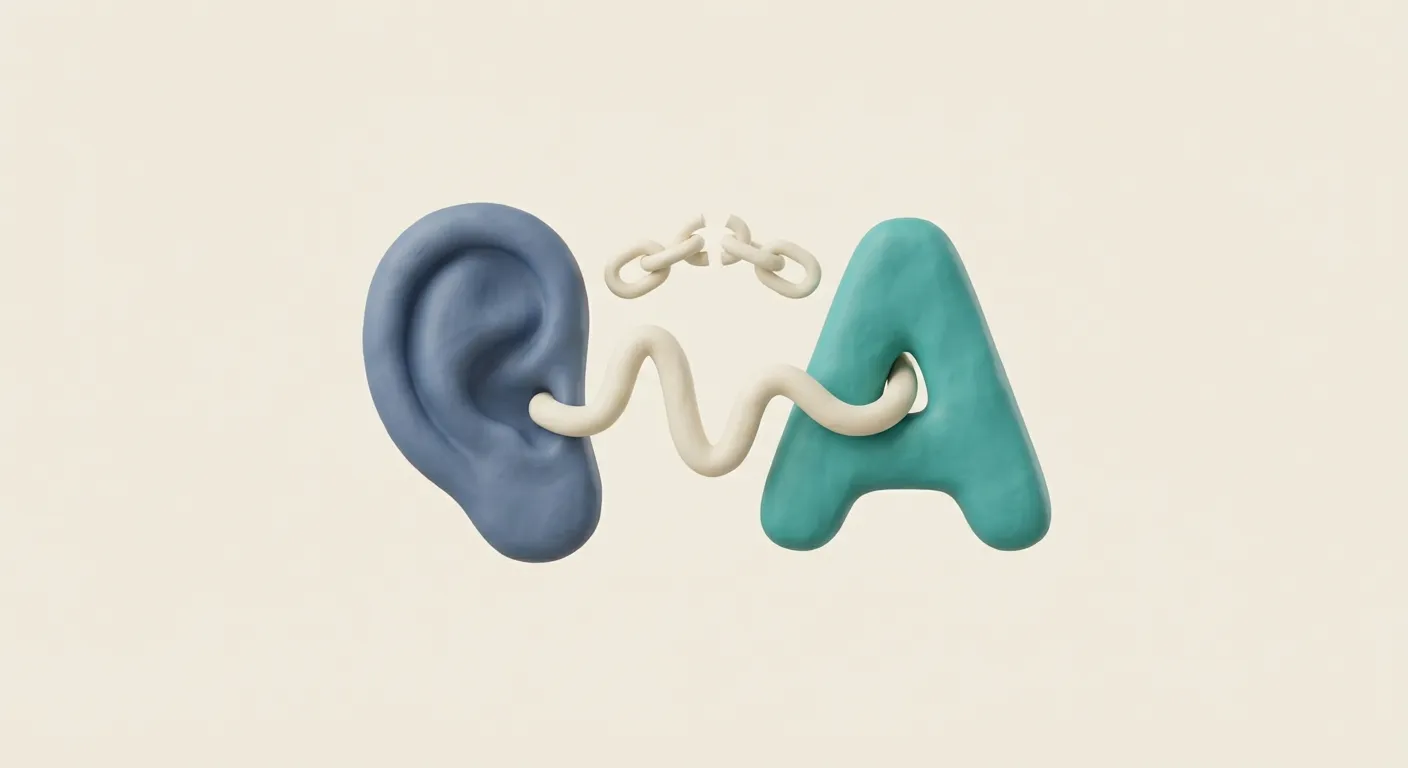
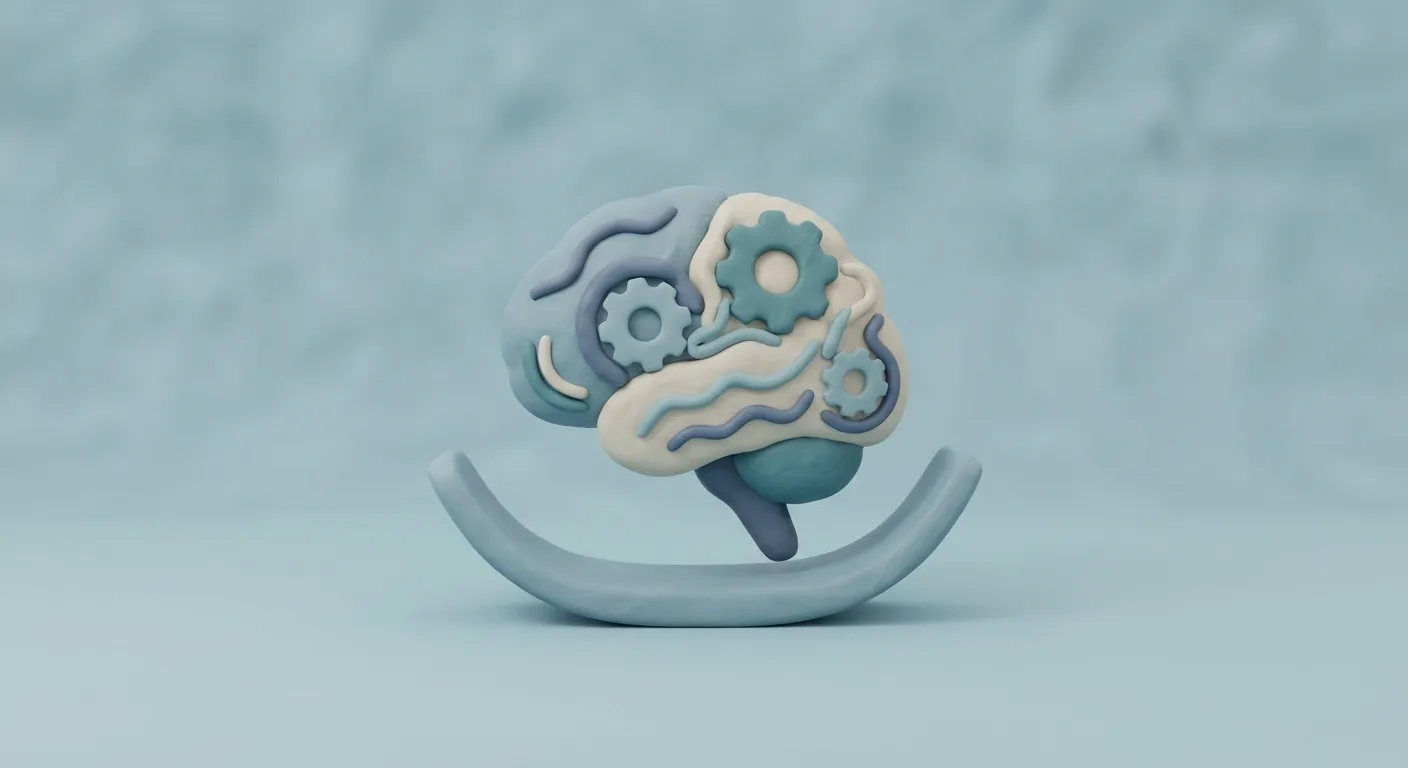
Dyslexia is a neurodevelopmental difference where the brain's left temporo-parietal region — the 'sound-to-symbol translator' — processes written language through alternative pathways. Affecting 15-20% of people globally with 40-60% heritability, it is one of the most common neurotypes. The same genes linked to reading challenges often boost spatial reasoning and big-picture thinking.
It's a difference in how the brain is wired, not a character flaw.
How many people out of 6 do you think have this?
Tap the icons to make your estimate.
fMRI studies confirm dyslexia is primarily a phonological processing difference — reduced activation in the left temporo-parietal region — not a visual problem. Letter reversals are a minor symptom, not the cause.
— Shaywitz, Overcoming Dyslexia (2003)How it looks vs. How it feels
The lived experience behind the observed behavior

What others see
Reading slowly with frequent pauses

On the inside
The Shimmer Effect

What others see
Misspelling common words repeatedly

On the inside
The Decoding Tax

What others see
Mixing up left and right directions

On the inside
The Flip Confusion

What others see
Mispronouncing long words

On the inside
The Sound Tangle

What others see
Writing that drifts across the page

On the inside
The Trapped Ideas
Neuroimaging reveals structural brain differences — including reduced gray matter in left posterior regions — present from birth, regardless of teaching quality or effort. Dyslexia is a neurodevelopmental variation, not an instructional failure.
— Norton et al., Neurobiology of Dyslexia (2015)Types of Dyslexia
Phonological Dyslexia
Difficulty analyzing sound structures in words. Linked to reduced activity in left inferior frontal gyrus.

Surface Dyslexia
Trouble recognizing whole words by sight. Associated with underactivation in .

Rapid Naming Deficit
Slow retrieval of familiar items. Tied to cerebellar differences affecting automaticity.

Attentional Dyslexia
Difficulty focusing on text amidst distractions. Overlaps with ADHD features.
Dyslexia affects readers in all languages studied, including Chinese, Arabic, and Hebrew. Prevalence varies by orthographic transparency — 3-6% in Italian vs 10-17% in English — but the underlying phonological deficit is universal.
— Journal of Cross-Cultural PsychologyThe Science of DYSLEXIA
The Why Behind The What
Understanding how dyslexic brains process language differently

The Phonological Bridge
The core challenge in dyslexia is connecting speech sounds (phonemes) to letters (graphemes). The left temporo-parietal region — the brain's 'sound-to-symbol translator' — shows reduced activation during reading tasks.

The Phonological Bridge
The core challenge in dyslexia is connecting speech sounds (phonemes) to letters (graphemes). The left temporo-parietal region — the brain's 'sound-to-symbol translator' — shows reduced activation during reading tasks.

The Right-Brain Detour
Successful dyslexic readers develop alternative neural pathways in right hemisphere regions. Instead of the typical left-brain reading route, they build contextual and visual routes that explain their strengths in big-picture thinking.

The Right-Brain Detour
Successful dyslexic readers develop alternative neural pathways in right hemisphere regions. Instead of the typical left-brain reading route, they build contextual and visual routes that explain their strengths in big-picture thinking.

The DCDC2 Trade-Off
The DCDC2 gene variant is associated with both reading challenges and enhanced spatial reasoning. This dual influence may explain why dyslexia persists evolutionarily — the same genes that affect reading boost 3D thinking.

The DCDC2 Trade-Off
The DCDC2 gene variant is associated with both reading challenges and enhanced spatial reasoning. This dual influence may explain why dyslexia persists evolutionarily — the same genes that affect reading boost 3D thinking.

The Alternative Route
Imagine a highway with a closed lane. Most drivers take the left lane to read. Dyslexic brains build scenic routes through the right hemisphere — slower for decoding, but rich with context, pattern, and meaning.
These differences are neurological, not motivational. Brain imaging consistently shows distinct patterns in reading networks, with compensatory strengths in spatial and narrative processing.
Visual Processing Simulation
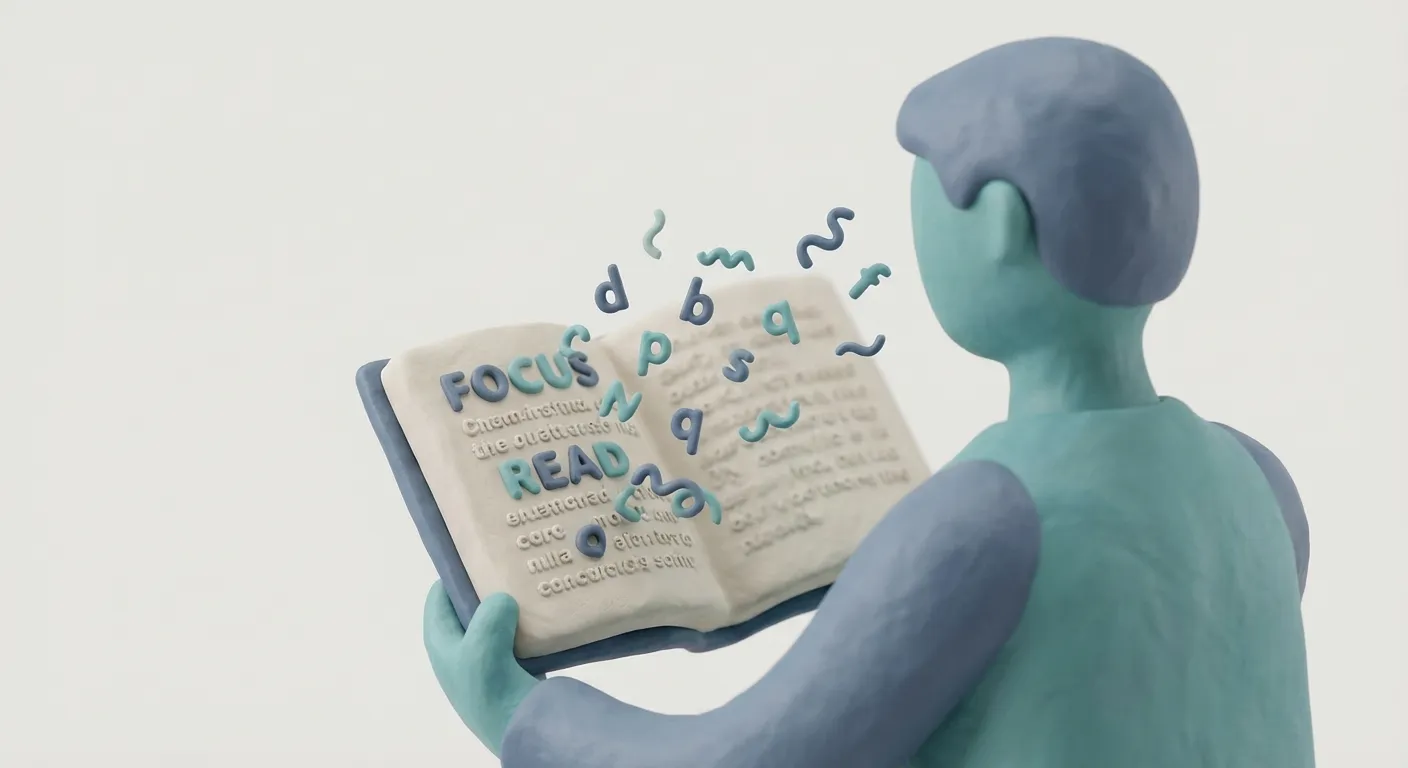
Experience: Letters may float, rotate, or swap (b/d, p/q). This simulates the "visual stress" some dyslexic brains experience.
Hover over the text to focus and "stabilize" it
Dyslexia has zero correlation with IQ. Studies show dyslexic individuals score across the full intelligence spectrum, and many high-achievers including engineers, CEOs, and scientists are dyslexic.
— International Dyslexia AssociationScientific Deep Dive
Explore Myths to Unlock
Earn 5 Insight Points

Does my brain read 'backwards'?
Neuroimaging Reveals Compensation Strategies: Recent fMRI studies show dyslexic adults reading complex texts activate right prefrontal regions for contextual analysis, while neurotypical readers use left phonological areas. This explains dyslexic strengths in big-picture thinking but slower decoding.

Two Sides of the Coin
Every neurological difference comes with trade-offs. The same trait that causes struggle in one context creates brilliance in another.
Phonological decoding
Breaking words into constituent sounds
Orthographic mapping
Memorizing irregular spellings (e.g., yacht)
Rapid automatized naming
Quickly retrieving known words
Working memory
Holding multiple instructions in mind simultaneously
Graphomotor skills
Coordinating handwriting movements
Time estimation
Judging task durations for assignment planning
The Kryptonite
The Superpowers
Phonological decoding
Breaking words into constituent sounds
Holistic problem-solving
Identifies patterns others miss in complex systems
Orthographic mapping
Memorizing irregular spellings (e.g., yacht)
Spatial intelligence
Excels in architecture, engineering, and 3D design fields
Rapid automatized naming
Quickly retrieving known words
Narrative reasoning
Creates compelling stories to explain abstract concepts
Working memory
Holding multiple instructions in mind simultaneously
Divergent thinking
Generates innovative solutions in entrepreneurship
Graphomotor skills
Coordinating handwriting movements
Resilience
Develops grit from overcoming daily reading challenges
Time estimation
Judging task durations for assignment planning
Contextual learning
Masters subjects through experiential methods
Longitudinal studies tracking dyslexic children into adulthood show the phonological processing difference persists throughout life, though compensatory strategies improve reading outcomes significantly over time.
— Annals of DyslexiaCommunity Voices
Real experiences
I graduated top of my class — with audiobooks, speech-to-text, and triple the study time. Dyslexia didn't stop me; the system almost did.
My brain doesn't read letters. It reads patterns, contexts, and meanings. I just get there by a different route.
Watching my son struggle with reading while building incredible LEGO structures taught me that intelligence has many languages.
I run a design firm. My dyslexia is my superpower for spatial thinking. The reading part? That's what assistants and technology are for.
The shame of being called lazy in school took decades to unlearn. Late diagnosis at 40 was both grief and liberation.
I don't think in words. I think in pictures, systems, and connections. My brain skips the text and goes straight to the meaning.
Think you might have Dyslexia?
Take our clinical-grade screening assessment. It takes less than 5 minutes and gives you instant insights.
Rewiring for Success
Stop trying to fix yourself. Start building a support system that works with your brain, not against it.
Tools for your brain
Built for this neurotype — not generic wellness
Frequently Asked Questions
Glossary of Terms
Co-occurring Conditions
Neurodivergent conditions often travel together. Understanding co-occurrence helps build a complete picture.
Click any condition to learn more. Co-occurrence percentages are from peer-reviewed research.
Further Reading
Explore related guides and resources
Understanding Dyslexia
AllHow dyslexia affects reading, writing, and processing language
When to Get Tested
AllSigns that suggest it is time to seek a learning difference assessment
Assessment Tools Compared
AllHow AskSheldon compares to other screening options
Overlapping Conditions
ParentsDyslexia often co-occurs with ADHD and other neurodivergent traits
Right to Choose
AllYour options for faster neurodevelopmental assessment
Scientific References
- Shaywitz, S. (2003). Overcoming Dyslexia. Knopf.
- International Dyslexia Association. (2020). Dyslexia Basics.
- Norton, E.S., et al. (2015). Neurobiology of Dyslexia.
- Peterson, R.L., & Pennington, B.F. (2015). Developmental Dyslexia.
- Dehaene, S. (2009). Reading in the Brain. Penguin.