Autistic Burnout Recovery: Timeline, Signs You're Healing, and What Actually Helps
The skills you used to have have gone quiet. Small talk, basic cooking, replying to a text -- things that were never exactly easy, but were possible. Now they are not. Your sensory tolerance has collapsed. Your executive function has stopped taking instructions. And the most frightening part: you cannot predict when, or whether, it lifts. This page is for you -- and for the people who love you and are trying to understand.
This guide draws on peer-reviewed autistic burnout research (Raymaker et al 2020, Mantzalas et al 2022) and neuroaffirming clinical practice. It is not a substitute for professional assessment or support.
You aren't depressed. You aren't lazy. You're in autistic burnout.
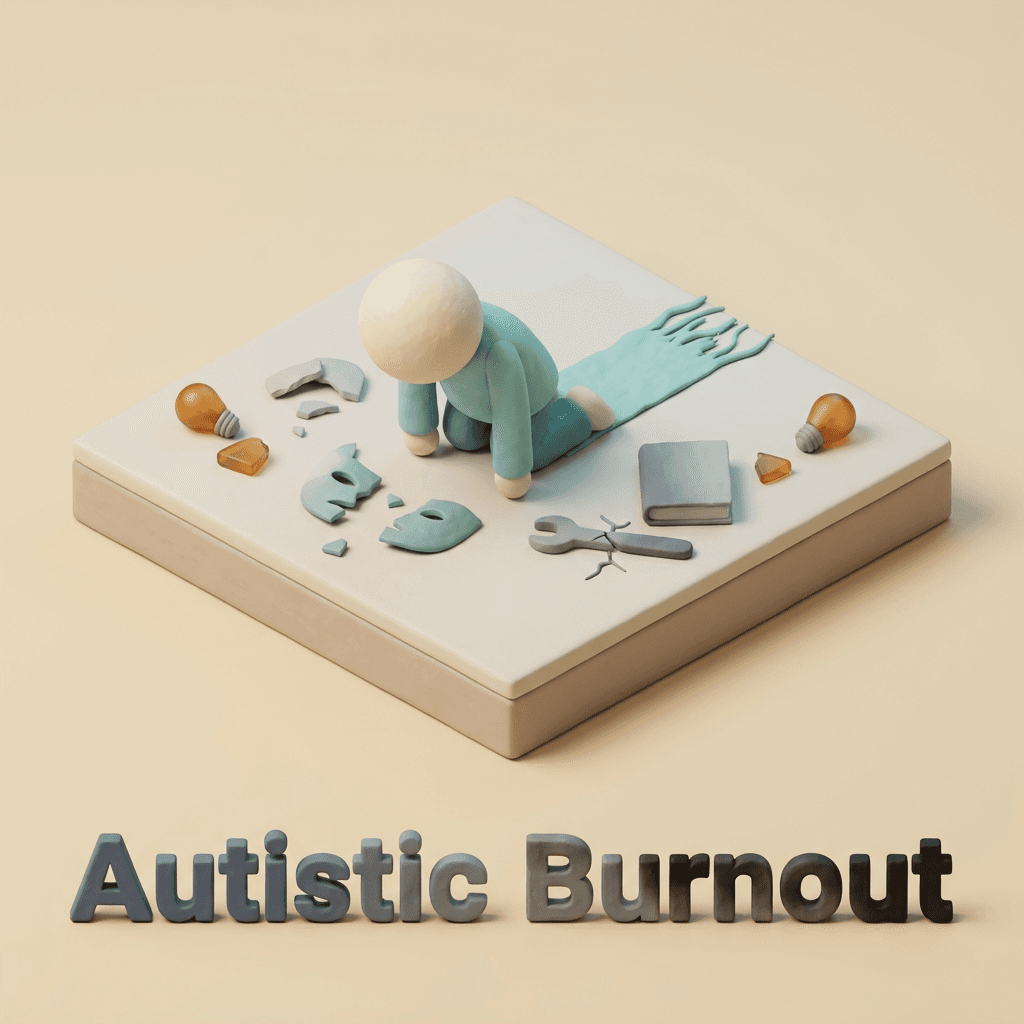
There is a specific kind of collapse that late-diagnosed autistic adults describe, and it does not match the word "burnout" as most people use it. It is not feeling stressed at work for a fortnight. It is not needing a holiday. It is the disappearance of capacities you spent decades building -- the social scripts you learned by painstaking observation, the sensory coping strategies you assembled over years, the executive scaffolding you relied on to move through a world not designed for your nervous system.
People in autistic burnout often describe being unable to speak fluently when they always could before. Cooking a meal with more than two steps becomes impossible. The inbox fills up. The friends stop getting replies. The body feels like it is running on a power supply that someone unplugged weeks ago, and pressing on anyway has only made the deficit worse.
If you are reading this in that state -- or reading it on behalf of someone you care about who is -- the first thing to know is that this is a recognised phenomenon. It has a name in the clinical literature. It has been described systematically by autistic researchers working with autistic participants. It is not a moral failing. It is not weakness. It is what happens when a nervous system that has been working in overdrive, without adequate support, finally runs out of runway.
The second thing to know is that recovery is possible. Not fast, not linear, and not by adding more. But possible. Read our deeper guide to autistic burnout if you are still trying to name what is happening. This page is about what comes after naming it: getting out.
What autistic burnout actually is -- and isn't

The most cited definition comes from Raymaker et al's 2020 qualitative study, which interviewed 56 autistic adults about their burnout experiences. Their definition is precise: autistic burnout is "a state of pervasive, long-term (typically 3+ months) exhaustion, loss of function, and reduced tolerance to stimulus, resulting from the accumulation of life stressors that exceed the individual's ability to cope given the available support." (Raymaker et al, 2020.)
Three words in that definition matter. Pervasive: this is not sector-specific fatigue from a difficult project. It bleeds into every part of life. Long-term: three months is the floor, not the ceiling. And loss of function: actual skill degradation, not just feeling tired. Speech, self-care, and social cognition can all become unreliable in ways that look alarming from the outside and terrifying from the inside.
Autistic burnout is often confused with several other things. Depression is the most common misdiagnosis (Mantzalos et al, 2022). The overlap in presentation is real -- low motivation, withdrawal, loss of pleasure in activities -- but the mechanism is different, and so is the treatment pathway. Occupational burnout, as defined in occupational psychology, typically lifts with rest and removal from the stressor; autistic burnout does not lift on that timescale because the stressor is not a job but an entire social and sensory environment built around neurotypical defaults.
Autistic regression -- a clinical term most commonly applied to early-childhood skill loss -- is a separate phenomenon. Adults using "regression" as a self-descriptor usually mean burnout. The distinction matters because the recovery pathway differs significantly. If you are unsure what you are experiencing, a neuroaffirming clinician who understands autistic burnout as distinct from depression is the right first port of call.
Why it's not in the DSM -- and why that matters for your treatment
Autistic burnout was named and documented by the autistic community before academic psychiatry caught up. As of DSM-5-TR (APA 2022), there is no entry for autistic burnout. It does not appear as a specifier, a subtype, or a differential diagnosis. This is not a minor administrative gap. It has clinical consequences.
When someone in autistic burnout presents to a GP or psychiatrist who has not been trained in this area, the presentation -- flat affect, social withdrawal, reduced speech, loss of interest in previously enjoyed activities, executive dysfunction -- looks almost identical to a depressive episode. SSRIs or SNRIs may be prescribed. These medications can be appropriate if major depressive disorder is co-occurring, but they do not address the core driver of autistic burnout: sustained masking, sensory overload, and unsupported executive demand stacked beyond the system's capacity.
A person can spend years on the wrong treatment pathway -- being told their low mood is treatment-resistant depression, cycling through medication adjustments -- when the actual intervention needed is structural: reduce the demand, build in sensory rest, find an environment that fits. Naming autistic burnout correctly is the prerequisite for treating it correctly.
The recovery timeline (the honest version)
There is no single timeline for autistic burnout recovery because there is no single burnout. A first episode after a life transition -- late diagnosis, relationship breakdown, new job with high masking demand -- can resolve in weeks if the demand is removed quickly. Severe burnout after decades of unrecognised masking can take years. What follows is a framework drawn from autistic-led research and neuroaffirming clinical practice. Treat it as a map, not a schedule.
Acute phase (weeks 1--8): stop
The only legitimate goal in this phase is reducing demand to the absolute minimum. Not reducing it to a comfortable level. To the floor. This means cancelling things, letting emails go unanswered, not performing wellness, and not trying to "use the time productively." Sensory rest is not optional decoration -- it is the active ingredient. Dim the lights. Remove the sounds. Eat simple food. Give yourself permission to be, in the plainest possible sense, useless for a while. This is not failure. It is the ground floor from which everything else becomes possible.
Stabilisation (months 2--6): fragments
Skills begin to come back in fragments. There will be a day where speech flows normally again. There will be a morning where making coffee feels possible rather than impossible. These moments are real, and they are signs. They are not evidence that recovery is complete. The most common reason autistic people crash back into acute burnout is that the early signs of return get read as "I'm fine now" -- and the demand goes back up before the system has actually stabilised. In this phase, the rule is: do not sprint. If you have 40% capacity and the day requires 30%, the answer is not to use the other 10% on something extra. It is to bank it.
Reconstruction (months 6+): new foundations
This is where most autistic people report something shifting that they did not expect. Not recovery to before -- before was the configuration that produced the burnout. But the beginning of a life built differently. New limits that are enforced rather than aspirational. A sensory environment designed for your nervous system, not borrowed from the neurotypical template. Work that fits, or at least fits better. The word "no" used earlier and more often. Many people describe this as the first time they have lived rather than performed living. Reconstruction is slow and it is not linear, but it is where the actual change happens.
Start your journey with AskSheldon
Free tools to explore, screen, and understand your neurodivergent mind.
What actually helps (the layered approach)
There is no single intervention that resolves autistic burnout. What the evidence and the autistic community consistently point to is a layered approach that addresses the structural drivers of burnout rather than treating the symptoms in isolation.
Sensory architecture
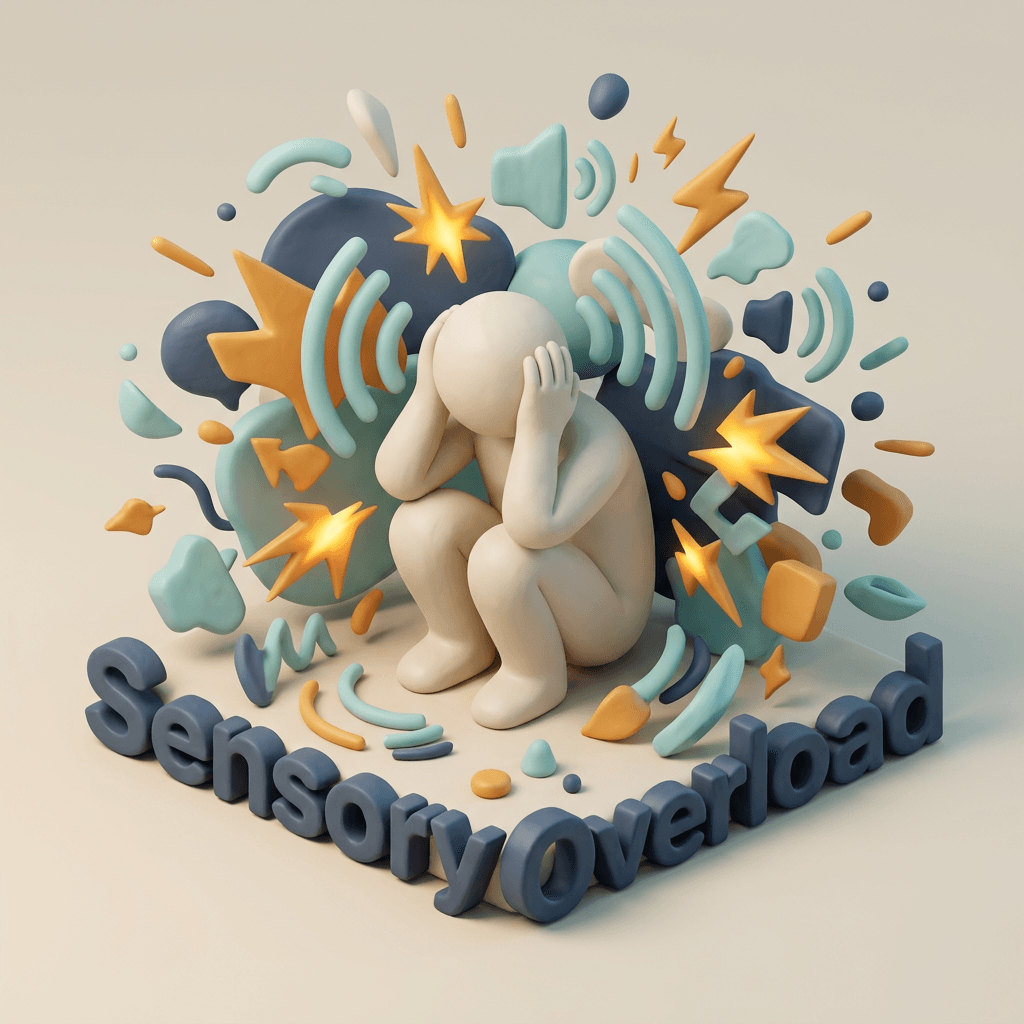
Noise-cancelling headphones are not a luxury -- they are standard recovery kit. The same applies to dim or warm lighting at home, weighted blankets, and a deliberate audit of the textures, scents, and sounds in your daily environment. What drains you? What restores you? Recovery often involves making the home genuinely sensory-safe rather than just tolerable. Our sensory overload toolkit walks through this inventory in practical detail.
Demand reduction
This is the hardest and the most important. Saying no to social events without negotiating or over-explaining. Batching administrative tasks into specific windows rather than letting them leak across the week. Asking for formal workplace accommodations, or taking medical leave if the burnout is severe enough to warrant it. Demand reduction is not laziness rebranded. It is the treatment.
Stim freely
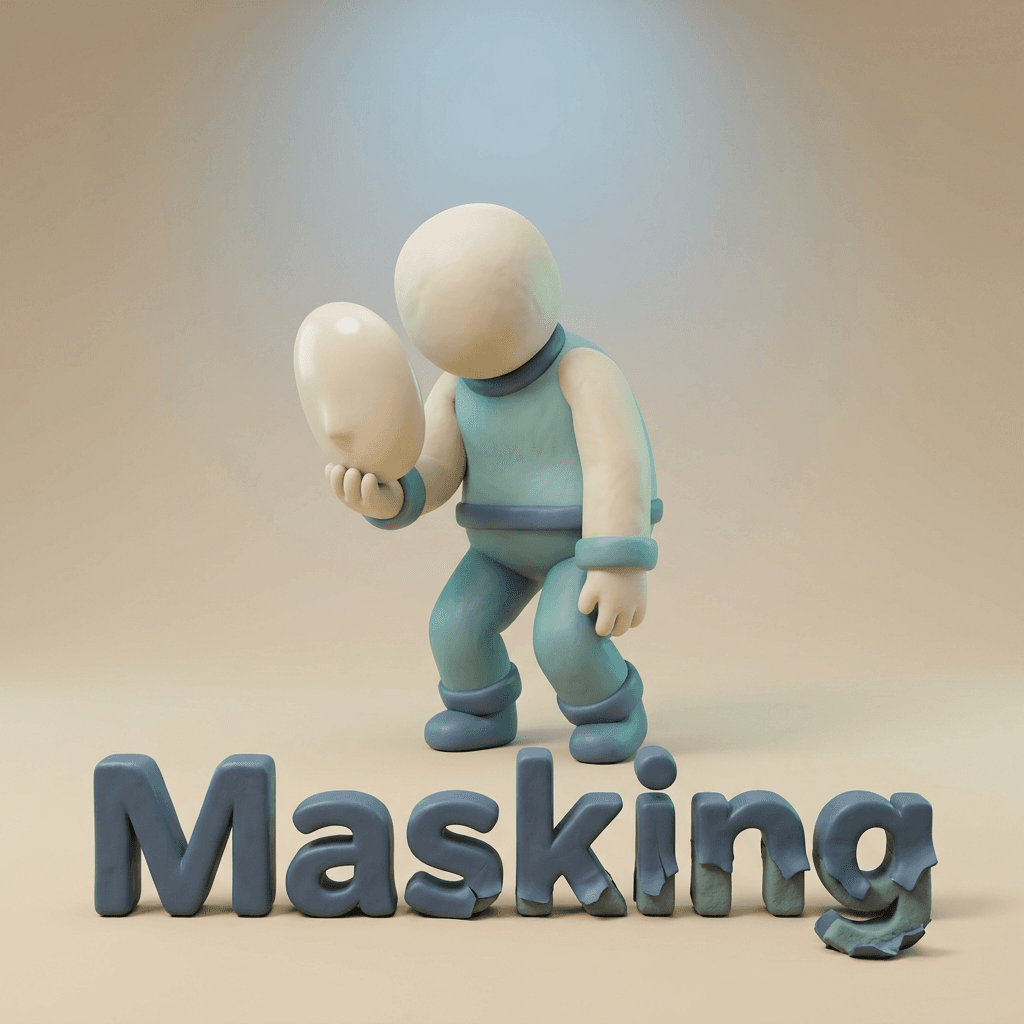
Masking suppression -- the sustained effort to appear neurotypical by hiding or suppressing autistic behaviours including stimming -- is one of the primary drivers of burnout (Raymaker et al, 2020). Unmasking is not a nice-to-have; it is recovery work. Stimming in private, in safe spaces, or incrementally in public settings where judgment is low gives the nervous system back some of its own regulation tools. See our guide to masking for more on this.
Connect with neurokin
Being chronically misunderstood is a load. It is an invisible and largely unmeasured load, but it is real and it accumulates. Autistic-led communities -- online forums, Discord servers, local groups -- offer something that even the best neurotypical support cannot: the experience of being understood without needing to explain. Research on autistic community connection consistently identifies it as protective. Even one relationship with another autistic person who "gets it" without translation can materially reduce the baseline load.
Therapy that genuinely gets it
Generic CBT for depression is not the right tool for autistic burnout. CBT models typically aim to change thoughts and behaviours -- but in burnout, the thoughts are often accurate (the environment is genuinely demanding too much), and changing behaviour without changing the environment just shifts the load. Neuroaffirming therapy -- from a clinician who understands autistic burnout as distinct from depression and who works with the autistic nervous system rather than against it -- is what to look for. Use our screening tests to begin building your picture before talking to a clinician.
Medication if depression is co-occurring
SSRIs and SNRIs may be appropriate if major depressive disorder is layered on top of burnout, and a psychiatrist who knows both conditions should be involved in that decision. But the key clinical distinction is this: medication treats the mood disorder; it does not address the burnout. The burnout requires demand reduction. Treating only the depression while leaving the autistic person in the same sensory and social environment that caused the burnout is unlikely to produce lasting recovery (Mantzalos et al, 2022).
Signs you're actually recovering

Recovery from autistic burnout is not announced. It arrives quietly, in small moments that can be easy to dismiss or, worse, to overinterpret as full recovery before they are. Knowing what early recovery actually looks like helps you trust the process without sprinting ahead of it.
- Tolerance for ordinary sound returning incrementally -- background noise in a coffee shop becomes neutral rather than painful.
- Replying to one or two messages without dread -- not all of them, just one or two.
- Cooking something that requires more than one step -- the sequence of instructions loading in order rather than dissolving.
- Being able to imagine the future -- not plan it, not optimise it, just imagine that there will be one. This often comes before energy returns.
- Curiosity returning before energy does -- the particular autistic interest-flicker that had gone quiet starts to light up again, even when the body is still tired.
- The first laugh that feels real -- not performed, not social, but something that actually reached the inside.
Each of these is a signal, not a finish line. When they arrive, the task is to notice them, be glad of them, and keep the demand low anyway.
Frequently asked questions
How long does autistic burnout last?
Autistic burnout typically lasts months to years, not days or weeks (Raymaker et al, 2020). Mild episodes can resolve in weeks if demand drops fast and rest is genuine. Severe burnout -- especially after years of masking -- can take 1-3 years to fully recover from. Speed of recovery depends almost entirely on how much demand you can take off the system, not on how much therapy you add.
Is autistic burnout the same as depression?
No. Depression is a mood disorder with biological and psychological drivers, often responsive to SSRIs and CBT. Autistic burnout is a state of chronic exhaustion driven by sustained masking, sensory overload, and unsupported executive demand. The two can co-occur, and burnout often gets misdiagnosed as depression. The treatments differ -- burnout requires demand reduction first; depression can require pharmacological treatment alongside.
Can autistic burnout cause skill loss?
Yes. Loss of previously acquired skills -- speech, executive function, social interaction, self-care -- is one of the defining features of autistic burnout (Raymaker et al, 2020). Skills typically return as the burnout lifts, though some autistic people report lasting changes after severe episodes. Skill loss is not regression and not damage -- it is the nervous system protecting itself.
Can you get autistic burnout if you're not diagnosed?
Yes. Many autistic adults experience burnout before they know they're autistic -- the burnout is often what brings them to seek assessment. The condition that drives burnout (masking under chronic neurotypical demand) does not require a formal diagnosis to occur.
What's the difference between autistic burnout and autistic regression?
Burnout is a temporary state of exhaustion and skill loss tied to overload, with most skills returning as the system recovers. Autistic regression is a clinical term used differently in different contexts -- most commonly to describe early-childhood loss of skills, which is a separate phenomenon. Adults using the word 'regression' for what they experience usually mean burnout.
Should I tell work I'm in autistic burnout?
It depends on your relationship with your employer, the protections in your country, and whether you have a formal diagnosis. In the UK, autism is a disability under the Equality Act 2010, with the right to reasonable adjustments. In India, the RPWD Act 2016 offers protections. Many autistic adults negotiate adjustments without naming burnout -- through clinician sick notes, requested adjustments, or formally filed flexible-working applications.
Will I burn out again?
Without changes to the underlying drivers -- chronic masking, sensory unfit environments, demand stacked beyond capacity -- yes, recurrence is common. The path that reduces recurrence is structural: lower-demand work, sensory-fit home, autistic community, unmasking where it is safe, and saying no much earlier and more often than feels socially comfortable.
Start your journey with AskSheldon
Free tools to explore, screen, and understand your neurodivergent mind.
Built by neurodivergent minds. 30+ conditions explored. Always free.
Sources
- Raymaker, D. M., Teo, A. R., Steckler, N. A., Lentz, B., Scharer, M., Delos Santos, A., Kapp, S. K., Hunter, M., Joyce, A., & Nicolaidis, C. (2020). "Having All of Your Internal Resources Exhausted Beyond Measure and Being Left with No Clean-Up Crew": Defining Autistic Burnout. Autism in Adulthood, 2(2), 132--143.
- Mantzalos, J., Richdale, A. L., Arnold, S., Dissanayake, C., & Trollor, J. (2022). What We Know and Don't Know About Autistic Burnout. Frontiers in Psychiatry, 13.
- American Psychiatric Association. (2022). Diagnostic and Statistical Manual of Mental Disorders, Fifth Edition, Text Revision (DSM-5-TR). Washington, DC.