Masking
Also known as: Camouflaging
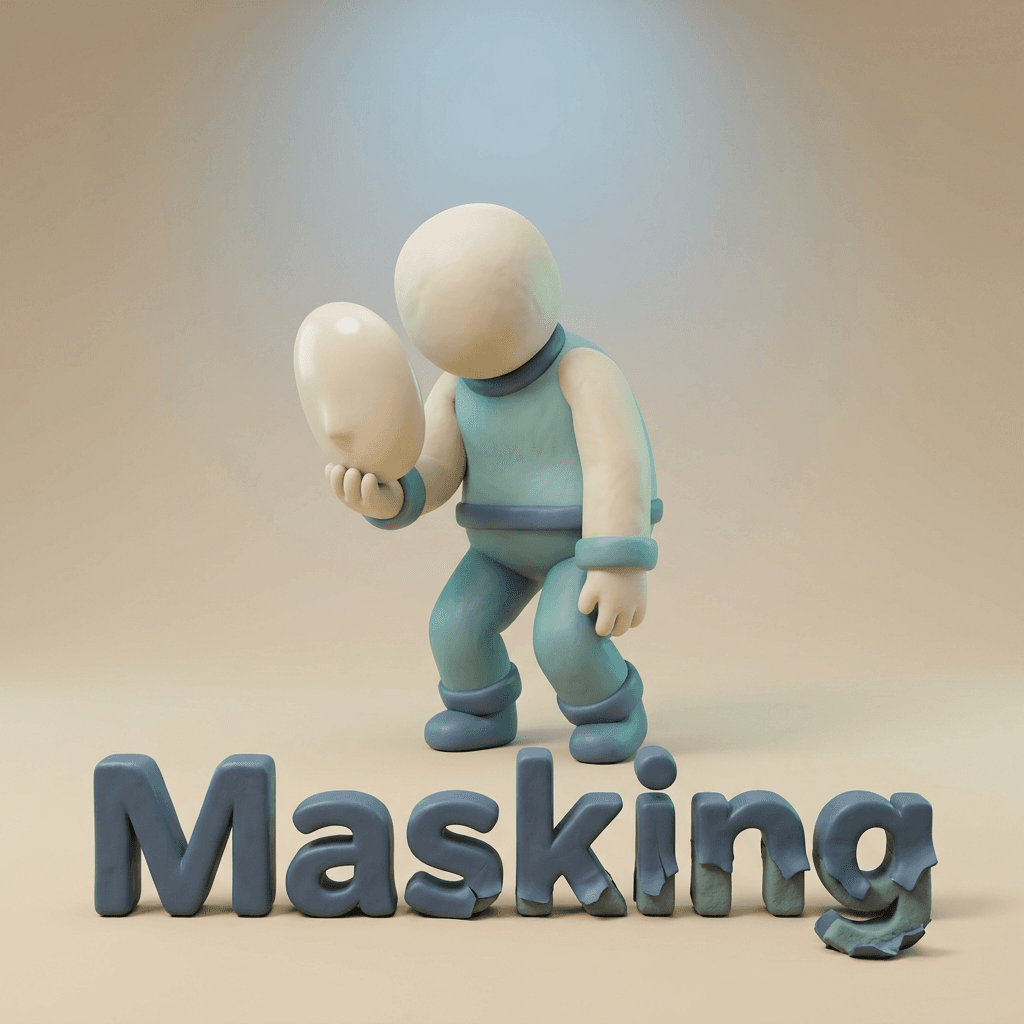
You're not fake — you've just been running a full-time performance so other people feel comfortable.
Consciously or unconsciously suppressing natural behaviours and performing learned social scripts to appear neurotypical. Can include forcing eye contact, rehearsing small talk, hiding stimming, and monitoring facial expressions constantly. Effective in the short term for social survival, but extremely costly — linked to burnout, anxiety, depression, and delayed diagnosis.
How it works
Your brain studies how people around you move, speak, and react, then builds a 'social costume' it can put on in different situations. To keep that costume in place, your brain uses a lot of executive function — tracking your face, voice, body, words, and the other person's reactions all at once. Over time, this constant self-editing overloads your nervous system and can blur your sense of who you really are.
Think of it like
It's like acting in a play that never ends — you remember everyone's lines and cues, but you're never allowed to step off stage and breathe.
What it feels like
You walk through the day on high alert, always checking 'Am I doing it right?' and crashing the moment you're finally alone. You might not fully know where the performance ends and you begin.