Bipolar Disorder | AskSheldon
Bipolar Disorder

What is Bipolar?

Bipolar disorder is a condition where the brain shifts between distinct neurobiological states — episodes of mania and depression — each with measurable changes in brain activity, dopamine signaling, and circadian rhythms. Affecting ~2.4% of the population with 60-80% heritability, it is driven by genetics and neurodevelopment, not personality.

1 in 40people affected
2.4%prevalence
Normal IQ range

How does Bipolar present?

  • Hyperfocused productivity then sudden stop
  • Speaking fast, agitated movement
  • Major decisions made in minutes
  • Disappearing from social life
  • Restless agitation

Types of Bipolar

  • Bipolar I(1%)
  • Bipolar II(1.1%)
  • Cyclothymia(0.3%)

Common questions about Bipolar

Is bipolar disorder caused by a chemical imbalance?

While neurotransmitter imbalances occur during episodes, bipolar involves complex neurodevelopmental factors. Dopamine and serotonin fluctuations are symptoms rather than root causes. Genetic studies show differences in ion channel and circadian clock genes that affect entire neural networks.

Can you have bipolar without medication?

While some manage mild cases with lifestyle changes, 80% of untreated cases worsen over time. Medication prevents the neurotoxic effects of repeated episodes. Studies show lithium increases gray matter volume in key regions over years.

Content reviewed against DSM-5 criteria and current clinical literature. This page is for educational purposes and does not constitute medical advice. Consult a qualified healthcare professional for diagnosis or treatment.

Bipolar Disorder

Bipolar Disorder

Could this be me?

Bipolar DisorderAudio Coming Soon

We're crafting an audio guide for this condition. Get notified when it drops.

What actually is it?

Bipolar disorder is a condition where the brain shifts between distinct neurobiological states — episodes of mania and depression — each with measurable changes in brain activity, dopamine signaling, and circadian rhythms. Affecting ~2.4% of the population with 60-80% heritability, it is driven by genetics and neurodevelopment, not personality. These are different brain configurations, not 'moodiness'.

It's a difference in how the brain is wired, not a character flaw.

Quick Guess

How many people out of 40 do you think have this?

Tap the icons to make your estimate.

Bipolar episodes last weeks to months — manic episodes average 3-6 months untreated, and depressive episodes 6-12 months. These are sustained neurobiological states, not momentary mood fluctuations.

American Journal of Psychiatry
Tap to Start Myth Busting

How it looks vs. How it feels

The lived experience behind the observed behavior

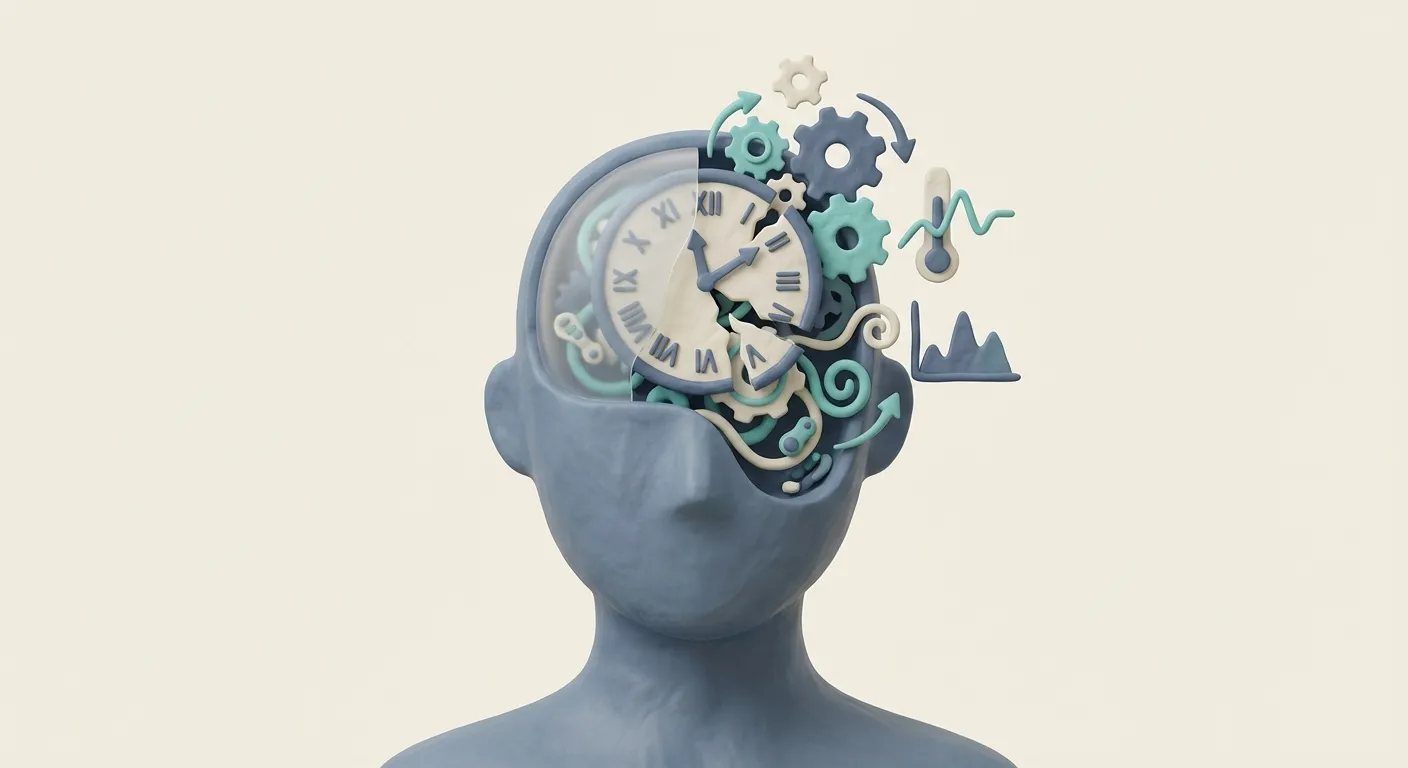
Hyperfocused productivity then sudden stop — The Time Warp

Tap to see inside

What others see

Hyperfocused productivity then sudden stop

The Time Warp
Tap to flip back

On the inside

The Time Warp

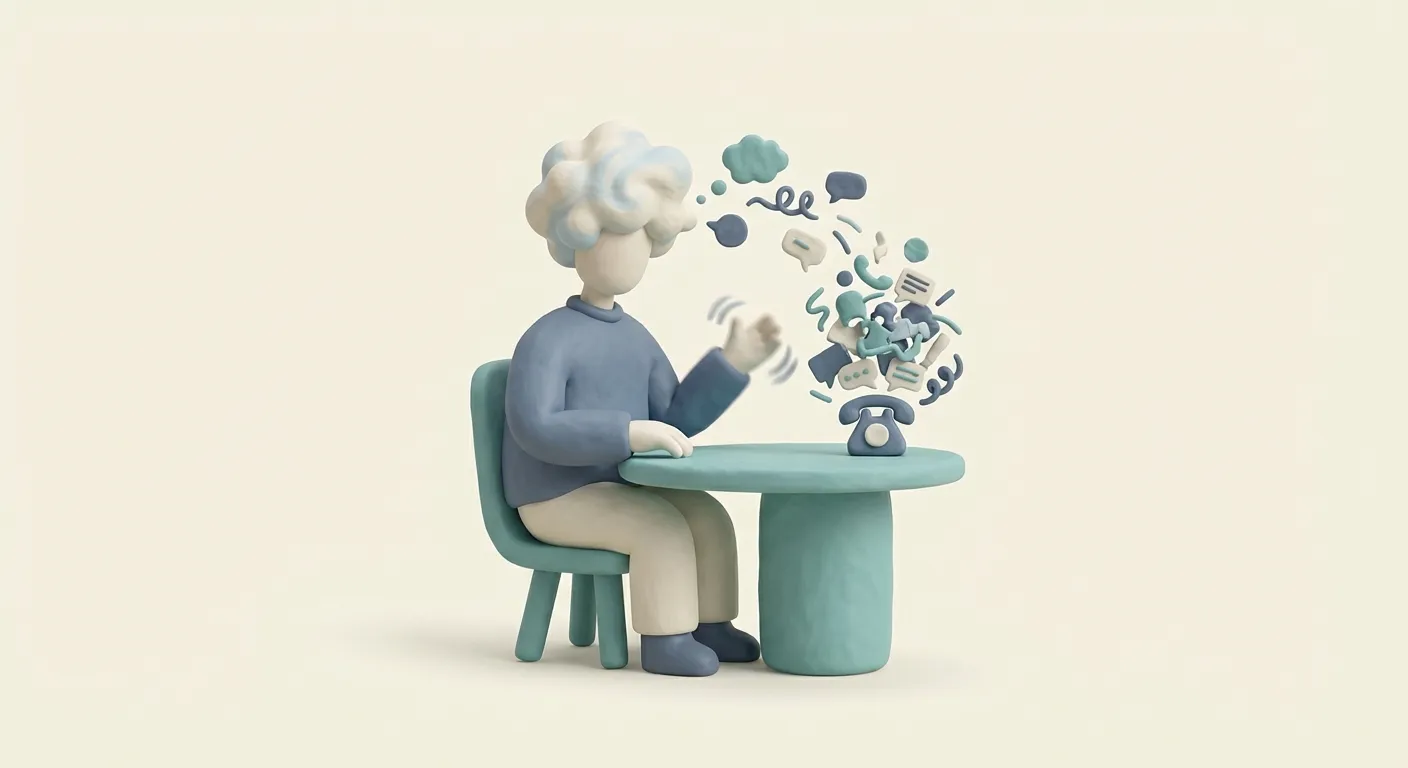
Hours vanish—I'm producing at superhuman speed, unstoppable. Then the engine dies without warning. The transition from brilliance to blank screen can happen in a single day.
Speaking fast, agitated movement — The Split State
Tap to see inside

What others see

Speaking fast, agitated movement

The Split State
Tap to flip back

On the inside

The Split State

My mouth is racing and my body won't stop moving, but underneath the speed there's an emotional hollowness. Energy and despair coexist—I'm simultaneously on fire and falling apart.

Major decisions made in minutes — The Knowledge Gap
Tap to see inside

What others see

Major decisions made in minutes
The Knowledge Gap
Tap to flip back

On the inside

The Knowledge Gap

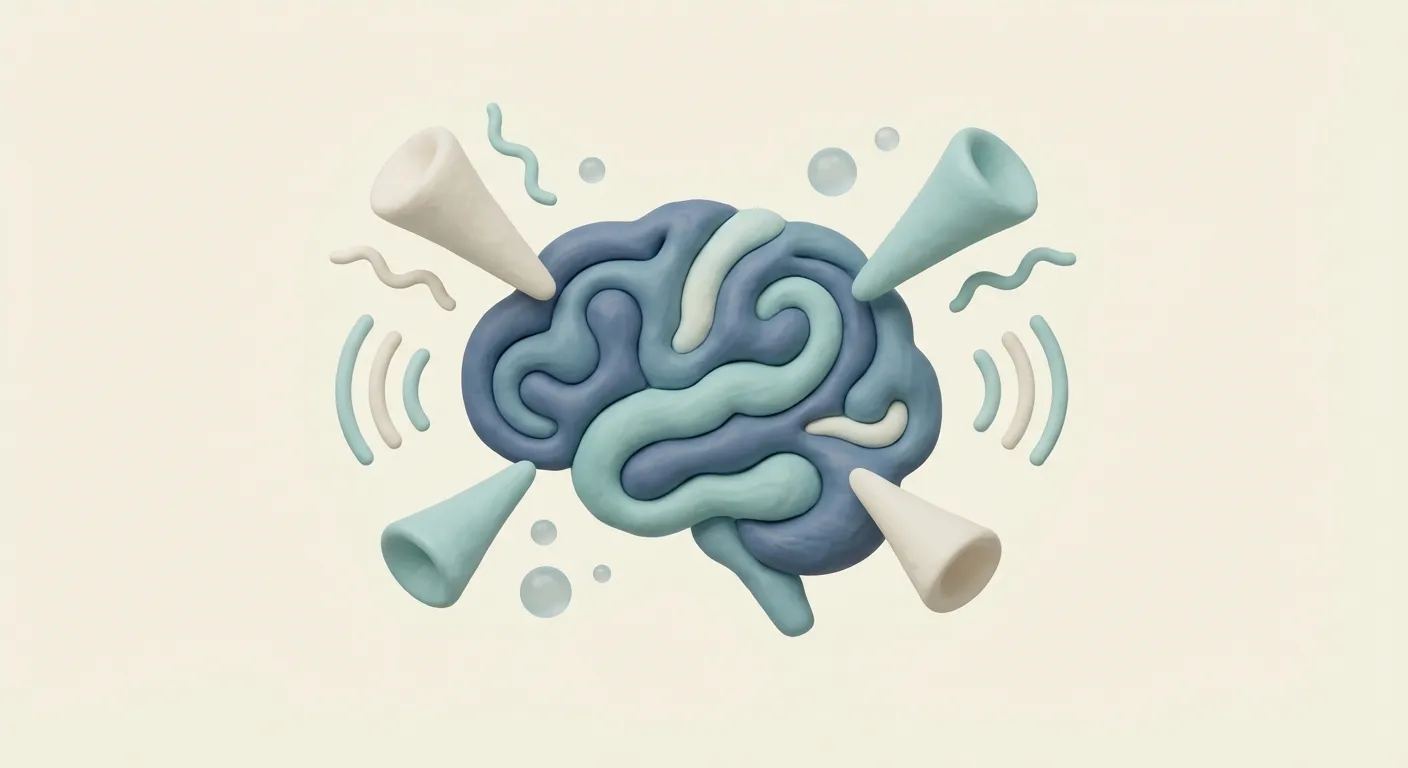
Last week I produced brilliance; this week I can barely start. Each version felt equally like 'me' at the time, but I can't access the other state's abilities from here.

Disappearing from social life — The Inner Critic
Tap to see inside

What others see

Disappearing from social life

The Inner Critic
Tap to flip back

On the inside

The Inner Critic

Depression brought a prosecutor cataloging every social failure on loop. Seeing people means performing okay-ness I can't muster. I withdraw because connection requires energy I don't have.

Restless agitation — The Hidden Exhaustion
Tap to see inside

What others see

Restless agitation

The Hidden Exhaustion
Tap to flip back

On the inside

The Hidden Exhaustion

My legs won't stop moving, my hands keep fidgeting—but underneath the agitation is bone-deep depletion. This restlessness isn't energy; it's my nervous system misfiring on empty.

Work quality varies dramatically — The Two Workers
Tap to see inside

What others see

Work quality varies dramatically

The Two Workers
Tap to flip back

On the inside

The Two Workers

One week my brain produces brilliance without effort. The next, it can barely start a sentence. Colleagues see inconsistency; I see two versions of myself taking turns at the same desk—and I can't control who shows up.

Twin studies demonstrate 60-80% heritability for bipolar disorder, with over 200 genetic loci identified. Environmental factors like parenting style account for less than 10% of variance.

Nature Genetics
Tap to Start Myth Busting

Types of Bipolar Disorder

Bipolar I: Defined by manic episodes lasting ≥7 days. High energy extremes often requiring hospitalization.
Type 11%

Bipolar I

Defined by manic episodes lasting ≥7 days. High energy extremes often requiring hospitalization.

Full Manic Episodes
Depressive Episodes
High Energy
Risk of Psychosis
Bipolar II: Hypomanic episodes (less severe highs) alternating with severe, often debilitating depression.
Type 21.1%

Bipolar II

Hypomanic episodes (less severe highs) alternating with severe, often debilitating depression.

Hypomania
Severe Depression
No Psychosis
Rapid Cycling Risk
Cyclothymia: Chronic, fluctuating mood disturbance involving numerous periods of hypomanic and depressive symptoms.
Type 30.3%

Cyclothymia

Chronic, fluctuating mood disturbance involving numerous periods of hypomanic and depressive symptoms.

Chronic Instability
Milder Symptoms
Long Duration
Emotional Liability

Full mania causes cognitive disorganization in 73% of patients, including flight of ideas, impaired judgment, and inability to complete projects — contrasting sharply with hypomania's occasional creative boost.

Bipolar Disorders Journal
Tap to Start Myth Busting

The Science of BIPOLAR

The Biological Rhythm

Understanding the neurobiology of Bipolar Disorder

Circadian Disruption: Bipolar disorder is fundamentally linked to the body's internal clock. Disruptions in sleep-wake cycles often trigger episodes.
Chronobiology

Circadian Disruption

Bipolar disorder is fundamentally linked to the body's internal clock. Disruptions in sleep-wake cycles often trigger episodes.

Neuroplasticity & BDNF: Episodes can cause wear and tear on neurons, but treatment (like Lithium) helps rebuild these connections (neurogenesis).
Neurology

Neuroplasticity & BDNF

Episodes can cause wear and tear on neurons, but treatment (like Lithium) helps rebuild these connections (neurogenesis).

Reward System Sensitivity: The bipolar brain has a hypersensitive reward system. Small wins feel huge (mania), and small losses feel catastrophic (depression).
Dopamine

Reward System Sensitivity

The bipolar brain has a hypersensitive reward system. Small wins feel huge (mania), and small losses feel catastrophic (depression).

The Seasonal Climate: Think of it not as weather (moods), but as changing climates. Mania is a scorching summer; depression is a frozen winter. The challenge is surviving the extreme seasons.
The Mechanics

The Seasonal Climate

Think of it not as weather (moods), but as changing climates. Mania is a scorching summer; depression is a frozen winter. The challenge is surviving the extreme seasons.

These states are biological, not character flaws. Treatment is about stabilizing the climate, not flattening the landscape.

Studies show that with proper treatment, individuals with bipolar disorder spend approximately 50-60% of their time in euthymic (stable, symptom-free) states between episodes.

Journal of Clinical Psychiatry
Tap to Start Myth Busting
Restricted Access

Scientific Deep Dive

Explore Myths to Unlock

Earn 5 Insight Points

Illustration for Deep Dive fact 1
1 / 5

Is my brain wired for intensity?

Neuroimaging reveals bipolar brains have 30% more dendritic spines in reward-processing regions, potentially explaining heightened emotional sensitivity. This structural difference may facilitate both creative insights and mood instability.

Unlock Answer
Two Sides of the Coin

Two Sides of the Coin

Every neurological difference comes with trade-offs. The same trait that causes struggle in one context creates brilliance in another.

Inconsistency

Difficulty maintaining routines or long-term projects across episodes.

Impulsivity

Financial or social risks taken during high-energy states.

Sleep Disruption

Vulnerability to sleep loss triggering episodes.

A 2020 meta-analysis found that lithium at therapeutic doses preserves cognitive function and actually increases gray matter volume by 3-5%, countering claims that mood stabilizers suppress personality.

The Lancet Psychiatry
Tap to Start Myth Busting

Community Voices

Real experiences

The high feels like God is whispering in your ear, but the crash feels like the world is made of lead.

Dakota F.
22

Routine is a medicine I hate taking, but it's the only thing that keeps the waves from becoming tsunamis.

Emery V.
39

I'm not 'moody'. I'm navigating a brain that occasionally forgets how to regulate its own energy.

Finley G.
16

The hardest part is not knowing which 'me' is going to wake up tomorrow.

Harper J.
33

Lithium didn't take away my creativity; it just gave me the stability to actually finish my projects.

Rowan E.
50

Stability isn't boring. Stability is the foundation that allows me to actually live my life.

Skyler A.
27

Think you might have Bipolar Disorder?

Take our clinical-grade screening assessment. It takes less than 5 minutes and gives you instant insights.

Rewiring for Success

Stop trying to fix yourself. Start building a support system that works with your brain, not against it.

Therapy

  • CBT for Bipolar
    Targets cognitive distortions in both depressive and manic states. Teaches thought-challenging techniques specific to episode types.
  • Interpersonal Social Rhythm
    Stabilizes circadian rhythms through consistent sleep/eating schedules - critical for preventing episodes.
  • Family-Focused Therapy
    Trains families to recognize early episode signs and improve communication patterns.
  • Mindfulness-Based CT
    Enhances emotional regulation through body scanning and non-judgmental awareness practices.

Medication

  • Lithium Carbonate
    Gold-standard mood stabilizer. Modulates glutamate/GABA balance and increases gray matter volume. Requires regular blood monitoring.
  • Valproate
    Anticonvulsant stabilizing sodium channels. Effective for rapid cycling. Caution in pregnancy.
  • Lurasidone
    Atypical antipsychotic for bipolar depression. Targets serotonin 5-HT7 receptors with lower metabolic risk.
  • Lamotrigine
    Glutamate regulator for depression prevention. Slow titration reduces rash risk.

Lifestyle

  • Circadian Hygiene
    Fixed sleep-wake times using light therapy. Critical for rhythm stabilization.
  • Activity Pacing
    Balancing productivity with energy conservation using time-blocking techniques.
  • Mood Tracking
    Daily logging of sleep, energy, and irritability to detect episode precursors.
  • Substance Avoidance
    Strict avoidance of alcohol/cannabis which disrupt mood stability.

Supplements

  • Omega-3 (EPA)
    May reduce inflammation in mood circuits. 1-2g/day (Consult doctor).
  • N-Acetylcysteine
    Glutathione precursor showing modest mood stabilization (Consult doctor).
  • Melatonin
    Low-dose (0.3mg) for circadian resetting (Consult doctor).
  • Vitamin D
    Correct deficiency linked to worse outcomes (Consult doctor).

Environment

  • Lighting Control
    Amber evening lighting to support melatonin production.
  • Stimulus Filtering
    Noise-cancelling headphones for sensory overload management.
  • Crisis Planning
    Pre-arranged emergency contacts and treatment agreements.
  • Workplace Adjustments
    Flexible scheduling accommodations for episodic disability.

Body

  • Aerobic Exercise
    30 mins daily to regulate HPA axis and BDNF levels.
  • Yoga/Tai Chi
    Combines movement with breath awareness for mood regulation.
  • Medical Monitoring
    Regular metabolic screenings for medication side effects.
  • Sleep Studies
    Polysomnography to detect comorbid sleep disorders.
FAQ

Frequently Asked Questions

Glossary of Terms

Co-occurring Conditions

Neurodivergent conditions often travel together. Understanding co-occurrence helps build a complete picture.

Click any condition to learn more. Co-occurrence percentages are from peer-reviewed research.

Scientific References

  1. National Institute of Mental Health. (2023). Bipolar Disorder.
  2. Mayo Clinic. (2024). Bipolar disorder diagnosis & treatment.
  3. Cleveland Clinic. (2023). Bipolar disorder symptoms & treatment.
  4. Smith et al. (2023). Evolutionary aspects of bipolar disorder. Journal of Psychiatric Research.
  5. Patel. (2023). Circadian rhythms in mood disorders. Neuroscience Reviews.

Your range of emotion is a canvas, not a chaos.