Attention Deficit Hyperactivity Disorder | AskSheldon
Attention Deficit Hyperactivity Disorder

What is ADHD?

ADHD is 74% heritable — as genetic as height. About 5% of adults worldwide have it, meaning in any room of 20 people, one is likely managing attention that works on different rules.

1 in 20people affected
5%prevalence
Normal IQ range

How does ADHD present?

  • Starting 10 projects but finishing none
  • Forgetting to eat or drink for 8 hours
  • Chronically late to everything
  • Exhausted after a 'simple' day
  • Suddenly losing motivation to work

Types of ADHD

  • Inattentive(20-30%)
  • Hyperactive-Impulsive(15-20%)
  • Combined Type(50-60%)

Common questions about ADHD

Why get diagnosed if ADHD isn't curable?

Diagnosis provides access to neural understanding and accommodations. Studies show diagnosis reduces self-blame and increases self-compassion. While not curable, 80% of adults report improved functioning with proper support [3][9].

How does ADHD affect emotional regulation?

Dopamine/norepinephrine imbalances impair prefrontal-amygdala communication. This causes intense emotional reactions and slow return to baseline. Strategies like 'emotional first aid' (naming feelings, rhythmic breathing) can help restore balance [7][9].

Content reviewed against DSM-5 criteria and current clinical literature. This page is for educational purposes and does not constitute medical advice. Consult a qualified healthcare professional for diagnosis or treatment.

Attention Deficit Hyperactivity Disorder

Attention Deficit Hyperactivity Disorder

Could this be me?

What actually is it?

ADHD is 74% heritable — as genetic as height. About 5% of adults worldwide have it, meaning in any room of 20 people, one is likely managing attention that works on different rules. It's not a discipline problem. Dopamine and norepinephrine signalling is wired differently, affecting executive functions like focus, impulse control, and task initiation. Not a failure of willpower — a different neurological fuel system.

It's a difference in how the brain is wired, not a character flaw.

Quick Guess

How many people out of 20 do you think have this?

Tap the icons to make your estimate.

ADHD is a neurodevelopmental condition with clear differences in brain structure and function, backed by decades of research. Brain imaging shows altered dopamine systems.

NIMH
Tap to Start Myth Busting

How it looks vs. How it feels

The lived experience behind the observed behavior

Starting 10 projects but finishing none — The Novelty Rush
Tap to see inside

What others see

Starting 10 projects but finishing none

The Novelty Rush
Tap to flip back

On the inside

The Novelty Rush

The beginning is electric. Once the 'puzzle' is solved in my head, the manual labor of finishing feels like torture.

Forgetting to eat or drink for 8 hours — The Flow State
Tap to see inside

What others see

Forgetting to eat or drink for 8 hours

The Flow State
Tap to flip back

On the inside

The Flow State

Hyperfocus is a double-edged sword. I am not choosing to ignore my body; I literally cannot hear its signals right now.

Chronically late to everything — The Now Puddle
Tap to see inside

What others see

Chronically late to everything

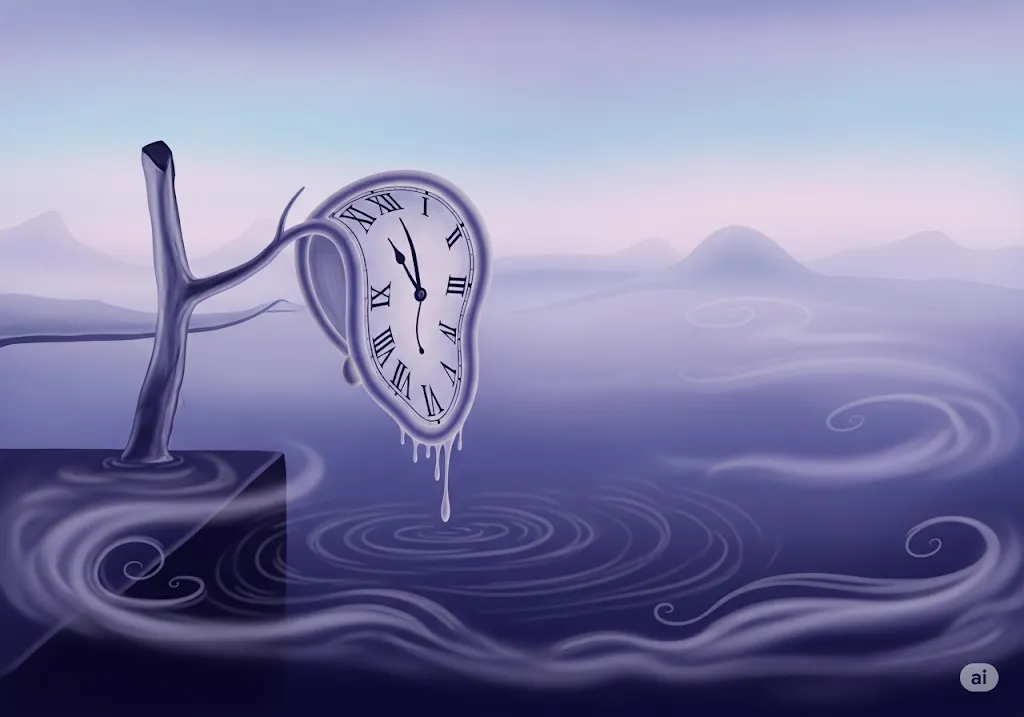
The Now Puddle
Tap to flip back

On the inside

The Now Puddle

Future time is an abstract concept. Only the immediate 'Now' has weight. I am not being disrespectful; I am lost in the current moment.

Exhausted after a 'simple' day — Dopamine Debt
Tap to see inside

What others see

Exhausted after a 'simple' day

Dopamine Debt
Tap to flip back

On the inside

Dopamine Debt

Navigating a neurotypical world requires manually doing what others do automatically. It's like walking up a down-escalator all day.

Suddenly losing motivation to work — The Wall
Tap to see inside

What others see

Suddenly losing motivation to work

The Wall
Tap to flip back

On the inside

The Wall

If a task lacks Interest, Challenge, Novelty, or Urgency (ICNU), my brain physically shuts down. No amount of willpower can restart it.

Constantly fidgeting and restless — The Kinetic Engine
Tap to see inside

What others see

Constantly fidgeting and restless

The Kinetic Engine
Tap to flip back

On the inside

The Kinetic Engine

Movement generates dopamine. Sitting still takes more energy than moving. The fidgeting is my brain's attempt to stay awake and focused.

65% of children continue meeting ADHD criteria in adulthood. Symptoms shift (internalized restlessness) but don't disappear—just look different.

JAMA Psychiatry
Tap to Start Myth Busting

Types of Attention Deficit Hyperactivity Disorder

Inattentive: Often mislabelled as 'daydreamers.' The struggle isn't a lack of attention — it's difficulty regulating where attention goes. Quietly processing multiple threads at once while appearing unfocused.
Type 120-30%

Inattentive

Often mislabelled as 'daydreamers.' The struggle isn't a lack of attention — it's difficulty regulating where attention goes. Quietly processing multiple threads at once while appearing unfocused.

Easily distracted by external stimuli
Difficulty sustaining attention
Frequent daydreaming
Losing daily objects
Hyperactive-Impulsive: The visible presentation. A motor that doesn't have an off switch, physical and mental restlessness that demands constant engagement. Often described as 'a lot' — which isn't an insult, it's an accurate description of the energy involved.
Type 215-20%

Hyperactive-Impulsive

The visible presentation. A motor that doesn't have an off switch, physical and mental restlessness that demands constant engagement. Often described as 'a lot' — which isn't an insult, it's an accurate description of the energy involved.

Fidgeting / squirming
Interrupting others
Restlessness / pacing
Difficulty waiting turn
Combined Type: The most common presentation — a dynamic mix of inattention and hyperactivity/impulsivity. The brain can't sit still and can't decide what to focus on, often switching between the two depending on context.
Type 350-60%

Combined Type

The most common presentation — a dynamic mix of inattention and hyperactivity/impulsivity. The brain can't sit still and can't decide what to focus on, often switching between the two depending on context.

Mix of focus and energy issues
Impulsivity with distraction
Variable presentation day-to-day
Most common diagnosis

ADHD involves differences in how the brain's reward and motivation circuits allocate attention — driven by dopamine, not willpower. This means attention isn't controllable on demand, even when the stakes are high.

CHADD
Tap to Start Myth Busting

The Science of ADHD

The "Why" Behind the "What"

It's not a willpower failure. It's biology.

Time Blindness: The future doesn't feel 'real' until it's 'now.' A shortened time horizon creates a state of either permanent urgency or blissful unawareness that a deadline exists at all.
Temporal Processing

Time Blindness

The future doesn't feel 'real' until it's 'now.' A shortened time horizon creates a state of either permanent urgency or blissful unawareness that a deadline exists at all.

The Missing Conductor: Intelligence is abundant, but the 'conductor' who organises the orchestra is unreliable. Knowing what to do isn't the problem — executing it on demand is. The skills are there; the coordination isn't always.
Executive Function

The Missing Conductor

Intelligence is abundant, but the 'conductor' who organises the orchestra is unreliable. Knowing what to do isn't the problem — executing it on demand is. The skills are there; the coordination isn't always.

The Race Car Brain with Bicycle Brakes: A genuinely powerful engine — fast, capable of extraordinary performance when engaged. The catch: bicycle brakes. Going from 0 to 180 on something interesting is effortless, but stopping, turning, or remembering you were supposed to be somewhere else entirely is where the engineering falls short.
The Mechanics

The Race Car Brain with Bicycle Brakes

A genuinely powerful engine — fast, capable of extraordinary performance when engaged. The catch: bicycle brakes. Going from 0 to 180 on something interesting is effortless, but stopping, turning, or remembering you were supposed to be somewhere else entirely is where the engineering falls short.

Linked to lower levels of dopamine and norepinephrine, and differences in the prefrontal cortex and cerebellum.

Time Perception

Time Perception Test

Do you have Time Blindness?

ADHD has 74% heritability—stronger than height. 27 genetic variants affect dopamine transporters and neural development. Parenting influences coping, not causation.

Molecular Psychiatry
Tap to Start Myth Busting
Restricted Access

Scientific Deep Dive

Explore Myths to Unlock

Earn 5 Insight Points

Illustration for Deep Dive fact 1
1 / 5

Was it useful in the past?

Evolutionary anthropology suggests ADHD traits conferred survival advantages in nomadic societies. The 'Hunter vs Farmer' hypothesis proposes that rapid environmental scanning, novelty-seeking, and risk tolerance made these traits highly adaptive. Not maladapted — adapted for a world that shifted to agriculture roughly 10,000 years ago.

Unlock Answer
Two Sides of the Coin

Two Sides of the Coin

Every neurological difference comes with trade-offs. The same trait that causes struggle in one context creates brilliance in another.

Working Memory

A mental scratchpad written in disappearing ink. Three instructions given, and by the second one the first has already left the building.

Task Initiation

Starting a boring task requires the same activation energy as a rocket launch. Not avoidance — the brain literally cannot find the ignition key without interest, novelty, or urgency.

Emotional Regulation

Feelings arrive at full volume with zero warning. Joy, rage, rejection — all delivered express, often bypassing logic circuits entirely.

Stimulants normalize prefrontal cortex activation in 70% of users. fMRI shows improved network connectivity, enhancing authentic cognitive functioning.

The Lancet Psychiatry
Tap to Start Myth Busting

Community Voices

Real experiences

I always thought I was just lazy. Diagnosed at 34, I realized I wasn't lazy; I was unsupported. Now I can finally stop fighting myself.

Jamie L., diagnosed at 34
22

The beginning is electric. Once the 'puzzle' is solved in my head, the manual labor of finishing feels like torture. That's not lack of willpower.

Alex R.
39

My partner isn't ignoring me; they're just processing the world differently. I had to learn to speak their language. It changed everything.

Morgan T.
16

I use text-to-speech and visual timers now. It's not 'cheating'; it's how I function. My productivity skyrocketed when I stopped shaming myself.

Taylor P.
33

Watching my child struggle the way I did breaks my heart, but knowing what it is means I can actually help them instead of just pushing harder.

Casey B.
50

My brain is a Ferrari engine with bicycle brakes. I learned to stop blaming the engine and start upgrading the brakes.

Quinn D.
27

Think you might have Attention Deficit Hyperactivity Disorder?

Take our clinical-grade screening assessment. It takes less than 5 minutes and gives you instant insights.

Rewiring for Success

Stop trying to fix yourself. Start building a support system that works with your brain, not against it.

Therapy

  • Executive Function Training
    Structured programs targeting task initiation, working memory, and emotional regulation [3][7].
  • DBT for Emotional Dysregulation
    Dialectical Behavior Therapy techniques to manage intense emotional responses [9].
  • Occupational Therapy
    Sensory integration strategies and adaptive task modification for daily functioning [6][9].

Medication

  • Methylphenidate (Ritalin/Concerta)
    Blocks dopamine/norepinephrine reuptake. 70% respond positively [3][7].
  • Lisdexamfetamine (Vyvanse)
    Prodrug stimulating dopamine release. Longer-lasting effects [7][10].
  • Atomoxetine
    Non-stimulant targeting norepinephrine. Preferred for anxiety comorbidity [7][9].
  • Guanfacine XR
    Alpha-2 agonist improving prefrontal cortex function [7][10].

Lifestyle

  • Movement Snacks
    5-minute physical breaks every 90 minutes to regulate dopamine levels [5][9].
  • Protein-First Nutrition
    Prioritizing 30g protein within 1 hour of waking to support dopamine synthesis [6][9].
  • Body Doubling
    Using parallel work sessions to leverage social motivation for task initiation [9].
  • Rhythmic Exercise
    Activities like swimming or drumming to regulate neural timing networks [6][9].

Supplements

  • Omega-3 (EPA/DHA)
    May support neuronal membrane fluidity (consult doctor) [6][9].
  • Zinc Carnosine
    May enhance stimulant effectiveness in dopamine synthesis [9].
  • Magnesium L-Threonate
    Crosses blood-brain barrier; may improve working memory [9].
  • Vitamin D3
    Correcting deficiency supports neurotransmitter production [6][9].

Environment

  • Sensory Sanctuary Zones
    Low-stimulus areas with tactile tools for resetting overwhelmed nervous systems [6][9].
  • Visual Task Systems
    Color-coded physical tracking systems bypassing working memory limits [9].
  • Ambient Noise Control
    Brown noise generators to dampen auditory distractions without overstimulation [9].
  • Transition Buffers
    15-minute calendar buffers between activities to prevent schedule overwhelm [9][10].

Body

  • Proprioceptive Input
    Weighted blankets or resistance exercises to ground restless energy [5][9].
  • Cold Exposure
    Brief cold showers to stimulate norepinephrine release [9].
  • Chewing Gum
    Mastication stimulates prefrontal cortex activity during focused work [6][9].
  • Bilateral Stimulation
    Alternating left-right movements to integrate cognitive and emotional processing [9].
FAQ

Frequently Asked Questions

Glossary of Terms

Co-occurring Conditions

Neurodivergent conditions often travel together. Understanding co-occurrence helps build a complete picture.

Click any condition to learn more. Co-occurrence percentages are from peer-reviewed research.

Scientific References

  1. American Psychiatric Association. (2022). Diagnostic and Statistical Manual of Mental Disorders (5th ed., text rev.).
  2. Barkley, R. A. (2023). ADHD and the Nature of Self-Control. Guilford Press.
  3. Faraone, S. V., et al. (2024). The World Federation of ADHD International Consensus Statement. Neuroscience & Biobehavioral Reviews, 149.
  4. NIMH. (2023). Attention-Deficit/Hyperactivity Disorder. National Institute of Mental Health.
  5. Mayo Clinic. (2023). Adult attention-deficit/hyperactivity disorder (ADHD).
  6. NHS. (2024). ADHD in children and young people.
  7. Psychiatry.org. (2023). What is ADHD? American Psychiatric Association.
  8. SADAG. (2024). The Difference Between Child and Adult ADHD.
  9. ADDitude. (2024). 10 Signs and Symptoms of ADHD in Adults.
  10. CDC. (2024). Diagnosing ADHD.

Your dynamic mind was born to explore, not just endure.

You've survived this far. Imagine what you can do when you stop fighting your own brain.

Why ADHD Brains Start Many Projects

If you've ever started a new hobby, project, or business idea with enormous enthusiasm — only to find yourself mysteriously losing all interest a few weeks later — you're not flaky. You're not a quitter. Your brain is doing exactly what its wiring tells it to do.

When the ADHD brain encounters something new, it releases a surge of dopamine. Novelty is neurologically exciting. The planning phase, the research phase, the "this is going to change everything" phase — these all feel genuinely amazing, because your brain is flooded with the chemical that signals reward and motivation. This isn't imagination. It's measurable neurochemistry.

The problem is that dopamine from novelty is time-limited. Once a project becomes familiar — once you've moved from the exciting discovery phase into the routine execution phase — the dopamine drops off. And for an ADHD brain, which is already running lower on baseline dopamine than a neurotypical brain, that drop is significant. What felt electric last month now feels like trying to push a boulder through mud. The interest hasn't just faded. The neurochemical fuel has run dry.

This is not a character flaw. It is not a sign that you are uncommitted, undisciplined, or broken. It is a predictable, documented feature of how the ADHD nervous system processes motivation. Neurotypical people can often push through low-interest tasks on willpower alone. ADHD brains genuinely struggle to do this — not because they lack willpower as a moral quality, but because the prefrontal cortex circuits that sustain goal-directed effort depend heavily on dopamine.

Understanding this can shift something important: instead of blaming yourself for all the unfinished things, you can start designing around your brain's pattern. Break projects into shorter novelty-rich phases. Build in external accountability. Celebrate starts, not just completions. Your enthusiasm at the beginning of something is real and valuable — it just needs a different kind of structure to carry it through.

  • Novelty triggers dopamine surges in ADHD brains — that initial excitement is real and neurochemical, not just hype.
  • When novelty fades, so does the dopamine that drives effort — this is brain chemistry, not character weakness.
  • ADHD brains need interest, novelty, or urgency to sustain effort — routine execution is genuinely harder without them.
  • Designing for your brain (accountability, smaller phases, celebrating starts) works better than trying to force neurotypical willpower.

ADHD Hyperfocus: The Flow State

You sit down to work on something that genuinely interests you. Four hours pass. You haven't eaten, haven't drunk water, haven't noticed the light changing outside. You surface from whatever you were doing feeling simultaneously exhausted and exhilarated, and slightly baffled that time moved so fast.

This is hyperfocus — and it's one of the most misunderstood parts of the ADHD experience.

Hyperfocus seems to contradict the "attention deficit" label. How can someone who "can't concentrate" also lose themselves so completely in a task that they forget basic bodily needs? The answer is that ADHD isn't really about a deficit of attention — it's about difficulty regulating attention. The ADHD brain doesn't lack focus. It lacks consistent, voluntary control over where focus goes. When something provides enough dopamine — through interest, excitement, novelty, or urgency — the ADHD brain doesn't just focus. It locks in.

This lockout from awareness of time, hunger, and fatigue isn't laziness or self-indulgence. It's the same neurological switch that makes it so hard to start boring tasks, just flipped in the opposite direction. The prefrontal cortex, which normally monitors and shifts attention, is overridden by a deep engagement signal that it can't interrupt.

Hyperfocus is genuinely useful. Many people with ADHD describe their most creative and productive work as coming from these locked-in states. Writers, programmers, artists, designers, and researchers with ADHD often credit hyperfocus as a core strength. But it also has real costs — missed meals, disrupted sleep, neglected relationships, and the crash that follows when the focus breaks.

Learning to work with hyperfocus rather than against it means setting external anchors: alarms, timers, a person who will physically interrupt you. It means recognising the signs that you're entering a lock-in state, and preparing your environment before you go in. Your capacity for deep focus is a real asset. The trick is making sure it doesn't run away with you.

  • Hyperfocus is attention dysregulation, not contradiction — ADHD brains lock in intensely when dopamine signals are strong.
  • Forgetting to eat, sleep, or rest during hyperfocus is neurological, not irresponsibility.
  • Hyperfocus is a genuine strength — many ADHD people produce their best work in these states.
  • External timers, alarms, and human interruptions are the most reliable way to surface safely from hyperfocus.

Time Blindness in ADHD

If you're always late — if getting somewhere on time feels like a genuine mystery no matter how hard you try — please hear this first: it is not disrespect. It is not selfishness. It is not that you don't care about the people who are waiting for you.

For people with ADHD, time doesn't feel the way it does for most neurotypical people. While many people have an intuitive, almost physical sense of time passing — a feeling of "it's been about 20 minutes" — the ADHD brain often experiences time in a very different way. There is now, and there is not now. That's it. The future, even five minutes away, can feel abstract and distant in a way that makes it genuinely hard to start preparing for it.

This is sometimes called "time blindness," and it's not a metaphor. Research shows that ADHD brains have measurable differences in how the prefrontal cortex and basal ganglia process temporal information. The internal clock that tells most people how long things take, how much time has elapsed, and how urgently they need to move — that clock runs differently in ADHD. It's not set wrong. It works differently at a neurological level.

The result is a pattern that feels infuriating from the inside: you genuinely think you have more time than you do. You start getting ready and are shocked when it's suddenly ten minutes past when you needed to leave. You estimate that a task will take 20 minutes and it takes two hours. You're not miscalculating on purpose. Your brain's time perception hardware is giving you inaccurate readings.

This matters because chronic lateness carries enormous social and emotional weight. People with ADHD often absorb years of being called thoughtless, disorganised, or rude — when in fact they're working with a profoundly different internal experience of time. Understanding this doesn't remove the challenge, but it does remove the shame. And from there, practical tools — external clocks, visible timers, building in extra buffer time — become strategies rather than admissions of failure.

  • ADHD time blindness is neurological — the brain's internal clock processes time differently, not carelessly.
  • "Now" and "not now" is a real cognitive experience, not an excuse — the future genuinely feels abstract until it arrives.
  • Chronic lateness in ADHD is not disrespect; it's a measurable difference in temporal perception.
  • Visible timers, calendar alerts, and building in buffer time work with the brain's wiring instead of fighting it.

The ADHD Dopamine Debt

By the end of the day, you might feel a kind of tiredness that's hard to explain — not just physically tired, but emptied out. Like your brain has been running at full effort all day and has nothing left. And yet, to everyone around you, it might look like you didn't do that much.

This is sometimes called the ADHD dopamine debt, and it's a real physiological phenomenon.

Executive function — the set of mental processes that let you plan, start tasks, switch between tasks, hold information in working memory, and manage impulses — is enormously energy-intensive for an ADHD brain. While a neurotypical brain can often run these processes on something like autopilot, an ADHD brain has to consciously recruit effort for things that others do automatically. Every time you override an impulse, force yourself to start a task you don't want to do, remember what you were in the middle of, or filter out a distraction — that takes real neural resources.

The ADHD brain also runs on a lower baseline of dopamine and norepinephrine than the neurotypical brain. These neurotransmitters are not just about mood — they are the fuel for focus, effort, and follow-through. Spending a day trying to function in a neurotypical world, meeting neurotypical expectations with a neurotypical schedule, draws heavily on a limited supply. By evening, the account is overdrawn.

This is not weakness. This is not laziness pretending to be fatigue. The exhaustion is real and it is physiological. Studies using brain imaging show measurably higher metabolic demand in ADHD brains performing executive function tasks. You are working harder than people around you may realise.

Knowing this matters because it changes how you talk to yourself at the end of the day. Instead of "I didn't get enough done, I wasted the day," the more accurate framing might be: "I ran a harder race today than most people around me, and my brain is telling me it needs to rest." Rest is not indulgence. For the ADHD brain, it's recovery.

  • ADHD executive function requires far more conscious effort than it does for neurotypical brains — the fatigue is real and physiological.
  • Lower baseline dopamine means the ADHD brain runs on a smaller fuel reserve, which depletes faster under cognitive load.
  • Evening exhaustion in ADHD is not laziness — it's the measurable cost of working harder than it looks.
  • Rest and recovery are not optional luxuries for ADHD brains — they are neurological necessities.

Why Motivation Vanishes in ADHD

You want to do the thing. You know you need to do the thing. You can see clearly that doing the thing would make your life better. And yet — you cannot make yourself do it. The gap between knowing and doing feels enormous, and nothing you tell yourself bridges it.

If this sounds familiar, you're not lazy. You're not self-sabotaging. Your brain is missing the key that most people use to start tasks: the ability to manufacture motivation on demand.

Psychologist Russell Barkley describes the ADHD nervous system as "interest-based" rather than "importance-based." Most people can motivate themselves with a sense of importance — this matters, so I'll do it. ADHD brains don't work this way. They need at least one of four things: interest, urgency, novelty, or challenge. Without one of these fuels present, the executive function circuits that initiate action simply don't fire reliably, no matter how much the person understands that the task is important.

This is a neurobiological reality, not a moral failing. The dopamine-driven motivation circuits in the ADHD brain require a stronger signal to activate than in the neurotypical brain. "This is important and I should do it" is not a strong enough signal. "This is fascinating," "this deadline is in one hour," "this is a new way I've never tried before" — these are strong enough signals.

The shame this creates is profound and lasting. Years of being told to "just try harder," "just care more," or "just prioritise better" leaves many ADHD people believing that their struggle to start tasks reflects something broken in their character. It doesn't. It reflects something different in their neurology.

Understanding the interest-based nervous system opens up practical alternatives: making tasks more interesting through gamification, pairing with another person, changing environment, adding music or time pressure, or working on what genuinely interests you first and using that momentum to carry into harder tasks. The solution isn't more willpower. It's more strategy.

  • ADHD brains can't generate motivation from importance alone — they need interest, urgency, novelty, or challenge.
  • This is not a character flaw or laziness — it's a measurable difference in how dopamine circuits activate motivation.
  • The gap between knowing and doing is neurological, not moral — willpower cannot bridge a biochemical gap.
  • Strategies that work with the interest-based nervous system (gamification, timers, accountability) are more effective than trying harder.

Why People with ADHD Fidget

Tapping a pen. Bouncing a leg. Spinning in a chair. Chewing a pen cap. Pulling at a thread in your sleeve. If you or someone you know with ADHD does any of these things, you've probably heard some version of: "Can you please stop? It's distracting."

Here's what's actually happening: fidgeting is not distraction. For many people with ADHD, fidgeting is the opposite — it's the brain generating just enough additional stimulation to stay focused.

The ADHD brain is chronically under-stimulated in environments that require sustained, quiet attention. In these conditions — a meeting, a classroom, a long document — there isn't enough dopamine input to keep the attention regulation system engaged. Fidgeting is the brain's automatic, often unconscious solution: create a low-level sensory input stream that provides just enough neurological activation to keep the rest of the brain on task.

This is why removing fidgeting often makes focus worse, not better. Studies on children with ADHD have found that allowing movement during cognitive tasks actually improves working memory performance. The movement isn't competing with the thinking — it's supporting it.

Fidgeting is a form of self-regulation. It belongs to the same family of behaviours as stimming in autistic people — sensory self-management that the nervous system uses to stay comfortable and functional. The fact that it tends to bother other people is a social problem, not a cognitive one.

For many ADHD people, there is also a shame layer here. Being told to sit still, stop fidgeting, and pay attention from early childhood creates an association between natural self-regulation and being problematic. That early message — your body is wrong, your way of coping is wrong — can leave deep marks.

Fidget tools, movement breaks, standing desks, and environments that tolerate physical movement are not accommodations that make things easier for lazy people. They are tools that allow ADHD brains to perform at their actual capacity, rather than spending cognitive resources on suppressing the self-regulation they genuinely need.

  • Fidgeting is self-regulation, not distraction — the brain creates low-level sensory input to maintain focus in understimulating environments.
  • Research shows that preventing movement often worsens ADHD focus and working memory performance.
  • Fidget tools and movement breaks are genuine cognitive supports, not indulgences.
  • The shame around fidgeting often comes from years of being told a natural coping strategy is wrong — it isn't.

Time Blindness: A Neuroscience Explanation

Time blindness — the difficulty perceiving how much time has passed or accurately estimating how long things will take — is one of the most functionally significant features of ADHD. And its roots are clearly visible in the brain's architecture.

Neuroimaging studies consistently show that people with ADHD have differences in several regions that are critical for temporal processing. The prefrontal cortex, which underlies prospective memory and the ability to plan future-oriented behaviour, is one of the regions most reliably affected in ADHD — and it plays a central role in timing. The cerebellum, long associated with motor control but increasingly understood as involved in interval timing and time estimation, shows structural and functional differences in ADHD as well. The basal ganglia, which act as a kind of pacemaker for the brain's internal clock, also show reduced activation in ADHD during timing tasks.

The result is a brain that cannot reliably generate or track internal time intervals. Where a neurotypical person might intuitively feel that "about 20 minutes have passed," the ADHD brain has a pacemaker that runs inconsistently — sometimes too fast, sometimes too slow, and often simply not calibrated against external reality.

Dopamine is also directly implicated. The basal ganglia's pacemaker function depends heavily on dopaminergic signalling. Lower tonic dopamine levels in ADHD — the same deficit that affects motivation, attention, and impulse control — also impair this timing function. This is why stimulant medications, which increase available dopamine and norepinephrine, often improve time perception as a side effect of their primary action.

Meta-analytic reviews comparing ADHD and neurotypical participants on interval timing tasks consistently find that ADHD individuals underestimate elapsed time and show greater variability in time reproduction tasks. They are not miscounting deliberately. The neural timing circuitry they are working with produces less reliable output.

Understanding this has practical implications: external timers and visible clocks are not crutches — they are prosthetics for a function that the ADHD brain performs unreliably.

  • The prefrontal cortex, cerebellum, and basal ganglia — all involved in temporal processing — show measurable differences in ADHD.
  • The brain's internal clock relies heavily on dopamine; lower dopamine in ADHD directly impairs time estimation.
  • Stimulant medications often improve time perception as part of their broader effect on dopaminergic signalling.
  • External timers and clocks compensate for an unreliable internal timing system — they are neurological prosthetics, not signs of weakness.

Executive Function: The Missing Conductor

Imagine a talented orchestra. The musicians are skilled — they can play their instruments beautifully. But the conductor keeps disappearing. Sometimes they're there, keeping everything together. Other times they're absent, and the musicians play their individual parts without coordination. The result isn't silence — it's a kind of brilliant, chaotic noise. Moments of extraordinary music, punctuated by sections where nothing quite aligns.

This is a useful way to understand executive function in ADHD.

Executive function is the set of higher-order cognitive processes that regulate all other cognitive processes. It includes working memory (holding information in mind while using it), cognitive flexibility (shifting between tasks or mental sets), inhibitory control (suppressing irrelevant thoughts and impulses), planning, prioritising, initiating, and self-monitoring. Together, these functions coordinate the brain's other capabilities toward goals — like a conductor directing an orchestra.

In ADHD, executive function is not absent. The musician analogy matters: the skills are there. Intelligence is unaffected. Creativity is often heightened. The difficulty is in consistent, reliable coordination of those abilities toward a goal, particularly under conditions of low interest, low urgency, or low dopamine. The conductor shows up sometimes — particularly when something is genuinely engaging, novel, or urgent. But they can't be reliably summoned on demand.

The neurological basis for this is well-established. The prefrontal cortex is the primary anatomical home of executive function, and it is also the region most consistently affected in ADHD — showing reduced volume, altered connectivity, and delayed maturation (by roughly three years on average, according to longitudinal neuroimaging studies). The networks that connect the prefrontal cortex to other brain regions — particularly the default mode network and the task-positive network — show disrupted switching patterns in ADHD.

This is why executive function challenges in ADHD are so confounding to outside observers. A person with ADHD can demonstrate excellent reasoning, deep knowledge, and creative problem-solving — and then struggle to write a to-do list, remember an appointment, or start a simple task on time. Both things are true simultaneously. The musicians are talented. The conductor is unreliable. The goal is not to replace the musicians — it's to build external structures that help the conductor show up when it matters.

  • Executive function coordinates all other cognitive abilities — in ADHD, this coordination is unreliable, not absent.
  • The prefrontal cortex, home of executive function, matures roughly three years later on average in ADHD and shows reduced connectivity.
  • High intelligence, creativity, and deep skill can coexist with significant executive function challenges — both are genuinely true.
  • External scaffolding (lists, reminders, routines, accountability partners) compensates for conductor unreliability rather than replacing it.

Why ADHD Brains Start Many Projects

If you've ever started a new hobby, project, or business idea with enormous enthusiasm — only to find yourself mysteriously losing all interest a few weeks later — you're not flaky. You're not a quitter. Your brain is doing exactly what its wiring tells it to do.

When the ADHD brain encounters something new, it releases a surge of dopamine. Novelty is neurologically exciting. The planning phase, the research phase, the "this is going to change everything" phase — these all feel genuinely amazing, because your brain is flooded with the chemical that signals reward and motivation. This isn't imagination. It's measurable neurochemistry.

The problem is that dopamine from novelty is time-limited. Once a project becomes familiar — once you've moved from the exciting discovery phase into the routine execution phase — the dopamine drops off. And for an ADHD brain, which is already running lower on baseline dopamine than a neurotypical brain, that drop is significant. What felt electric last month now feels like trying to push a boulder through mud. The interest hasn't just faded. The neurochemical fuel has run dry.

This is not a character flaw. It is not a sign that you are uncommitted, undisciplined, or broken. It is a predictable, documented feature of how the ADHD nervous system processes motivation. Neurotypical people can often push through low-interest tasks on willpower alone. ADHD brains genuinely struggle to do this — not because they lack willpower as a moral quality, but because the prefrontal cortex circuits that sustain goal-directed effort depend heavily on dopamine.

Understanding this can shift something important: instead of blaming yourself for all the unfinished things, you can start designing around your brain's pattern. Break projects into shorter novelty-rich phases. Build in external accountability. Celebrate starts, not just completions. Your enthusiasm at the beginning of something is real and valuable — it just needs a different kind of structure to carry it through.

ADHD Hyperfocus: The Flow State

You sit down to work on something that genuinely interests you. Four hours pass. You haven't eaten, haven't drunk water, haven't noticed the light changing outside. You surface from whatever you were doing feeling simultaneously exhausted and exhilarated, and slightly baffled that time moved so fast.

This is hyperfocus — and it's one of the most misunderstood parts of the ADHD experience.

Hyperfocus seems to contradict the "attention deficit" label. How can someone who "can't concentrate" also lose themselves so completely in a task that they forget basic bodily needs? The answer is that ADHD isn't really about a deficit of attention — it's about difficulty regulating attention. The ADHD brain doesn't lack focus. It lacks consistent, voluntary control over where focus goes. When something provides enough dopamine — through interest, excitement, novelty, or urgency — the ADHD brain doesn't just focus. It locks in.

This lockout from awareness of time, hunger, and fatigue isn't laziness or self-indulgence. It's the same neurological switch that makes it so hard to start boring tasks, just flipped in the opposite direction. The prefrontal cortex, which normally monitors and shifts attention, is overridden by a deep engagement signal that it can't interrupt.

Hyperfocus is genuinely useful. Many people with ADHD describe their most creative and productive work as coming from these locked-in states. Writers, programmers, artists, designers, and researchers with ADHD often credit hyperfocus as a core strength. But it also has real costs — missed meals, disrupted sleep, neglected relationships, and the crash that follows when the focus breaks.

Learning to work with hyperfocus rather than against it means setting external anchors: alarms, timers, a person who will physically interrupt you. It means recognising the signs that you're entering a lock-in state, and preparing your environment before you go in. Your capacity for deep focus is a real asset. The trick is making sure it doesn't run away with you.

Time Blindness in ADHD

If you're always late — if getting somewhere on time feels like a genuine mystery no matter how hard you try — please hear this first: it is not disrespect. It is not selfishness. It is not that you don't care about the people who are waiting for you.

For people with ADHD, time doesn't feel the way it does for most neurotypical people. While many people have an intuitive, almost physical sense of time passing — a feeling of "it's been about 20 minutes" — the ADHD brain often experiences time in a very different way. There is now, and there is not now. That's it. The future, even five minutes away, can feel abstract and distant in a way that makes it genuinely hard to start preparing for it.

This is sometimes called "time blindness," and it's not a metaphor. Research shows that ADHD brains have measurable differences in how the prefrontal cortex and basal ganglia process temporal information. The internal clock that tells most people how long things take, how much time has elapsed, and how urgently they need to move — that clock runs differently in ADHD. It's not set wrong. It works differently at a neurological level.

The result is a pattern that feels infuriating from the inside: you genuinely think you have more time than you do. You start getting ready and are shocked when it's suddenly ten minutes past when you needed to leave. You estimate that a task will take 20 minutes and it takes two hours. You're not miscalculating on purpose. Your brain's time perception hardware is giving you inaccurate readings.

This matters because chronic lateness carries enormous social and emotional weight. People with ADHD often absorb years of being called thoughtless, disorganised, or rude — when in fact they're working with a profoundly different internal experience of time. Understanding this doesn't remove the challenge, but it does remove the shame. And from there, practical tools — external clocks, visible timers, building in extra buffer time — become strategies rather than admissions of failure.

The ADHD Dopamine Debt

By the end of the day, you might feel a kind of tiredness that's hard to explain — not just physically tired, but emptied out. Like your brain has been running at full effort all day and has nothing left. And yet, to everyone around you, it might look like you didn't do that much.

This is sometimes called the ADHD dopamine debt, and it's a real physiological phenomenon.

Executive function — the set of mental processes that let you plan, start tasks, switch between tasks, hold information in working memory, and manage impulses — is enormously energy-intensive for an ADHD brain. While a neurotypical brain can often run these processes on something like autopilot, an ADHD brain has to consciously recruit effort for things that others do automatically. Every time you override an impulse, force yourself to start a task you don't want to do, remember what you were in the middle of, or filter out a distraction — that takes real neural resources.

The ADHD brain also runs on a lower baseline of dopamine and norepinephrine than the neurotypical brain. These neurotransmitters are not just about mood — they are the fuel for focus, effort, and follow-through. Spending a day trying to function in a neurotypical world, meeting neurotypical expectations with a neurotypical schedule, draws heavily on a limited supply. By evening, the account is overdrawn.

This is not weakness. This is not laziness pretending to be fatigue. The exhaustion is real and it is physiological. Studies using brain imaging show measurably higher metabolic demand in ADHD brains performing executive function tasks. You are working harder than people around you may realise.

Knowing this matters because it changes how you talk to yourself at the end of the day. Instead of "I didn't get enough done, I wasted the day," the more accurate framing might be: "I ran a harder race today than most people around me, and my brain is telling me it needs to rest." Rest is not indulgence. For the ADHD brain, it's recovery.

Why Motivation Vanishes in ADHD

You want to do the thing. You know you need to do the thing. You can see clearly that doing the thing would make your life better. And yet — you cannot make yourself do it. The gap between knowing and doing feels enormous, and nothing you tell yourself bridges it.

If this sounds familiar, you're not lazy. You're not self-sabotaging. Your brain is missing the key that most people use to start tasks: the ability to manufacture motivation on demand.

Psychologist Russell Barkley describes the ADHD nervous system as "interest-based" rather than "importance-based." Most people can motivate themselves with a sense of importance — this matters, so I'll do it. ADHD brains don't work this way. They need at least one of four things: interest, urgency, novelty, or challenge. Without one of these fuels present, the executive function circuits that initiate action simply don't fire reliably, no matter how much the person understands that the task is important.

This is a neurobiological reality, not a moral failing. The dopamine-driven motivation circuits in the ADHD brain require a stronger signal to activate than in the neurotypical brain. "This is important and I should do it" is not a strong enough signal. "This is fascinating," "this deadline is in one hour," "this is a new way I've never tried before" — these are strong enough signals.

The shame this creates is profound and lasting. Years of being told to "just try harder," "just care more," or "just prioritise better" leaves many ADHD people believing that their struggle to start tasks reflects something broken in their character. It doesn't. It reflects something different in their neurology.

Understanding the interest-based nervous system opens up practical alternatives: making tasks more interesting through gamification, pairing with another person, changing environment, adding music or time pressure, or working on what genuinely interests you first and using that momentum to carry into harder tasks. The solution isn't more willpower. It's more strategy.

Why People with ADHD Fidget

Tapping a pen. Bouncing a leg. Spinning in a chair. Chewing a pen cap. Pulling at a thread in your sleeve. If you or someone you know with ADHD does any of these things, you've probably heard some version of: "Can you please stop? It's distracting."

Here's what's actually happening: fidgeting is not distraction. For many people with ADHD, fidgeting is the opposite — it's the brain generating just enough additional stimulation to stay focused.

The ADHD brain is chronically under-stimulated in environments that require sustained, quiet attention. In these conditions — a meeting, a classroom, a long document — there isn't enough dopamine input to keep the attention regulation system engaged. Fidgeting is the brain's automatic, often unconscious solution: create a low-level sensory input stream that provides just enough neurological activation to keep the rest of the brain on task.

This is why removing fidgeting often makes focus worse, not better. Studies on children with ADHD have found that allowing movement during cognitive tasks actually improves working memory performance. The movement isn't competing with the thinking — it's supporting it.

Fidgeting is a form of self-regulation. It belongs to the same family of behaviours as stimming in autistic people — sensory self-management that the nervous system uses to stay comfortable and functional. The fact that it tends to bother other people is a social problem, not a cognitive one.

For many ADHD people, there is also a shame layer here. Being told to sit still, stop fidgeting, and pay attention from early childhood creates an association between natural self-regulation and being problematic. That early message — your body is wrong, your way of coping is wrong — can leave deep marks.

Fidget tools, movement breaks, standing desks, and environments that tolerate physical movement are not accommodations that make things easier for lazy people. They are tools that allow ADHD brains to perform at their actual capacity, rather than spending cognitive resources on suppressing the self-regulation they genuinely need.

Time Blindness: A Neuroscience Explanation

Time blindness — the difficulty perceiving how much time has passed or accurately estimating how long things will take — is one of the most functionally significant features of ADHD. And its roots are clearly visible in the brain's architecture.

Neuroimaging studies consistently show that people with ADHD have differences in several regions that are critical for temporal processing. The prefrontal cortex, which underlies prospective memory and the ability to plan future-oriented behaviour, is one of the regions most reliably affected in ADHD — and it plays a central role in timing. The cerebellum, long associated with motor control but increasingly understood as involved in interval timing and time estimation, shows structural and functional differences in ADHD as well. The basal ganglia, which act as a kind of pacemaker for the brain's internal clock, also show reduced activation in ADHD during timing tasks.

The result is a brain that cannot reliably generate or track internal time intervals. Where a neurotypical person might intuitively feel that "about 20 minutes have passed," the ADHD brain has a pacemaker that runs inconsistently — sometimes too fast, sometimes too slow, and often simply not calibrated against external reality.

Dopamine is also directly implicated. The basal ganglia's pacemaker function depends heavily on dopaminergic signalling. Lower tonic dopamine levels in ADHD — the same deficit that affects motivation, attention, and impulse control — also impair this timing function. This is why stimulant medications, which increase available dopamine and norepinephrine, often improve time perception as a side effect of their primary action.

Meta-analytic reviews comparing ADHD and neurotypical participants on interval timing tasks consistently find that ADHD individuals underestimate elapsed time and show greater variability in time reproduction tasks. They are not miscounting deliberately. The neural timing circuitry they are working with produces less reliable output.

Understanding this has practical implications: external timers and visible clocks are not crutches — they are prosthetics for a function that the ADHD brain performs unreliably.

Executive Function: The Missing Conductor

Imagine a talented orchestra. The musicians are skilled — they can play their instruments beautifully. But the conductor keeps disappearing. Sometimes they're there, keeping everything together. Other times they're absent, and the musicians play their individual parts without coordination. The result isn't silence — it's a kind of brilliant, chaotic noise. Moments of extraordinary music, punctuated by sections where nothing quite aligns.

This is a useful way to understand executive function in ADHD.

Executive function is the set of higher-order cognitive processes that regulate all other cognitive processes. It includes working memory (holding information in mind while using it), cognitive flexibility (shifting between tasks or mental sets), inhibitory control (suppressing irrelevant thoughts and impulses), planning, prioritising, initiating, and self-monitoring. Together, these functions coordinate the brain's other capabilities toward goals — like a conductor directing an orchestra.

In ADHD, executive function is not absent. The musician analogy matters: the skills are there. Intelligence is unaffected. Creativity is often heightened. The difficulty is in consistent, reliable coordination of those abilities toward a goal, particularly under conditions of low interest, low urgency, or low dopamine. The conductor shows up sometimes — particularly when something is genuinely engaging, novel, or urgent. But they can't be reliably summoned on demand.

The neurological basis for this is well-established. The prefrontal cortex is the primary anatomical home of executive function, and it is also the region most consistently affected in ADHD — showing reduced volume, altered connectivity, and delayed maturation (by roughly three years on average, according to longitudinal neuroimaging studies). The networks that connect the prefrontal cortex to other brain regions — particularly the default mode network and the task-positive network — show disrupted switching patterns in ADHD.

This is why executive function challenges in ADHD are so confounding to outside observers. A person with ADHD can demonstrate excellent reasoning, deep knowledge, and creative problem-solving — and then struggle to write a to-do list, remember an appointment, or start a simple task on time. Both things are true simultaneously. The musicians are talented. The conductor is unreliable. The goal is not to replace the musicians — it's to build external structures that help the conductor show up when it matters.