ADHD vs Autism in Children — Understanding the Difference
ADHD and autism are distinct neurodevelopmental conditions that can look remarkably similar in children. Research shows that 50 to 70% of autistic people also meet criteria for ADHD, making co-occurrence the norm rather than the exception. Both involve attention differences, social challenges, and executive function difficulties. However, they differ in core areas: ADHD centres on attention regulation and impulse control, while autism involves social communication differences and sensory processing. Many children have both — a combination sometimes called AuDHD.

For our full guides to these conditions — including lived experiences, the neuroscience, and interactive empathy simulations — visit our comprehensive autism page and comprehensive ADHD page.
How ADHD and Autism Overlap

One of the reasons parents (and clinicians) find it so hard to tell ADHD and autism apart is that they share a surprising number of surface-level traits. A child with either condition might:
- Struggle to pay attention in class or follow multi-step instructions
- Have meltdowns or emotional outbursts that seem disproportionate
- Find it hard to make or keep friends
- Appear to be “in their own world” at times
- Have difficulty with transitions — moving from one activity to another
- Show unusual responses to sensory input (sound, texture, light)
- Experience sleep difficulties
These overlapping traits mean that a child might be assessed for one condition when the other (or both) is actually present. Understanding the differences underneath these shared behaviours is key.
Start your journey with AskSheldon
Free tools to explore, screen, and understand your neurodivergent mind.
Key Differences Between ADHD and Autism
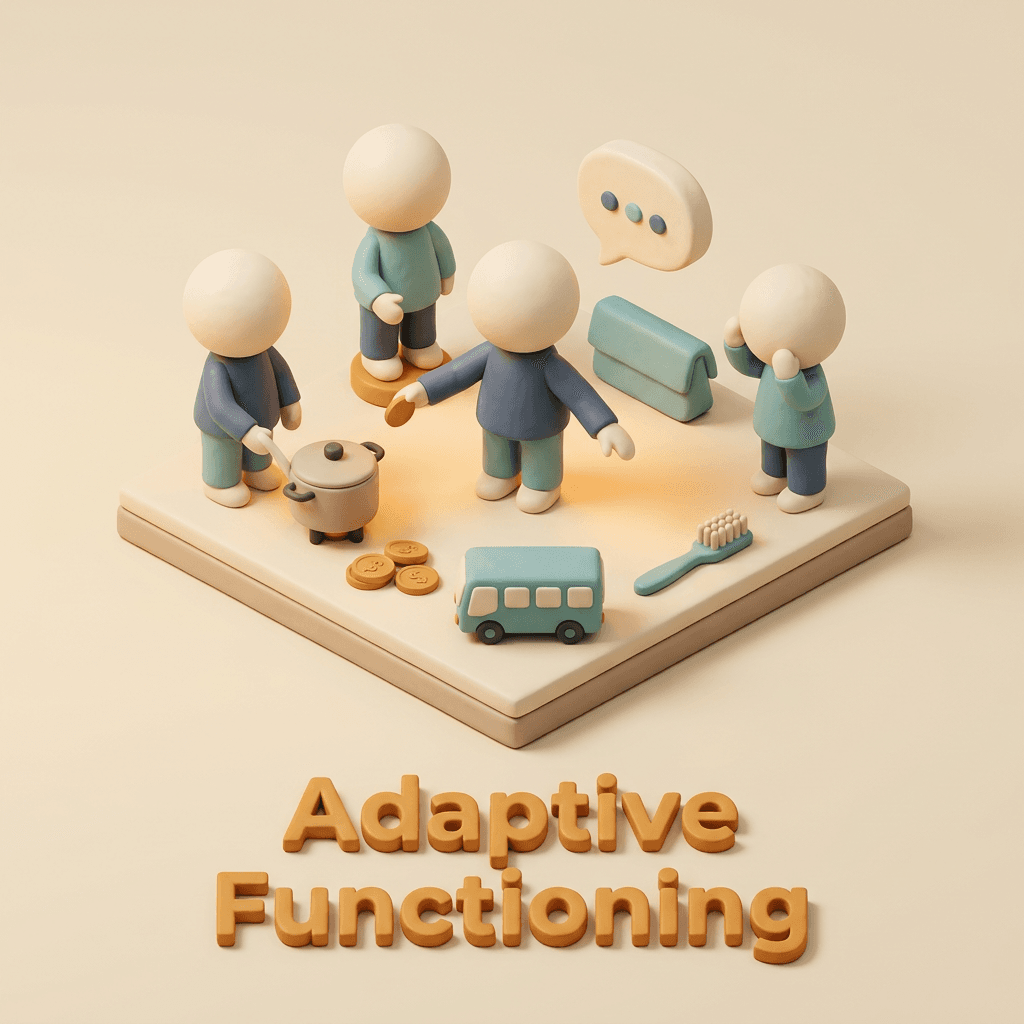
While every child is different, certain patterns tend to distinguish ADHD from autism. Here is how they typically differ across five areas:
Attention
ADHD
Inconsistent focus — easily distracted, but can hyperfocus on novel or exciting tasks
Autism
Intense, sustained focus on specific interests — may seem to "tune out" everything else
Social behaviour
ADHD
Wants social connection but acts impulsively — interrupts, talks over others, misses social timing
Autism
Difficulty reading social cues, body language, or unspoken rules — may prefer parallel play or structured interaction
Sensory processing
ADHD
Often sensory-seeking — fidgets, touches things, craves movement and stimulation
Autism
Often sensory-avoidant or overwhelmed — distressed by loud sounds, certain textures, bright lights, or crowds
Routine
ADHD
Struggles with routine — finds repetition boring, resists structure, forgets steps
Autism
Needs routine — finds comfort in predictability, becomes distressed when plans change unexpectedly
Communication
ADHD
Talkative, interrupts, jumps between topics — the words are there but the timing is off
Autism
May struggle with pragmatic language — literal interpretation, difficulty with sarcasm, or finding the right words in social contexts
These are general patterns, not rules. Many children do not fit neatly into one column. If your child shows a mix of traits from both sides, that is worth exploring with a professional.
Can a Child Have Both ADHD and Autism?
Yes — and it is more common than most people realise. Research consistently shows that 30 to 50 per cent of autistic children also meet the diagnostic criteria for ADHD. The reverse is also true: a significant proportion of children with ADHD show autistic traits.
This combination is increasingly referred to as AuDHD. Children with AuDHD often experience a unique set of challenges — for instance, the autistic need for routine clashing with the ADHD drive for novelty, or sensory-seeking and sensory-avoidant tendencies existing in the same child depending on the context.
Until 2013, clinical guidelines actually prevented a dual diagnosis of ADHD and autism. That rule has since been removed, but many parents are still told their child can only have one or the other. If your child seems to show features of both, trust your observations and ask for a comprehensive assessment.
Learn more about AuDHD →How to Tell Which Your Child Has

The honest answer is that you cannot reliably tell from observation alone. ADHD and autism require formal assessment by a qualified professional — typically a developmental paediatrician, child psychologist, or child psychiatrist. What you can do is gather useful information before that appointment.
Keep a behaviour diary. Note what happens, when, and what was going on around your child at the time. Patterns across settings (home, school, social) are especially useful for clinicians.
Ask for school input. Teachers see your child in a structured environment with peers — they often notice things that are less visible at home.
Use validated screening tools. Questionnaires like the Conners (ADHD), the SRS-2 or SCQ (autism), and the SDQ (general) can help clarify where concerns lie. These are not diagnostic, but they give clinicians a structured starting point.
Request a comprehensive assessment. Ask your GP or paediatrician for a developmental assessment that considers both ADHD and autism, rather than screening for just one.
What You Can Do Right Now

If you suspect your child may have ADHD, autism, or both, here are practical steps you can take today:
- Ask your GP for a comprehensive developmental assessment. Request that the referral considers both ADHD and autism rather than screening for just one.
- Keep a behaviour diary. Note what happens, when, and what was going on around your child at the time. Patterns across settings (home, school, social) are especially useful for clinicians.
- Talk to your child's teacher. Teachers see your child in a structured environment with peers and often notice things that are less visible at home.
AskSheldon also offers free tools to help you make sense of what you are seeing:
Explore ADHD
Understand how ADHD presents in children, including inattentive, hyperactive, and combined types.
Explore Autism
Learn about the autistic spectrum, social communication differences, sensory profiles, and strengths.
Explore AuDHD
Discover what it means to have both ADHD and autism, and how the two interact.
Chat with Sheldon
Ask our AI chatbot any question about ADHD, autism, or the assessment process.
Frequently Asked Questions
What age can you tell if a child has ADHD or autism?+
Autism can sometimes be identified as early as 18 months, though many children are not diagnosed until school age or later. ADHD is typically diagnosed from age 5 onwards, once the demands of school highlight attention and impulse control difficulties. If you have concerns at any age, speak to your GP or paediatrician.
Can a child be misdiagnosed with ADHD when they actually have autism?+
Yes, this is relatively common. Both conditions share surface-level traits like difficulty paying attention, social struggles, and emotional dysregulation. A child with autism may be diagnosed with ADHD first because hyperactivity and inattention are more obvious to teachers and parents than subtle social communication differences.
Is it possible for a child to have both ADHD and autism?+
Absolutely. Research suggests that 30 to 50 per cent of autistic children also meet the criteria for ADHD, and vice versa. This combination is sometimes called AuDHD. Having both conditions is not unusual and does not mean one diagnosis is wrong.
Should I get my child assessed for ADHD or autism first?+
There is no strict rule. If your child shows strong signs of one condition, start there. Many clinicians now assess for both simultaneously because of the high overlap. A comprehensive developmental assessment will consider ADHD, autism, and other possibilities together.
What should I do if I think my child might be neurodivergent?+
Start by noting specific examples of behaviours that concern you, including when they happen and how often. Speak to your child’s teacher for their perspective. Then contact your GP or health visitor to request a referral for developmental assessment. In the meantime, tools like AskSheldon can help you understand what you are observing and prepare for clinical conversations.
This page is for informational purposes only and does not constitute medical advice. AskSheldon provides educational content and screening tools, not clinical diagnoses. If you have concerns about your child's development, please consult a qualified healthcare professional.
Last updated: March 2026
Start your journey with AskSheldon
Free tools to explore, screen, and understand your neurodivergent mind.
Built by neurodivergent minds. 30+ conditions explored. Always free.