Serotonin
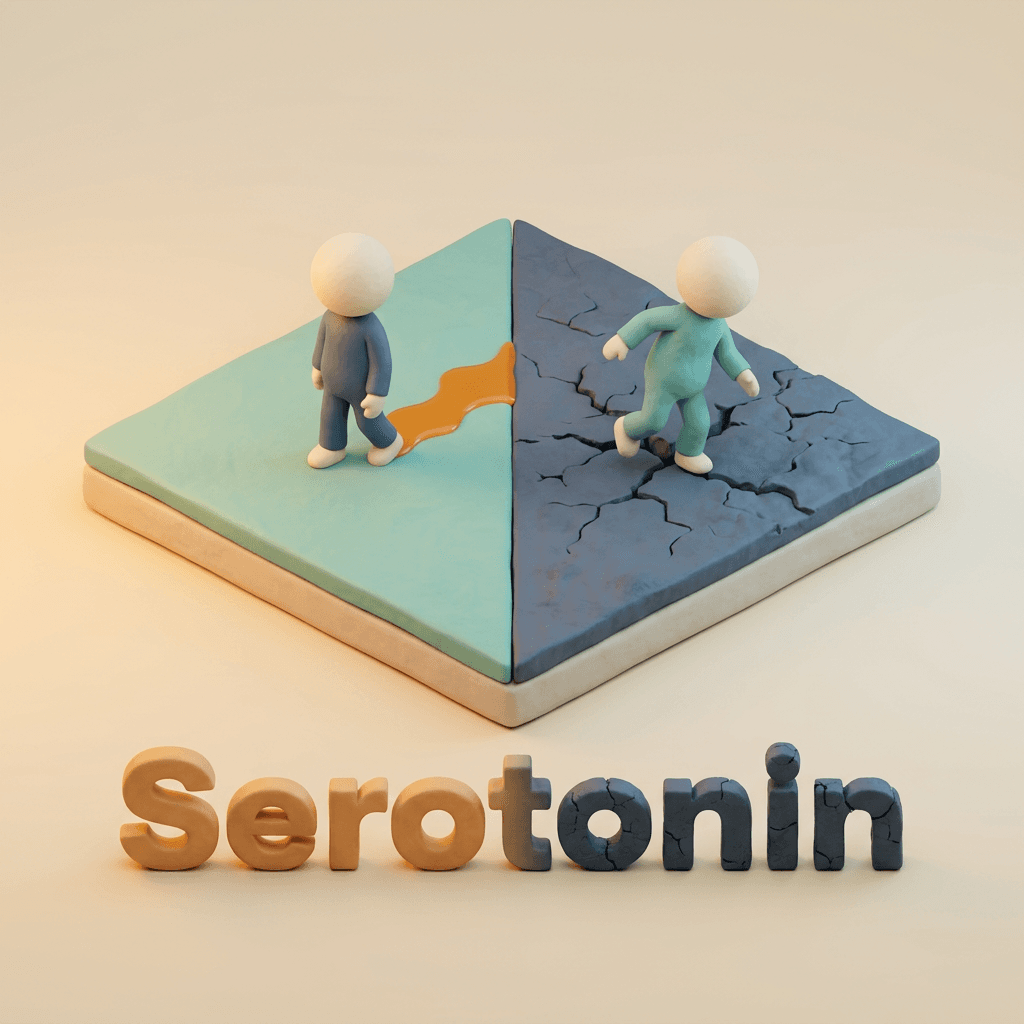
The 'wellbeing' neurotransmitter that influences your mood, sleep, appetite, and sense that things are going to be OK.
A neurotransmitter involved in mood regulation, sleep, appetite, and feelings of wellbeing. Often called the 'feel-good' chemical, though its role is more complex than that. Low serotonin activity is associated with depression and anxiety. Many antidepressants (SSRIs) work by keeping serotonin active in the brain for longer.
How it works
Your brain uses serotonin to regulate mood, anxiety, sleep cycles, and appetite. Low serotonin activity is linked to depression, anxiety, and OCD. Most antidepressants (SSRIs) work by keeping more serotonin available in the spaces between your brain cells.
Think of it like
It's like the background music in a film that sets the emotional tone — when it's right, everything feels manageable. When it's off, the same scenes feel darker.
What it feels like
When serotonin is balanced, you feel a quiet 'rightness' about the day. When it's low, the world looks the same but feels heavier and harder to face.