Post-Traumatic Stress Disorder | AskSheldon
Post-Traumatic Stress Disorder

What is PTSD?

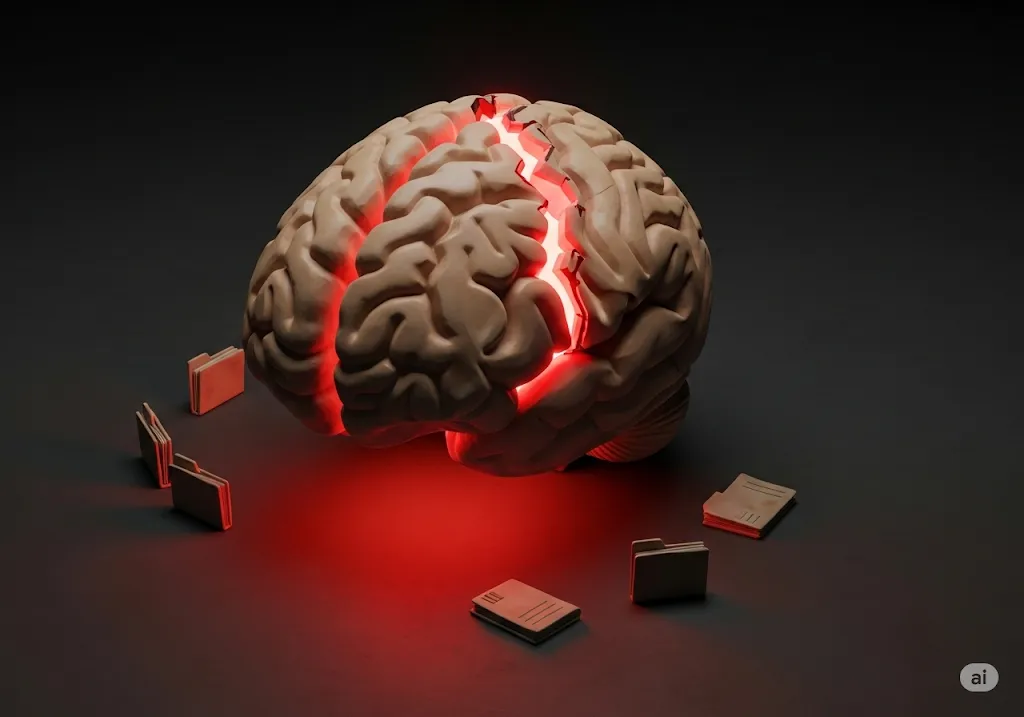
PTSD develops after exposure to events threatening survival or safety, triggering lasting changes in brain networks that process fear and memory. The amygdala (threat detector), hippocampus (memory center), and prefrontal cortex (emotional regulator) show altered activity patterns.

1 in 14people affected
7%prevalence
Normal IQ range

How does PTSD present?

  • Flinching at sounds others ignore
  • Avoiding places, smells, or songs connected to the past
  • Snapping at people without meaning to
  • Pulling back from close relationships
  • Trouble focusing at work or school

Types of PTSD

  • Acute PTSD(~40%)
  • Chronic PTSD(~30%)
  • Delayed-Onset(~15%)
  • Complex PTSD(~15%)

Common questions about PTSD

Why do some people get PTSD while others don

Differences stem from genetic factors (COMT gene variants affecting stress response), childhood trauma history altering HPA axis development, and social support availability post-trauma. Brain scans show those resistant to PTSD have stronger hippocampal-prefrontal connectivity[1][6][9].

Can PTSD change your personality?

Trauma can temporarily alter self-perception through amygdala-driven threat focus and prefrontal shutdown. However, core identity remains intact. Therapy helps reintegrate disjointed self-narratives[5][8][10].

Content reviewed against DSM-5 criteria and current clinical literature. This page is for educational purposes and does not constitute medical advice. Consult a qualified healthcare professional for diagnosis or treatment.

Post-Traumatic Stress Disorder

Post-Traumatic Stress Disorder

Could this be me?

Post-Traumatic Stress DisorderAudio Coming Soon

We're crafting an audio guide for this condition. Get notified when it drops.

What actually is it?

PTSD develops after exposure to events threatening survival or safety, triggering lasting changes in brain networks that process fear and memory. The amygdala (threat detector), hippocampus (memory center), and prefrontal cortex (emotional regulator) show altered activity patterns.

It's a difference in how the brain is wired, not a character flaw.

Quick Guess

How many people out of 14 do you think have this?

Tap the icons to make your estimate.

PTSD involves measurable changes in brain structure and function — amygdala hyperactivation, hippocampal volume reduction, and disrupted prefrontal connectivity — confirmed by neuroimaging across dozens of studies.

NIMH
Tap to Start Myth Busting

How it looks vs. How it feels

The lived experience behind the observed behavior

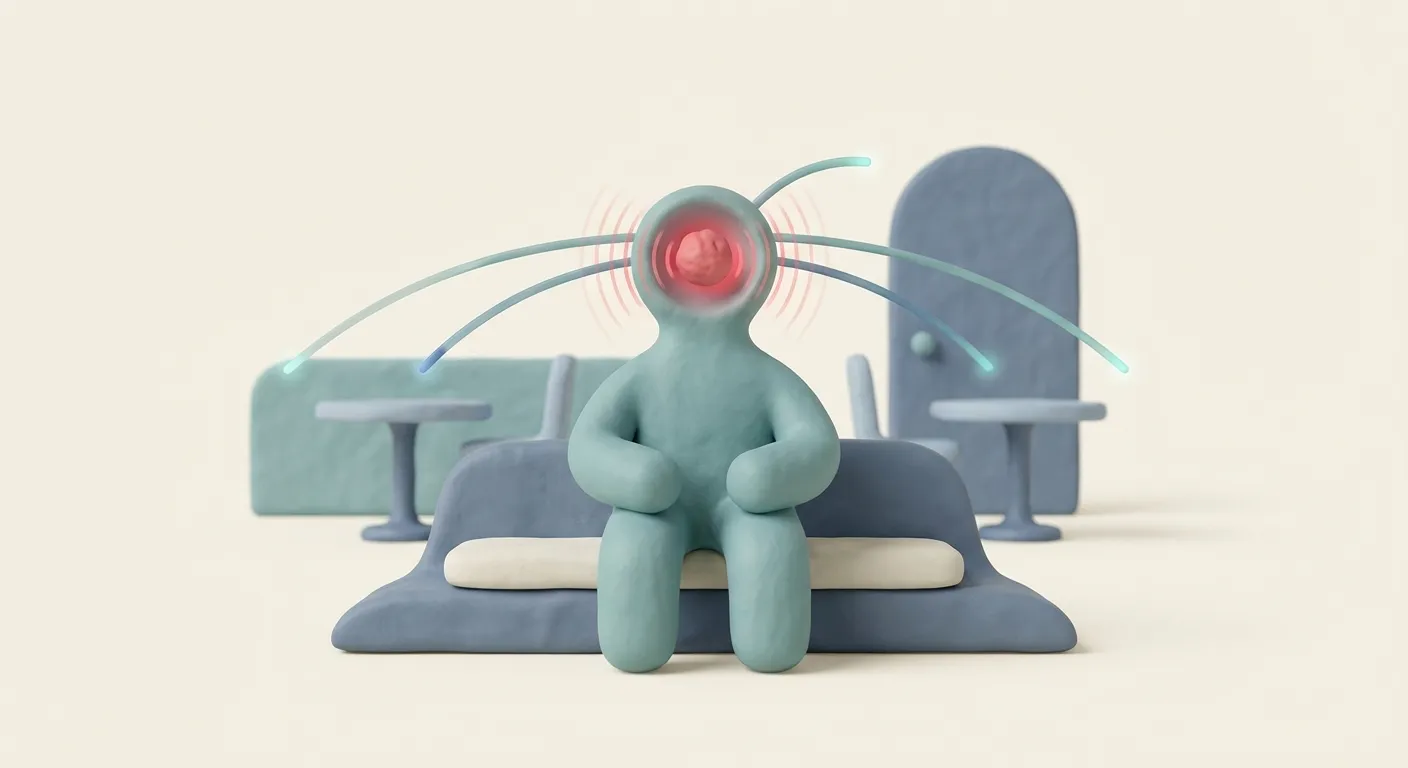
Flinching at sounds others ignore — The Perimeter Patrol
Tap to see inside

What others see

Flinching at sounds others ignore

The Perimeter Patrol
Tap to flip back

On the inside

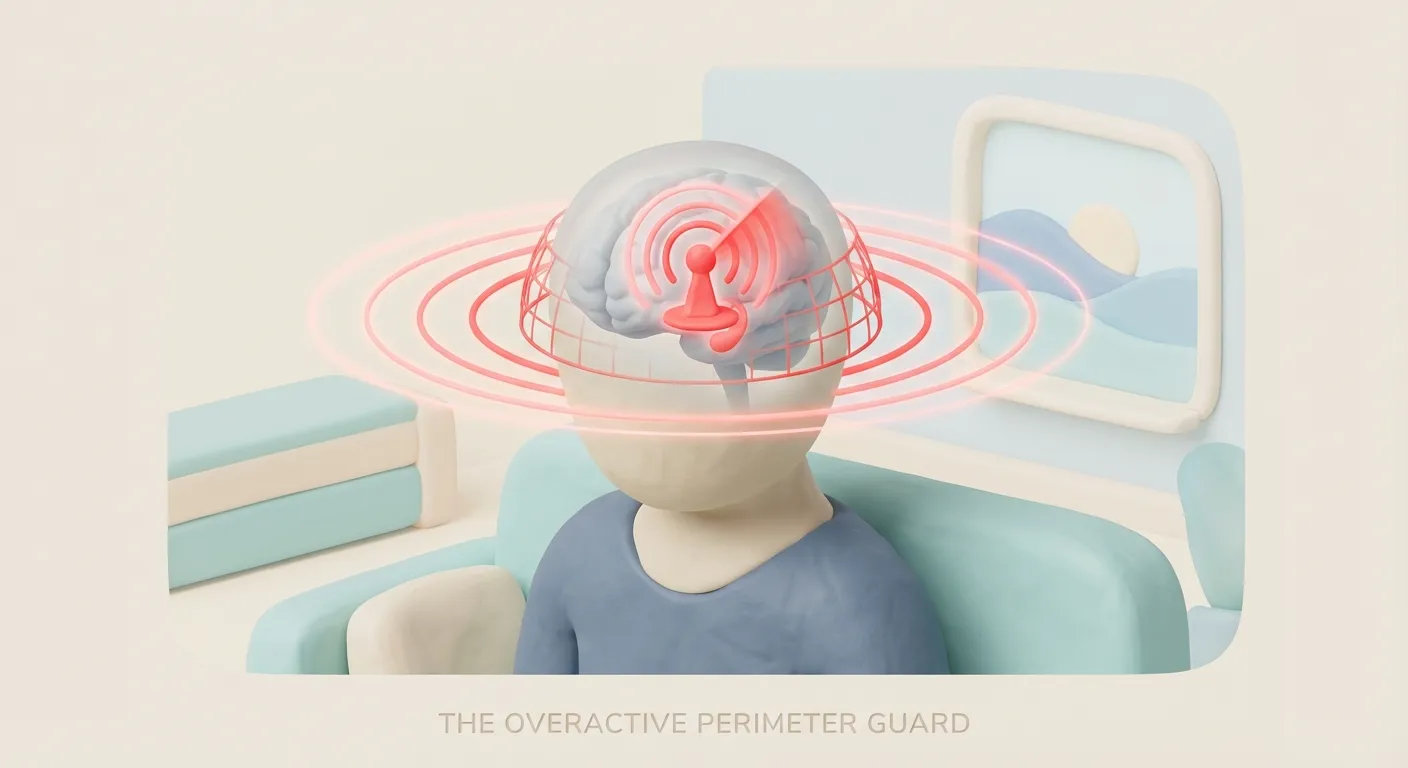
The Perimeter Patrol

That sound just triggered a full-body threat scan. My amygdala can't tell the difference between a car backfiring and the original danger.

Avoiding places, smells, or songs connected to the past — The Landmine Map
Tap to see inside

What others see

Avoiding places, smells, or songs connected to the past

The Landmine Map
Tap to flip back

On the inside

The Landmine Map

That street, that song, that smell — each one is a portal back to the worst moment. Avoiding them isn't weakness; it's survival navigation.

Snapping at people without meaning to — The Hair Trigger
Tap to see inside

What others see

Snapping at people without meaning to

The Hair Trigger
Tap to flip back

On the inside

The Hair Trigger

I snapped before I chose to. My nervous system is set to 'defend' and the threshold for perceived threat is almost nothing.

Pulling back from close relationships — The Glass Wall
Tap to see inside

What others see

Pulling back from close relationships

The Glass Wall
Tap to flip back

On the inside

The Glass Wall

I can see the people I love, but I can't feel connected to them. Something between us won't let me through — closeness feels dangerous.

Trouble focusing at work or school — The Fragmented Focus
Tap to see inside

What others see

Trouble focusing at work or school

The Fragmented Focus
Tap to flip back

On the inside

The Fragmented Focus

My brain is running threat detection in the background while I try to read this page. There's no bandwidth left for concentration.

Going emotionally blank or shutting down during stress — The Circuit Breaker
Tap to see inside

What others see

Going emotionally blank or shutting down during stress

The Circuit Breaker
Tap to flip back

On the inside

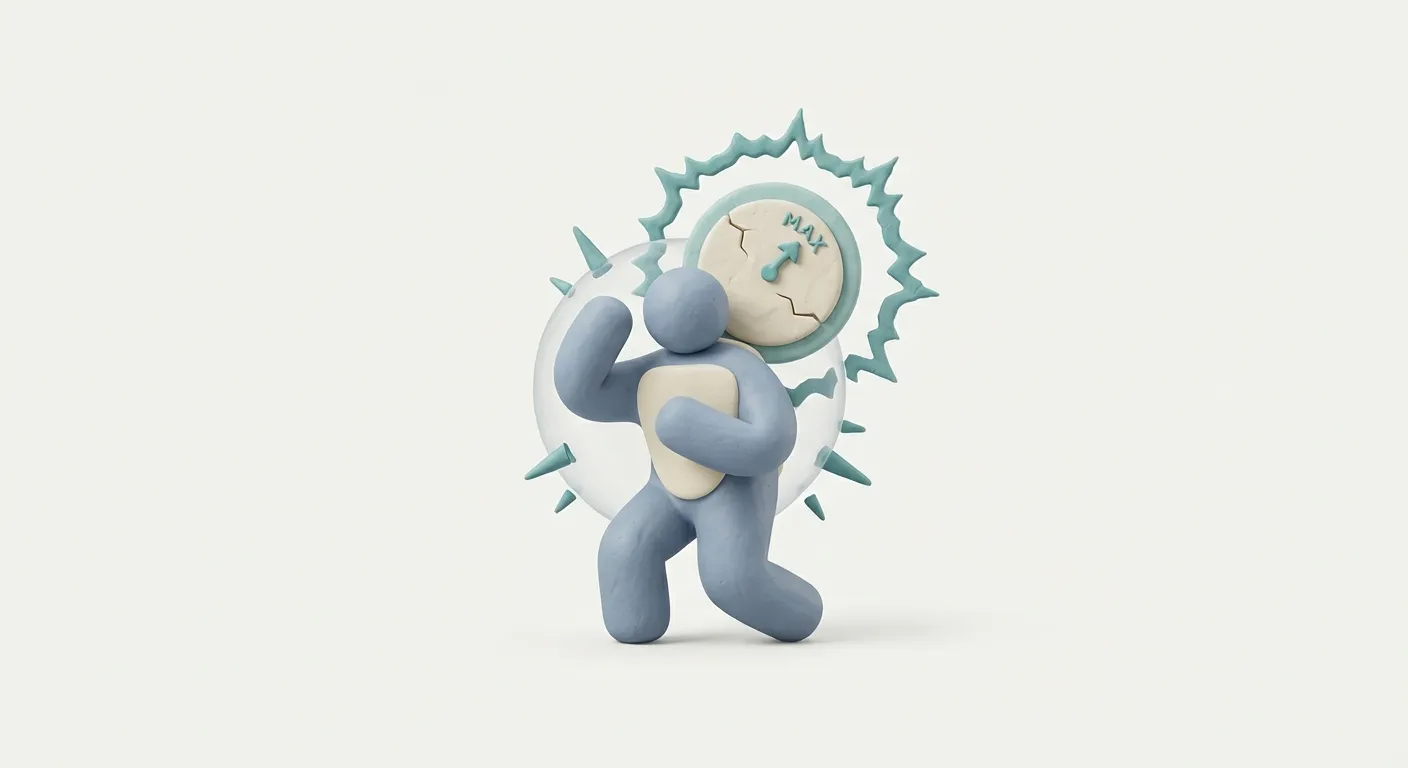
The Circuit Breaker

When it's too much, I go numb. It's not indifference — it's my nervous system hitting the emergency shutdown to survive the overload.

Sexual assault has a 50% PTSD risk — the highest of any single trauma type. Veterans represent approximately 20% of global PTSD cases; 80% are civilians from assault, accidents, abuse, and loss.

WHO
Tap to Start Myth Busting

Types of Post-Traumatic Stress Disorder

Acute PTSD: Symptoms appearing within 3 months. Your hippocampus shows temporary shrinkage, your startle response is heightened, and your brain is still trying to process what happened. Often the most treatment-responsive phase.
Type 1~40%

Acute PTSD

Symptoms appearing within 3 months. Your hippocampus shows temporary shrinkage, your startle response is heightened, and your brain is still trying to process what happened. Often the most treatment-responsive phase.

Symptoms <3 months
Heightened startle response
Temporary hippocampal changes
Most treatment-responsive
Chronic PTSD: Symptoms persisting beyond 3 months. Lasting amygdala hyperactivity and prefrontal underactivation have established patterns. Not a failure to recover — these are neural pathways that have consolidated, and they can be reshaped.
Type 2~30%

Chronic PTSD

Symptoms persisting beyond 3 months. Lasting amygdala hyperactivity and prefrontal underactivation have established patterns. Not a failure to recover — these are neural pathways that have consolidated, and they can be reshaped.

Symptoms >3 months
Consolidated neural patterns
Amygdala hyperactivity established
Responds to trauma-focused therapy
Delayed-Onset: Emerging 6+ months after the event. Subsequent stress reactivates latent neural fear circuits — the trauma was stored but not processed, and life threw a second punch that woke it up.
Type 3~15%

Delayed-Onset

Emerging 6+ months after the event. Subsequent stress reactivates latent neural fear circuits — the trauma was stored but not processed, and life threw a second punch that woke it up.

Emerges ≥6 months later
Triggered by subsequent stress
Latent fear circuit reactivation
Often missed by clinicians
Complex PTSD: From prolonged or repeated trauma — childhood abuse, captivity, domestic violence. Features emotional dysregulation, altered self-identity, and relationship difficulties from chronic stress hormone exposure. Deeper roots, longer rewiring.
Type 4~15%

Complex PTSD

From prolonged or repeated trauma — childhood abuse, captivity, domestic violence. Features emotional dysregulation, altered self-identity, and relationship difficulties from chronic stress hormone exposure. Deeper roots, longer rewiring.

From prolonged/repeated trauma
Emotional dysregulation
Identity disturbance
Requires longer-term therapy

Approximately 25% of PTSD cases are delayed-onset — appearing 6+ months after the trauma when subsequent stress reactivates dormant fear circuits established during the original event.

American Journal of Psychiatry
Tap to Start Myth Busting

The Science of PTSD

The "Why" Behind the "What"

It's not weakness. It's survival neuroscience.

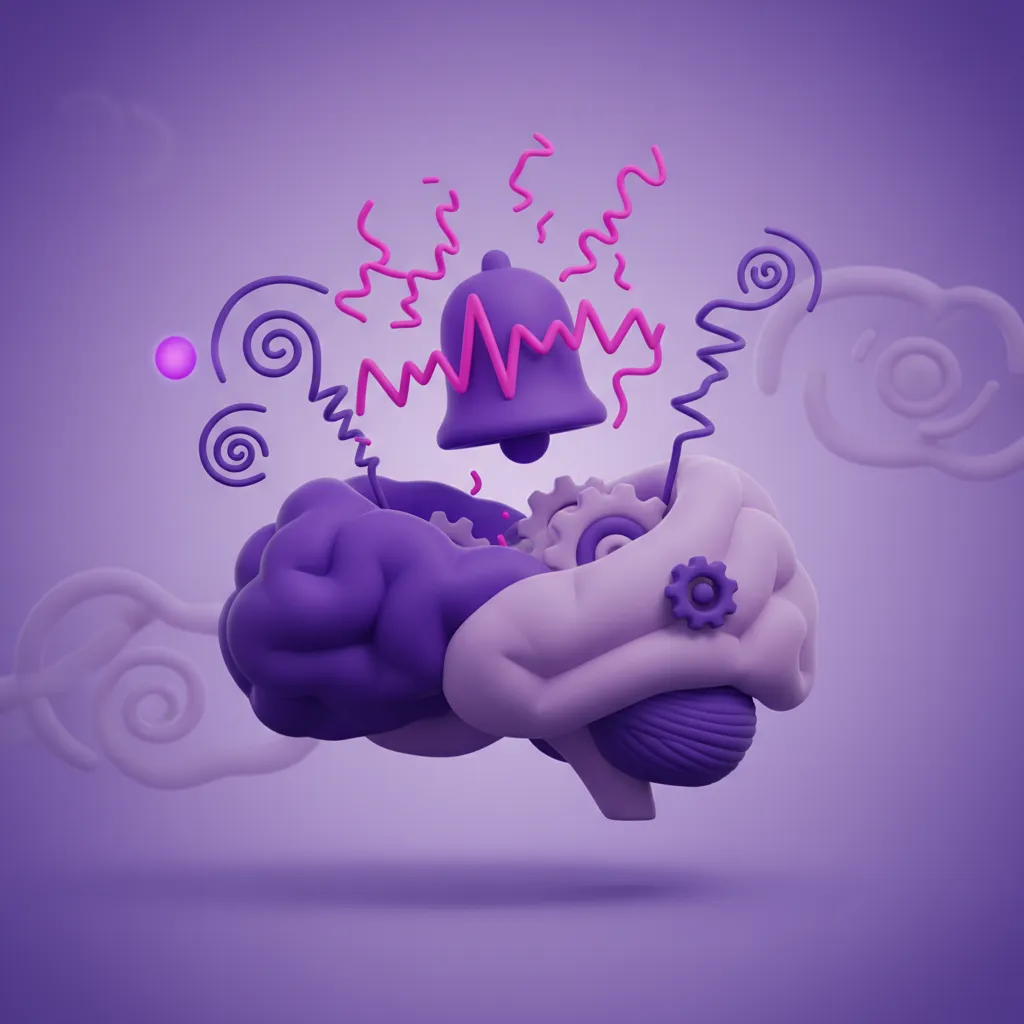
The Alarm That Won't Reset: Your amygdala has been recalibrated by experience. It cannot reliably distinguish between the original danger and anything that resembles it. The fire alarm goes off for smoke, steam, and sometimes just warm air. That's not malfunction — that's survival learning that hasn't been unlearned yet.
Threat Detection

The Alarm That Won't Reset

Your amygdala has been recalibrated by experience. It cannot reliably distinguish between the original danger and anything that resembles it. The fire alarm goes off for smoke, steam, and sometimes just warm air. That's not malfunction — that's survival learning that hasn't been unlearned yet.

The Shattered Timeline: Trauma memories don't file themselves neatly in the past. They're stored as fragments — sensory shards, body sensations, emotional intensities — without a clear timestamp or narrative thread. When something pulls at one fragment, the whole thing can come flooding back as if it's happening now.
Memory Processing

The Shattered Timeline

Trauma memories don't file themselves neatly in the past. They're stored as fragments — sensory shards, body sensations, emotional intensities — without a clear timestamp or narrative thread. When something pulls at one fragment, the whole thing can come flooding back as if it's happening now.

The Missing Override: The prefrontal cortex is supposed to look at what the amygdala is alarmed about, assess the actual context, and say 'not a threat right now.' In PTSD, during trigger states, this override is partially or fully offline. The alarm rings, and the volume knob is broken.
Emotional Regulation

The Missing Override

The prefrontal cortex is supposed to look at what the amygdala is alarmed about, assess the actual context, and say 'not a threat right now.' In PTSD, during trigger states, this override is partially or fully offline. The alarm rings, and the volume knob is broken.

The Broken Record Player: Imagine a record player that got scratched during one song. Now the needle keeps jumping back to that scratch — the same few seconds playing over and over, regardless of what album you put on. PTSD isn't about being stuck in the past by choice. It's a hippocampal filing error — the trauma memory never got properly shelved. Therapy doesn't erase the scratch. It helps the needle learn to play past it.
The Mechanics

The Broken Record Player

Imagine a record player that got scratched during one song. Now the needle keeps jumping back to that scratch — the same few seconds playing over and over, regardless of what album you put on. PTSD isn't about being stuck in the past by choice. It's a hippocampal filing error — the trauma memory never got properly shelved. Therapy doesn't erase the scratch. It helps the needle learn to play past it.

Linked to amygdala hyperactivation, hippocampal volume reduction, and disrupted prefrontal-amygdala connectivity.

50-60% of people experience significant trauma but only ~7% develop PTSD. Genetic factors including COMT variants, early life experience, and hippocampal resilience determine vulnerability — not character strength.

Journal of Traumatic Stress
Tap to Start Myth Busting
Restricted Access

Scientific Deep Dive

Explore Myths to Unlock

Earn 5 Insight Points

Illustration for Deep Dive fact 1
1 / 10

Is my alarm system broken?

In PTSD, the amygdala (threat detector) becomes hyperactive and fails to communicate with the prefrontal cortex (logic center). Your brain literally can

Unlock Answer
Two Sides of the Coin

Two Sides of the Coin

Every neurological difference comes with trade-offs. The same trait that causes struggle in one context creates brilliance in another.

The Permanent Sentry

Your nervous system runs 24/7 threat detection. It's exhausting, it's always on, and it doesn't take days off. You're burning fuel at rest that others burn only in emergencies.

The Trigger Minefield

Sounds, smells, locations, songs — anything associated with the trauma becomes a potential landmine. Your brain mapped danger broadly, and the map doesn't shrink on its own.

The Emotional Circuit Breaker

When overwhelm hits, you go numb. Not by choice — your nervous system trips the breaker. The cost is losing access to joy, connection, and presence.

50-70% of people with PTSD show meaningful improvement with evidence-based treatments. EMDR has 30+ randomised controlled trials. Neuroimaging confirms measurable brain changes after successful therapy.

The Lancet Psychiatry
Tap to Start Myth Busting

Community Voices

Real experiences

The past isn

Community Member
22

Hypervigilance means I

Community Member
39

Flashbacks are time travel you didn

Community Member
16

Healing isn

Community Member
33

EMDR felt like magic, but it

Community Member
50

I

Community Member
27

Think you might have Post-Traumatic Stress Disorder?

Take our clinical-grade screening assessment. It takes less than 5 minutes and gives you instant insights.

Rewiring for Success

Stop trying to fix yourself. Start building a support system that works with your brain, not against it.

Therapy

  • EMDR (Eye Movement Desensitisation and Reprocessing)
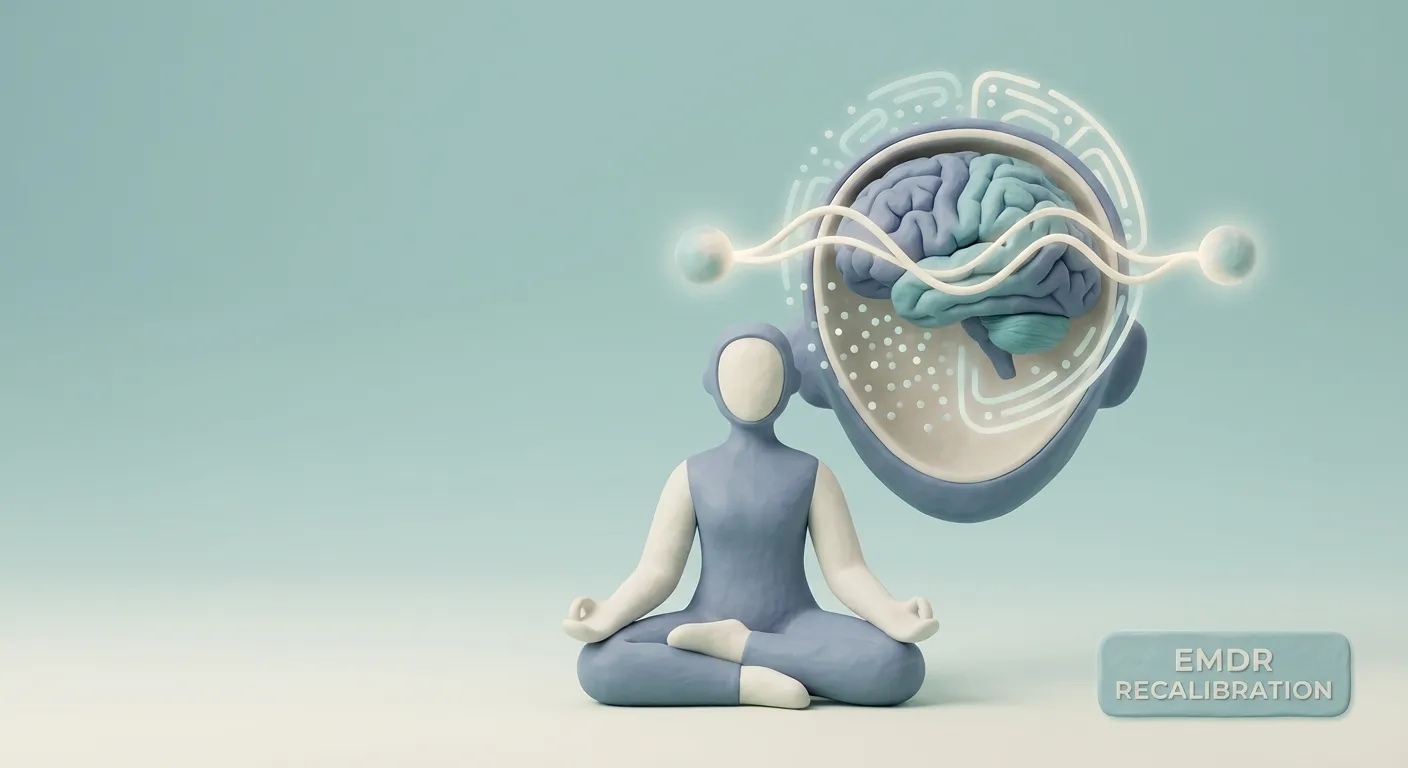
    Bilateral stimulation during trauma recall facilitates hippocampal reprocessing of fragmented memories. 30+ RCTs demonstrate efficacy.
  • Prolonged Exposure Therapy
    Gradual, structured confrontation of trauma memories and avoided situations to extinguish conditioned fear responses.
  • Cognitive Processing Therapy (CPT)
    Challenges stuck beliefs about safety, trust, power, esteem, and intimacy that develop from traumatic experience.

Medication

  • SSRIs (Sertraline / Paroxetine)
    FDA-approved for PTSD. Moderate HPA axis activity and reduce amygdala reactivity. Most effective combined with trauma therapy.
  • Prazosin
    Alpha-1 blocker that reduces nightmare frequency and severity by blocking norepinephrine in the brain.
  • SNRIs (Venlafaxine)
    Alternative to SSRIs; addresses both norepinephrine and serotonin systems disrupted by chronic trauma stress.
  • MDMA-Assisted Psychotherapy
    Investigational — Phase 3 trials showing significant symptom reduction. Reduces amygdala reactivity during trauma processing.

Lifestyle

  • Aerobic Exercise
    Reduces cortisol, increases BDNF (hippocampal growth factor), and restores HPA axis regulation. 3-4 sessions per week has direct neurobiological impact.
  • Sleep Hygiene Protocols
    Trauma disrupts sleep architecture and REM processing. Consistent sleep routines support memory consolidation and cortisol rhythm restoration.
  • Nature Exposure
    Green environments reduce sympathetic activation and lower cortisol. 20+ minutes in nature shows measurable effects on hyperarousal baseline.
  • Social Connection
    Consistent, predictable safe relationships are the most powerful neurobiological regulator of the HPA axis. Isolation maintains PTSD.

Supplements

  • Omega-3 (EPA/DHA)
    Supports neuroinflammation reduction and hippocampal cell membrane integrity. Evidence for reduced PTSD symptom severity (consult doctor).
  • Magnesium Glycinate
    Modulates NMDA receptors involved in fear memory consolidation. May reduce hyperarousal (consult doctor).
  • Ashwagandha (KSM-66)
    Adaptogen that modulates HPA axis cortisol response. RCTs show reduced stress and anxiety markers.
  • Vitamin D3
    Deficiency is associated with elevated inflammatory markers; correcting deficiency supports neurotransmitter regulation.

Environment

  • Safety Architecture
    Arranging your physical space so you have sightlines, exits, and control over who approaches. Not avoidance — structural safety supports nervous system regulation.
  • Sensory Buffering
    Reducing unpredictable auditory and visual stimulation (soundproofing, soft lighting) lowers the baseline threat-scanning load.
  • Predictable Routines
    Consistency reduces the number of unresolvable unknowns the threat-scanning system has to process. Routine is neurologically calming.
  • Trigger Mapping
    Deliberately identifying known triggers with a therapist allows preparation and graduated exposure rather than continual surprise activation.

Body

  • Extended Exhale Breathing
    Exhaling longer than inhaling activates the ventral vagal system, directly downregulating sympathetic hyperarousal. 4-count inhale, 8-count exhale.
  • Cold Water Immersion
    Cold water on the face activates the dive reflex, rapidly lowering heart rate and sympathetic arousal. Useful during acute triggering.
  • Progressive Muscle Relaxation
    Systematic tension-release helps restore body awareness disrupted by chronic hyperarousal and dissociation.
  • Bilateral Stimulation
    Alternating left-right movement (tapping, eye movements, walking) supports the same mechanism that underlies EMDR's efficacy.

Tools for your brain

Built for this neurotype — not generic wellness

See all
FAQ

Frequently Asked Questions

Glossary of Terms

Co-occurring Conditions

Neurodivergent conditions often travel together. Understanding co-occurrence helps build a complete picture.

Click any condition to learn more. Co-occurrence percentages are from peer-reviewed research.

Scientific References

  1. American Psychiatric Association. (2022). Diagnostic and Statistical Manual of Mental Disorders (5th ed., text rev.).
  2. van der Kolk, B. A. (2014). The Body Keeps the Score. Viking.
  3. Shapiro, F. (2018). Eye Movement Desensitization and Reprocessing (EMDR) Therapy (3rd ed.). Guilford Press.
  4. Porges, S. W. (2011). The Polyvagal Theory. W. W. Norton & Company.
  5. Bremner, J. D. (2006). Traumatic stress: effects on the brain. Dialogues in Clinical Neuroscience, 8(4), 445-461.
  6. NIMH. (2023). Post-Traumatic Stress Disorder. National Institute of Mental Health.
  7. WHO. (2022). ICD-11: Post-traumatic stress disorder (6B40).
  8. Kessler, R. C., et al. (2005). Lifetime prevalence and age-of-onset distributions of DSM-IV disorders. Archives of General Psychiatry, 62(6), 593-602.
  9. Yehuda, R., & LeDoux, J. (2007). Response variation following trauma: a translational neuroscience approach. Neuron, 56(1), 19-32.
  10. Forbes, D., et al. (2020). A guide to guidelines for the treatment of PTSD and related conditions. Journal of Traumatic Stress, 23(5), 537-552.

Your scars are evidence of healing, not just harm. You are re-writing your story.

You've survived this far. Imagine what you can do when you stop fighting your own brain.

Why PTSD Creates Extreme Startle Responses

You're sitting in a coffee shop, and someone drops a metal tray on the other side of the room. Before you've consciously registered the sound, your whole body has already responded — heart hammering, muscles tensed, scanning the room for danger. By the time your thinking brain catches up and says 'it was just a tray,' your nervous system has already launched a full threat response.

This isn't overreaction. This is your amygdala doing exactly what it was trained to do.

The amygdala is the brain's threat detection centre — a small, almond-shaped structure that processes sensory information for danger before the thinking cortex has even had a chance to evaluate it. In most brains, the amygdala sends a 'possible threat' signal to the prefrontal cortex, which evaluates the context and either confirms or dismisses the alarm. In PTSD, this system has been recalibrated by the traumatic experience.

After significant trauma, the amygdala becomes hyperactivated — its baseline threat sensitivity is raised, and its threshold for triggering a fear response is dramatically lowered. Neuroscientists describe this as a shift in the fear acquisition system: the brain has learned that the world contains extreme danger, and it is now calibrated to detect and respond to that danger at maximum sensitivity.

The HPA axis — the hypothalamic-pituitary-adrenal system that governs your stress hormone response — also stays in a heightened state of activation. Cortisol and adrenaline surge faster and more intensely in response to stimuli that the amygdala has tagged as potentially threatening. The problem is that the amygdala generalises: it links sensory cues present during the trauma to the trauma itself, and then responds to any similar cue with the same urgency.

This is why a car backfiring, a particular song, or a certain type of shouting can send the nervous system into full emergency mode even in complete safety. The amygdala is not confused or malfunctioning. It is doing its job with devastating thoroughness — protecting you from a danger that has already passed, using a sensitivity setting that was appropriate then and is now calibrated to a world that no longer exists in the same form.

Understanding this doesn't stop the startle response, but it does change the meaning you assign to it. You are not broken. You are running on a threat-detection system that saved your life — and that now needs help finding a lower setting.

  • The amygdala's threat threshold is permanently lowered in PTSD — it now responds to potential danger cues with the urgency of actual emergencies.
  • The HPA axis remains in a state of heightened readiness, releasing stress hormones faster and more intensely than before the trauma.
  • Sensory generalisation means any cue that resembles the trauma context — sound, smell, voice tone — can trigger a full threat response.
  • This is not overreaction — it is a survival system that was calibrated to a specific danger and hasn't yet been recalibrated to present safety.

Triggers, Avoidance, and the PTSD Landmine Map

You take a different route home so you don't pass that street. You skip the party because you know that song will be playing. You hold your breath when you catch a particular aftershave in the air, because it pulls you somewhere you don't want to go. From the outside, this might look excessive. From the inside, it's careful navigation of a map only you can see.

Triggers are sensory cues that become linked to trauma memories through a process called conditioned fear. During the traumatic event, the amygdala is absorbing and encoding every available sensory input alongside the terror — the sights, sounds, smells, physical sensations, even the temperature of the air. The amygdala doesn't catalogue these as neutral background details. It tags them as potential predictors of danger. If this smell was present when the worst thing happened, then this smell means danger.

This is associative learning at its most primitive and powerful — the same mechanism that allows organisms to avoid poisonous plants after one bad experience. In PTSD, the learning is correct but the conditions are now different. The danger has passed. But the amygdala has no mechanism for spontaneously unlearning conditioned fear. It holds onto survival-relevant associations until those associations are actively reworked through a process called extinction learning.

The hippocampus, which is responsible for contextual memory — for understanding that 'this smell is here, but we are not in that place anymore' — is significantly compromised in PTSD. High cortisol levels from sustained stress damage hippocampal neurons, leading to reduced volume and impaired function. This means the contextual processing that would normally allow the brain to say 'this is similar to then, but this is now and we are safe' is unreliable. The amygdala fires. The hippocampus fails to contextualise. The result is that past and present collapse into a single overwhelming moment.

Avoidance develops as a rational response to this collapse. If particular places, sounds, or smells reliably send you into a state of terror or intrusive re-experiencing, avoiding them is a form of pain management. The problem with avoidance as a long-term strategy is that it maintains and sometimes expands the landmine map. What began as one specific trigger can gradually expand to encompass wider and wider categories of experience. Effective trauma treatment works not by confronting triggers aggressively, but by gradually and safely rebuilding the contextual processing that allows the brain to hold 'past' and 'present' as separate.

  • Conditioned fear links sensory cues present during trauma to the traumatic experience itself — the amygdala learns that these cues predict danger.
  • Hippocampal damage from chronic cortisol impairs the contextual processing needed to distinguish past danger from present safety.
  • Avoidance is a rational pain-management response, but it maintains the fear associations rather than allowing them to resolve.
  • Trauma-focused therapy works by gradually restoring contextual processing so the brain can hold 'then' and 'now' as genuinely separate.

Irritability and Hyperarousal in PTSD

You didn't mean to snap. You know you didn't mean to snap. But by the time your prefrontal cortex registered that the person asking you a question wasn't a threat, you'd already responded as if they were. You watched yourself do it and couldn't stop it. And now you're managing the aftermath of a reaction that came from somewhere deep and fast, somewhere you don't fully control.

In PTSD, the nervous system is in a state of chronic hyperarousal. This is not a mood or a choice — it's a physiological baseline shift. The autonomic nervous system has recalibrated itself toward sympathetic dominance: the 'fight or flight' state that should be reserved for genuine emergencies is now the resting state. Heart rate is elevated. Muscles are primed. Cortisol and adrenaline are circulating at higher baseline levels. The system is ready to respond to threat at any moment, because experience has taught it that threat can come at any moment.

In this state of hyperarousal, the threshold for perceived threat is dramatically lowered. What a non-traumatised nervous system would process as mild frustration — someone asking you the same question twice, an unexpected change in plans, a person standing too close — the hyperaroused PTSD nervous system processes as a potential danger requiring an urgent defensive response.

The prefrontal cortex — the brain region responsible for emotional regulation, impulse control, and contextual social reasoning — is significantly underactivated during PTSD hyperarousal states. Neuroimaging studies show that when PTSD patients encounter trauma-relevant stimuli or even mild stressors, prefrontal cortex activation decreases while amygdala activation surges. The rational override system goes offline precisely when you need it most.

The result is that the reaction happens before the reasoning. You snap, you raise your voice, you withdraw abruptly — and your thinking brain catches up a moment later, often with a flood of shame and self-blame. The anger or irritability that characterises PTSD hyperarousal is not aggression. It is a protective nervous system doing the only thing it knows how to do under perceived threat: defend.

Knowing this doesn't excuse the impact on people around you. But it fundamentally changes the story you tell yourself. You are not an angry person. You are a person whose threat-response system has been set to the highest sensitivity, and whose prefrontal brakes intermittently fail when that system fires. Both things matter. And both things can be worked with.

  • PTSD creates chronic sympathetic nervous system hyperarousal — 'fight or flight' becomes the resting baseline rather than an emergency state.
  • The threshold for perceived threat is dramatically lowered, so minor frustrations can register as genuine danger requiring a defensive response.
  • Prefrontal cortex function — responsible for impulse control and social reasoning — drops off during hyperarousal, meaning reactions happen before reasoning.
  • Irritability in PTSD is a protective nervous system response, not aggression or a character flaw.

Emotional Numbing and Relational Withdrawal in PTSD

You look at someone you love — someone you know, intellectually, that you love — and you feel like you're watching them through glass. You can see them. You can hear them. You might even smile at the right moments. But the warmth, the felt sense of connection, the thing that used to make you feel close to another person — it isn't there. And you don't know where it went.

This is emotional numbing, and it is one of the most isolating and least understood features of PTSD.

The emotional system has a self-protection mechanism. When arousal exceeds a certain threshold — when the combination of fear, helplessness, and overwhelm becomes physiologically unbearable — the nervous system can shift into a state of emotional constriction. This is sometimes understood through polyvagal theory as a shift from hyperarousal (fight/flight) to hypoarousal (shutdown): instead of the sympathetic nervous system firing at maximum, the dorsal vagal branch of the parasympathetic nervous system applies an emergency brake. The result is a flattening of emotional experience.

The same shutdown that buffers against unbearable terror also buffers against warmth, joy, love, and connection. The system is not selective about which emotions it dampens. It acts more like a circuit breaker — when the load exceeds capacity, it cuts power across the board.

The attachment system is also directly affected by trauma. Interpersonal trauma in particular — assault, abuse, betrayal by trusted others — can recalibrate the attachment system toward threat detection. Closeness becomes associated with danger. Vulnerability, which is the necessary prerequisite of intimacy, becomes neurologically tagged as risk. The person who wants connection and the nervous system that experiences closeness as threat are in conflict, and the nervous system wins.

Oxytocin — the neuropeptide associated with bonding, trust, and social connection — shows reduced activity in many PTSD presentations. The very neurochemical substrate of human closeness is disrupted. Wanting to feel connected and being unable to is not indifference, and it is not a lack of love. It is a physiological reality of what sustained trauma exposure does to the systems that make connection possible.

The glass wall is real. It was built for survival. And with the right kind of support, it can be gradually dismantled — not by pushing through it, but by slowly, carefully making it safe enough to stop needing it.

  • Emotional numbing is a nervous system shutdown response — the same mechanism that buffers against overwhelming fear also dampens warmth, joy, and connection.
  • Interpersonal trauma can recalibrate the attachment system so that closeness and vulnerability feel neurologically dangerous rather than safe.
  • Oxytocin disruption in PTSD impairs the neurochemical basis of bonding — wanting connection and being unable to feel it is physiological, not personal.
  • The glass wall was built for survival; therapeutic work helps create the safety conditions that allow it to be gradually released.

Why PTSD Devastates Concentration and Cognitive Function

You sit down to read a paragraph. You reach the end and realise you have no idea what it said. You read it again. The same thing happens. Somewhere around the third attempt, a noise outside pulls your attention to the window, and by the time you look back at the page, you've lost whatever thread you were holding. You're not stupid. You're not lazy. Your brain is doing something else.

Concentration requires the prefrontal cortex to maintain a stable attentional focus — to sustain engagement with a task while filtering out irrelevant stimuli. In PTSD, this function is severely compromised for two compounding reasons.

First, the hypervigilance that characterises PTSD is a full-time cognitive occupation. Your brain is continuously scanning the environment for threat signals — monitoring sounds, movements, exits, the behaviour of people nearby, changes in ambient conditions. This is not something you're choosing to do. It is automatic, involuntary, and neurologically expensive. Every bit of cognitive bandwidth consumed by this ongoing threat surveillance is bandwidth that cannot be allocated to reading, writing, thinking, or engaging with the task in front of you.

Second, the default mode network — the brain network active during internally focused thought, memory consolidation, and sustained cognitive tasks — is chronically disrupted in PTSD. Intrusive memories and hyperarousal signals interrupt the default mode network's normal function, creating a pattern of cognitive fragmentation. Sustained attention is replaced by interrupted attention: brief periods of focus punctuated by involuntary intrusions from traumatic memory material or threat-scanning activity.

Working memory — the ability to hold information in mind while processing it — is also directly impaired by elevated cortisol. High cortisol levels interfere with synaptic transmission in the prefrontal cortex and hippocampus, the two regions most critical for working memory function. This means that not only is the brain distracted, but its capacity to hold and process information is biochemically reduced in the aftermath of trauma.

The result is a cognitive profile that can look deceptively like ADHD, learning disability, or low intelligence — none of which are accurate. The difficulty is not capacity. It is interference. When the threat-detection system quiets and the prefrontal cortex has more resources available, the same brain that struggles to read a paragraph can engage in complex, sustained intellectual work. The brain's potential is undiminished. Its available bandwidth, in the presence of unresolved trauma, is severely limited.

  • Hypervigilance consumes substantial cognitive bandwidth continuously — the threat-scanning system and the concentration system compete for the same neural resources.
  • Default mode network disruption means intrusive memories and arousal signals interrupt the sustained internal focus that concentration requires.
  • Elevated cortisol directly impairs working memory by interfering with prefrontal and hippocampal synaptic function.
  • Cognitive difficulties in PTSD reflect interference, not capacity — the brain's intellectual ability is intact, but available bandwidth is severely reduced.

Dissociation and Shutdown in PTSD

In the middle of an argument, a difficult conversation, or a situation that escalates beyond a certain point, something happens. The lights dim. You're still there — physically present, perhaps still talking — but something behind your eyes has stepped back. The emotional intensity flattens. You feel distant from yourself, as if watching from slightly outside your own body. People might tell you later that you seemed 'cold' or 'absent.' You don't have a good explanation for what happened to you in those moments.

This is the dorsal vagal shutdown — the nervous system's last-resort response to inescapable overwhelm.

Polyvagal theory, developed by neuroscientist Stephen Porges, describes three states of the autonomic nervous system. The first is the social engagement system — regulated, calm, capable of connection. The second is sympathetic hyperarousal — fight or flight, mobilisation for action. The third, dorsal vagal shutdown, is an evolutionarily ancient emergency brake: when threat is inescapable and hyperarousal is insufficient or unmanageable, the dorsal vagal branch applies a global system shutdown. Heart rate drops. Metabolism slows. Emotional processing flatlines. The organism plays dead.

In animals, this response is used when caught by a predator — playing dead as a survival strategy. In humans with PTSD, the same mechanism is triggered by psychological overwhelm that crosses a threshold the nervous system cannot process any other way. The shutdown is not chosen. It is involuntary, automatic, and in the moment of its triggering, it is protective.

Dissociation — the sense of being detached from yourself, your emotions, or your surroundings — is the conscious experience of this shutdown state. During traumatic events, dissociation serves as a buffer against unbearable experience. In PTSD, this response becomes generalised: the nervous system learns to trip the breaker earlier, sometimes in response to emotional intensity that would not be traumatic to an untraumatised system.

The aftermath of shutdown episodes can include confusion, shame, emotional blankness, and the sense of not being fully 'back' for hours. Partners and family members sometimes interpret this as manipulation, indifference, or stonewalling. It is none of these things. It is a biological emergency response that has been applied to non-emergency situations because the nervous system can no longer accurately distinguish between overwhelming trauma and overwhelming feelings.

Ground techniques — connecting with sensory input from the present environment, rhythmic movement, slow exhalation — work by activating the ventral vagal branch and re-engaging the social engagement system. They are not distraction tactics. They are neurological on-switches for the part of the system that shutdown turned off.

  • Dorsal vagal shutdown is an evolutionarily ancient emergency response — the nervous system's last resort when overwhelm exceeds what fight/flight can manage.
  • Dissociation is the conscious experience of this shutdown state — a buffer against inescapable overwhelm, not indifference or manipulation.
  • In PTSD, the shutdown threshold becomes lowered so that intense emotions (not just actual danger) can trip the circuit breaker.
  • Grounding techniques re-engage the ventral vagal system — they are neurological resets, not distraction tools.

Amygdala Hyperactivation in PTSD

The amygdala is the brain's threat-detection hub — a small, bilaterally symmetric structure in the medial temporal lobe that processes incoming sensory information for emotional significance, particularly danger. Under normal conditions, the amygdala sends a 'possible threat' signal to the prefrontal cortex, which evaluates context and determines the appropriate response. In most situations, the prefrontal cortex says 'not a threat' and the alarm subsides.

In PTSD, this regulatory circuit has been disrupted at both ends. The amygdala fires more easily, more intensely, and to a broader range of stimuli than before the trauma. Simultaneously, the prefrontal cortex — which provides the 'all clear' signal — is underactivated during threat states, making it less able to inhibit the amygdala's alarm.

FMRI studies comparing PTSD patients with trauma-exposed non-PTSD controls consistently find greater amygdala activation to trauma-related stimuli, and — critically — to stimuli that are only loosely related to the original trauma. This process of threat generalisation is central to understanding PTSD: the amygdala has learned that danger is broadly present, not narrowly specific. Where once it responded only to the original traumatic cues, it now responds to a widening circle of associated stimuli.

Cortisol is both a consequence and an exacerbating factor. The HPA axis — the stress hormone system — becomes sensitised by traumatic experience, producing faster and larger cortisol responses to perceived threat. Chronically elevated cortisol further damages the hippocampus and prefrontal cortex, making contextual regulation of the amygdala increasingly unreliable. The system becomes progressively harder to inhibit from the top down.

Neuroplasticity, however, operates in both directions. The same brain that learned to fear can learn to distinguish. EMDR, prolonged exposure therapy, and trauma-focused CBT all show measurable reductions in amygdala hyperactivation alongside clinical improvement. Brain imaging before and after effective trauma therapy shows restored prefrontal-amygdala connectivity — the brakes working again. Recovery is not just psychological. It is neurological.

Understanding that your alarm system was calibrated to a real threat, and that recalibration is possible and documented, is not a small thing. It is the foundation of a different relationship with your own nervous system.

  • The amygdala in PTSD is hyperactivated — it fires more intensely and to a broader range of stimuli than before the trauma.
  • Threat generalisation means the fear network expands beyond the original trauma cues to encompass increasingly wide categories of experience.
  • The HPA axis sensitisation creates a feedback loop: elevated cortisol further impairs the prefrontal regions that would normally regulate amygdala firing.
  • Trauma-focused therapies produce measurable neurological changes — restored prefrontal-amygdala connectivity is visible in brain imaging after successful treatment.

How Trauma Fragments Memory: Hippocampal Neuroscience

Normal memory works, roughly, like this: an experience is processed through the hippocampus, which encodes it into a contextualised narrative — 'that happened, at that time, in that place, and it is now in the past.' The memory can be retrieved, but it comes back labelled as memory — as something that occurred then, not something that is occurring now.

Traumatic memory doesn't work this way.

During a traumatic event, the extreme stress response floods the brain with cortisol and norepinephrine at levels that significantly impair hippocampal function. The hippocampus, which is responsible for consolidating experience into coherent, time-stamped autobiographical narrative, is overwhelmed and partially shut down. The result is that the traumatic experience is encoded not as a narrative but as fragments — raw sensory impressions, body sensations, emotional intensities, visual flashes — without the contextual and temporal metadata that would mark them as 'past.'

Because these fragments lack temporal context, they cannot be filed away in the normal autobiographical sequence. Instead, they exist in an undated, achronological form that can be reactivated by any matching sensory cue. When something in the present environment matches a sensory fragment — a sound, a smell, a physical sensation — the fragment is not 'remembered' in the normal sense. It is re-experienced. The absence of a timestamp means the nervous system cannot easily distinguish retrieval from recurrence.

This is why flashbacks feel so present-tense. It is not imagination or confusion. It is the accurate subjective experience of a memory system that lacks the contextual architecture to place the experience in the past.

Structural MRI studies consistently show reduced hippocampal volume in PTSD — in some studies, reductions of 8-26% compared with trauma-exposed non-PTSD controls. This reduction is partly attributable to the neurotoxic effects of chronically elevated cortisol on hippocampal neurons, and partly to stress-related suppression of hippocampal neurogenesis. Critically, some of this volume reduction is reversible with successful treatment — hippocampal neurogenesis can be restored through exercise, antidepressant therapy, and resolution of the chronic stress state.

Narrative therapy, EMDR, and prolonged exposure all work partly by helping the hippocampus complete the interrupted consolidation process — giving the fragmented traumatic material the temporal context and narrative structure that the original encoding failed to provide. The shattered timeline can be reassembled, not by pretending it wasn't broken, but by building the scaffolding it was originally denied.

  • Extreme cortisol during trauma impairs hippocampal consolidation, so traumatic memories are encoded as sensory fragments without temporal context.
  • The absence of a 'timestamp' means traumatic fragments can be re-experienced as present-tense rather than remembered as past — this is the neurological basis of flashbacks.
  • Hippocampal volume reduction of 8-26% is documented in PTSD, partly from cortisol neurotoxicity and suppressed neurogenesis.
  • Successful trauma therapy partly works by helping complete the interrupted consolidation process — giving fragments the narrative and temporal context they originally lacked.

Prefrontal Shutdown and the Lost Emotional Override

The prefrontal cortex is the brain's executive director — the region responsible for evaluating context, modulating emotional responses, and applying the brakes to impulses and alarm signals generated by more primitive brain structures. For emotional regulation in particular, the ventromedial prefrontal cortex (vmPFC) and the anterior cingulate cortex (ACC) maintain ongoing inhibitory connections to the amygdala. In simple terms: when the amygdala raises an alarm, the prefrontal cortex checks the context and, if the alarm is not warranted, sends an inhibitory signal that damps down the response.

In PTSD, this circuit is disrupted in a specific and consistent way. Neuroimaging studies — using both fMRI and PET imaging — show that during exposure to trauma-related stimuli or during active PTSD symptoms, prefrontal cortex activity decreases while amygdala activity increases. The inhibitory control that would normally modulate the fear response is partially or fully withdrawn at the exact moment it is most needed.

This is not a permanent structural failure. The prefrontal cortex in PTSD is not damaged in the way that it might be in traumatic brain injury — the circuitry is intact. What has happened is a functional disruption: the amygdala's alarm signals are strong enough, and the stress hormone environment is dysregulated enough, that the prefrontal cortex is effectively overwhelmed and temporarily offline during high arousal states. The car has an accelerator and it has brakes — but in a state of extreme hyperarousal, the brake system can't keep up with the accelerator.

This explains a feature of PTSD that is deeply confusing and deeply shame-inducing: the experience of knowing, intellectually, that you are safe — and being completely unable to convince your nervous system of this fact. The knowledge is real. The safety is real. But the prefrontal cortex, which is the interface between rational appraisal and emotional response, is not fully online to act on that knowledge.

Therapies that work in PTSD consistently show restoration of this connectivity. EMDR produces measurable increases in prefrontal activation alongside clinical improvement. Trauma-focused CBT restores prefrontal-amygdala communication. Somatic approaches work by activating the body's own regulatory systems, which feed back into prefrontal regulation. The missing override can be reinstated. Recovery is, in part, the story of gradually restoring the conversation between the thinking brain and the survival brain — so that when one says 'we're safe,' the other can finally hear it.

  • The vmPFC and ACC normally send inhibitory signals to the amygdala during threat assessment — in PTSD, this inhibitory control drops offline during high arousal.
  • This is a functional disruption, not structural damage — the prefrontal circuitry is intact but overwhelmed by the amygdala's signal strength and the stress hormone environment.
  • Knowing you're safe and being unable to feel safe is a direct consequence of this prefrontal shutdown — the rational appraisal exists but can't reach the emotional system.
  • EMDR, trauma-focused CBT, and somatic therapies all show measurable prefrontal reactivation in neuroimaging — the override circuit can be restored.


Why PTSD Creates Extreme Startle Responses

You're sitting in a coffee shop, and someone drops a metal tray on the other side of the room. Before you've consciously registered the sound, your whole body has already responded — heart hammering, muscles tensed, scanning the room for danger. By the time your thinking brain catches up and says 'it was just a tray,' your nervous system has already launched a full threat response.

This isn't overreaction. This is your amygdala doing exactly what it was trained to do.

The amygdala is the brain's threat detection centre — a small, almond-shaped structure that processes sensory information for danger before the thinking cortex has even had a chance to evaluate it. In most brains, the amygdala sends a 'possible threat' signal to the prefrontal cortex, which evaluates the context and either confirms or dismisses the alarm. In PTSD, this system has been recalibrated by the traumatic experience.

After significant trauma, the amygdala becomes hyperactivated — its baseline threat sensitivity is raised, and its threshold for triggering a fear response is dramatically lowered. Neuroscientists describe this as a shift in the fear acquisition system: the brain has learned that the world contains extreme danger, and it is now calibrated to detect and respond to that danger at maximum sensitivity.

The HPA axis — the hypothalamic-pituitary-adrenal system that governs your stress hormone response — also stays in a heightened state of activation. Cortisol and adrenaline surge faster and more intensely in response to stimuli that the amygdala has tagged as potentially threatening. The problem is that the amygdala generalises: it links sensory cues present during the trauma to the trauma itself, and then responds to any similar cue with the same urgency.

This is why a car backfiring, a particular song, or a certain type of shouting can send the nervous system into full emergency mode even in complete safety. The amygdala is not confused or malfunctioning. It is doing its job with devastating thoroughness — protecting you from a danger that has already passed, using a sensitivity setting that was appropriate then and is now calibrated to a world that no longer exists in the same form.

Understanding this doesn't stop the startle response, but it does change the meaning you assign to it. You are not broken. You are running on a threat-detection system that saved your life — and that now needs help finding a lower setting.

Triggers, Avoidance, and the PTSD Landmine Map

You take a different route home so you don't pass that street. You skip the party because you know that song will be playing. You hold your breath when you catch a particular aftershave in the air, because it pulls you somewhere you don't want to go. From the outside, this might look excessive. From the inside, it's careful navigation of a map only you can see.

Triggers are sensory cues that become linked to trauma memories through a process called conditioned fear. During the traumatic event, the amygdala is absorbing and encoding every available sensory input alongside the terror — the sights, sounds, smells, physical sensations, even the temperature of the air. The amygdala doesn't catalogue these as neutral background details. It tags them as potential predictors of danger. If this smell was present when the worst thing happened, then this smell means danger.

This is associative learning at its most primitive and powerful — the same mechanism that allows organisms to avoid poisonous plants after one bad experience. In PTSD, the learning is correct but the conditions are now different. The danger has passed. But the amygdala has no mechanism for spontaneously unlearning conditioned fear. It holds onto survival-relevant associations until those associations are actively reworked through a process called extinction learning.

The hippocampus, which is responsible for contextual memory — for understanding that 'this smell is here, but we are not in that place anymore' — is significantly compromised in PTSD. High cortisol levels from sustained stress damage hippocampal neurons, leading to reduced volume and impaired function. This means the contextual processing that would normally allow the brain to say 'this is similar to then, but this is now and we are safe' is unreliable. The amygdala fires. The hippocampus fails to contextualise. The result is that past and present collapse into a single overwhelming moment.

Avoidance develops as a rational response to this collapse. If particular places, sounds, or smells reliably send you into a state of terror or intrusive re-experiencing, avoiding them is a form of pain management. The problem with avoidance as a long-term strategy is that it maintains and sometimes expands the landmine map. What began as one specific trigger can gradually expand to encompass wider and wider categories of experience. Effective trauma treatment works not by confronting triggers aggressively, but by gradually and safely rebuilding the contextual processing that allows the brain to hold 'past' and 'present' as separate.

Irritability and Hyperarousal in PTSD

You didn't mean to snap. You know you didn't mean to snap. But by the time your prefrontal cortex registered that the person asking you a question wasn't a threat, you'd already responded as if they were. You watched yourself do it and couldn't stop it. And now you're managing the aftermath of a reaction that came from somewhere deep and fast, somewhere you don't fully control.

In PTSD, the nervous system is in a state of chronic hyperarousal. This is not a mood or a choice — it's a physiological baseline shift. The autonomic nervous system has recalibrated itself toward sympathetic dominance: the 'fight or flight' state that should be reserved for genuine emergencies is now the resting state. Heart rate is elevated. Muscles are primed. Cortisol and adrenaline are circulating at higher baseline levels. The system is ready to respond to threat at any moment, because experience has taught it that threat can come at any moment.

In this state of hyperarousal, the threshold for perceived threat is dramatically lowered. What a non-traumatised nervous system would process as mild frustration — someone asking you the same question twice, an unexpected change in plans, a person standing too close — the hyperaroused PTSD nervous system processes as a potential danger requiring an urgent defensive response.

The prefrontal cortex — the brain region responsible for emotional regulation, impulse control, and contextual social reasoning — is significantly underactivated during PTSD hyperarousal states. Neuroimaging studies show that when PTSD patients encounter trauma-relevant stimuli or even mild stressors, prefrontal cortex activation decreases while amygdala activation surges. The rational override system goes offline precisely when you need it most.

The result is that the reaction happens before the reasoning. You snap, you raise your voice, you withdraw abruptly — and your thinking brain catches up a moment later, often with a flood of shame and self-blame. The anger or irritability that characterises PTSD hyperarousal is not aggression. It is a protective nervous system doing the only thing it knows how to do under perceived threat: defend.

Knowing this doesn't excuse the impact on people around you. But it fundamentally changes the story you tell yourself. You are not an angry person. You are a person whose threat-response system has been set to the highest sensitivity, and whose prefrontal brakes intermittently fail when that system fires. Both things matter. And both things can be worked with.

Emotional Numbing and Relational Withdrawal in PTSD

You look at someone you love — someone you know, intellectually, that you love — and you feel like you're watching them through glass. You can see them. You can hear them. You might even smile at the right moments. But the warmth, the felt sense of connection, the thing that used to make you feel close to another person — it isn't there. And you don't know where it went.

This is emotional numbing, and it is one of the most isolating and least understood features of PTSD.

The emotional system has a self-protection mechanism. When arousal exceeds a certain threshold — when the combination of fear, helplessness, and overwhelm becomes physiologically unbearable — the nervous system can shift into a state of emotional constriction. This is sometimes understood through polyvagal theory as a shift from hyperarousal (fight/flight) to hypoarousal (shutdown): instead of the sympathetic nervous system firing at maximum, the dorsal vagal branch of the parasympathetic nervous system applies an emergency brake. The result is a flattening of emotional experience.

The same shutdown that buffers against unbearable terror also buffers against warmth, joy, love, and connection. The system is not selective about which emotions it dampens. It acts more like a circuit breaker — when the load exceeds capacity, it cuts power across the board.

The attachment system is also directly affected by trauma. Interpersonal trauma in particular — assault, abuse, betrayal by trusted others — can recalibrate the attachment system toward threat detection. Closeness becomes associated with danger. Vulnerability, which is the necessary prerequisite of intimacy, becomes neurologically tagged as risk. The person who wants connection and the nervous system that experiences closeness as threat are in conflict, and the nervous system wins.

Oxytocin — the neuropeptide associated with bonding, trust, and social connection — shows reduced activity in many PTSD presentations. The very neurochemical substrate of human closeness is disrupted. Wanting to feel connected and being unable to is not indifference, and it is not a lack of love. It is a physiological reality of what sustained trauma exposure does to the systems that make connection possible.

The glass wall is real. It was built for survival. And with the right kind of support, it can be gradually dismantled — not by pushing through it, but by slowly, carefully making it safe enough to stop needing it.

Why PTSD Devastates Concentration and Cognitive Function

You sit down to read a paragraph. You reach the end and realise you have no idea what it said. You read it again. The same thing happens. Somewhere around the third attempt, a noise outside pulls your attention to the window, and by the time you look back at the page, you've lost whatever thread you were holding. You're not stupid. You're not lazy. Your brain is doing something else.

Concentration requires the prefrontal cortex to maintain a stable attentional focus — to sustain engagement with a task while filtering out irrelevant stimuli. In PTSD, this function is severely compromised for two compounding reasons.

First, the hypervigilance that characterises PTSD is a full-time cognitive occupation. Your brain is continuously scanning the environment for threat signals — monitoring sounds, movements, exits, the behaviour of people nearby, changes in ambient conditions. This is not something you're choosing to do. It is automatic, involuntary, and neurologically expensive. Every bit of cognitive bandwidth consumed by this ongoing threat surveillance is bandwidth that cannot be allocated to reading, writing, thinking, or engaging with the task in front of you.

Second, the default mode network — the brain network active during internally focused thought, memory consolidation, and sustained cognitive tasks — is chronically disrupted in PTSD. Intrusive memories and hyperarousal signals interrupt the default mode network's normal function, creating a pattern of cognitive fragmentation. Sustained attention is replaced by interrupted attention: brief periods of focus punctuated by involuntary intrusions from traumatic memory material or threat-scanning activity.

Working memory — the ability to hold information in mind while processing it — is also directly impaired by elevated cortisol. High cortisol levels interfere with synaptic transmission in the prefrontal cortex and hippocampus, the two regions most critical for working memory function. This means that not only is the brain distracted, but its capacity to hold and process information is biochemically reduced in the aftermath of trauma.

The result is a cognitive profile that can look deceptively like ADHD, learning disability, or low intelligence — none of which are accurate. The difficulty is not capacity. It is interference. When the threat-detection system quiets and the prefrontal cortex has more resources available, the same brain that struggles to read a paragraph can engage in complex, sustained intellectual work. The brain's potential is undiminished. Its available bandwidth, in the presence of unresolved trauma, is severely limited.

Dissociation and Shutdown in PTSD

In the middle of an argument, a difficult conversation, or a situation that escalates beyond a certain point, something happens. The lights dim. You're still there — physically present, perhaps still talking — but something behind your eyes has stepped back. The emotional intensity flattens. You feel distant from yourself, as if watching from slightly outside your own body. People might tell you later that you seemed 'cold' or 'absent.' You don't have a good explanation for what happened to you in those moments.

This is the dorsal vagal shutdown — the nervous system's last-resort response to inescapable overwhelm.

Polyvagal theory, developed by neuroscientist Stephen Porges, describes three states of the autonomic nervous system. The first is the social engagement system — regulated, calm, capable of connection. The second is sympathetic hyperarousal — fight or flight, mobilisation for action. The third, dorsal vagal shutdown, is an evolutionarily ancient emergency brake: when threat is inescapable and hyperarousal is insufficient or unmanageable, the dorsal vagal branch applies a global system shutdown. Heart rate drops. Metabolism slows. Emotional processing flatlines. The organism plays dead.

In animals, this response is used when caught by a predator — playing dead as a survival strategy. In humans with PTSD, the same mechanism is triggered by psychological overwhelm that crosses a threshold the nervous system cannot process any other way. The shutdown is not chosen. It is involuntary, automatic, and in the moment of its triggering, it is protective.

Dissociation — the sense of being detached from yourself, your emotions, or your surroundings — is the conscious experience of this shutdown state. During traumatic events, dissociation serves as a buffer against unbearable experience. In PTSD, this response becomes generalised: the nervous system learns to trip the breaker earlier, sometimes in response to emotional intensity that would not be traumatic to an untraumatised system.

The aftermath of shutdown episodes can include confusion, shame, emotional blankness, and the sense of not being fully 'back' for hours. Partners and family members sometimes interpret this as manipulation, indifference, or stonewalling. It is none of these things. It is a biological emergency response that has been applied to non-emergency situations because the nervous system can no longer accurately distinguish between overwhelming trauma and overwhelming feelings.

Ground techniques — connecting with sensory input from the present environment, rhythmic movement, slow exhalation — work by activating the ventral vagal branch and re-engaging the social engagement system. They are not distraction tactics. They are neurological on-switches for the part of the system that shutdown turned off.

Amygdala Hyperactivation in PTSD

The amygdala is the brain's threat-detection hub — a small, bilaterally symmetric structure in the medial temporal lobe that processes incoming sensory information for emotional significance, particularly danger. Under normal conditions, the amygdala sends a 'possible threat' signal to the prefrontal cortex, which evaluates context and determines the appropriate response. In most situations, the prefrontal cortex says 'not a threat' and the alarm subsides.

In PTSD, this regulatory circuit has been disrupted at both ends. The amygdala fires more easily, more intensely, and to a broader range of stimuli than before the trauma. Simultaneously, the prefrontal cortex — which provides the 'all clear' signal — is underactivated during threat states, making it less able to inhibit the amygdala's alarm.

FMRI studies comparing PTSD patients with trauma-exposed non-PTSD controls consistently find greater amygdala activation to trauma-related stimuli, and — critically — to stimuli that are only loosely related to the original trauma. This process of threat generalisation is central to understanding PTSD: the amygdala has learned that danger is broadly present, not narrowly specific. Where once it responded only to the original traumatic cues, it now responds to a widening circle of associated stimuli.

Cortisol is both a consequence and an exacerbating factor. The HPA axis — the stress hormone system — becomes sensitised by traumatic experience, producing faster and larger cortisol responses to perceived threat. Chronically elevated cortisol further damages the hippocampus and prefrontal cortex, making contextual regulation of the amygdala increasingly unreliable. The system becomes progressively harder to inhibit from the top down.

Neuroplasticity, however, operates in both directions. The same brain that learned to fear can learn to distinguish. EMDR, prolonged exposure therapy, and trauma-focused CBT all show measurable reductions in amygdala hyperactivation alongside clinical improvement. Brain imaging before and after effective trauma therapy shows restored prefrontal-amygdala connectivity — the brakes working again. Recovery is not just psychological. It is neurological.

Understanding that your alarm system was calibrated to a real threat, and that recalibration is possible and documented, is not a small thing. It is the foundation of a different relationship with your own nervous system.

How Trauma Fragments Memory: Hippocampal Neuroscience

Normal memory works, roughly, like this: an experience is processed through the hippocampus, which encodes it into a contextualised narrative — 'that happened, at that time, in that place, and it is now in the past.' The memory can be retrieved, but it comes back labelled as memory — as something that occurred then, not something that is occurring now.

Traumatic memory doesn't work this way.

During a traumatic event, the extreme stress response floods the brain with cortisol and norepinephrine at levels that significantly impair hippocampal function. The hippocampus, which is responsible for consolidating experience into coherent, time-stamped autobiographical narrative, is overwhelmed and partially shut down. The result is that the traumatic experience is encoded not as a narrative but as fragments — raw sensory impressions, body sensations, emotional intensities, visual flashes — without the contextual and temporal metadata that would mark them as 'past.'

Because these fragments lack temporal context, they cannot be filed away in the normal autobiographical sequence. Instead, they exist in an undated, achronological form that can be reactivated by any matching sensory cue. When something in the present environment matches a sensory fragment — a sound, a smell, a physical sensation — the fragment is not 'remembered' in the normal sense. It is re-experienced. The absence of a timestamp means the nervous system cannot easily distinguish retrieval from recurrence.

This is why flashbacks feel so present-tense. It is not imagination or confusion. It is the accurate subjective experience of a memory system that lacks the contextual architecture to place the experience in the past.

Structural MRI studies consistently show reduced hippocampal volume in PTSD — in some studies, reductions of 8-26% compared with trauma-exposed non-PTSD controls. This reduction is partly attributable to the neurotoxic effects of chronically elevated cortisol on hippocampal neurons, and partly to stress-related suppression of hippocampal neurogenesis. Critically, some of this volume reduction is reversible with successful treatment — hippocampal neurogenesis can be restored through exercise, antidepressant therapy, and resolution of the chronic stress state.

Narrative therapy, EMDR, and prolonged exposure all work partly by helping the hippocampus complete the interrupted consolidation process — giving the fragmented traumatic material the temporal context and narrative structure that the original encoding failed to provide. The shattered timeline can be reassembled, not by pretending it wasn't broken, but by building the scaffolding it was originally denied.

Prefrontal Shutdown and the Lost Emotional Override

The prefrontal cortex is the brain's executive director — the region responsible for evaluating context, modulating emotional responses, and applying the brakes to impulses and alarm signals generated by more primitive brain structures. For emotional regulation in particular, the ventromedial prefrontal cortex (vmPFC) and the anterior cingulate cortex (ACC) maintain ongoing inhibitory connections to the amygdala. In simple terms: when the amygdala raises an alarm, the prefrontal cortex checks the context and, if the alarm is not warranted, sends an inhibitory signal that damps down the response.

In PTSD, this circuit is disrupted in a specific and consistent way. Neuroimaging studies — using both fMRI and PET imaging — show that during exposure to trauma-related stimuli or during active PTSD symptoms, prefrontal cortex activity decreases while amygdala activity increases. The inhibitory control that would normally modulate the fear response is partially or fully withdrawn at the exact moment it is most needed.

This is not a permanent structural failure. The prefrontal cortex in PTSD is not damaged in the way that it might be in traumatic brain injury — the circuitry is intact. What has happened is a functional disruption: the amygdala's alarm signals are strong enough, and the stress hormone environment is dysregulated enough, that the prefrontal cortex is effectively overwhelmed and temporarily offline during high arousal states. The car has an accelerator and it has brakes — but in a state of extreme hyperarousal, the brake system can't keep up with the accelerator.

This explains a feature of PTSD that is deeply confusing and deeply shame-inducing: the experience of knowing, intellectually, that you are safe — and being completely unable to convince your nervous system of this fact. The knowledge is real. The safety is real. But the prefrontal cortex, which is the interface between rational appraisal and emotional response, is not fully online to act on that knowledge.

Therapies that work in PTSD consistently show restoration of this connectivity. EMDR produces measurable increases in prefrontal activation alongside clinical improvement. Trauma-focused CBT restores prefrontal-amygdala communication. Somatic approaches work by activating the body's own regulatory systems, which feed back into prefrontal regulation. The missing override can be reinstated. Recovery is, in part, the story of gradually restoring the conversation between the thinking brain and the survival brain — so that when one says 'we're safe,' the other can finally hear it.