Dysgraphia | AskSheldon
Dysgraphia

What is Dysgraphia?

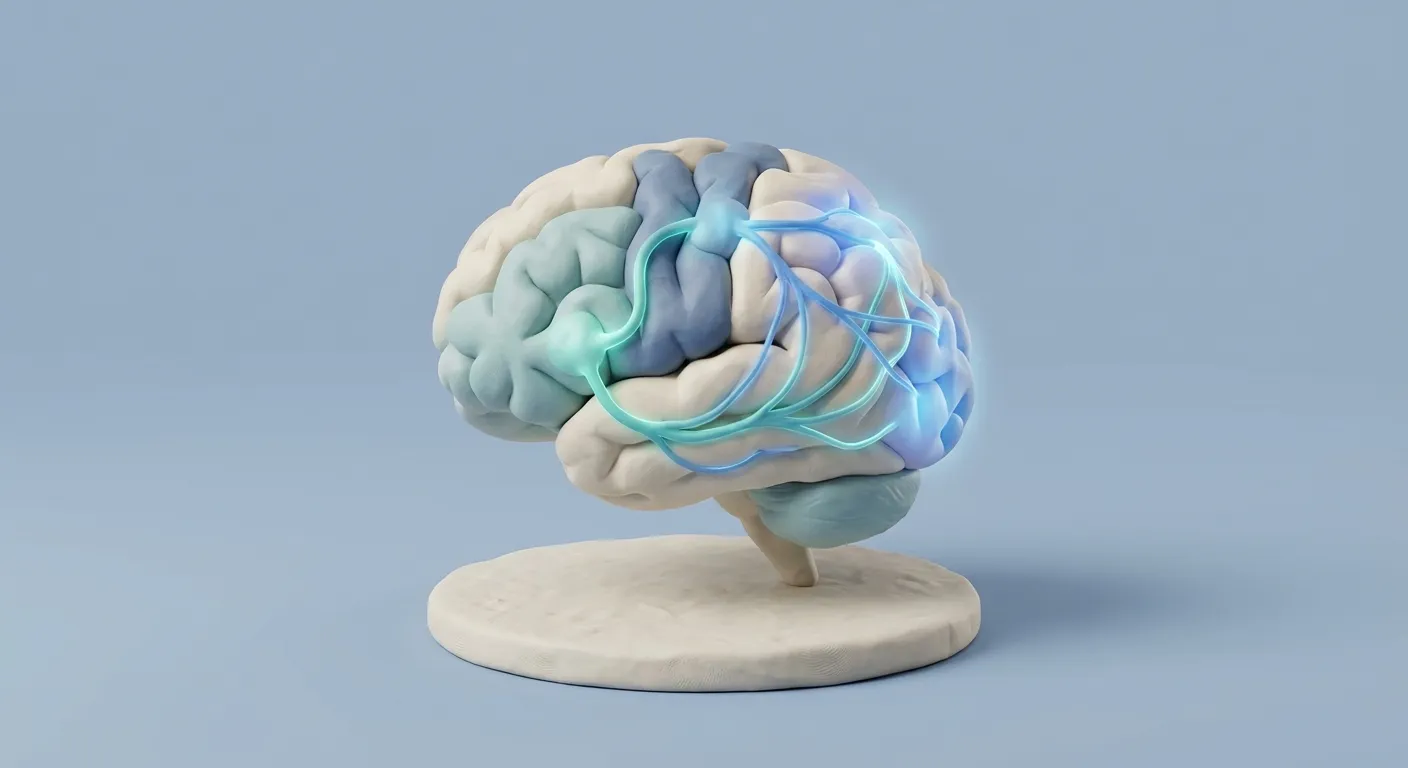
Dysgraphia is a neurodevelopmental difference that impacts the brain's ability to coordinate the complex processes required for written expression. Research shows it involves atypical connectivity between language processing areas (Broca's area), motor planning regions (premotor cortex), and visual-spatial networks.

1 in 17people affected
6%prevalence
Normal IQ range

How does Dysgraphia present?

  • Illegible writing despite concentrated effort
  • Writing so slowly assignments never finish on time
  • Breaking pencils from grip pressure, intense hand fatigue
  • Words drifting off page edges or cramming into corners
  • Verbal brilliance that vanishes in written work

Types of Dysgraphia

  • Motor Dysgraphia(Most common)
  • Spatial Dysgraphia(~30% of cases)
  • Linguistic Dysgraphia(~25% of cases)

Common questions about Dysgraphia

Why get diagnosed if there's no cure?

Diagnosis unlocks formal accommodations — extended time, assistive technology, oral assessments — that can transform educational and professional outcomes. Research also shows that receiving a diagnosis reduces self-blame and shame significantly, with one study finding a 40% improvement in mental health measures following formal identification. The diagnosis doesn't change the neurology. It changes how the world responds to it — and how you respond to yourself.

Can dysgraphia affect math skills?

Yes. Sometimes called dyscalculia graphica, approximately 30% of people with dysgraphia have math-specific writing challenges — difficulty aligning numbers in columns, miswriting multi-digit figures, or making arithmetic errors due to poor legibility of their own work. The issue isn't mathematical reasoning; it's the same spatial and motor difficulties applying to number output rather than letter output.

Content reviewed against DSM-5 criteria and current clinical literature. This page is for educational purposes and does not constitute medical advice. Consult a qualified healthcare professional for diagnosis or treatment.

Dysgraphia

Dysgraphia

Could this be me?

DysgraphiaAudio Coming Soon

We're crafting an audio guide for this condition. Get notified when it drops.

What actually is it?

Dysgraphia is a neurodevelopmental difference that impacts the brain's ability to coordinate the complex processes required for written expression. Research shows it involves atypical connectivity between language processing areas (Broca's area), motor planning regions (premotor cortex), and visual-spatial networks. This affects both the physical act of writing and the cognitive process of translating ideas into written form.

It's a difference in how the brain is wired, not a character flaw.

Quick Guess

How many people out of 17 do you think have this?

Tap the icons to make your estimate.

Dysgraphia stems from brain differences in writing networks, not aesthetics.

Research
Tap to Start Myth Busting

How it looks vs. How it feels

The lived experience behind the observed behavior

Illegible writing despite concentrated effort — The Letter Sculptor
Tap to see inside

What others see

Illegible writing despite concentrated effort

The Letter Sculptor
Tap to flip back

On the inside

The Letter Sculptor

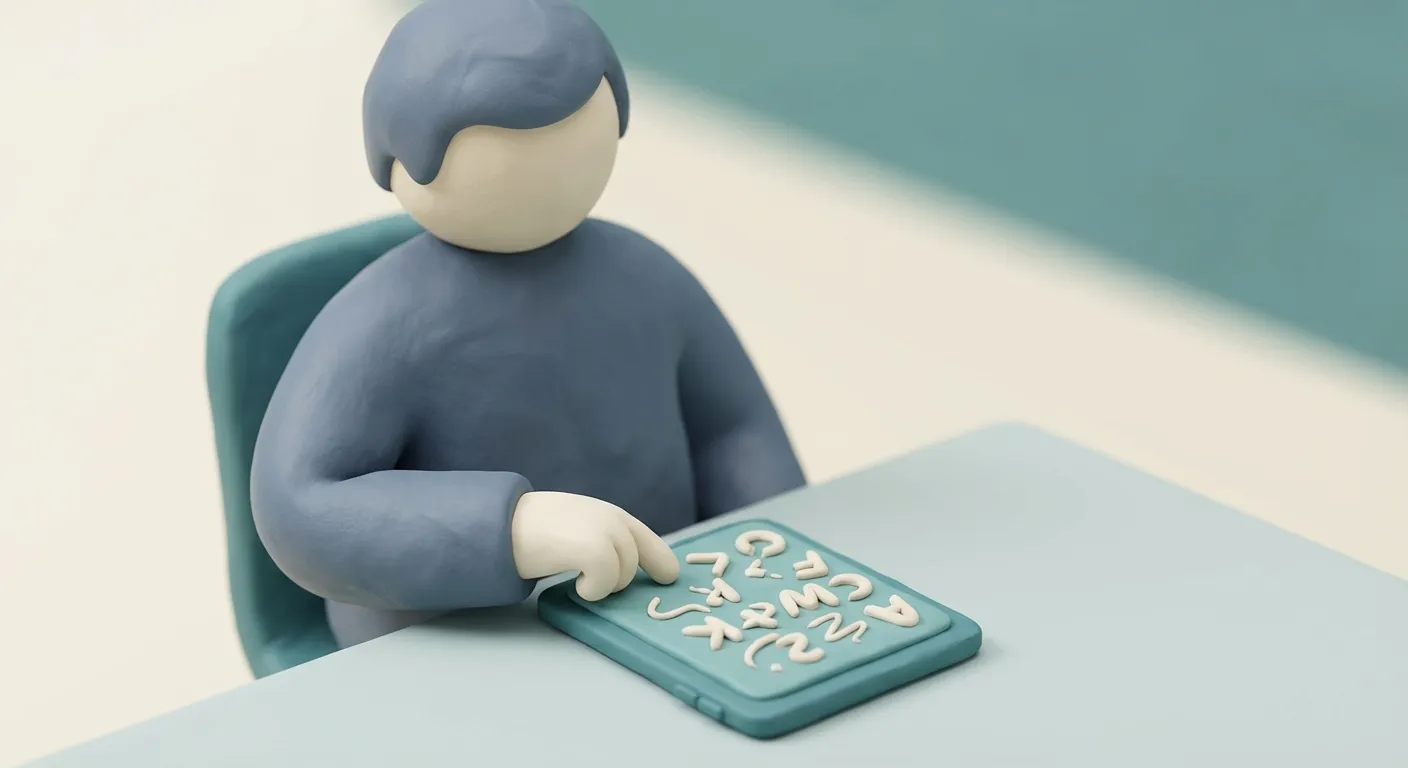
Each letter requires conscious construction. What others automate, I build stroke by stroke — like drawing a portrait every time I write my own name.

Writing so slowly assignments never finish on time — The Thought Traffic Jam
Tap to see inside

What others see

Writing so slowly assignments never finish on time

The Thought Traffic Jam
Tap to flip back

On the inside

The Thought Traffic Jam

Ideas flow fast — until they hit my hand. The bottleneck is not the thinking. It never was. My mind has moved three paragraphs ahead while my pen is still arguing with the first sentence.

Breaking pencils from grip pressure, intense hand fatigue — The Hand Fire
Tap to see inside

What others see

Breaking pencils from grip pressure, intense hand fatigue

The Hand Fire
Tap to flip back

On the inside

The Hand Fire

Twenty minutes of writing and my muscles burn. My knuckles whiten, my grip locks, my forearm cramps. What looks effortless to others costs me physically — every single session.

Words drifting off page edges or cramming into corners — The Public Exposure
Tap to see inside

What others see

Words drifting off page edges or cramming into corners

The Public Exposure
Tap to flip back

On the inside

The Public Exposure

Writing on a whiteboard means showing everyone how my brain-hand connection struggles. Every drifting line, every cramped cluster — it's my neurology on display, judged in real time by a room full of people.

Verbal brilliance that vanishes in written work — The Working Memory Overload
Tap to see inside

What others see

Verbal brilliance that vanishes in written work

The Working Memory Overload
Tap to flip back

On the inside

The Working Memory Overload

Holding my idea, finding the words, AND forming the letters simultaneously — something has to give. It is always the idea. My thoughts arrive fluent and leave fragmented.

Dysgraphia requires compensatory strategies, not just repetitive practice.

Research
Tap to Start Myth Busting

Types of Dysgraphia

Motor Dysgraphia: Linked to cerebellum and basal ganglia differences affecting fine motor control [9]. Characterized by irregular letter sizing, slow writing speed, and hand fatigue. While spelling may be intact, the physical act of writing is extremely effortful. Often co-occurs with developmental coordination disorder.
Type 1Most common

Motor Dysgraphia

Linked to cerebellum and basal ganglia differences affecting fine motor control [9]. Characterized by irregular letter sizing, slow writing speed, and hand fatigue. While spelling may be intact, the physical act of writing is extremely effortful. Often co-occurs with developmental coordination disorder.

Irregular letter sizing and formation
Slow writing speed with hand fatigue
Spelling often intact despite poor legibility
Frequently co-occurs with dyspraxia
Spatial Dysgraphia: Associated with parietal lobe functioning impacting spatial awareness. Presents with inconsistent word spacing, difficulty staying on lines, and poor page layout. Letter formation might be clear but text appears disorganized. Often overlaps with non-verbal learning differences.
Type 2~30% of cases

Spatial Dysgraphia

Associated with parietal lobe functioning impacting spatial awareness. Presents with inconsistent word spacing, difficulty staying on lines, and poor page layout. Letter formation might be clear but text appears disorganized. Often overlaps with non-verbal learning differences.

Inconsistent word and letter spacing
Difficulty staying on lines or margins
Clear individual letters but disorganized layout
Often overlaps with non-verbal learning differences
Linguistic Dysgraphia: Rooted in temporal lobe language processing differences. Features frequent spelling errors, omitted words, and simplified syntax despite good verbal skills. Writing mechanics may be functional, but written content doesn't reflect true knowledge. Commonly co-occurs with dyslexia.
Type 3~25% of cases

Linguistic Dysgraphia

Rooted in temporal lobe language processing differences. Features frequent spelling errors, omitted words, and simplified syntax despite good verbal skills. Writing mechanics may be functional, but written content doesn't reflect true knowledge. Commonly co-occurs with dyslexia.

Frequent spelling errors in written work
Omitted words and simplified sentence structure
Writing doesn't reflect verbal ability
Commonly co-occurs with dyslexia

Linguistic dysgraphia affects spelling/grammar due to orthographic coding differences.

Research
Tap to Start Myth Busting

The Science of DYSGRAPHIA

The "Why" Behind the "What"

It's not messy handwriting. It's a specific brain network working differently.

The Broken Shortcut: Your brain stores letter shapes in a region called the left fusiform gyrus — and that region is supposed to fire instantly whenever you need to write. In dysgraphia, the shortcut isn't built the same way. You can see letters fine. Retrieving them for motor output is another matter entirely.
Orthographic Coding

The Broken Shortcut

Your brain stores letter shapes in a region called the left fusiform gyrus — and that region is supposed to fire instantly whenever you need to write. In dysgraphia, the shortcut isn't built the same way. You can see letters fine. Retrieving them for motor output is another matter entirely.

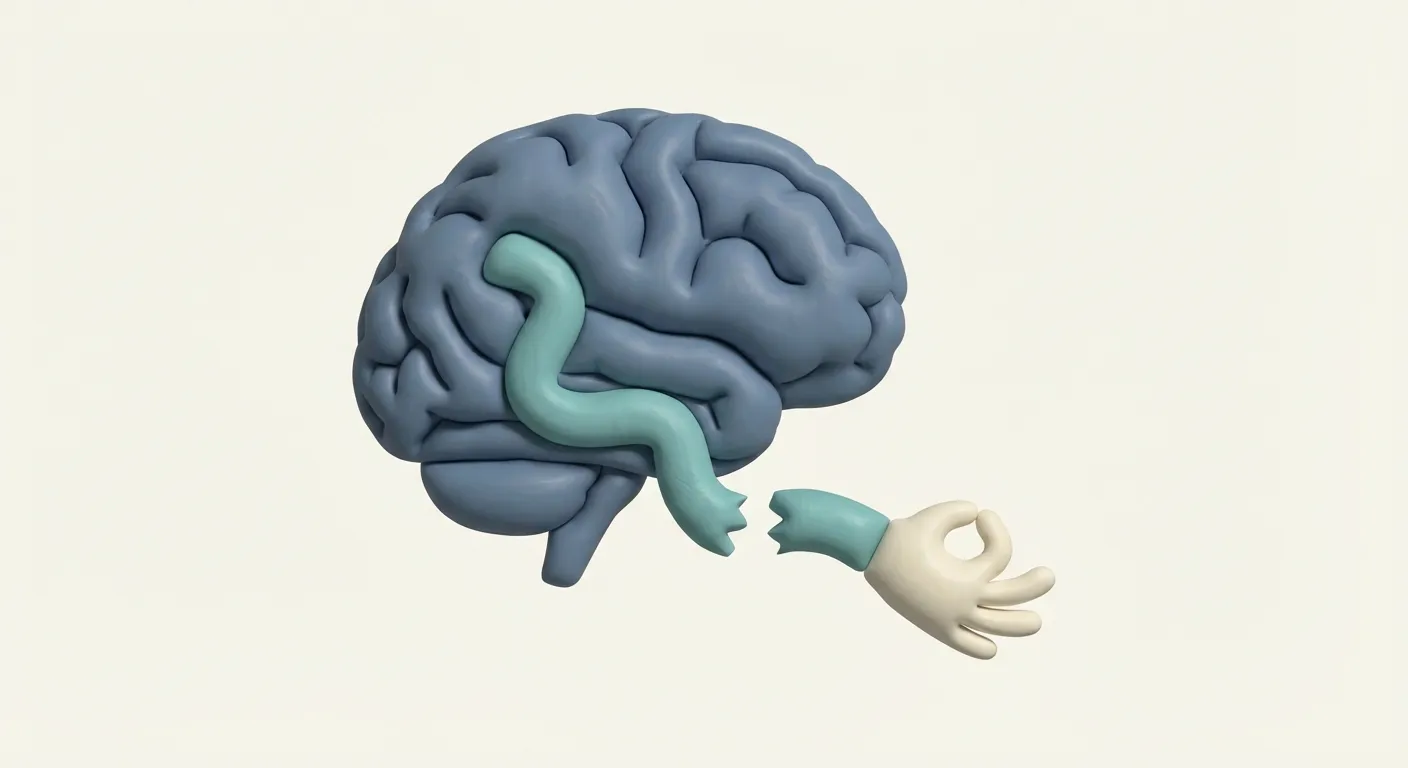
The Motor Planner Gone Rogue: Writing a single letter involves a loop: premotor cortex plans the stroke, cerebellum calibrates it, basal ganglia sequence it. In motor dysgraphia, this loop runs with friction. The plan is there. The execution is where things get complicated.
Graphomotor Loop

The Motor Planner Gone Rogue

Writing a single letter involves a loop: premotor cortex plans the stroke, cerebellum calibrates it, basal ganglia sequence it. In motor dysgraphia, this loop runs with friction. The plan is there. The execution is where things get complicated.

The Spelling System That Thinks in Sound: Linguistic dysgraphia lives in the temporal lobe — where language is stored, assembled, and converted into written sequences. Your verbal skills can be excellent. Your brain just has a different system for turning those words into letters on paper.
Linguistic Processing

The Spelling System That Thinks in Sound

Linguistic dysgraphia lives in the temporal lobe — where language is stored, assembled, and converted into written sequences. Your verbal skills can be excellent. Your brain just has a different system for turning those words into letters on paper.

The Brilliant Composer with a Broken Piano: Imagine a composer with music fully formed in their head — harmonies, structure, emotional arc, every note. Now imagine the only instrument available is a piano with sticky keys, missing hammers, and unpredictable sustain. The music is real. The composer is not incompetent. But the output that reaches the audience bears little resemblance to what was intended. Every performance is exhausting in a way the audience will never fully see. That is dysgraphia: the composition is always there. The piano is the problem.
The Mechanics

The Brilliant Composer with a Broken Piano

Imagine a composer with music fully formed in their head — harmonies, structure, emotional arc, every note. Now imagine the only instrument available is a piano with sticky keys, missing hammers, and unpredictable sustain. The music is real. The composer is not incompetent. But the output that reaches the audience bears little resemblance to what was intended. Every performance is exhausting in a way the audience will never fully see. That is dysgraphia: the composition is always there. The piano is the problem.

Linked to differences in the left fusiform gyrus, premotor cortex, cerebellum, and superior parietal lobule — regions governing letter storage, motor sequencing, calibration, and spatial awareness during writing.

Brain differences in motor planning areas cause dysgraphia, regardless of effort.

Research
Tap to Start Myth Busting
Restricted Access

Scientific Deep Dive

Explore Myths to Unlock

Earn 5 Insight Points

Visual coming soon
1 / 5

Why does my hand hurt?

Neural interference — your motor planning system (premotor cortex + cerebellum) isn't generating smooth, automatic stroke programs, so the motor cortex falls back on deliberate, effortful control for every movement. That requires sustained muscular tension that fluent writers never generate. You're running the manual override on every single letter. It's exhausting for the same reason that manually overriding power steering is exhausting: the system wasn't designed to work that way.

Unlock Answer
Two Sides of the Coin

Two Sides of the Coin

Every neurological difference comes with trade-offs. The same trait that causes struggle in one context creates brilliance in another.

Graphomotor Coordination

The pipeline from intention to pen stroke runs with friction you can feel in your hand. It costs physical energy just to put letters on paper — energy that other people spend on thinking.

Working Memory Under Dual Load

You cannot hold the idea AND build the letter simultaneously without something giving. It's usually the idea that goes first. Your best thinking evaporates in the gap between knowing and writing.

Orthographic Retrieval

Letter sequences aren't always reliably on tap. You know the word perfectly — you've said it a hundred times — but writing it down goes sideways in ways that feel genuinely baffling from the inside.

Dysgraphia specifically impacts writing skills, not general intelligence or understanding.

Research
Tap to Start Myth Busting

Community Voices

Real experiences

I got a C in English despite being able to speak about the books for hours. My teacher said I wasn't applying myself. I was applying myself so hard my hand shook.

Marcus, 34
22

I used to think I was the dumbest person in the room. Then I got a job in radio and won an award. The work was identical — just no pen required.

Priya, 29
39

My daughter was in tears every night over homework. Not because she didn't know the answers — she knew all the answers. Because her hand wouldn't cooperate. Diagnosis at age nine changed everything.

Sandra
16

I type 90 words per minute. I write about 12, with pain, and no one can read it. People used to think I was faking. My keyboard doesn't lie.

Jonah, 41
33

The day my university gave me a computer for exams, I went from Cs to As. Nothing about my thinking changed. The bottleneck was removed.

Anika, 26
50

I became an architect. People are shocked when I explain I struggle with handwriting. Apparently they thought that disqualified you from design. It doesn't. My spatial thinking is exceptional. My penmanship is not.

Leon, 38
27

Think you might have Dysgraphia?

Take our clinical-grade screening assessment. It takes less than 5 minutes and gives you instant insights.

Rewiring for Success

Stop trying to fix yourself. Start building a support system that works with your brain, not against it.

Therapy

  • Occupational Therapy (Handwriting Focus)
    Targeted work on graphomotor loop efficiency, grip mechanics, and letter formation. OT can significantly reduce physical fatigue even when full automaticity is not achievable.
  • Cognitive Strategy Training
    Explicit instruction in planning, drafting, and revising as separate phases — reduces working memory overload by separating content generation from transcription.
  • Multisensory Letter Formation
    Programmes like Handwriting Without Tears use visual, auditory, and kinaesthetic channels simultaneously to build orthographic-motor links more robustly than repetition alone.

Medication

  • ADHD Medication (where comorbid)
    30–50% of people with dysgraphia also have ADHD. When both are present, treating ADHD with stimulants can reduce working memory overload and improve writing fluency as a secondary benefit.
  • Anxiety Management
    Writing-related anxiety is common and significantly worsens performance. Low-dose SSRIs or beta-blockers may be appropriate where anxiety is a primary barrier to functional writing.

Lifestyle

  • Separate Drafting from Transcription
    Generate ideas verbally (voice memo, dictation) before attempting written output. This decouples the thinking from the transcription bottleneck entirely.
  • Regular Fine Motor Warm-Up
    Brief hand and forearm exercises before writing sessions can reduce cramping and improve initial output quality by warming the motor circuits involved.
  • Timed Writing Breaks
    Set a timer for 15–20 minute writing intervals followed by rest. Prevents the cumulative hand fatigue that degrades both legibility and content over extended sessions.

Supplements

  • Omega-3 Fatty Acids
    DHA and EPA support myelin integrity and general neural connectivity. Some evidence for improved fine motor coordination in children with developmental coordination difficulties.
  • Magnesium
    Supports muscle relaxation and neuromuscular function. May help with the tension and cramping associated with compensatory grip in motor dysgraphia.

Environment

  • Assistive Technology First
    Word processors, speech-to-text (Dragon NaturallySpeaking, Apple Dictation, Google Docs Voice), and text prediction software are not last resorts — they should be first-line tools. They bypass the bottleneck rather than fighting it.
  • Ergonomic Writing Tools
    Triangular grip pencils, weighted pens, angled writing surfaces, and pencil grips reduce compensatory muscle tension and extend comfortable writing duration significantly.
  • Formal Academic Accommodations
    Extended time (50–100% additional), use of computer/tablet for written work, scribe or voice recorder options. These are legal entitlements in most jurisdictions — pursue them.

Body

  • Fine Motor Activities
    Regular engagement with activities that develop fine motor precision — clay modelling, finger painting, musical instruments — can build graphomotor circuits through enjoyable, low-pressure repetition.
  • Gross Motor Exercise
    Whole-body movement, particularly balance and coordination work (swimming, dance, climbing), supports cerebellar function — the same cerebellar networks implicated in motor dysgraphia.
  • Hand and Wrist Stretches
    Targeted stretches for the flexor and extensor muscle groups reduce the cumulative tension from compensatory grip. Takes two minutes before and after writing sessions.
FAQ

Frequently Asked Questions

Glossary of Terms

Co-occurring Conditions

Neurodivergent conditions often travel together. Understanding co-occurrence helps build a complete picture.

Click any condition to learn more. Co-occurrence percentages are from peer-reviewed research.

Scientific References

  1. Berninger, V. W., & Wolf, B. J. (2016). Dyslexia, dysgraphia, OWL LD, and dyscalculia. Paul H. Brookes Publishing.
  2. Deuel, R. K. (1995). Developmental dysgraphia and motor skills disorders. Journal of Child Neurology, 10(S1), S6–S8.
  3. Fuentes, C. T., & Bastian, A. J. (2010). Where is your arm? Variations in proprioception across space and tasks. Journal of Neurophysiology, 103(1), 164–171.
  4. Hamstra-Bletz, L., & Blöte, A. W. (1993). A longitudinal study on dysgraphic handwriting in primary school. Journal of Learning Disabilities, 26(10), 689–699.
  5. Kushki, A., Schwellnus, H., Ilyas, F., & Chau, T. (2011). Changes in kinetics and kinematics of handwriting during a prolonged writing task in children with and without dysgraphia. Research in Developmental Disabilities, 32(3), 1058–1064.
  6. Manis, F. R., Doi, L. M., & Bhadha, B. (2000). Naming speed, phonological awareness, and orthographic knowledge in second graders. Journal of Learning Disabilities, 33(4), 325–333.
  7. McCloskey, M., & Rapp, B. (2000). A visually based spelling system: Evidence from a case of acquired dysgraphia. Cognitive Neuropsychology, 17(1–3), 5–73.
  8. Rosenblum, S., Aloni, T., & Josman, N. (2010). Relationships between handwriting performance and organizational abilities among children with and without dysgraphia. Research in Developmental Disabilities, 31(2), 502–509.
  9. Sumner, E., Connelly, V., & Barnett, A. L. (2013). Children with dyslexia are slow writers because they pause more often and not because they are slow at handwriting execution. Reading and Writing, 26(6), 991–1008.
  10. Teverovsky, E. G., Bickel, J. O., & Feldman, H. M. (2009). Functional characteristics of children diagnosed with childhood apraxia of speech. Disability and Rehabilitation, 31(2), 94–102.

Your thoughts are faster than your hand. That is a kind of velocity, not a defect.

Why Dysgraphia Makes Every Letter a Construction Project

For most people, handwriting becomes automatic by mid-primary school. The brain builds what researchers call orthographic-motor integration — a fast, unconscious pipeline that translates a stored letter-shape into a coordinated hand movement without requiring conscious attention. You think 'A', and your hand writes an A. You are not thinking about the strokes. You stopped thinking about them around age seven.

For a brain with dysgraphia, that automation never fully forms. The letter 'A' does not automatically trigger a motor program. Each time, the process requires conscious reconstruction: retrieve the letter shape from orthographic memory (unreliably), plan the sequence of strokes (in what order? starting where?), coordinate the fine motor output (how much pressure? what angle?), and monitor the result while simultaneously continuing to think about what you actually want to say.

This is an enormous cognitive load — and it sits on top of everything else writing demands. Spelling. Grammar. Vocabulary selection. The thing you were trying to communicate in the first place.

The neurological basis is well-documented. fMRI studies show reduced activation in the left fusiform gyrus — the brain region responsible for visual word form recognition and letter storage — during writing tasks in people with dysgraphia. The premotor cortex, which should be generating smooth motor programs, is less efficiently recruited. The result is a brain that is not being careless. It is working extraordinarily hard to do something that, to neurotypical observers, looks effortless.

Legibility is not a reliable proxy for effort. Many people with dysgraphia produce their most illegible work precisely when they are concentrating hardest — because concentration is being split across too many simultaneous processes. When asked to focus only on making letters neat, content suffers dramatically. The bottleneck is real, and it is architectural.

Understanding this reframes the whole experience. The letter sculptor is not drawing poorly. They are constructing each letter from raw materials in real time, every single time — in a workshop where everyone else installed an automated press twenty years ago.

  • Orthographic-motor integration — the automatic pipeline from letter shape to hand movement — doesn't fully develop in dysgraphia, requiring conscious effort every time.
  • Reduced left fusiform gyrus activation during writing tasks is measurable on fMRI — this is not a motivation deficit.
  • Splitting cognitive load between letter formation and content means focusing on neatness degrades meaning, and vice versa.
  • Illegibility under concentration is not carelessness — it is the visible signature of a genuinely overloaded working memory system.

The Gap Between Thinking Fast and Writing Slow

One of the most frustrating aspects of dysgraphia — and one of the least visible to outside observers — is the mismatch between cognitive speed and transcription speed. The brain with dysgraphia is not slower at thinking. In many cases, verbal reasoning and idea generation are genuinely strong. The problem is the transfer: the handoff between 'thought ready to express' and 'thought successfully on paper'.

Cognitive psychologists describe writing as involving two simultaneous systems: a generative system (idea formation, language construction, narrative organisation) and a transcription system (converting language into physical marks). In fluent writers, transcription is fast and largely automatic, which means the generative system runs freely. In dysgraphia, the transcription system is slow and effortful, creating a processing bottleneck that back-pressures the generative system.

The practical consequence is that ideas do not wait at the bottleneck. They do not queue politely. They degrade, fragment, or get lost. The brilliant sentence that existed fully formed in working memory fifteen seconds ago has often partially evaporated by the time the pen has caught up. The essay you intended to write and the essay that emerges are different documents — not because the thinking was poor, but because the transcription process consumed so much working memory that the original content couldn't survive intact.

This is particularly visible in timed assessments, where the gap between verbal and written performance is often dramatic. A student who can articulate sophisticated arguments aloud may produce sparse, fragmentary written work. This discrepancy — confident in discussion, apparently struggling on paper — is often misread as inconsistency, lack of effort, or strategic avoidance. It is none of these things.

Research on working memory in dysgraphia shows that letter formation draws heavily on the same limited-capacity systems that support content generation. The two processes compete for the same resources. This is not a metaphor. It is a documented competition in a finite system.

The path forward involves bypassing the bottleneck, not forcing more material through it: voice-to-text for initial drafts, assistive technology, extended time accommodations, and separating the thinking phase from the transcription phase entirely.

  • Dysgraphia slows transcription, not cognition — verbal fluency and idea generation are typically intact or above average.
  • The generative and transcription systems compete for working memory — slow letter formation directly degrades content quality.
  • Ideas degrade in working memory while waiting for slow transcription — what's lost isn't thinking ability, it's the holding capacity under dual load.
  • Extended time, voice-to-text, and separating drafting from transcription address the actual bottleneck rather than demanding more from an overloaded system.

Why Writing Hurts: The Physical Reality of Motor Dysgraphia

Pain during writing is not dramatic exaggeration. For many people with motor dysgraphia, the physical act of sustained handwriting causes genuine muscular fatigue, cramping, and discomfort — often beginning within minutes of starting. This is a physiological consequence of how the motor system is trying to compensate for deficits in automatic fine motor coordination.

In typical handwriting, the cerebellum and basal ganglia work together to generate smooth, calibrated motor programs. These programs handle grip pressure, stroke velocity, and directional correction automatically — the same way walking generates automatic gait adjustments without requiring conscious attention. When this automaticity is impaired, as it is in motor dysgraphia, the motor system falls back on deliberate, effortful control for every movement. This is like manually overriding your car's power steering: you can do it, but it's physically exhausting in a way that normal steering is not.

The excessive grip pressure that often accompanies dysgraphia — the white knuckles, the broken pencil tips, the grooves worn into pen barrels — is the motor system trying to increase proprioceptive feedback to compensate for unreliable automatic control. If the hand can't feel precisely where the pen is through normal feedback, it grips harder to generate more sensory information. This is adaptive. It is also exhausting and ultimately counterproductive, because increased grip tension reduces fine motor control rather than improving it.

The fatigue is real and accumulative. Thirty minutes of forced writing can leave a person with dysgraphia with hand and forearm fatigue comparable to what a neurotypical person might feel after an hour of manual work. Extended writing sessions in examinations are not merely inconvenient — they are genuinely physically taxing in a way that affects both quality and stamina.

Accommodations like ergonomic pen grips, adapted pencil holders, and typing alternatives are not about making things easier. They are about removing a compensatory physiological burden — the death-grip — so the brain can redirect that energy toward the actual task of expressing ideas.

  • Motor dysgraphia forces the motor system into effortful manual control for every stroke, creating real physical fatigue quickly.
  • Excessive grip pressure is a compensatory strategy to boost proprioceptive feedback — adaptive, but exhausting and counterproductive over time.
  • Hand pain and cramping during writing are physiological, not attitudinal — they are the measurable cost of running a non-automatic motor system.
  • Ergonomic tools and typing alternatives reduce compensatory load, allowing cognitive resources to return to content rather than grip management.

Spatial Dysgraphia and the Experience of Writing Under Observation

There is a particular kind of exposure that comes with writing difficulties — one that is qualitatively different from most academic struggles. Maths anxiety, reading difficulty, memory gaps — these tend to be experienced privately, or at least with some delay before others notice. Handwriting difficulties are visible in real time, displayed for any observer as the pen moves across the page or the marker moves across the whiteboard.

For people with spatial dysgraphia — involving parietal lobe differences that affect the spatial awareness component of writing — this visibility is especially acute. The parietal lobe integrates proprioceptive and visual information to maintain spatial maps: where the hand is in space, where the paper edge is, how words relate to one another on the page. When this integration is disrupted, the spatial layout of writing becomes unpredictable. Words drift toward the right margin and off the edge. Lines slope upward or downward. Words that should be spaced evenly cluster or sprawl. Text jams into corners because the end of the line wasn't anticipated.

This is not an absence of caring about presentation. People with dysgraphia often care enormously — too much, in fact, because they know the output doesn't reflect the thought behind it. The gap between internal competence and visible output is a source of profound frustration and shame.

Being asked to write on a whiteboard, in front of a group, is for many people with dysgraphia an intensely stressful request. It combines the already effortful task of writing with performance anxiety, real-time observation, and the impossibility of erasing or revising before anyone sees. The result often looks worse than private writing, because the added cognitive load of social observation consumes resources that were already being stretched thin.

Understanding this matters for how we design workplaces and classrooms. Asking someone to 'just write it on the board' is not a neutral request for everyone in the room.

  • Spatial dysgraphia involves parietal lobe differences that impair the brain's spatial map of the page — drifting lines and cramped text are the output, not the intention.
  • Handwriting difficulties are uniquely visible in real time, creating a form of public exposure that most other learning differences don't carry.
  • Social observation during writing adds cognitive load to an already stretched system, typically making output worse under pressure — not better.
  • The gap between internal competence and visible written output is the core source of shame for many people with dysgraphia — the thought quality and the page quality are separate things.

When Writing Eats Your Thinking: Working Memory in Dysgraphia

Working memory is the brain's mental whiteboard — the limited-capacity workspace where information is held active and manipulated in the moment. It is where you keep the beginning of a sentence while you compose its end. It is where you hold the argument while you locate the word. It is where the idea lives while the hand gives it form.

In neurotypical writers, the transcription process (converting thought to marks on paper) is largely automated and consumes minimal working memory. This leaves most of the whiteboard available for generative work: ideas, structure, vocabulary, narrative logic. The writer thinks and writes in close parallel.

In dysgraphia, letter formation is not automated. Each character requires active attention. This means that a significant portion of the working memory whiteboard is perpetually occupied by transcription — by the conscious management of stroke sequences, spatial placement, grip pressure, and letter retrieval. The generative content that was ready at the start of the sentence must wait, or compress, or evaporate, while the transcription system finishes its slow, laborious work.

This is why the discrepancy between verbal and written performance is so reliably striking in dysgraphia. A student who answers complex questions confidently aloud, who debates with sophistication, who tells stories with structure and richness, may produce written work that looks sparse, simple, and stilted. The difference is not intelligence. It is working memory allocation. In spoken language, nothing competes with the thinking. In written language, transcription takes up the desk.

Researchers studying writing in learning disabilities have found that when the transcription burden is reduced — through training letter automaticity, providing word processors, or using speech-to-text — written content quality rises significantly. The ideas were always there. The bottleneck was never the thinking.

This understanding matters not just for accommodations but for self-concept. The person who writes poorly but speaks brilliantly is not performing inconsistently. They are experiencing a predictable consequence of working memory overload — one that disappears almost entirely when the transcription burden is removed.

  • Working memory has finite capacity — dysgraphia forces transcription to compete with content generation for the same limited space.
  • The verbal-written performance gap in dysgraphia is not inconsistency — it is a predictable consequence of working memory being consumed by letter formation.
  • When transcription burden is reduced (typing, voice-to-text), written content quality typically rises to match verbal performance.
  • The ideas were never the problem. The whiteboard was just too small to hold both the thoughts and the letter-by-letter construction process at the same time.

Orthographic Coding: How Letter Memory Works Differently in Dysgraphia

When a fluent writer decides to write the word 'breakfast', something fast and largely invisible happens in their brain. The left fusiform gyrus — a region of the temporal lobe sometimes called the visual word form area — activates almost instantly. It retrieves the stored orthographic representations of each letter: not just what B, R, E, A, K, F, A, S, T look like visually, but the specific motor programs associated with producing them. This happens in under 300 milliseconds. The hand is already moving before conscious attention has fully registered the decision.

This is orthographic-motor integration — the coupling of a stored visual letter form with its corresponding motor sequence — and it is the neurological mechanism that makes handwriting feel automatic in fluent writers.

In dysgraphia, this coupling is disrupted. Neuroimaging studies using fMRI consistently find reduced activation in the left fusiform gyrus during writing tasks in individuals with dysgraphia. The orthographic representations are often present — people with dysgraphia can typically recognize letters and read without difficulty — but the efficient pipeline from stored shape to motor output is less reliable. The shortcut is either not built, partially built, or built with greater resistance than in neurotypical writers.

This has a downstream consequence that is often misunderstood: people with dysgraphia may be able to copy text with more success than they can write freely, because copying provides a continuous visual reference that partially compensates for the weak internal retrieval pipeline. Free writing, by contrast, must rely entirely on orthographic memory — and that is where the system shows its limitations.

The linguistic dysgraphia subtype adds a spelling dimension: when orthographic coding is particularly impaired, words may be written with letters omitted, transposed, or replaced with phonologically similar alternatives. This is not a phonological deficit (as in dyslexia) but a specific failure to reliably store and retrieve the full letter sequence for a word. The sound is known. The sequence is unstable.

Therapeutic approaches that target orthographic memory — including explicit multisensory letter-form training, graphic-motor practice, and assistive technology that bypasses retrieval entirely — are grounded in this neuroscience.

  • The left fusiform gyrus is the brain's letter library — in dysgraphia, this region shows reduced activation during writing, disrupting the orthographic-to-motor pipeline.
  • Orthographic coding stores not just what letters look like but the motor programs for producing them — both can be partially disrupted in dysgraphia.
  • Copying is often easier than free writing because it provides external visual reference, compensating for weak internal retrieval.
  • Spelling errors in linguistic dysgraphia reflect orthographic storage instability, not phonological confusion — the sounds are known, the letter sequences are not.

The Graphomotor Loop: Why Motor Dysgraphia Isn't a Grip Problem

The graphomotor loop is the neural circuit that turns the intention to write into coordinated hand movement. It involves at minimum three cooperating systems: the premotor cortex, which generates and sequences motor plans; the cerebellum, which calibrates those plans against feedback and adjusts for errors in real time; and the basal ganglia, which sequence and initiate stored motor programs. These systems communicate continuously during writing, updating the plan with each stroke, comparing output against intention, and correcting on the fly.

In motor dysgraphia, this loop is disrupted at one or more of its nodes. Neuroimaging studies have identified structural differences in the cerebellum and superior parietal lobule — a region that integrates proprioceptive information (where is my hand?) with spatial information (where should the letter be?) — in individuals with motor dysgraphia. The premotor cortex shows reduced activation during writing compared to controls.

The practical consequence is a graphomotor loop that cannot operate smoothly at speed. To compensate, the brain slows down. But slowing down does not reliably improve the output — because the problem is not speed, it is the calibration itself. The stroke that was planned and the stroke that arrives on paper are not the same stroke. The feedback loop that should correct this is running late or running with noise.

And here is what makes motor dysgraphia particularly cruel: the person can often see clearly that the letter looks wrong. The visual system is intact. The problem is not recognition; it is correction. The correction loop is the same loop that's impaired, so knowing a letter looks wrong doesn't automatically produce a better version. It produces a more anxious, over-controlled attempt — which often looks worse.

This is why trying harder makes motor dysgraphia output more laboured, more cramped, more inconsistent — not better. The effort itself introduces more noise into an already noisy system. The appropriate response is not more control but a different pathway: typing, voice dictation, or text-to-speech, which bypass the graphomotor loop entirely and allow the rest of the brain's capabilities to perform without that friction.

  • The graphomotor loop involves the premotor cortex, cerebellum, and basal ganglia cooperating in real time — motor dysgraphia disrupts this cooperation at a structural level.
  • The superior parietal lobule integrates proprioceptive and spatial information during writing — differences here explain poor spatial layout and letter sizing.
  • Knowing a letter looks wrong doesn't automatically fix it — correction relies on the same impaired loop, creating a frustrating awareness-without-control experience.
  • Trying harder often makes motor dysgraphia worse, not better — the appropriate response is bypassing the loop via typing or voice, not increasing effort through it.

Linguistic Dysgraphia: When Language Networks Write Differently

Language in the brain is not a single system. Speaking, listening, reading, and writing each recruit overlapping but distinct neural networks — and the network for writing has components that the network for speaking does not.

Linguistic dysgraphia involves disruption to the language processing networks specifically involved in written output. These include Wernicke's area (involved in language comprehension and word retrieval), the angular gyrus (a critical hub for integrating phonological and orthographic information), and the connections between these regions and the frontal motor areas. When these circuits function differently, writing is affected at the level of word selection, spelling, and sentence construction — even when spoken language is fluent and rich.

The key mechanism is the phonological-to-orthographic conversion pathway. When writing, the brain must not only retrieve a word but also map its phonological form (its sounds) onto its orthographic form (its letter sequence). This mapping is non-trivial in English, where phonology and orthography frequently diverge. The angular gyrus plays a central role in this cross-modal mapping — and differences in angular gyrus connectivity appear in neuroimaging studies of individuals with spelling-based writing difficulties.

The result is a characteristic pattern: words written as they sound (though, thot; because, becuz), letters omitted or transposed within words, function words (prepositions, articles, conjunctions) dropped entirely, syntax simplified when writing compared to speech. The ideas are present. The linguistic vehicle in written form has leaks.

This is sometimes confused with dyslexia, which involves phonological processing difficulties that affect both reading and spelling. Linguistic dysgraphia can affect spelling severely while leaving reading largely intact — because reading is a different direction of processing along the same phonological-orthographic pathway. The distinction matters for intervention: targeting phonological awareness (as in dyslexia therapy) may be less effective than orthographic memory training and bypass strategies for linguistic dysgraphia.

Voice-to-text technology is particularly valuable here, because it bypasses the phonological-orthographic conversion entirely. The brain's verbal strength is directly captured. The conversion step that creates errors is removed from the equation.

  • Linguistic dysgraphia involves the angular gyrus and temporal language networks — the phonological-to-orthographic conversion pathway runs with less reliability.
  • Spelling errors, omitted function words, and simplified syntax can coexist with strong verbal reasoning — these are distinct neural systems.
  • Linguistic dysgraphia can affect spelling while leaving reading relatively intact — distinguishing it from dyslexia, which is primarily phonological.
  • Voice-to-text technology directly captures verbal strength while bypassing the impaired conversion step — one of the most effective accommodations for this subtype.

Why Dysgraphia Makes Every Letter a Construction Project

For most people, handwriting becomes automatic by mid-primary school. The brain builds what researchers call orthographic-motor integration — a fast, unconscious pipeline that translates a stored letter-shape into a coordinated hand movement without requiring conscious attention. You think 'A', and your hand writes an A. You are not thinking about the strokes. You stopped thinking about them around age seven.

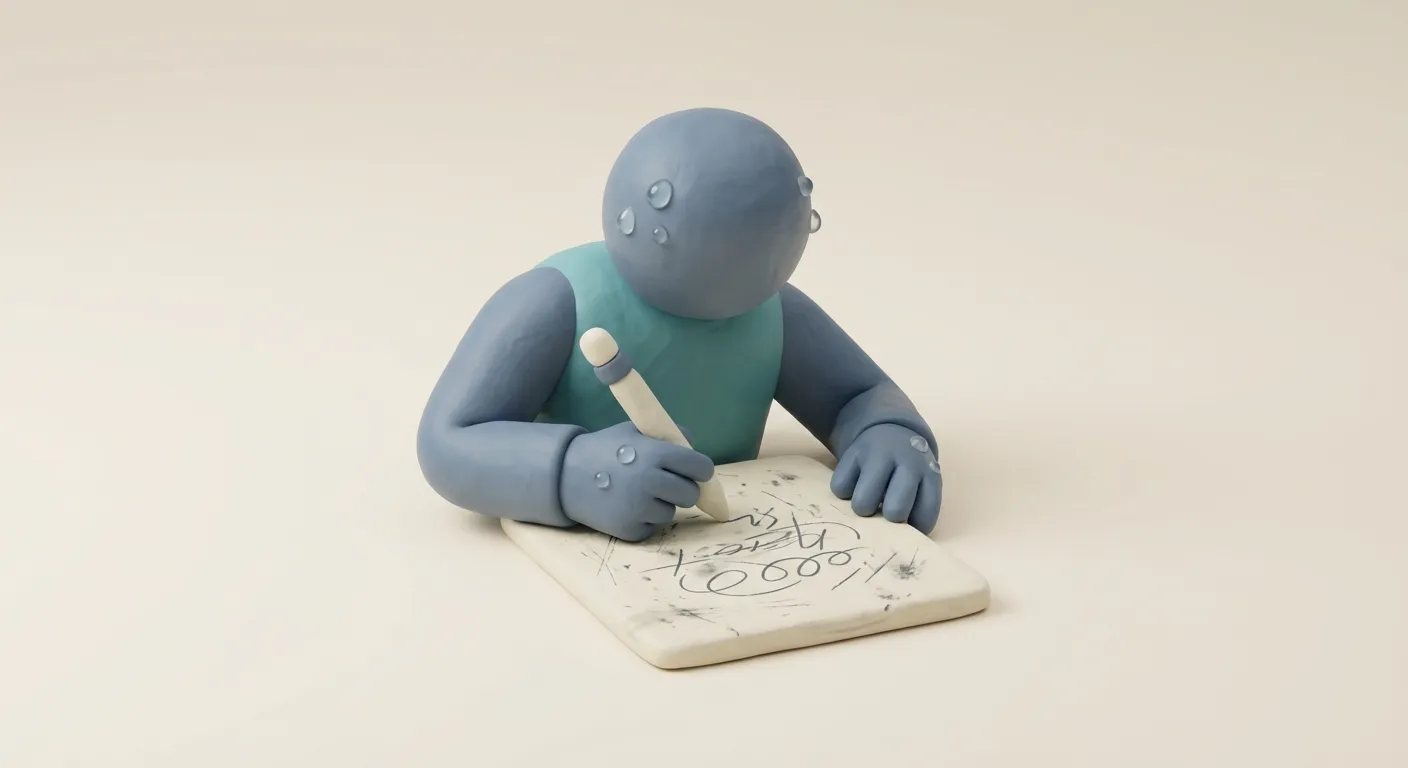
For a brain with dysgraphia, that automation never fully forms. The letter 'A' does not automatically trigger a motor program. Each time, the process requires conscious reconstruction: retrieve the letter shape from orthographic memory (unreliably), plan the sequence of strokes (in what order? starting where?), coordinate the fine motor output (how much pressure? what angle?), and monitor the result while simultaneously continuing to think about what you actually want to say.

This is an enormous cognitive load — and it sits on top of everything else writing demands. Spelling. Grammar. Vocabulary selection. The thing you were trying to communicate in the first place.

The neurological basis is well-documented. fMRI studies show reduced activation in the left fusiform gyrus — the brain region responsible for visual word form recognition and letter storage — during writing tasks in people with dysgraphia. The premotor cortex, which should be generating smooth motor programs, is less efficiently recruited. The result is a brain that is not being careless. It is working extraordinarily hard to do something that, to neurotypical observers, looks effortless.

Legibility is not a reliable proxy for effort. Many people with dysgraphia produce their most illegible work precisely when they are concentrating hardest — because concentration is being split across too many simultaneous processes. When asked to focus only on making letters neat, content suffers dramatically. The bottleneck is real, and it is architectural.

Understanding this reframes the whole experience. The letter sculptor is not drawing poorly. They are constructing each letter from raw materials in real time, every single time — in a workshop where everyone else installed an automated press twenty years ago.

The Gap Between Thinking Fast and Writing Slow

One of the most frustrating aspects of dysgraphia — and one of the least visible to outside observers — is the mismatch between cognitive speed and transcription speed. The brain with dysgraphia is not slower at thinking. In many cases, verbal reasoning and idea generation are genuinely strong. The problem is the transfer: the handoff between 'thought ready to express' and 'thought successfully on paper'.

Cognitive psychologists describe writing as involving two simultaneous systems: a generative system (idea formation, language construction, narrative organisation) and a transcription system (converting language into physical marks). In fluent writers, transcription is fast and largely automatic, which means the generative system runs freely. In dysgraphia, the transcription system is slow and effortful, creating a processing bottleneck that back-pressures the generative system.

The practical consequence is that ideas do not wait at the bottleneck. They do not queue politely. They degrade, fragment, or get lost. The brilliant sentence that existed fully formed in working memory fifteen seconds ago has often partially evaporated by the time the pen has caught up. The essay you intended to write and the essay that emerges are different documents — not because the thinking was poor, but because the transcription process consumed so much working memory that the original content couldn't survive intact.

This is particularly visible in timed assessments, where the gap between verbal and written performance is often dramatic. A student who can articulate sophisticated arguments aloud may produce sparse, fragmentary written work. This discrepancy — confident in discussion, apparently struggling on paper — is often misread as inconsistency, lack of effort, or strategic avoidance. It is none of these things.

Research on working memory in dysgraphia shows that letter formation draws heavily on the same limited-capacity systems that support content generation. The two processes compete for the same resources. This is not a metaphor. It is a documented competition in a finite system.

The path forward involves bypassing the bottleneck, not forcing more material through it: voice-to-text for initial drafts, assistive technology, extended time accommodations, and separating the thinking phase from the transcription phase entirely.

Why Writing Hurts: The Physical Reality of Motor Dysgraphia

Pain during writing is not dramatic exaggeration. For many people with motor dysgraphia, the physical act of sustained handwriting causes genuine muscular fatigue, cramping, and discomfort — often beginning within minutes of starting. This is a physiological consequence of how the motor system is trying to compensate for deficits in automatic fine motor coordination.

In typical handwriting, the cerebellum and basal ganglia work together to generate smooth, calibrated motor programs. These programs handle grip pressure, stroke velocity, and directional correction automatically — the same way walking generates automatic gait adjustments without requiring conscious attention. When this automaticity is impaired, as it is in motor dysgraphia, the motor system falls back on deliberate, effortful control for every movement. This is like manually overriding your car's power steering: you can do it, but it's physically exhausting in a way that normal steering is not.

The excessive grip pressure that often accompanies dysgraphia — the white knuckles, the broken pencil tips, the grooves worn into pen barrels — is the motor system trying to increase proprioceptive feedback to compensate for unreliable automatic control. If the hand can't feel precisely where the pen is through normal feedback, it grips harder to generate more sensory information. This is adaptive. It is also exhausting and ultimately counterproductive, because increased grip tension reduces fine motor control rather than improving it.

The fatigue is real and accumulative. Thirty minutes of forced writing can leave a person with dysgraphia with hand and forearm fatigue comparable to what a neurotypical person might feel after an hour of manual work. Extended writing sessions in examinations are not merely inconvenient — they are genuinely physically taxing in a way that affects both quality and stamina.

Accommodations like ergonomic pen grips, adapted pencil holders, and typing alternatives are not about making things easier. They are about removing a compensatory physiological burden — the death-grip — so the brain can redirect that energy toward the actual task of expressing ideas.

Spatial Dysgraphia and the Experience of Writing Under Observation

There is a particular kind of exposure that comes with writing difficulties — one that is qualitatively different from most academic struggles. Maths anxiety, reading difficulty, memory gaps — these tend to be experienced privately, or at least with some delay before others notice. Handwriting difficulties are visible in real time, displayed for any observer as the pen moves across the page or the marker moves across the whiteboard.

For people with spatial dysgraphia — involving parietal lobe differences that affect the spatial awareness component of writing — this visibility is especially acute. The parietal lobe integrates proprioceptive and visual information to maintain spatial maps: where the hand is in space, where the paper edge is, how words relate to one another on the page. When this integration is disrupted, the spatial layout of writing becomes unpredictable. Words drift toward the right margin and off the edge. Lines slope upward or downward. Words that should be spaced evenly cluster or sprawl. Text jams into corners because the end of the line wasn't anticipated.

This is not an absence of caring about presentation. People with dysgraphia often care enormously — too much, in fact, because they know the output doesn't reflect the thought behind it. The gap between internal competence and visible output is a source of profound frustration and shame.

Being asked to write on a whiteboard, in front of a group, is for many people with dysgraphia an intensely stressful request. It combines the already effortful task of writing with performance anxiety, real-time observation, and the impossibility of erasing or revising before anyone sees. The result often looks worse than private writing, because the added cognitive load of social observation consumes resources that were already being stretched thin.

Understanding this matters for how we design workplaces and classrooms. Asking someone to 'just write it on the board' is not a neutral request for everyone in the room.

When Writing Eats Your Thinking: Working Memory in Dysgraphia

Working memory is the brain's mental whiteboard — the limited-capacity workspace where information is held active and manipulated in the moment. It is where you keep the beginning of a sentence while you compose its end. It is where you hold the argument while you locate the word. It is where the idea lives while the hand gives it form.

In neurotypical writers, the transcription process (converting thought to marks on paper) is largely automated and consumes minimal working memory. This leaves most of the whiteboard available for generative work: ideas, structure, vocabulary, narrative logic. The writer thinks and writes in close parallel.

In dysgraphia, letter formation is not automated. Each character requires active attention. This means that a significant portion of the working memory whiteboard is perpetually occupied by transcription — by the conscious management of stroke sequences, spatial placement, grip pressure, and letter retrieval. The generative content that was ready at the start of the sentence must wait, or compress, or evaporate, while the transcription system finishes its slow, laborious work.

This is why the discrepancy between verbal and written performance is so reliably striking in dysgraphia. A student who answers complex questions confidently aloud, who debates with sophistication, who tells stories with structure and richness, may produce written work that looks sparse, simple, and stilted. The difference is not intelligence. It is working memory allocation. In spoken language, nothing competes with the thinking. In written language, transcription takes up the desk.

Researchers studying writing in learning disabilities have found that when the transcription burden is reduced — through training letter automaticity, providing word processors, or using speech-to-text — written content quality rises significantly. The ideas were always there. The bottleneck was never the thinking.

This understanding matters not just for accommodations but for self-concept. The person who writes poorly but speaks brilliantly is not performing inconsistently. They are experiencing a predictable consequence of working memory overload — one that disappears almost entirely when the transcription burden is removed.

Orthographic Coding: How Letter Memory Works Differently in Dysgraphia

When a fluent writer decides to write the word 'breakfast', something fast and largely invisible happens in their brain. The left fusiform gyrus — a region of the temporal lobe sometimes called the visual word form area — activates almost instantly. It retrieves the stored orthographic representations of each letter: not just what B, R, E, A, K, F, A, S, T look like visually, but the specific motor programs associated with producing them. This happens in under 300 milliseconds. The hand is already moving before conscious attention has fully registered the decision.

This is orthographic-motor integration — the coupling of a stored visual letter form with its corresponding motor sequence — and it is the neurological mechanism that makes handwriting feel automatic in fluent writers.

In dysgraphia, this coupling is disrupted. Neuroimaging studies using fMRI consistently find reduced activation in the left fusiform gyrus during writing tasks in individuals with dysgraphia. The orthographic representations are often present — people with dysgraphia can typically recognize letters and read without difficulty — but the efficient pipeline from stored shape to motor output is less reliable. The shortcut is either not built, partially built, or built with greater resistance than in neurotypical writers.

This has a downstream consequence that is often misunderstood: people with dysgraphia may be able to copy text with more success than they can write freely, because copying provides a continuous visual reference that partially compensates for the weak internal retrieval pipeline. Free writing, by contrast, must rely entirely on orthographic memory — and that is where the system shows its limitations.

The linguistic dysgraphia subtype adds a spelling dimension: when orthographic coding is particularly impaired, words may be written with letters omitted, transposed, or replaced with phonologically similar alternatives. This is not a phonological deficit (as in dyslexia) but a specific failure to reliably store and retrieve the full letter sequence for a word. The sound is known. The sequence is unstable.

Therapeutic approaches that target orthographic memory — including explicit multisensory letter-form training, graphic-motor practice, and assistive technology that bypasses retrieval entirely — are grounded in this neuroscience.

The Graphomotor Loop: Why Motor Dysgraphia Isn't a Grip Problem

The graphomotor loop is the neural circuit that turns the intention to write into coordinated hand movement. It involves at minimum three cooperating systems: the premotor cortex, which generates and sequences motor plans; the cerebellum, which calibrates those plans against feedback and adjusts for errors in real time; and the basal ganglia, which sequence and initiate stored motor programs. These systems communicate continuously during writing, updating the plan with each stroke, comparing output against intention, and correcting on the fly.

In motor dysgraphia, this loop is disrupted at one or more of its nodes. Neuroimaging studies have identified structural differences in the cerebellum and superior parietal lobule — a region that integrates proprioceptive information (where is my hand?) with spatial information (where should the letter be?) — in individuals with motor dysgraphia. The premotor cortex shows reduced activation during writing compared to controls.

The practical consequence is a graphomotor loop that cannot operate smoothly at speed. To compensate, the brain slows down. But slowing down does not reliably improve the output — because the problem is not speed, it is the calibration itself. The stroke that was planned and the stroke that arrives on paper are not the same stroke. The feedback loop that should correct this is running late or running with noise.

And here is what makes motor dysgraphia particularly cruel: the person can often see clearly that the letter looks wrong. The visual system is intact. The problem is not recognition; it is correction. The correction loop is the same loop that's impaired, so knowing a letter looks wrong doesn't automatically produce a better version. It produces a more anxious, over-controlled attempt — which often looks worse.

This is why trying harder makes motor dysgraphia output more laboured, more cramped, more inconsistent — not better. The effort itself introduces more noise into an already noisy system. The appropriate response is not more control but a different pathway: typing, voice dictation, or text-to-speech, which bypass the graphomotor loop entirely and allow the rest of the brain's capabilities to perform without that friction.

Linguistic Dysgraphia: When Language Networks Write Differently

Language in the brain is not a single system. Speaking, listening, reading, and writing each recruit overlapping but distinct neural networks — and the network for writing has components that the network for speaking does not.

Linguistic dysgraphia involves disruption to the language processing networks specifically involved in written output. These include Wernicke's area (involved in language comprehension and word retrieval), the angular gyrus (a critical hub for integrating phonological and orthographic information), and the connections between these regions and the frontal motor areas. When these circuits function differently, writing is affected at the level of word selection, spelling, and sentence construction — even when spoken language is fluent and rich.

The key mechanism is the phonological-to-orthographic conversion pathway. When writing, the brain must not only retrieve a word but also map its phonological form (its sounds) onto its orthographic form (its letter sequence). This mapping is non-trivial in English, where phonology and orthography frequently diverge. The angular gyrus plays a central role in this cross-modal mapping — and differences in angular gyrus connectivity appear in neuroimaging studies of individuals with spelling-based writing difficulties.

The result is a characteristic pattern: words written as they sound (though, thot; because, becuz), letters omitted or transposed within words, function words (prepositions, articles, conjunctions) dropped entirely, syntax simplified when writing compared to speech. The ideas are present. The linguistic vehicle in written form has leaks.

This is sometimes confused with dyslexia, which involves phonological processing difficulties that affect both reading and spelling. Linguistic dysgraphia can affect spelling severely while leaving reading largely intact — because reading is a different direction of processing along the same phonological-orthographic pathway. The distinction matters for intervention: targeting phonological awareness (as in dyslexia therapy) may be less effective than orthographic memory training and bypass strategies for linguistic dysgraphia.

Voice-to-text technology is particularly valuable here, because it bypasses the phonological-orthographic conversion entirely. The brain's verbal strength is directly captured. The conversion step that creates errors is removed from the equation.