Dyscalculia
Not 'bad at math,' but a different relationship with quantities. Your brain processes numbers through pathways that need more translation time.
Dyscalculia — Audio Coming Soon
We're crafting an audio guide for this condition. Get notified when it drops.
What actually is it?
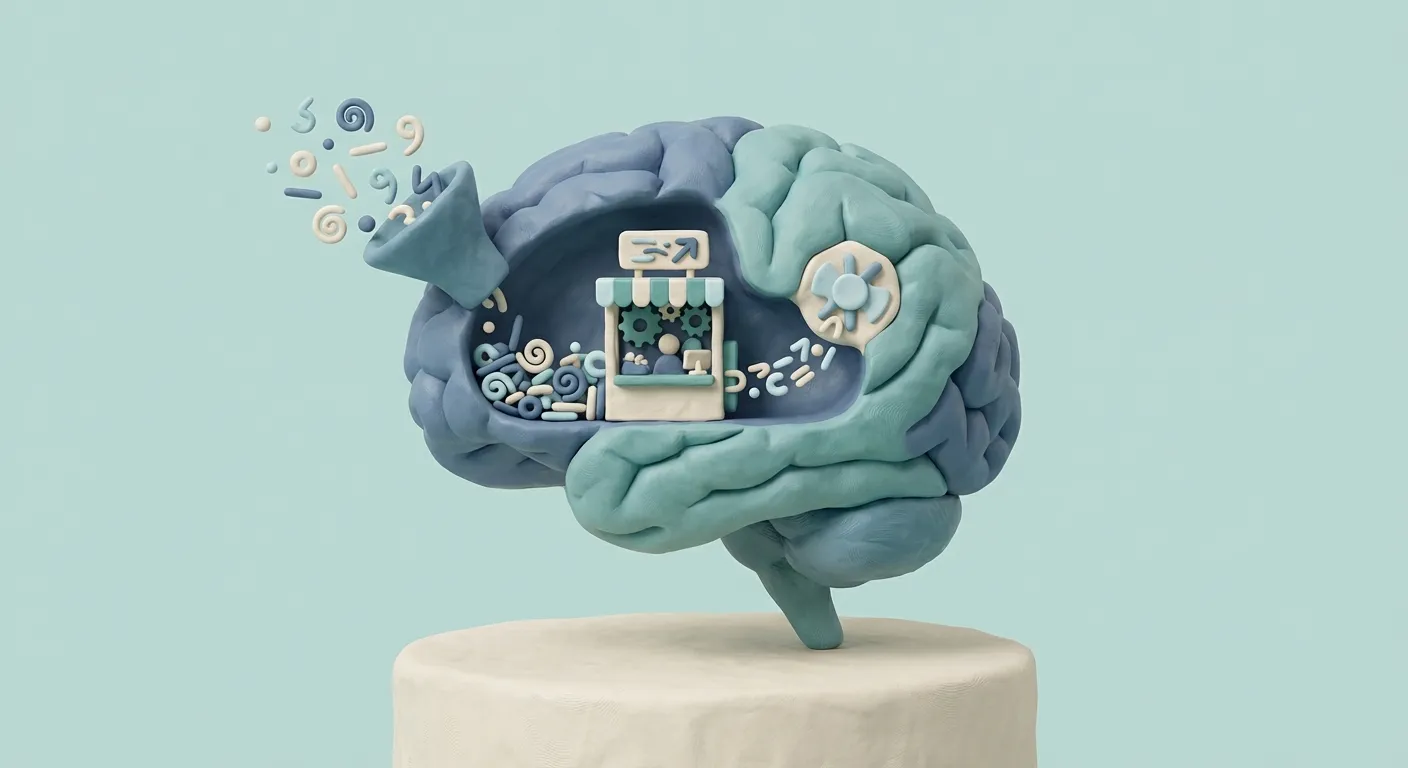
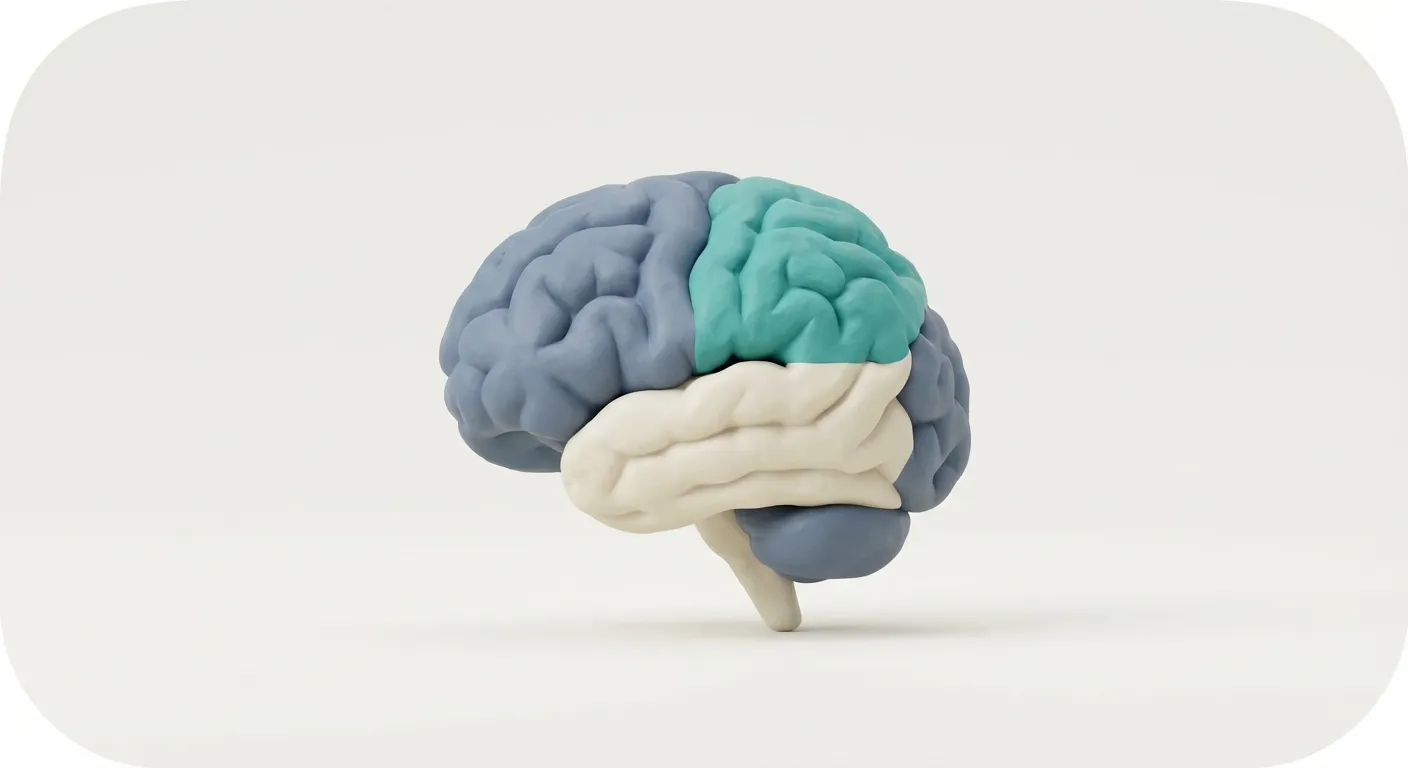
Dyscalculia is a neurodevelopmental condition where reduced gray matter in the right parietal lobe — the brain's core number-processing region — affects quantity estimation, magnitude comparison, and arithmetic fact retrieval. Affecting ~6.5% of people globally with 58% heritability, it has nothing to do with intelligence or effort. Your brain simply translates numbers through different, slower pathways.
It's a difference in how the brain is wired, not a character flaw.
How many people out of 15 do you think have this?
Tap the icons to make your estimate.
fMRI studies show reduced gray matter and atypical activation in the intraparietal sulcus — the brain's number-processing center — confirming dyscalculia is a neurological difference, not a result of poor teaching or effort.
— Kucian & von Aster, Frontiers in Psychology (2015)How it looks vs. How it feels
The lived experience behind the observed behavior

What others see
Still using fingers for basic addition

On the inside
The Slippery Numbers

What others see
Writing numbers backward then correcting

On the inside
The Mirror Digits

What others see
Running late because time estimates fail

On the inside
The Time Fog

What others see
Avoiding games with scoring
On the inside
The Score Dread

What others see
Unable to read analog clocks quickly

On the inside
The Clock Puzzle
Adults with dyscalculia report significant challenges in budgeting, tipping, time management, cooking measurements, and spatial navigation — impacting daily functioning far beyond academic math.
— British Journal of Educational PsychologyTypes of Dyscalculia
Core Number Processing
Fundamental difficulty understanding quantities. Linked to reduced activation in .

Math Fact Retrieval
Struggle to memorize arithmetic facts. Linked to working memory differences.

Procedural Dyscalculia
Impaired ability to organize multi-step math operations.

Spatial-Numerical
Difficulty mapping numbers to spatial representations (graphs, number lines).
Research shows 40-60% comorbidity between dyscalculia and dyslexia, though they have distinct neural bases: dyscalculia involves right parietal regions while dyslexia involves left temporo-parietal areas.
— Journal of Child Psychology and PsychiatryThe Science of DYSCALCULIA
The Why Behind The What
Understanding how dyscalculic brains process numbers differently

The Number Sense Gap
Brain imaging shows reduced gray matter in the right parietal lobe, particularly the intraparietal sulcus — the brain's core 'number center'. This region handles quantity estimation, magnitude comparison, and subitizing.

The Number Sense Gap
Brain imaging shows reduced gray matter in the right parietal lobe, particularly the intraparietal sulcus — the brain's core 'number center'. This region handles quantity estimation, magnitude comparison, and subitizing.

Working Memory & Math Facts
Math fact retrieval relies on hippocampal engagement and working memory. In dyscalculia, reduced connectivity means arithmetic facts don't automate — 7×8 must be re-derived every time instead of recalled instantly.

Working Memory & Math Facts
Math fact retrieval relies on hippocampal engagement and working memory. In dyscalculia, reduced connectivity means arithmetic facts don't automate — 7×8 must be re-derived every time instead of recalled instantly.

Genetic Basis
Twin studies reveal 58% heritability for dyscalculia. The same genetic factors that affect number sense often boost verbal memory and holistic pattern recognition — a neurodevelopmental trade-off.

Genetic Basis
Twin studies reveal 58% heritability for dyscalculia. The same genetic factors that affect number sense often boost verbal memory and holistic pattern recognition — a neurodevelopmental trade-off.

The Translation Layer
Imagine every number has to pass through a translator before your brain can use it. For most people, '7' instantly means a quantity. For dyscalculic brains, '7' is a symbol that needs active decoding every time.
These differences are neurological, not motivational. Brain imaging consistently shows distinct patterns in numerical processing regions.
Dyscalculia impairs the innate 'number sense' — the ability to estimate quantities, compare magnitudes, and subitize — functions far more fundamental than school math. It exists independently of general intelligence.
— Butterworth, Dyscalculia: From Science to Education (2018)Scientific Deep Dive
Explore Myths to Unlock
Earn 5 Insight Points

Is it just 'bad at math'?
It's a hardware difference. fMRI shows the intraparietal sulcus (your brain's 'number center') is less active, but visual-spatial regions often show *enhanced* connectivity to compensate.

Two Sides of the Coin
Every neurological difference comes with trade-offs. The same trait that causes struggle in one context creates brilliance in another.
Automating calculations
Needing to re-derive 5×7
Mental math pressure
Quick tip calculation anxiety
Interpreting graphs
Without text explanations
Sequencing steps
In algebra/geometry proofs
Managing schedules
Without digital reminders
Comparing values
In spreadsheets/reports
The Kryptonite
The Superpowers
Automating calculations
Needing to re-derive 5×7
Strong narrative memory
Recalling events/stories in vivid detail
Mental math pressure
Quick tip calculation anxiety
Holistic problem-solving
Seeing 'big picture' others miss
Interpreting graphs
Without text explanations
Enhanced creativity
In arts, design, or verbal expression
Sequencing steps
In algebra/geometry proofs
Resilience
From developing alternative learning strategies
Managing schedules
Without digital reminders
Empathy
From understanding struggle with 'easy' tasks
Comparing values
In spreadsheets/reports
Qualitative talent
Talent for qualitative analysis over quantitative
A 6-year longitudinal study found that 95% of children diagnosed with dyscalculia still met diagnostic criteria in adulthood. Brain structure differences are stable, though targeted interventions can build effective workarounds.
— Shalev et al., Journal of Pediatrics (2005)Community Voices
Real experiences
I have a master's degree and I still count on my fingers. That's not a failure — it's my brain's way of getting the job done.
People say 'just practice more.' I've practiced for 20 years. The numbers don't stick because my brain files them differently.
When I stopped forcing myself to do math 'normally' and started using visual strategies, everything changed.
My child isn't lazy. She can write beautiful stories but can't tell you what 6+7 is without thinking hard. That's dyscalculia.
I thought I was stupid for 30 years. Diagnosis at 35 was the kindest thing that ever happened to me.
Splitting the bill at dinner shouldn't cause a panic attack. But for me, it does. And that's okay — I have workarounds now.
Think you might have Dyscalculia?
Take our clinical-grade screening assessment. It takes less than 5 minutes and gives you instant insights.
Rewiring for Success
Stop trying to fix yourself. Start building a support system that works with your brain, not against it.
Tools for your brain
Built for this neurotype — not generic wellness
Frequently Asked Questions
Glossary of Terms
Co-occurring Conditions
Neurodivergent conditions often travel together. Understanding co-occurrence helps build a complete picture.
Click any condition to learn more. Co-occurrence percentages are from peer-reviewed research.
Further Reading
Explore related guides and resources
Understanding Dyscalculia
AllHow dyscalculia affects number sense, maths, and everyday tasks
When to Get Tested
AllSigns that difficulty with numbers may need formal assessment
Overlapping Conditions
ParentsDyscalculia often co-occurs with dyslexia and ADHD
Assessment Tools Compared
AllHow AskSheldon compares to other screening options
Scientific References
- Shalev, R. S., et al. (1995). Developmental dyscalculia. Journal of Child Psychology and Psychiatry.
- Kadosh, R. C., & Walsh, V. (2007). Dyscalculia. Current Biology.
- McCaskey, U., et al. (2020). Persistent differences in brain structure in developmental dyscalculia.
- Butterworth, B. (2018). Dyscalculia: From science to education.