Parent's Guide to the Autism Diagnosis Process
If you suspect your child may be autistic, the diagnosis process in the UK involves speaking to your GP or health visitor, being referred to a specialist assessment team, and undergoing a multi-professional evaluation. The process can take several months to several years on the NHS, but early preparation and knowing your options can help.

Step 1: Recognising the Signs

Every child develops at their own pace, and autism presents differently in every individual. However, there are common patterns that may prompt parents to seek assessment. These include differences in social communication (limited eye contact, difficulty with back-and-forth conversation), repetitive behaviours (lining up toys, repeating phrases), sensory sensitivities(distress with certain sounds or textures), and a strong preference for routine.
For a detailed breakdown by age, see our signs of autism in children guide.
Not sure if your child's experiences point to autism? Start with our free child screening to explore the possibility and organise your observations before speaking to a professional.
Support your child’s journey
Free tools to understand, screen, and navigate a diagnosis — at your own pace.
Step 2: Raising Your Concerns
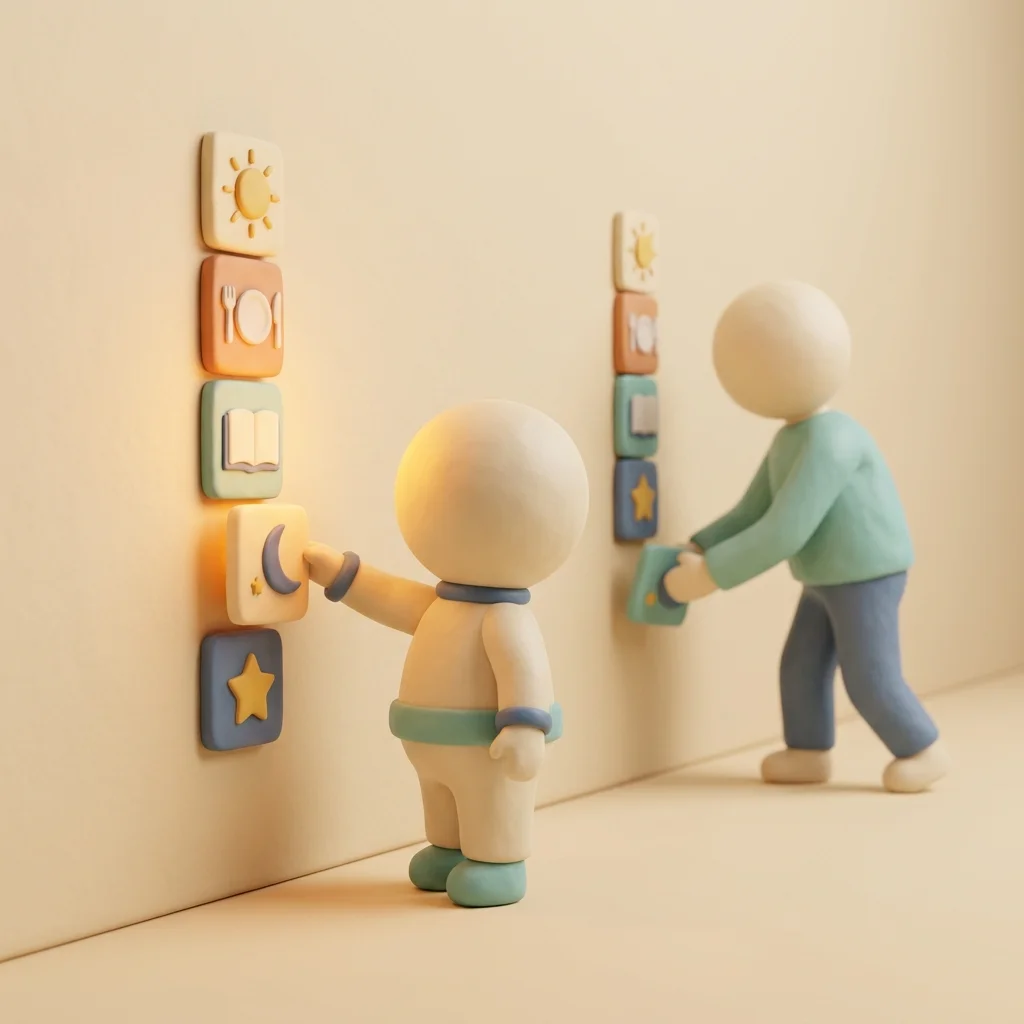
You can raise concerns with your GP, health visitor, or your child's school SENCO. Before the appointment, write down specific examples of behaviours you have noticed, when they started, and how they affect your child's daily life.
What to bring to your GP
- Written examples of concerning behaviours with dates
- Observations from nursery, school, or childminder
- Any screening results (e.g. M-CHAT completed online)
- Videos of behaviours at home, if you have them
- Family history of autism, ADHD, or related conditions
Step 3: The Referral

Your GP or health visitor can refer your child to the local autism assessment team, which is usually based within Child and Adolescent Mental Health Services (CAMHS) or a community paediatric service. The referral should include your concerns, the GP's observations, and any input from school.
NICE guideline CG128 recommends that children referred for autism assessment should have their first appointment within 13 weeks. In practice, waiting times are typically 6 months to 3 years depending on your area. For more detail on managing this period, see our guide to understanding NHS waiting times.
Step 4: The Assessment
A child autism assessment is carried out by a multi-disciplinary team that typically includes a paediatrician or psychiatrist, a clinical psychologist, and a speech and language therapist. The assessment involves:
A structured play-based assessment that looks at how your child communicates, interacts, and plays.
A detailed interview with parents about your child's development from birth to present, covering social skills, communication, and behaviour patterns.
Reports from teachers or a visit to observe your child in a school or nursery setting.
Speech and language assessment, cognitive testing, sensory profile, and screening for co-occurring conditions like ADHD or anxiety.
Step 5: After the Diagnosis

If your child receives an autism diagnosis, the assessment team will provide a report with recommendations for support. This may include referrals to speech therapy, occupational therapy, or social skills groups. The report can also support an application for an Education, Health and Care Plan (EHCP) if your child needs additional support at school.
A diagnosis is not a label that limits your child. It is a key that unlocks understanding, appropriate support, and accommodations that help your child thrive. A common worry is whether autism affects intelligence — it doesn't. Read more about autism and intelligence to understand the full picture. Many autistic children have extraordinary strengths in areas like pattern recognition, memory, creativity, and focused attention.
How AskSheldon Helps Parents

AskSheldon provides free tools to support you through the diagnostic process. Chat with Sheldon to ask questions and explore your concerns. Browse our autism information pages to understand the condition in depth, or check the signs of autism by age to see how traits present at different developmental stages.
The Diagnosis Journey — What to Expect

Every family's path is different, but most follow a similar arc. Here are the six landmarks you're likely to encounter on the road to a child autism diagnosis.
Something Feels Different
You notice your child develops, communicates, or responds to the world differently from peers. Trust this instinct. Parents are often the first to recognise that something unique is happening — and that observation is the foundation of everything that follows.
Screening
A structured tool helps identify specific patterns across social communication, sensory processing, and behaviour. This gives you language for what you're observing and helps you present your concerns clearly to a GP. Our free child autism screening takes about 10 minutes and covers areas that standard GP observations might miss.
GP Conversation
Armed with screening results and your observations, you request a referral. Bring specific examples, not just feelings. Written notes with dates and concrete situations are far more compelling than a general sense that something is different.
Referral and Waiting
The NHS refers to a specialist team. Waiting lists vary — months to years. Use this time to document patterns and explore support. See our guide to navigating the autism waiting list for practical steps to take during this period.
Assessment
A multi-disciplinary team — or specialist clinician — conducts a detailed evaluation. They will want to hear from you, from school, and observe your child. Typically this includes structured play observation (ADOS-2), a developmental history interview, and school reports.
Understanding
Whether the outcome is a diagnosis, a “not at this time,” or a referral for something else, you now have a clearer map of your child's needs. A diagnosis is not a ceiling — it is a framework for understanding, and a key to accessing the right support.
Frequently Asked Questions

How do I start the autism diagnosis process for my child?
Start by speaking to your GP or health visitor about your concerns. Bring specific examples of behaviours you have observed. You can also raise concerns with your child's school SENCO (Special Educational Needs Coordinator). The GP can refer your child to a specialist autism assessment team.
How long does a child autism diagnosis take in the UK?
NHS waiting times for child autism assessments vary significantly by area, typically ranging from 6 months to 3 years. NICE guidelines recommend assessment within 13 weeks of referral, but most services are unable to meet this target due to demand. Private assessments can be faster (4-12 weeks) but cost £1,000-£3,000.
What happens during a child autism assessment?
A child autism assessment typically includes observation of your child (often using the ADOS-2), a detailed developmental history interview with parents or carers, input from the school, and assessments of communication, social interaction, sensory processing, and behaviour. The assessment team usually includes a paediatrician, clinical psychologist, and speech and language therapist.
Can my child get support before a formal diagnosis?
Yes. Schools can provide support through the SEN (Special Educational Needs) system without a formal diagnosis. An EHCP (Education, Health and Care Plan) can be applied for based on need, not diagnosis. Many local authorities also offer early intervention programmes.
What if my child is diagnosed with autism?
A diagnosis opens doors to targeted support including speech and language therapy, occupational therapy, social skills groups, school accommodations, and potentially an EHCP. It also provides a framework for understanding your child's needs and strengths. Many parents find the diagnosis itself to be a relief, as it validates what they have been observing.
Last updated: March 2026
Support your child’s journey
Free tools to understand, screen, and navigate a diagnosis — at your own pace.
Built by neurodivergent minds. 30+ conditions explored. Always free.