Self-Regulation
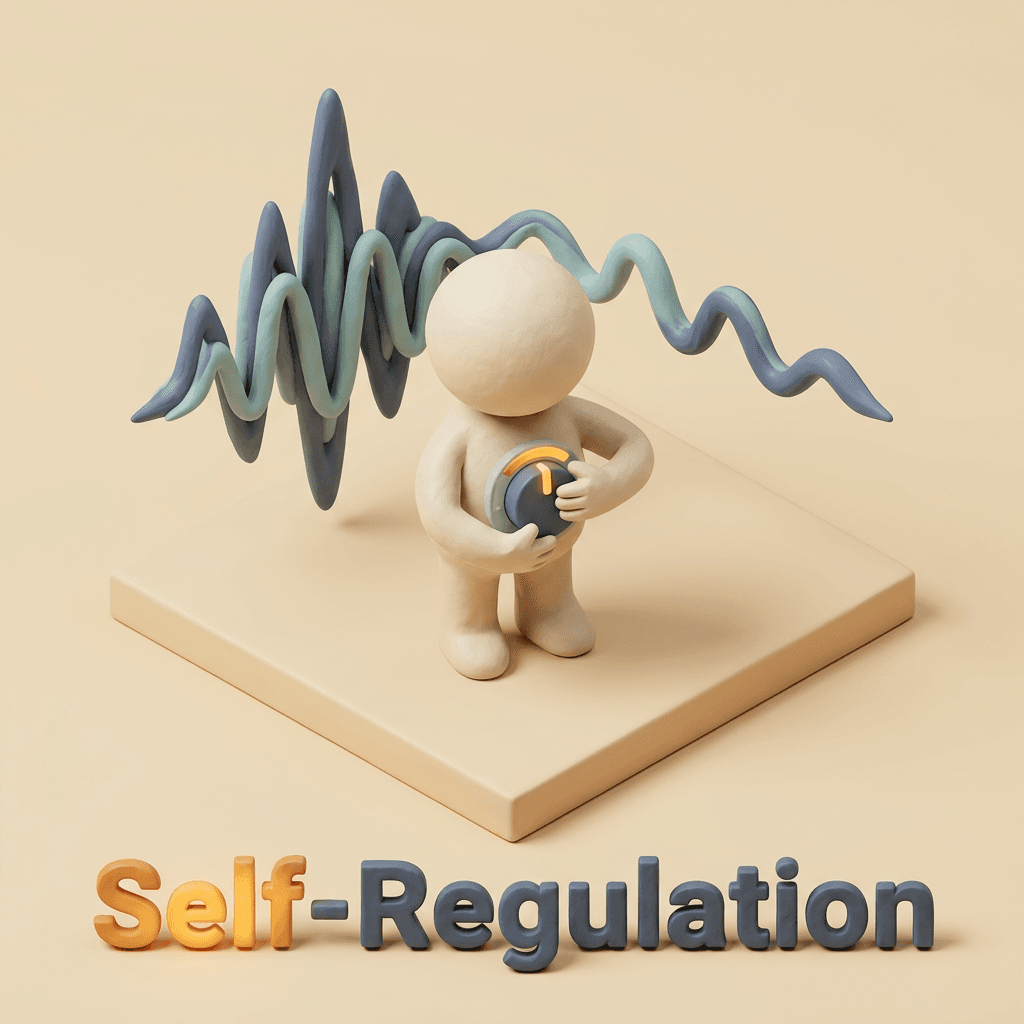
Managing your own emotions, attention, and energy to meet the moment — a skill that looks different across every brain.
The ability to manage your own emotions, attention, behaviour, and energy levels to meet the demands of a situation. Not suppressing feelings — adjusting them. Built on a foundation of co-regulation learned in childhood. Everyone's self-regulation capacity varies by context, energy level, and stress. Neurodivergent people often need different strategies than those typically taught.
How it works
Your brain coordinates multiple systems — arousal, emotion, attention, behaviour — to match your responses to what the situation requires. When these systems work differently, regulation takes more conscious effort. It's not about suppressing feelings but about flexibly adjusting them.
Think of it like
It's like being your own thermostat — sensing when you're running hot or cold and making adjustments. Some thermostats need manual tuning.
What it feels like
Some days you manage beautifully. Other days, everything feels too hot, too cold, too loud, or too much — and the internal dial won't budge.