Hippocampus
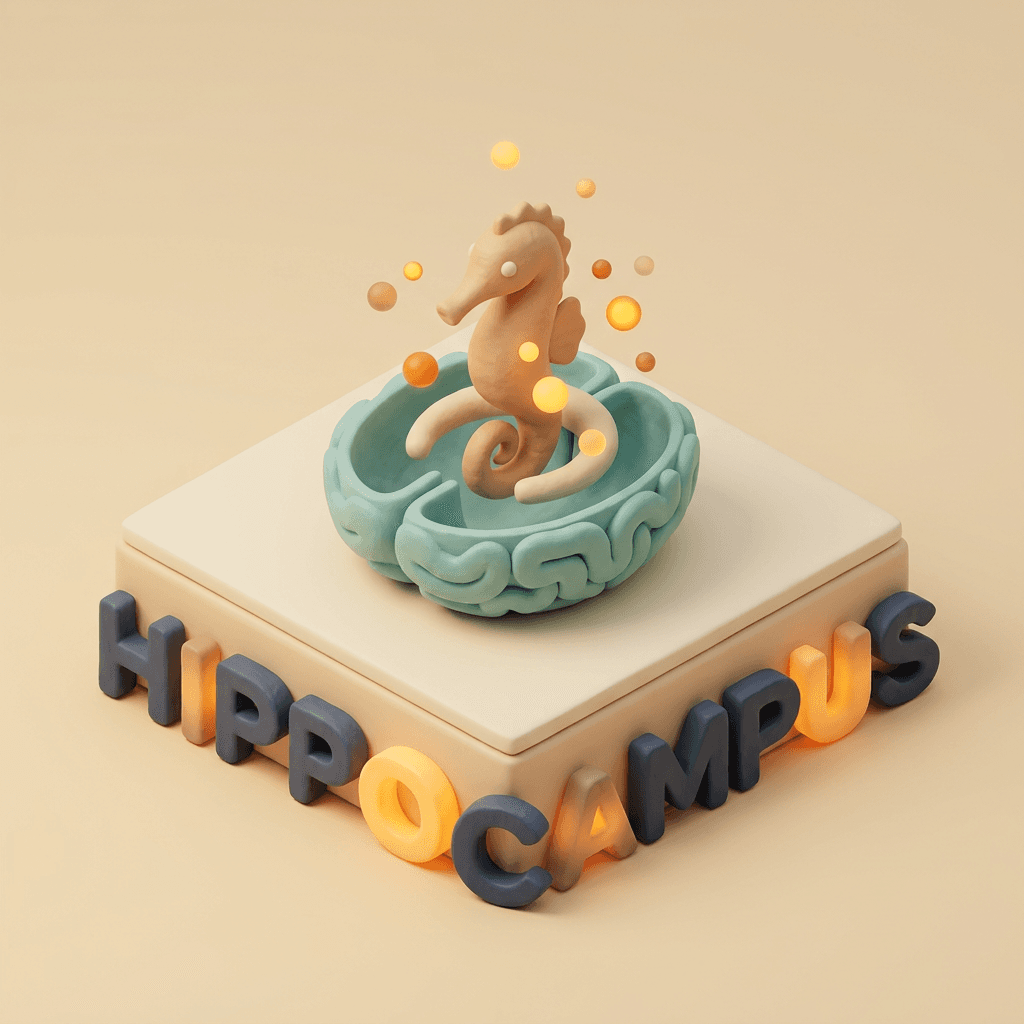
The seahorse-shaped structure that files your memories — and the first place chronic stress attacks.
A seahorse-shaped structure deep in the brain that is essential for forming new memories and placing events in their correct time and context. Think of it as the brain's filing clerk. In PTSD, the hippocampus can shrink due to chronic stress, which is why traumatic memories often feel like they're happening 'now' rather than being properly filed as 'past.'
How it works
Your hippocampus converts short-term experiences into long-term memories and helps place events in their correct time and context. Chronic stress and elevated cortisol can shrink it, leading to memory difficulties and emotional dysregulation. The good news: it's one of the few brain regions where new neurons can grow.
Think of it like
It's like your brain's filing cabinet — when it's working well, memories are organised and retrievable. Under stress, the filing system breaks down.
What it feels like
You know you experienced something but can't quite place when or where. Stress makes your memory feel unreliable, and that's genuinely frustrating.