Cognitive Flexibility
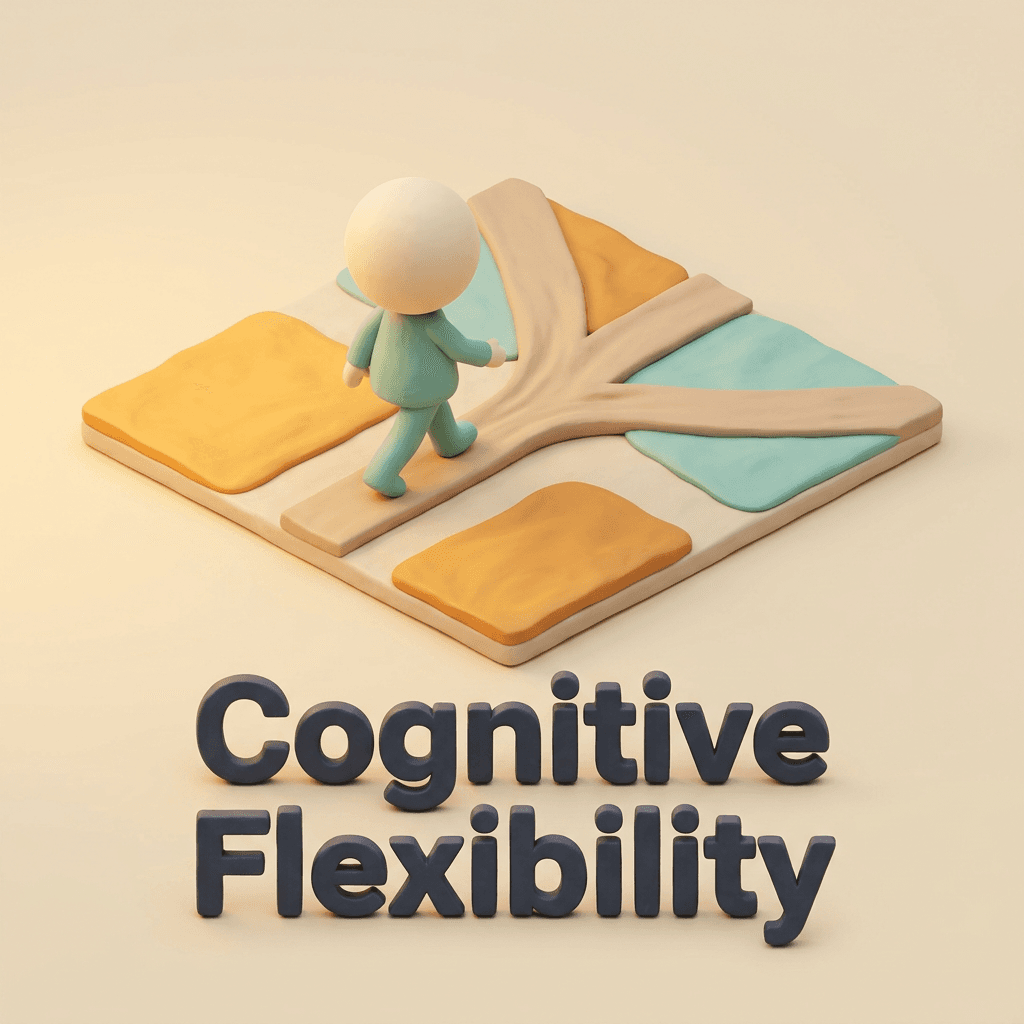
The mental agility to switch gears when Plan A falls apart — a skill that comes easier to some brains than others.
The ability to switch between different ways of thinking, adapt to new rules, and consider a situation from a different angle when the first approach isn't working. A core executive function. ADHD, autism, and OCD can each affect cognitive flexibility in different ways — not from stubbornness, but from how the brain's switching mechanisms work.
How it works
Your brain's prefrontal cortex manages the ability to shift between ideas, rules, and perspectives. When this system works differently, unexpected changes feel much harder to process. It's not stubbornness — it's your brain needing more time to rebuild its mental map.
Think of it like
It's like being asked to suddenly drive on the other side of the road — possible, but it takes your full concentration and feels deeply uncomfortable.
What it feels like
A sudden change of plans can feel like the ground shifted under you. You need a moment to recalibrate, and that's OK.