BDNF
Also known as: Brain-Derived Neurotrophic Factor
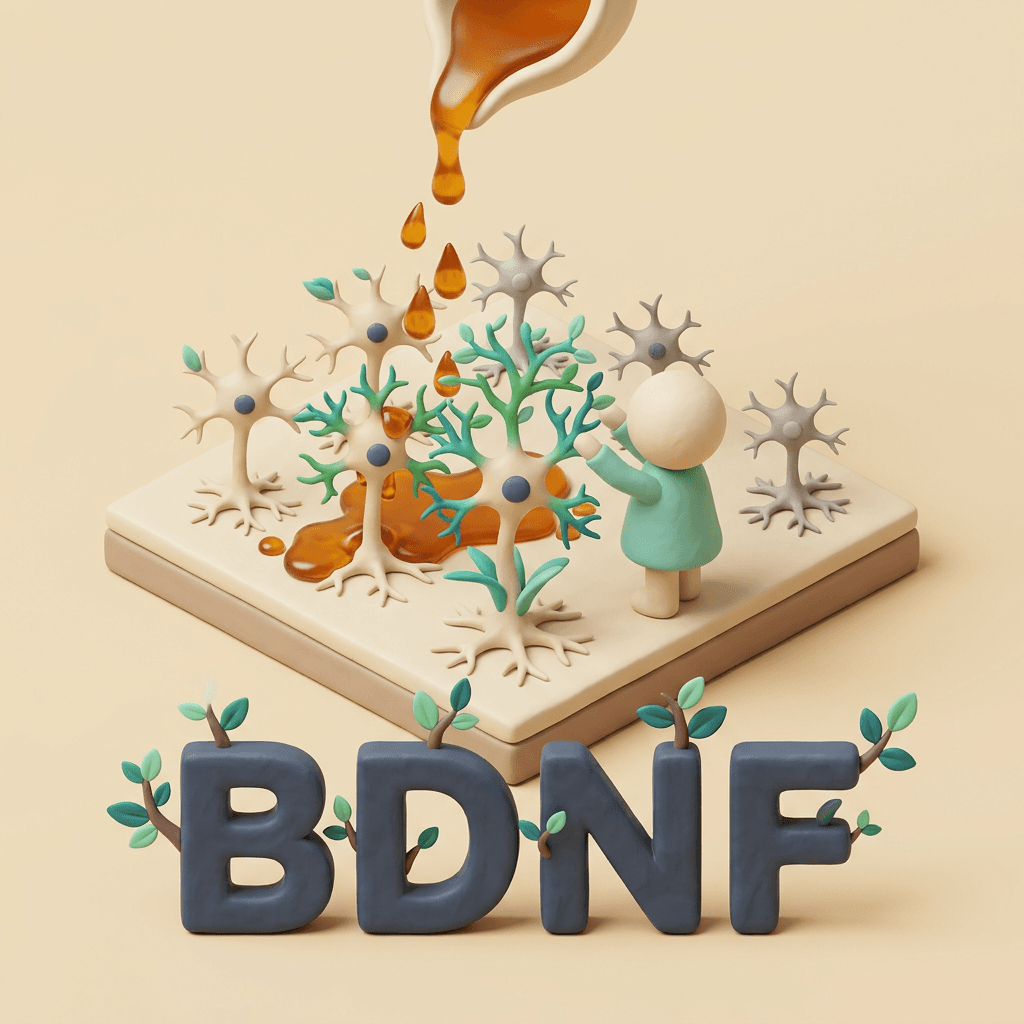
A protein that acts like fertilizer for your brain cells — helping them grow, connect, and stay healthy.
Brain-Derived Neurotrophic Factor — a protein that acts like fertilizer for brain cells. It helps neurons grow, survive, and form stronger connections. In depression, BDNF levels are often lower. Exercise, therapy, and some medications work partly by raising BDNF — literally growing more neural connections.
How it works
BDNF helps your neurons form new connections, strengthen existing ones, and survive stress. Exercise, sleep, and social connection boost it. Low levels are linked to depression, anxiety, and slower learning — which is one real reason exercise genuinely helps mental health.
Think of it like
It's like watering a garden — the plants (brain cells) are there, but without regular watering (BDNF), they struggle to grow and bloom.
What it feels like
You might not feel BDNF directly, but you feel its absence — as brain fog, low mood, or thinking that seems slower than usual. The good news: movement, rest, and connection help your brain make more.