Executive Function in Adults: What It Is, Why It Breaks, and How to Build Around It
Executive function is the cognitive system that allows goal-directed behaviour: planning, prioritising, starting, switching, holding information in mind, and regulating emotion while doing all of that. When it works, life feels manageable. When it does not, you can know exactly what needs doing and still find yourself frozen. This is a neuroaffirming guide for adults -- especially those with adult ADHD, autism, or burnout -- drawing on our glossary entry on executive function and expanding it into clinical detail.
Research-backed and last updated 8 May 2026. This article is for informational purposes and does not constitute medical advice. Please consult a qualified clinician for assessment and treatment.
"You can want to send the email and not be able to send the email"

You have the time. The laptop is open. The email is one paragraph long. You have written it in your head at least four times. And yet 45 minutes later you are still sitting there, browser tabs multiplying, the cursor blinking at a blank compose window. This is not a character flaw. It is not a motivational failure. It is executive dysfunction, and it is one of the most widely misunderstood features of neurodivergent life.
The cooked dinner that sits cooling on the hob because you cannot quite summon the sequence of actions required to plate it. The shower that takes 90 minutes from "I should shower" to "I am in the shower," despite wanting to shower, knowing how to shower, and having used showers successfully your entire life. The form that has been sitting on the table for three weeks, getting more frightening with every passing day, when the actual task is filling in four fields.
What makes this particularly hard to communicate to people who have not experienced it is that it looks, from the outside, exactly like laziness or lack of care. The person who cannot start the email is not the same as a person who does not care about sending it. Often they care enormously. The intention is completely intact. What is broken is the mechanism that translates intention into initiation.
Executive dysfunction also wears other faces. It is the person who starts six tasks in the same hour and finishes none of them. The person who cannot leave the house because deciding which shoes to wear has somehow become a cognitive mountain. The person who loses their keys, their phone, their train of thought, and their sense of time, simultaneously, every single day. The person who is visibly distressed by an unexpected change of plan that everyone else seems to absorb without trouble.
None of this reflects intelligence, willingness, or personal value. It reflects the condition of a specific set of cognitive circuits. Understanding those circuits is the first step to building a life that works with them rather than against them.
What executive function actually is
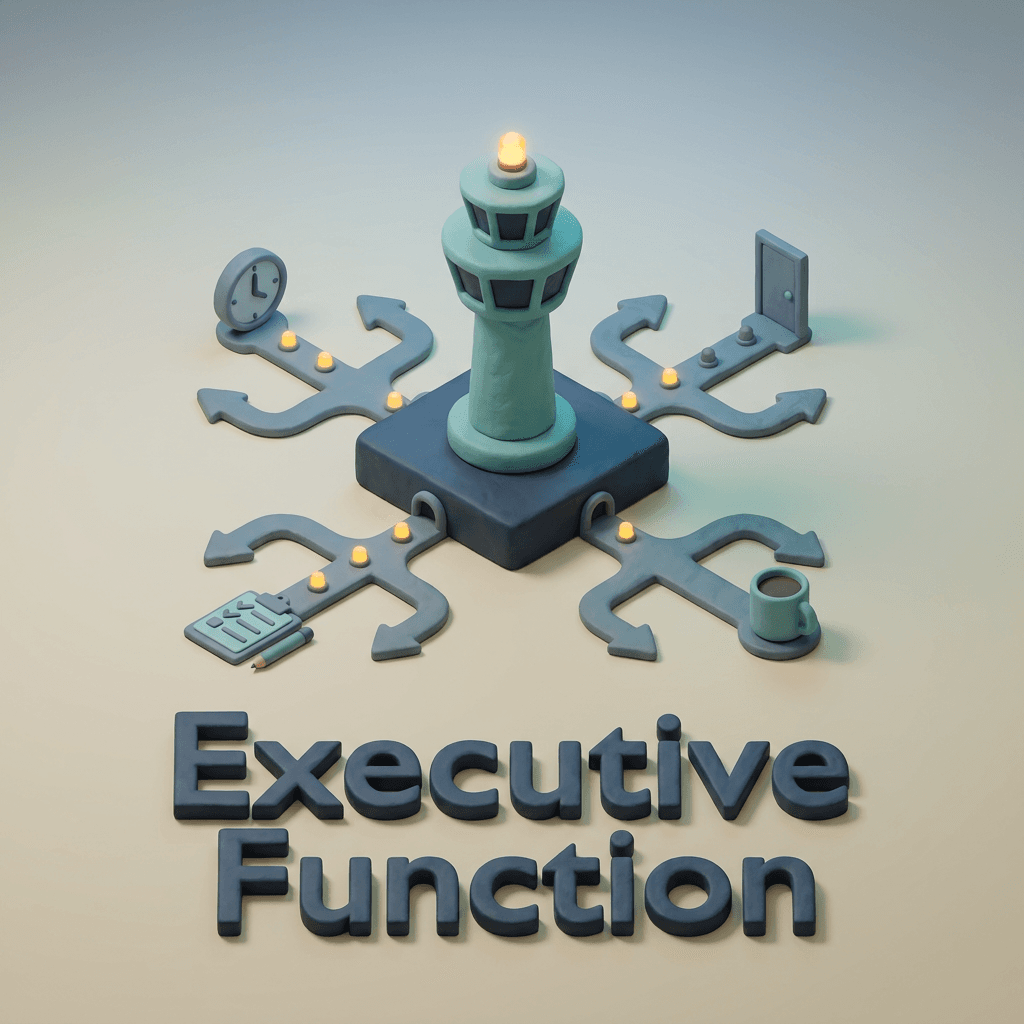
The term "executive function" refers to a family of higher-order cognitive processes that collectively enable goal-directed behaviour. The most widely cited scientific framework comes from Adele Diamond's 2013 review in the Annual Review of Psychology, which identifies three core components and a set of higher-order functions built on top of them.
The three core components are:
- Inhibition -- the ability to stop a habitual response, impulse, or train of thought in order to do something more appropriate. Without it, you act before you think, blurt before you filter, and scroll when you meant to work.
- Working memory -- the ability to hold information in mind and manipulate it while doing something else. It is why you can follow a multi-step verbal instruction, hold the beginning of a sentence in mind while someone finishes it, or keep a recipe step in your head while you find the right pan.
- Cognitive flexibility -- the ability to switch mental sets, shift perspectives, and adapt when circumstances change. It is what allows you to stop doing one thing and start doing another without a substantial recovery cost.
From these three foundations, four higher-order functions emerge:
- Planning -- anticipating future states and organising the steps required to reach them.
- Organising -- imposing structure on time, materials, and information so that they can be reliably used.
- Self-monitoring -- tracking one's own behaviour and performance in real time and making corrections.
- Emotional regulation -- modulating emotional responses so they do not overwhelm the cognitive task at hand.
Russell Barkley's influential 2012 work extends Diamond's model by placing emotional regulation more centrally, arguing that affect -- the immediate emotional pull of a stimulus -- is one of the most potent disruptors of executive control. When a task feels boring, aversive, or emotionally charged, the executive system has to work harder to override the emotional response and maintain goal-directed behaviour (Barkley 2012).
This is why "just try harder" is not a clinically coherent instruction. The effort required to initiate a task is not primarily willpower -- it is executive capacity. And executive capacity, like any other cognitive resource, can be intact, impaired, depleted, or situationally undermined.
Why executive function fails in ADHD
Russell Barkley's most significant contribution to the field is the reframing of ADHD not as a deficit of attention but as a disorder of executive function. The name, he has argued repeatedly, is misleading: people with ADHD can pay attention -- they pay intense attention to things that engage them. What they struggle to do is regulate attention according to task demand rather than intrinsic interest. That regulatory failure is an executive function failure (Barkley 2012).
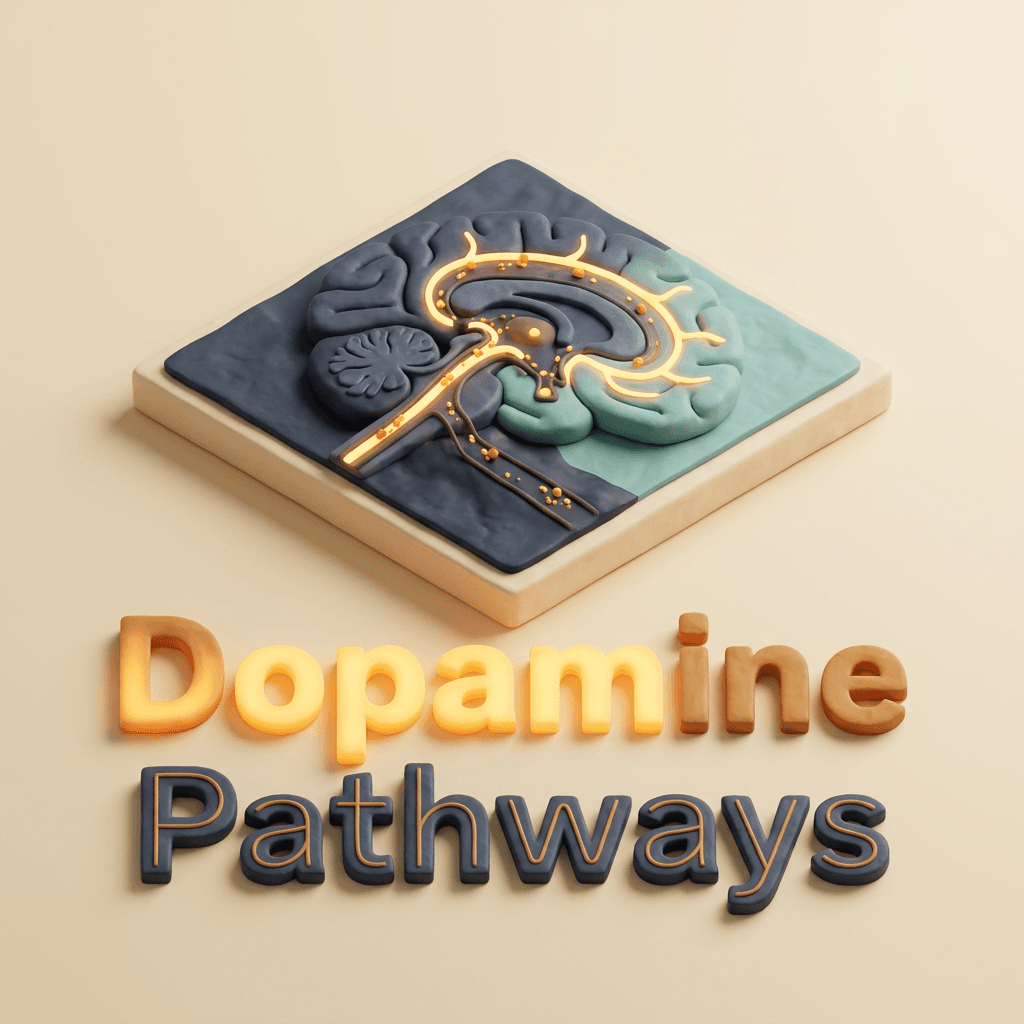
The neuroscience locates the problem in the prefrontal cortex (PFC) and its dopaminergic circuits. The PFC is the seat of executive function. It orchestrates goal-directed behaviour by modulating activity in subcortical regions, filtering competing stimuli, and sustaining representations of future goals in working memory. This orchestration depends critically on dopamine and norepinephrine as signalling molecules.
In ADHD brains, dopamine signalling in the PFC is weaker, noisier, or both (Volkow et al 2009). The air-traffic-control tower is not absent -- it is operating on a poor signal. A routine task with no intrinsic urgency or novelty does not generate enough dopaminergic signal to sustain the PFC's regulatory function. The task stalls at initiation. Or it starts and drifts. Or it competes unsuccessfully with a more stimulating distraction.
This is why ADHD brains frequently work brilliantly under deadline pressure, in emergencies, or in states of high interest. A genuine deadline creates artificial urgency, which generates a dopamine spike, which temporarily powers the executive system to full function. The person who "does their best work at the last minute" is not procrastinating strategically -- they are relying on urgency to supply the dopamine signal their PFC cannot reliably generate on demand.
Stimulant medication works by increasing dopamine and norepinephrine availability in the PFC -- essentially, it provides the signal strength the brain was not generating independently. This is why, for many people with ADHD, correctly dosed stimulants feel less like being sped up and more like the inside of their head going quiet for the first time.
Executive function in autism: a different signature

Autistic adults also show executive function differences, but the profile is distinct from ADHD. Rather than weak inhibitory control as the primary driver, research consistently finds that cognitive flexibility -- the ability to shift mental sets and adapt to change -- is the domain most reliably affected in autism (Diamond 2013). This maps onto one of the most recognisable features of the autistic experience: the high cost of transitions, unexpected changes, and demands to abandon a current focus without adequate warning.
Working memory load is also a significant factor, particularly in autistic adults who mask heavily. Masking -- the process of monitoring and modifying one's social presentation to pass as neurotypical -- is cognitively expensive. It consumes working memory and attentional resources in real time. An autistic adult who appears to be coping well in a social or professional setting may be doing so at the cost of having very little executive capacity left for anything else. The exhaustion that follows is not disproportionate. It is the logical consequence of running a high-load cognitive overlay for hours.
Planning difficulties in autism often show up not as an inability to plan but as difficulty re-planning. An autistic person may have an elaborate, well-constructed plan for a day. When that plan is disrupted -- by a cancelled meeting, a change of venue, an unexpected social demand -- the cost of switching to an alternative plan can be disproportionately high. This is not rigidity of personality; it is reduced cognitive flexibility at the neurological level.
When executive dysfunction and autistic burnout occur together, the compounding effect is severe. See our detailed guide to autistic burnout for the clinical picture and recovery pathways.
Ready to explore further?
Take a free screening, chat with Sheldon, or explore 30+ neurotypes in depth.
How burnout, sleep loss, and stress wreck executive function

Executive dysfunction is not the exclusive property of neurodivergent brains. Sleep deprivation produces an ADHD-like cognitive profile in neurotypical adults: impaired inhibition, degraded working memory, reduced cognitive flexibility, and difficulty initiating tasks (Kuula et al 2018). A neurotypical person running on five hours of sleep for a week is, on standard cognitive testing, functionally indistinguishable from someone with mild ADHD. This is not a metaphor. It is a measurable cognitive state.
Chronic stress achieves a similar effect via a different mechanism. Sustained cortisol elevation -- the neurobiological signature of chronic stress -- directly impairs PFC function. The PFC is particularly vulnerable to cortisol because it has a high density of cortisol receptors. During high-stress periods, working memory contracts, inhibitory control weakens, and planning becomes effortful even in people who normally manage these functions with ease.
Several life transitions involve hormonal changes that specifically target dopamine pathways in the PFC: the perimenopausal transition, the postpartum period, and premenstrual phases (Quinn 2005). People who have always managed their executive function adequately may find it suddenly and dramatically degraded at these junctures. Grief and depression similarly reduce executive capacity, partly through the same cortisol and dopamine mechanisms.
This is clinically important because a full adult ADHD assessment requires ruling out reversible causes of executive dysfunction first. Someone who presents with ADHD-like symptoms in the context of severe sleep deprivation, major depression, or perimenopause may or may not have ADHD; the assessment cannot answer that question until the reversible conditions are either addressed or accounted for.
How to build around executive dysfunction

The most important conceptual shift in managing executive dysfunction is moving from trying to fix the brain to building scaffolding around it. The brain you have is the brain you have. What changes dramatically is the environment and the external support structures you put in place.
External brain
Working memory is unreliable; the world outside your skull is not. Write it down. Phone reminders, calendars, lists, sticky notes, whiteboards, apps -- any system that offloads memory and planning onto a physical or digital external store reduces the demand on a cognitive system that is already underpowered. The goal is not to be more organised; the goal is to stop needing to be organised inside your own head.
Body doubling
Working in the presence of another person -- in the same room, on a video call, or even via a quiet co-working audio stream -- dramatically lowers the initiation threshold for many people with executive dysfunction. The mechanism is not fully understood but likely involves social accountability cues activating the dopamine system. Body doubling is free, requires no diagnosis, and works immediately for many people.
Implementation intentions
Gollwitzer's 1999 research on implementation intentions showed that "When X happens, I will do Y" reliably outperforms "I should do Y" as a behaviour-change strategy. The specificity of the if-then format pre-commits the cognitive system to a response, reducing the in-the-moment executive demand. "When I sit down at my desk after breakfast, I will open the draft email first" is a more actionable instruction than "I need to send that email today."
Reduce cognitive load everywhere else
Every decision, however small, costs executive resources. Meal planning once a week eliminates 21 separate "what shall I eat" decisions. A capsule wardrobe eliminates the morning outfit decision. Automating bill payments eliminates a class of deadline-tracking entirely. The goal is to reserve executive capacity for the things that genuinely require it, by eliminating the unnecessary micro-demands that accumulate across a day.
Sensory and physical environment
A brain trying to regulate executive function while simultaneously managing sensory discomfort -- temperature, lighting, noise, hunger, thirst -- is running a heavier cognitive load than it needs to. Getting the environment right (the right ambient sound, the right lighting level, stable blood sugar) is not self-indulgence; it is basic cognitive hygiene. Twenty minutes of moderate aerobic exercise temporarily boosts executive function for several hours via catecholamine release, making it one of the most evidence-supported non-pharmacological interventions available.
Clinical treatment
Where executive dysfunction is driven by ADHD, the evidence base for treatment is robust. Stimulant medication (methylphenidate, amphetamine salts) remains the most effective single intervention for ADHD-related executive dysfunction. Non-stimulant options (atomoxetine, guanfacine) are available where stimulants are contraindicated or poorly tolerated. ADHD coaching focuses specifically on external scaffolding and implementation intentions. Occupational therapy addresses daily living skills and environmental modification. None of these options require a person to first prove they have "tried hard enough" -- they are responses to a neurological condition, not a motivational one.
Frequently Asked Questions
What is executive function in simple terms?
Executive function is the set of cognitive abilities that lets you plan, prioritise, start tasks, switch between them, hold information in mind, and regulate your emotions while doing all of that. It is the brain's air-traffic-control system. When it works, life feels organised. When it does not, you can know exactly what to do and still not be able to do it.
Is executive dysfunction the same as ADHD?
Closely related but not identical. Russell Barkley's influential model frames ADHD as fundamentally a disorder of executive function. However, executive dysfunction also occurs in autism (different signature), in depression, after traumatic brain injury, in chronic sleep deprivation, and during burnout. Executive dysfunction is a feature of many conditions; ADHD is the most common cause in adults seeking help.
Can you improve executive function as an adult?
Yes, with some honest caveats. The underlying neurological capacity is partly hardwired. What changes a lot is the scaffolding around the brain: external systems (calendars, lists, body doubling), reduced cognitive load, sensory-fit environments, and treatment of underlying conditions. Many adults report dramatic improvements in daily functioning after they stop trying to brute-force their executive system and start building scaffolds around it.
What does executive dysfunction look like day-to-day?
Common signs: chronic procrastination on tasks you actually want to do, difficulty starting (not finishing), losing track of time, missing appointments despite reminders, forgetting steps in routines, leaving the kettle on, inability to switch tasks once started, emotional flooding when plans change unexpectedly, working memory failures mid-conversation.
How is executive function tested clinically?
Neuropsychological assessment includes specific subtests: the Stroop (inhibition), Trail Making Test B (cognitive flexibility), Wisconsin Card Sorting Test (rule-switching), Digit Span (working memory), and the Behavior Rating Inventory of Executive Function (BRIEF) self-report. These are part of a full assessment, not a self-administered test.
Does coffee help executive function?
Mildly, in non-ADHD brains. In ADHD adults, the response to caffeine is variable; some report calming, others get jittery without focus benefit. Stimulant medication is fundamentally different from caffeine, working on dopamine and norepinephrine pathways with much higher specificity. Caffeine is not a substitute for ADHD treatment.
Why does my executive function get worse during my period or perimenopause?
Oestrogen modulates dopamine in the prefrontal cortex. When oestrogen drops (premenstrual phase, perimenopause, postpartum), executive function takes a measurable hit, especially in ADHD brains, where dopamine signalling is already underpowered (Quinn 2005). This is real, well-documented, and often explains the perimenopausal ADHD diagnosis spike.
Start your journey with AskSheldon
Free tools to explore, screen, and understand your neurodivergent mind.
Built by neurodivergent minds. 30+ conditions explored. Always free.
Related guides
Sources
- Barkley, R.A. (2012). Executive Functions: What They Are, How They Work, and Why They Evolved. Guilford Press.
- Diamond, A. (2013). Executive functions. Annual Review of Psychology, 64, 135--168.
- Gollwitzer, P.M. (1999). Implementation intentions: Strong effects of simple plans. American Psychologist, 54(7), 493--503.
- Kuula, L., et al. (2018). Using actigraphy to study effects of sleep deprivation on executive function. Scientific Reports, 8, 1--8.
- Quinn, P.O. (2005). Treating adolescent girls and women with ADHD: Gender-specific issues. Journal of Clinical Psychology, 61(5), 579--587.
- Shaw, P., et al. (2007). Attention-deficit/hyperactivity disorder is characterized by a delay in cortical maturation. Proceedings of the National Academy of Sciences, 104(49), 19649--19654.
- Volkow, N.D., et al. (2009). Evaluating dopamine reward pathway in ADHD: Clinical implications. JAMA, 302(10), 1084--1091.