AuDHD (AuDHD) | AskSheldon
AuDHD (AuDHD)

ما هو اضطراب نقص الانتباه مع فرط النشاط؟

يعني مصطلح AuDHD وجود كل من التوحد واضطراب فرط الحركة ونقص الانتباه في الدماغ نفسه، وهو ما يصيب ما بين 50 و70% من الأطفال المصابين بالتوحد. وحتى عام 2013، كان الدليل التشخيصي ينص صراحةً على استحالة وجود كليهما، مما ترك ملايين العائلات بتفسير ناقص.

1 in 29أشخاص متأثرون
3.5%الانتشار
نطاق ذكاء طبيعي

كيف يظهر اضطراب نقص الانتباه مع فرط النشاط؟

  • Switching between laser focus and 'squirrel!' with zero warning
  • Building elaborate systems then forgetting they exist
  • Needing routine AND novelty simultaneously
  • Info-dumping enthusiastically then vanishing to recharge
  • Appearing 'inconsistent' to people who expect one neurotype

أنواع اضطراب نقص الانتباه مع فرط النشاط

  • Autism-Forward Presentation(~35%)
  • ADHD-Forward Presentation(~35%)
  • Fluctuating Presentation(~30%)

أسئلة شائعة عن اضطراب نقص الانتباه مع فرط النشاط

هل يمكن أن يكون طفلي مصاباً بالتوحد واضطراب فرط الحركة ونقص الانتباه مع فرط النشاط في آن واحد؟

نعم. تُشير الأبحاث إلى أن 50-70% من المصابين بالتوحد تنطبق عليهم أيضًا معايير اضطراب نقص الانتباه مع فرط النشاط. تشترك الحالتان في متغيرات جينية في مسارات الدوبامين والسيروتونين، فهما مرتبطتان عصبيًا، وليستا منفصلتين. منذ عام 2013، اعترف الدليل التشخيصي والإحصائي للاضطرابات النفسية (DSM) رسميًا بالتشخيص المزدوج. إذا ظهرت على طفلك علامات كليهما، فمن المرجح أنه مصاب بهما معًا.

طفلي لديه تشخيص واحد بالفعل - هل يجب أن أسعى للحصول على التشخيص الثاني؟

إذا لاحظتَ تناقضات لا يُفسّرها التشخيص الحالي - كأن يكون الشخص مُركّزًا أحيانًا لكنه لا يستطيع البدء بالمهام، اجتماعيًا لكنه ينهار بعد الاختلاط بالآخرين، يحتاج إلى روتين لكنه يشعر بالملل - فقد تكون الحالة الثانية غير مُشخّصة. التشخيص الجزئي يُؤدّي إلى دعم جزئي، وتستمر الحالة غير المُعالجة في التسبب بالصعوبات.

تمت مراجعة المحتوى وفق معايير DSM-5 والأدبيات السريرية الحالية. هذه الصفحة للأغراض التثقيفية ولا تُشكّل مشورة طبية. استشر مختصاً صحياً مؤهلاً للتشخيص أو العلاج.

AuDHD (AuDHD)

AuDHD

ما العلامات التي يجب أن أبحث عنها؟

هل أنا السبب في هذا؟

إذا كنت تتساءل عما إذا كان شيء فعلته قد تسبب في إصابة طفلك بالتوحد واضطراب فرط الحركة ونقص الانتباه معًا، فالجواب هو لا. إليك ما يقوله العلم في الواقع.

لم تتسبب أنت في إصابة طفلك باضطراب فرط الحركة ونقص الانتباه. إن الجمع بين التوحد واضطراب فرط الحركة ونقص الانتباه هو في الأساس وراثي - حيث تتشارك بعض الطفرات في المسارات العصبية نفسها لتُنتج كلا الحالتين معًا. وجودك هنا، وتعلمك عن كيفية عمل دماغ طفلك الفريد، هو ما يُحدث الفرق تحديدًا.

AuDHD (AuDHD)الصوت قريباً

نحن نُعِدّ دليلاً صوتياً لهذه الحالة. أخبرنا عند إطلاقه.

ما هي فعلاً؟

يعني مصطلح AuDHD وجود كل من التوحد واضطراب فرط الحركة ونقص الانتباه في الدماغ نفسه، وهو ما يصيب ما بين 50 و70% من الأطفال المصابين بالتوحد. وحتى عام 2013، كان الدليل التشخيصي ينص صراحةً على استحالة وجود كليهما، مما ترك ملايين العائلات بتفسير ناقص. أما الآن، فقد أكدت فحوصات الدماغ التصويرية وجود اختلافات جينية مشتركة في نظامي الدوبامين والسيروتونين، مما يعني أن هذه ليست حالتين منفصلتين متداخلتين، بل هي سمة عصبية مميزة. إذا تم تشخيص طفلك بأحدهما ولاحظت عليه أعراض الآخر، فأنت لست واهمًا.

إنها اختلاف في طريقة تركيب الدماغ، وليست عيباً في الشخصية.

تخمين سريع

كم شخصاً من بين 29 تظن أن لديه هذا؟

انقر على الأيقونات لتقديم تقديرك.

تتراوح نسبة الأفراد المصابين بالتوحد الذين تنطبق عليهم معايير اضطراب نقص الانتباه مع فرط النشاط بين 50 و70%. وقد ألغى الدليل التشخيصي والإحصائي للاضطرابات النفسية، الإصدار الخامس (2013)، الحظر المفروض على التشخيص المزدوج، معترفاً بأن التزامن بين الحالتين أمر شائع.

روميلسي وآخرون. (2010); DSM-5 (2013)
Tap to Start Myth Busting

علامات حسب العمر

غالباً ما يبدو اضطراب فرط الحركة ونقص الانتباه المصاحب لاضطراب طيف التوحد متناقضاً، وهذا تحديداً ما يجعل تشخيصه صعباً. هذه أنماط شائعة حيث يخلق كل من دافع اضطراب فرط الحركة ونقص الانتباه وجاذبية التوحد صورةً مربكة. إذا تطابقت عدة أعراض، فمن المفيد دراسة كلا الحالتين.

العلامات وحدها لا تروي القصة كاملة

كثير من الأطفال يُظهرون بعض هذه العلامات. ما يُميّز اضطراب نقص الانتباه مع فرط النشاط هو نمط FIRE: Frequency (كم مرة)، Intensity (بأي شدّة)، Range (في كم مجال)، وEffect (الأثر على الأداء اليومي). المهم هو النمط الكلّي وليس العلامات المنفردة.

التناقض

  • يركز بشدة على لعبة واحدة، ثم يتخلى عنها فجأة لينتقل إلى شيء جديد في الجانب الآخر من الغرفة.
  • يتوق للتفاعل ويحاول الوصول إليك، ثم يغمره رد فعلك.
  • نشيطون للغاية ودائمو الحركة - لكن لديهم روتينات صارمة محددة لن يتزحزحوا عنها
  • مفتونون بالبيئات الجديدة - لكنهم ينهارون عندما تأخذهم بالفعل إلى مكان جديد

تواصل

  • قد يعاني من تأخر في النطق أو قد يكون متحدثًا مبكرًا بأنماط غير عادية
  • يتحدث بحماس عن موضوع واحد ولكنه يجد صعوبة في الحوارات المتبادلة.
  • يكرر عبارات أو نصوصًا من العروض (صدى الكلام) بطاقة وحيوية عاليتين
  • صعوبة الاستجابة لاسمهم - ليس بالضرورة سماعك دائمًا مقابل عدم معالجة الأمر بسرعة كافية

اللعب الحسي

  • يسعى إلى الحصول على مدخلات حسية مكثفة (الدوران، الاصطدام) ولكنه يغرق في المدخلات الحسية غير المتوقعة (الضوضاء العالية، الأنسجة الجديدة).
  • يرتب الألعاب بدقة متناهية، ثم يقلبها باندفاع.
  • أنماط لعب متكررة ممزوجة بفترات قصيرة من الاستكشاف عالي الطاقة
  • صعوبات النوم - الدماغ نشط للغاية بحيث لا يستطيع الاسترخاء، ولكنه يحتاج بشدة إلى روتين وقت النوم

كيف تبدو من الخارج مقابل كيف تُحسّ من الداخل

التجربة المعاشة خلف السلوك الملاحَظ

Switching between laser focus and 'squirrel!' with zero warning — The Neural Tug-of-War
اضغط للرؤية من الداخل

ما يراه الآخرون

Switching between laser focus and 'squirrel!' with zero warning

The Neural Tug-of-War
اضغط للعودة

من الداخل

The Neural Tug-of-War

My autistic brain wants to stay locked in. My ADHD brain wants to chase the new shiny thing. Neither one consults me before pulling.

Building elaborate systems then forgetting they exist — The System Graveyard
اضغط للرؤية من الداخل

ما يراه الآخرون

Building elaborate systems then forgetting they exist

The System Graveyard
اضغط للعودة

من الداخل

The System Graveyard

I built that organiser with autistic precision. Colour-coded. Cross-referenced. Then ADHD got bored and it died. RIP, beautiful system.

Needing routine AND novelty simultaneously — احتياجات تبدو متناقضة
اضغط للرؤية من الداخل

ما يراه الآخرون

Needing routine AND novelty simultaneously

احتياجات تبدو متناقضة
اضغط للعودة

من الداخل

احتياجات تبدو متناقضة

يحتاج طفلك إلى الروتين ليشعر بالأمان، لكنه يملّ من التكرار. يبحث عن الجديد، لكنه يشعر بالإرهاق من التغيير. ليس هذا عنادًا منه، بل هو نظامان عصبيان لهما احتياجات متعارضة، ولا يستطيع أي منهما التوقف عن العمل.

Info-dumping enthusiastically then vanishing to recharge — The Social Battery Split
اضغط للرؤية من الداخل

ما يراه الآخرون

Info-dumping enthusiastically then vanishing to recharge

The Social Battery Split
اضغط للعودة

من الداخل

The Social Battery Split

I'm info-dumping with ADHD enthusiasm — then autistic overload hits like a wall and I need to vanish. Both are real. Neither is a choice.

Appearing 'inconsistent' to people who expect one neurotype — بريقٌ يأتي ويذهب
اضغط للرؤية من الداخل

ما يراه الآخرون

Appearing 'inconsistent' to people who expect one neurotype

بريقٌ يأتي ويذهب
اضغط للعودة

من الداخل

بريقٌ يأتي ويذهب

يوم الاثنين، كتب طفلك قصة كاملة دون أن يرفع رأسه. يوم الثلاثاء، لم يستطع حتى أن يبدأ جملة واحدة. نفس الطفل، نفس المكتب، نفس المهمة. ليس هذا تناقضًا أو كسلاً، بل هو نظامان للانتباه يتناوبان على القيادة، ولا يستجيب أي منهما للطلبات.

إنّ التحديات التي تواجه الوظائف التنفيذية لدى المصابين باضطراب فرط الحركة ونقص الانتباه تتجاوز مجموع تأثيرات كل حالة على حدة. ويعكس السلوك المتناقض وجود نظامين عصبيين ذوي احتياجات متعارضة، وليس مجرد تحدٍّ.

أنتسل وآخرون (2016)
Tap to Start Myth Busting

Types of AuDHD (AuDHD)

Autism-Forward Presentation: You look organised. Colour-coded calendar, structured routines, the works. Meanwhile your ADHD is backstage causing absolute chaos — racing thoughts, time blindness, impulsive urges. The outside says 'has it together.' The inside says 'barely.'
النوع 1~35%

Autism-Forward Presentation

You look organised. Colour-coded calendar, structured routines, the works. Meanwhile your ADHD is backstage causing absolute chaos — racing thoughts, time blindness, impulsive urges. The outside says 'has it together.' The inside says 'barely.'

Visible structure masking internal chaos
ADHD symptoms hidden by autistic routines
Burnout from maintaining systems while fighting impulses
Often diagnosed autistic first, ADHD missed
ADHD-Forward Presentation: You seem spontaneous, chatty, social. People are surprised when you need three hours alone after a party. Your autism runs a secret operating system of internal rules and sensory monitoring that nobody sees but you cannot function without.
النوع 2~35%

ADHD-Forward Presentation

You seem spontaneous, chatty, social. People are surprised when you need three hours alone after a party. Your autism runs a secret operating system of internal rules and sensory monitoring that nobody sees but you cannot function without.

Social presentation masks autistic needs
Internal rule systems invisible to others
Often diagnosed ADHD first, autism missed
Sensory needs dismissed as 'pickiness'
Fluctuating Presentation: Some days the autism drives, some days the ADHD takes the wheel. Observers find this confusing. You find it Tuesday. The fluctuation isn't inconsistency — it's the most consistent thing about AuDHD.
النوع 3~30%

Fluctuating Presentation

Some days the autism drives, some days the ADHD takes the wheel. Observers find this confusing. You find it Tuesday. The fluctuation isn't inconsistency — it's the most consistent thing about AuDHD.

Context-dependent presentation shifts
Neither neurotype dominates permanently
Confuses clinicians expecting stable profiles
Most authentic AuDHD expression

يُعد اضطراب فرط الحركة ونقص الانتباه مع فرط النشاط (AuDHD) نمطًا عصبيًا متميزًا بخصائص فريدة (الحاجة إلى التجديد المنظم، والتمويه المزدوج) لا يفسرها التوحد أو اضطراب فرط الحركة ونقص الانتباه بمفردهما.

مركز فاندربيلت فريست للتوحد والابتكار
Tap to Start Myth Busting

علم AUDHD

The Intersection

Where two neurotypes meet, argue, and occasionally create something remarkable.

The Dual Network: Your brain is running two network modes that fundamentally disagree. fMRI shows autistic brains have hyper-connectivity for focused tasks while ADHD brains have under-connectivity for sustained attention. Put them together and you get a brain that alternates between laser focus and 'what was I doing?' like a TV switching channels on its own.
Connectivity

The Dual Network

Your brain is running two network modes that fundamentally disagree. fMRI shows autistic brains have hyper-connectivity for focused tasks while ADHD brains have under-connectivity for sustained attention. Put them together and you get a brain that alternates between laser focus and 'what was I doing?' like a TV switching channels on its own.

The Dopamine Paradox: ADHD means low baseline dopamine — your brain is constantly hunting for stimulation. Autism means atypical dopamine signaling in reward circuits — your brain only accepts very specific stimulation. Combine them and you get the neurochemical equivalent of being starving hungry but only able to eat one very particular food.
Neurochemistry

The Dopamine Paradox

ADHD means low baseline dopamine — your brain is constantly hunting for stimulation. Autism means atypical dopamine signaling in reward circuits — your brain only accepts very specific stimulation. Combine them and you get the neurochemical equivalent of being starving hungry but only able to eat one very particular food.

The Double Bottleneck: Your autistic brain can't easily switch tasks. Your ADHD brain can't easily start them. Beginning a new task means defeating two gatekeepers who don't coordinate. This 'double bottleneck' is why you can be genuinely brilliant and still spend forty minutes staring at an email.
Executive Function

The Double Bottleneck

Your autistic brain can't easily switch tasks. Your ADHD brain can't easily start them. Beginning a new task means defeating two gatekeepers who don't coordinate. This 'double bottleneck' is why you can be genuinely brilliant and still spend forty minutes staring at an email.

The Dual Operating System: Imagine running macOS and Windows on the same machine, simultaneously, with no virtualisation layer. Different keyboard shortcuts, different file systems, updates that conflict with each other. Sometimes they integrate beautifully and you feel like a genius. Other times Ctrl+C means 'copy' on one and 'abort everything' on the other. Nobody gave you a manual because until 2013, the tech industry insisted you could only run one.
الآليات

The Dual Operating System

Imagine running macOS and Windows on the same machine, simultaneously, with no virtualisation layer. Different keyboard shortcuts, different file systems, updates that conflict with each other. Sometimes they integrate beautifully and you feel like a genius. Other times Ctrl+C means 'copy' on one and 'abort everything' on the other. Nobody gave you a manual because until 2013, the tech industry insisted you could only run one.

Based on emerging research into shared genetic variants in dopamine and serotonin systems affecting both autism and ADHD.

Find My Neural Archetype

Deep DivingDeep DivingMovement & RhythmMovement & RhythmEmotional RadarEmotional RadarSocial ShapeshiftingSocial ShapeshiftingSensory WorldSensory WorldRhythm & RitualRhythm & RitualTime FluidityTime FluidityPattern FindingPattern FindingEmotional DepthEmotional DepthSocial BatterySocial Battery

Tap axes or use sliders to begin

يؤثر كل من التوحد واضطراب فرط الحركة ونقص الانتباه على أنظمة عصبية مختلفة تتعايش فيما بينها بدلاً من أن تلغي بعضها بعضاً. يُشكّل عمق الانتباه لدى المصابين بالتوحد، بالإضافة إلى عدم استقرار الانتباه لدى المصابين باضطراب فرط الحركة ونقص الانتباه، سمةً فريدةً، وليست مجرد متوسط محايد.

أنتسل وآخرون (2016)؛ مركز فاندربيلت فريست
Tap to Start Myth Busting

يتأثر تباين التركيز لدى المصابين باضطراب فرط الحركة ونقص الانتباه بتنافس نظامي الدوبامين (اضطراب فرط الحركة ونقص الانتباه) والسيروتونين (التوحد). ويتذبذب الأداء بناءً على النظام المهيمن، وليس على الجهد أو الدافع.

روميلس وآخرون (2017)
Tap to Start Myth Busting

ما يحدث أثناء التقييم

يُعدّ تقييم اضطراب فرط الحركة ونقص الانتباه المصاحب للتوحد أكثر تعقيدًا من تقييم كل حالة على حدة، إذ يحتاج الأطباء إلى تقييم كل من التوحد واضطراب فرط الحركة ونقص الانتباه، وفهم كيفية تفاعلهما. إليكم ما يمكن توقعه في نظام الرعاية الصحية الهندي.

1

تحدث إلى طبيب متخصص في نمو الأطفال

في الهند، يمكنك التوجه مباشرةً إلى طبيب أطفال متخصص في النمو أو طبيب نفسي للأطفال، دون الحاجة إلى إحالة من طبيب عام. بالنسبة لاضطراب فرط الحركة ونقص الانتباه المصاحب للتوحد (AuDHD)، يُعدّ إيجاد الأخصائي المناسب أكثر أهمية من المعتاد. تلقى العديد من الأطباء الهنود تدريبهم عندما كان الدليل التشخيصي ينص على عدم إمكانية الإصابة بالتوحد واضطراب فرط الحركة ونقص الانتباه معًا، ولا يزال البعض يعتقد ذلك. كن دقيقًا في وصف التناقضات التي تلاحظها: "يحتاجون إلى روتين لكنهم لا يستطيعون الالتزام به"، "يركزون بشدة لكنهم لا يستطيعون البدء في أداء واجباتهم المدرسية"، "كثير الكلام لكنهم ينهارون بعد الاختلاط بالآخرين". يمكن لمنصات مثل TheMindClan وAmaha مساعدتك في العثور على ممارسين يفهمون الحالات المتزامنة، وليس حالة واحدة فقط.

موعد واحددوّن التناقضات التي تلاحظها، وليس الأعراض الفردية فقط. غالبًا ما يُغفل تشخيص اضطراب فرط الحركة ونقص الانتباه (AuDHD) لأن كل حالة تُخفي الأخرى. ملاحظاتك حول التناقض بينهما هي أهم المعلومات التشخيصية.
2

التنقل بين خيارات الوصول والتكلفة

العائق الحقيقي في الهند ليس قوائم الانتظار، بل إيجاد أطباء مؤهلين لتقييم كلتا الحالتين، بالإضافة إلى تكلفة التقييم. تكلفة تقييم اضطراب فرط الحركة ونقص الانتباه (AuDHD) أعلى من تقييم كل حالة على حدة، لأنه يتطلب جلسات أكثر: توقع أن تتراوح التكلفة بين 15,000 و50,000 روبية هندية أو أكثر للتقييم الخاص، وذلك حسب المدينة والعيادة. تقدم المستشفيات الحكومية (مثل المعهد الوطني للصحة العقلية وعلوم الأعصاب في بنغالورو، ومعهد عموم الهند للعلوم الطبية في دلهي) تقييمًا مدعومًا، ولكنها قد تُقيّم التوحد واضطراب فرط الحركة ونقص الانتباه من خلال أقسام مختلفة، لذا قد تحتاج إلى المطالبة بتقييم متكامل. تمتلك مراكز مثل كادابامز (بنغالورو/حيدر آباد) وتشيلدرن فيرست (دلهي) فرقًا متخصصة في الحالات المتزامنة.

يختلف الأمر - فالقطاع الخاص أسرع، أما الحكومة فقد تستغرق أسابيع إلى شهورقد تحصل بعض العائلات على تشخيص واحد أولاً (عادةً ما يكون التشخيص الأكثر وضوحًا) ثم التشخيص الثاني لاحقًا. إذا كان طفلك مصابًا بتشخيص واحد بالفعل، فيمكنك طلب تقييم للتشخيص الآخر - لستَ مضطرًا للبدء من الصفر.
3

التقييم نفسه

ينبغي أن يشمل التقييم الشامل لاضطراب فرط الحركة ونقص الانتباه لدى الأطفال تقييم كلا الحالتين، وليس فقط الحالة الأكثر وضوحًا. في الهند، يُستخدم مقياس التقييم الهندي للتوحد (ISAA) بشكل شائع لتقييم التوحد، إلى جانب أدوات دولية مثل ADOS-2 وADI-R. أما بالنسبة لاضطراب فرط الحركة ونقص الانتباه، فمن المتوقع استخدام مقاييس كونرز، أو SNAP-IV، أو مقاييس فاندربيلت - وسيحتاج المعلمون أيضًا إلى إكمال نسخهم الخاصة. ينبغي على المُقيِّم البحث تحديدًا عن التمويه المتبادل: حيث تُخفي طاقة اضطراب فرط الحركة ونقص الانتباه الاختلافات الاجتماعية لدى المصابين بالتوحد، ويُخفي تركيز المصابين بالتوحد مشاكل الانتباه لديهم. إذا قال الطبيب "لا يمكن أن يُصاب الطفل بكلتا الحالتين"، فاطلب رأيًا طبيًا ثانيًا - فالأبحاث تُشير بوضوح إلى إمكانية ذلك، حيث يُصاب ما بين 50% و70% من الأطفال المصابين بالتوحد بكلتا الحالتين.

2-4 جلسات على مدى أسابيع (غالباً ما تكون أطول من تقييم حالة واحدة)قدّم أمثلة محددة على التناقضات: "لقد بنوا نظامًا معقدًا ثم نسوا وجوده"، "إنهم يعرفون القواعد لكنهم يتصرفون باندفاع"، "إنهم كثيرو الكلام لكنهم منهكون بعد الاختلاط بالآخرين". تُعدّ أنماط الصراع هذه كنزًا تشخيصيًا ثمينًا.
4

التقييم والتشخيص

قد تتلقى كلا التشخيصين معًا، أو أحدهما الآن والآخر لاحقًا. بعض الأطباء الهنود أكثر خبرةً في حالة واحدة وقد يقللون من شأن الأخرى، لا سيما اضطراب فرط الحركة ونقص الانتباه لدى الأطفال الذين يبدون شديدي التركيز (فرط التركيز التوحدي يخفي اضطراب فرط الحركة ونقص الانتباه)، أو التوحد لدى الأطفال الذين يبدون اجتماعيين (اندفاعية اضطراب فرط الحركة ونقص الانتباه تخفي اختلافات التوحد). هام: في الهند، يقدم بعض الممارسين ملاحظات شفهية فقط. اطلب بوضوح تقريرًا تشخيصيًا مكتوبًا يذكر كلا الحالتين، ستحتاج إليه لتوفير التسهيلات المدرسية، وبطاقة الهوية الموحدة، ومتطلبات امتحانات المجلس.

عادةً في الجلسة الأخيرة أو بعد أسبوع إلى أسبوعيناسأل تحديدًا: "هل تم تقييم كل من التوحد واضطراب فرط الحركة ونقص الانتباه؟" إذا كانت الإجابة لا، فاطلب التقرير المفقود. يُعد التقرير المكتوب الذي يذكر الحالتين بمثابة جواز سفر طفلك للحصول على الدعم المتكامل.
5

بعد التشخيص: بناء الدعم المتكامل

يُتيح التشخيص المزدوج فرصًا حقيقية للدعم في الهند، والأهم من ذلك، أنه يُعطي صورة شاملة. بموجب قانون حقوق الأشخاص ذوي الإعاقة لعام 2016، يُمكن توفير التسهيلات اللازمة لكل من التوحد واضطراب فرط الحركة ونقص الانتباه. قدّم طلبًا للحصول على بطاقة الهوية الفريدة للإعاقة (UDID)، وهي ضرورية للحصول على المزايا الحكومية والتسهيلات المدرسية. بالنسبة لامتحانات مجلسي CBSE وICSE، يُمكن لطفلك الحصول على وقت إضافي، وكاتب، وتسهيلات أخرى مع تقديم الوثائق اللازمة. بموجب سياسة التعليم الوطنية لعام 2020، يجب على المدارس دعم التعليم الشامل. بالنسبة لاضطراب التوحد المصحوب بفرط الحركة ونقص الانتباه تحديدًا، اسعَ للحصول على تسهيلات تُعالج التناقضات: هيكلية مع تنوّع، مساحات هادئة وفترات راحة للحركة، وروتين مع عناصر جديدة. تُصبح قرارات الأدوية أكثر تعقيدًا مع اضطراب التوحد المصحوب بفرط الحركة ونقص الانتباه، إذ يُمكن أن تُزيد مُنشطات اضطراب فرط الحركة ونقص الانتباه أحيانًا من الحساسية الحسية لدى المصابين بالتوحد، لذا يجب مراقبة الجرعات بعناية. يصف العديد من الآباء التشخيص المزدوج بأنه اللحظة التي أصبح فيها كل شيء منطقيًا أخيرًا.

تواصل مع كل من مجتمعات التوحد (منظمة العمل من أجل التوحد، وجمعية التوحد في الهند) ومجتمعات اضطراب فرط الحركة ونقص الانتباه (الجمعية الأمريكية لاضطراب فرط الحركة ونقص الانتباه) - وابحث تحديدًا عن آباء آخرين لأطفال مصابين باضطراب فرط الحركة ونقص الانتباه ممن يفهمون التناقضات التي لا تستطيع المجتمعات التي تركز على حالة واحدة استيعابها بشكل كامل

What helps while you wait

  • لاحظ التناقضات - لاحظ متى يحتاج طفلك إلى الروتين والتجديد في نفس الوقت، وما الذي يساعده على تلبية كلا الحاجتين
  • أدخل "التجديد المنظم" في الحياة اليومية: أطر عمل متوقعة مع محتوى متناوب بداخلها (نفس وقت الواجب المنزلي، نشاط بداية مختلف)
  • قم بإنشاء مناطق تحفيزية (لتلبية احتياجات الإدخال لدى المصابين باضطراب فرط الحركة ونقص الانتباه) ومناطق استرخاء (لتلبية احتياجات التعافي لدى المصابين بالتوحد) في منزلك
  • حماية المصالح الخاصة - فهي تؤدي وظيفة مزدوجة كتنظيم التوحد وتوفير الدوبامين لاضطراب فرط الحركة ونقص الانتباه. لا تستخدمها أبدًا كوسيلة ضغط.
  • تحدث مع المدرسة بشأن التسهيلات التي تعالج كلا الأمرين: فترات راحة من الحركة (اضطراب فرط الحركة ونقص الانتباه) ضمن جدول زمني متوقع (التوحد). بموجب سياسة التعليم الوطنية لعام 2020، يجب على المدارس دعم التعليم الشامل.
  • تواصل مع مجتمعات أولياء الأمور في الهند - تُعدّ منظمات مثل "Action for Autism" و"AADHA" ومجموعات واتساب المحلية بمثابة شريان حياة للتنقل في النظام
  • إذا قال الأقارب إن طفلك "مُرتبك" أو "يحتاج إلى التركيز على مشكلة واحدة"، فاعلم أن اضطراب فرط الحركة ونقص الانتباه (AuDHD) هو حالة عصبية معروفة، حيث يشترك التوحد واضطراب فرط الحركة ونقص الانتباه في أصول وراثية. ويُعدّ وجود كليهما أكثر شيوعًا من وجود التوحد وحده دون اضطراب فرط الحركة ونقص الانتباه.
  • ابدأ البحث مبكرًا عن بطاقة UDID وأحكام قانون حقوق الأشخاص ذوي الإعاقة (RPwD Act) - فالأوراق الرسمية تستغرق وقتًا، وتوثيق كلا الحالتين يمنح طفلك إمكانية الوصول إلى أقصى نطاق من الدعم.
  • إذا استبعد الطبيب الحالة الثانية، فلا تيأس. فقد سمح دليل التشخيص بالتشخيص المزدوج منذ عام ٢٠١٣، وتُظهر الأبحاث بوضوح أن نسبة التزامن تتراوح بين ٥٠ و٧٠٪. ملاحظاتك حول التناقضات صحيحة.

ما يجب فعله الآن

لا تحتاج إلى تشخيص مزدوج لبدء مساعدة طفلك. تتناول هذه الخطوات التفاعل الفريد بين اضطراب فرط الحركة ونقص الانتباه المصاحب لاضطراب فرط الحركة ونقص الانتباه، وهي مفيدة سواء تم تأكيد كلا الحالتين رسميًا أم لا.

Do now

خريطة التناقضات

ابدأ بتدوين لحظات التناقض: متى يحتاجون إلى الروتين لكنهم يتوقون إلى التجديد؟ متى يكونون اجتماعيين ثم ينهارون فجأة؟ متى يستطيعون التركيز الشديد لكنهم لا يستطيعون البدء؟ سجّل مقاطع فيديو كلما أمكن - يجد الأطباء الهنود مقاطع الفيديو المنزلية قيّمة للغاية لأن سلوك العديد من الأطفال يختلف في المنزل عنه في العيادة. هذه التناقضات هي الدليل التشخيصي وخارطة الطريق للدعم في آن واحد.

ابحث عن أخصائي تنمية

أمامك عدة خيارات: اطلب من طبيب الأطفال إحالتك إلى أخصائي نمو لديه خبرة في الحالات المتزامنة، أو ابحث في مواقع مثل TheMindClan أو Amaha عن أطباء متخصصين في كل من التوحد واضطراب فرط الحركة ونقص الانتباه، أو تواصل مع مراكز معتمدة مثل Cadabams (بنغالورو/حيدر آباد) أو Children First (دلهي). كن دقيقًا عند الاتصال: "أعتقد أن طفلي قد يكون مصابًا بالتوحد واضطراب فرط الحركة ونقص الانتباه معًا - ألاحظ أنماطًا متناقضة". هذا يساعدهم على توجيهك إلى طبيب مختص لا يتجاهل الصورة كاملة.

This week

اصنع أشياءً جديدة ومنظمة في المنزل

ابتكروا روتينًا منتظمًا مع تنويع في الأنشطة. نفس وقت الإفطار، مع تغيير قائمة الطعام. نفس وقت الواجبات المنزلية، مع تغيير النشاط الافتتاحي. نفس روتين ما قبل النوم، مع اختيار قصة. هذا يُلبي حاجة الأطفال المصابين بالتوحد إلى الروتين، وحاجة المصابين باضطراب فرط الحركة ونقص الانتباه إلى التجديد. في الأسر الممتدة، من المهم أن يتفق الجميع على هذا النهج - فالاتساق بين مقدمي الرعاية أساسي، حتى عندما يعتقد الجد أن "كثرة الروتين تُفسدهم".

إنشاء مناطق للتحفيز والاستشفاء

يحتاج طفلك إلى مساحات مخصصة لتحفيزه في حالات اضطراب فرط الحركة ونقص الانتباه (الحركة، والتحفيز، واللعب النشط)، ومساحات أخرى للراحة والاسترخاء في حالات التوحد (الهدوء، والإضاءة الخافتة، والترتيب المتوقع). في المنازل الهندية، قد يعني هذا ركنًا مزودًا بوسائد وإضاءة خافتة للاسترخاء، ومساحة مفتوحة أو شرفة للعب النشط. كلا الأمرين ضروريان، فالتناقض الحسي في اضطراب فرط الحركة ونقص الانتباه يعني أن طفلك قد يعاني من نقص التحفيز وفرط التحفيز في آن واحد.

تحدث مع المدرسة حول كلا نوعي الاحتياجات

تُراعي العديد من المدارس الهندية احتياجات الأطفال المصابين بالتوحد (من خلال جداول بصرية وأماكن هادئة) أو اضطراب نقص الانتباه مع فرط النشاط (من خلال فترات راحة حركية وأدوات لتخفيف التوتر)، ولكن ليس كليهما معًا. يحتاج طفلك إلى فترات راحة حركية ضمن جدول زمني مُحدد، وحرية اختيار ضمن إطار مُنظم، ودعم اجتماعي يُراعي حدود طاقته. وبموجب سياسة التعليم الوطنية لعام 2020، يجب على المدارس دعم التعليم الشامل. بالنسبة لمناهج المجلس المركزي للتعليم الثانوي (CBSE) والمجلس الهندي لشهادات المدارس الثانوية (ICSE)، تشمل التسهيلات وقتًا إضافيًا، ومُساعدين، ومقاعد منفصلة.

حماية مصالحهم الخاصة

تؤدي الاهتمامات الخاصة دورًا مزدوجًا في اضطراب فرط الحركة ونقص الانتباه المصاحب للتوحد: فهي تنظم الجهاز العصبي لدى المصابين بالتوحد، وتوفر الدوبامين الذي يتوق إليه دماغ المصاب بهذا الاضطراب. في ظل نظام التعليم الهندي الذي يثقل كاهله بالرسوم الدراسية، قد يبدو تخصيص وقت للاهتمامات أمرًا غير منطقي، ولكنه في الواقع يزيد من إنتاجية وقت الدراسة. لا تستخدم هذه الاهتمامات أبدًا كوسيلة ضغط ("أنهِ واجباتك أولًا"). إنها ليست مكافآت، بل هي ضرورات عصبية.

This month

تواصل مع مجتمعات الآباء الهنود

انضموا إلى منظمة "العمل من أجل التوحد" (actionforautism.co.in)، وجمعية "نقص الانتباه وفرط النشاط" (AADHA)، ومجموعات واتساب المحلية لأولياء الأمور في مدينتكم. مجموعات أولياء أمور أطفال التوحد تفهم نصف طفلكم، ومجموعات أولياء أمور أطفال اضطراب نقص الانتباه وفرط النشاط تفهم النصف الآخر. ابحثوا تحديدًا عن أولياء أمور آخرين لأطفال مصابين باضطراب نقص الانتباه وفرط النشاط، فهم يفهمون التناقضات، والتداخل بين الأعراض، ولماذا قد تأتي الاستراتيجيات الناجحة مع حالة واحدة بنتائج عكسية مع كلتيهما.

تعلم من البالغين المصابين باضطراب فرط النشاط ونقص الانتباه مع فرط النشاط

اقرأ كتبًا ومدونات ومنشورات على وسائل التواصل الاجتماعي لأشخاص بالغين مصابين بالتوحد واضطراب نقص الانتباه مع فرط النشاط، بمن فيهم أشخاص من الهند يعانون من نفس الاضطراب، والذين يفهمون الضغوط الخاصة بالبيئة الأكاديمية، وديناميكيات الأسرة الممتدة، والوصمة الاجتماعية المحيطة بكلتا الحالتين. بإمكانهم التعبير عما لا يستطيع طفلك التعبير عنه بعد: كيف يشعر بالصراع الداخلي، ولماذا يحتاج إلى روتين ولكنه يشعر بالملل، ولماذا يُعدّ "اختيار شيء واحد والتركيز عليه" أمرًا مستحيلاً من الناحية العصبية بالنسبة له.

Restricted Access

Scientific Deep Dive

Explore Myths to Unlock

Earn 5 Insight Points

Illustration for Deep Dive fact 1
1 / 6

لماذا يبدو طفلي وكأنه طفلان مختلفان باختلاف اليوم؟

لأن دماغهم يُشغّل نظامين عصبيين يتناوبان على الظهور بشكلٍ أكثر وضوحًا. ففي بعض الأيام، يُسيطر التوحد (التنظيم، والتركيز، والحساسية الحسية)، وفي أيام أخرى يُسيطر اضطراب فرط الحركة ونقص الانتباه (التململ، والاندفاع، وحب الاستطلاع). يُعدّ هذا "التذبذب في السمات" السمة الأكثر ثباتًا في اضطراب التوحد المصحوب بفرط النشاط - فالتباين بحد ذاته هو النمط السائد.

Unlock Answer
Two Sides of the Coin

وجها العملة

كل اختلاف عصبي يأتي مع نقاط ضعف. السمة نفسها التي تسبب الكفاح في سياق واحد تخلق براعة في سياق آخر.

المأزق المزدوج للمدير التنفيذي

لا يستطيع طفلك البدء بالمهمة (شلل بدء المهمة في اضطراب فرط الحركة ونقص الانتباه) ولا يستطيع التوقف عما يفعله (صعوبة تبديل المهام في التوحد). لهذا السبب تستغرق الواجبات المنزلية ثلاث ساعات - ليس لأنها صعبة، بل لأن بوابتين عصبيتين معطلتان.

الإرهاق الناتج عن استخدام قناع مزدوج

في المدرسة، يكبت طفلك سمات التوحد ودوافع اضطراب فرط الحركة ونقص الانتباه في آنٍ واحد، مُشغلاً برنامجين مُستنزفين للطاقة من بطارية واحدة. الانهيار بعد المدرسة ليس مُبالغة، بل هو نظام مُنهك تماماً.

الاحتياجات المتناقضة

يحتاجون إلى الروتين ليشعروا بالأمان، لكنهم يملّون من التكرار. يتوقون إلى التواصل الاجتماعي، لكنهم يُرهقون منه. يسعون إلى التجديد، لكن التغيير يُربكهم. كل تلبية لحاجةٍ ما قد تُحبط الحاجة الأخرى.

صدمة حسية

يحتاج المصابون باضطراب فرط الحركة ونقص الانتباه إلى التحفيز الحسي لرفع مستوى الدوبامين. أما المصابون بالتوحد فيشعرون بالإرهاق من كثرة التحفيز الحسي. قد يعاني طفلك من نقص التحفيز وفرط التحفيز في آن واحد، فيشعر بالملل والإرهاق في الوقت نفسه.

فخ التناقض

طفلك يتألق يوم الاثنين، ثم يعجز عن القيام بأي شيء يوم الأربعاء. نفس الطفل، نفس البيئة. يلاحظ المعلمون هذا التناقض. أنت ترى طفلاً يتناوب فيه نظاماه العصبيان على القيادة، فلا يستجيب أي منهما للأوامر.

تأخر التشخيص

كل حالة تخفي الأخرى: طاقة اضطراب فرط الحركة ونقص الانتباه تخفي الصعوبات الاجتماعية لدى المصابين بالتوحد، وتركيز المصابين بالتوحد يخفي مشاكل الانتباه لدى المصابين باضطراب فرط الحركة ونقص الانتباه. ويأتي تشخيص اضطراب فرط الحركة ونقص الانتباه المصاحب للتوحد متأخراً بسنوات عن تشخيص كل حالة على حدة.

قد يؤدي علاج اضطراب فرط الحركة ونقص الانتباه فقط، أو التوحد فقط لدى الشخص المصاب بالتوحد المصحوب باضطراب فرط الحركة ونقص الانتباه، إلى تفاقم الحالة غير المعالجة. لذا، يجب معالجة كلا الحالتين معًا لتوفير دعم فعال.

إرشادات لطيفة؛ روميلسي وآخرون. (2017)
Tap to Start Myth Busting

أصوات المجتمع

تجارب حقيقية

كان التشخيص الثاني هو الحلقة المفقودة. فجأةً أصبحت التناقضات منطقية - لم يكن طفلنا صعب المراس، بل كان يلبي مجموعتين مختلفتين من الاحتياجات في آن واحد.

والد لطفل يبلغ من العمر 9 سنوات، تم تشخيص إصابته باضطراب فرط الحركة ونقص الانتباه في سن السابعة
22

لقد أمضينا سنوات نسمع عبارة "بإمكانهم التركيز عندما يريدون ذلك". الحصول على تشخيص اضطراب فرط الحركة ونقص الانتباه يعني أخيراً القدرة على القول: الأمر لا يتعلق بالرغبة - بل يتعلق بالنظام الذي يقود.

أحد الوالدين لمراهق، تم تشخيصه بمرضين في سن 13
39

أحدثت التغييرات المنظمة في روتيننا الصباحي تغييراً جذرياً في حياتنا الأسرية. نتبع نفس الروتين كل صباح، لكنهم يختارون ترتيبه. إنها فكرة بسيطة للغاية، لكنها حلت 90% من مشاكلنا الصباحية.

أحد الوالدين لطفل يبلغ من العمر 8 سنوات
16

طاقة طفلي الناتجة عن اضطراب فرط الحركة ونقص الانتباه، بالإضافة إلى عمق شخصيته التوحدية، تجعله أكثر شخص مثير للاهتمام أعرفه. بمجرد أن توقفت عن مقاومة طبيعته وبدأت في دعمها، تغير كل شيء.

كاي م.
33

كان التواصل مع آباء آخرين لأطفال مصابين باضطراب فرط الحركة ونقص الانتباه بمثابة طوق نجاة. لقد فهموا التناقضات دون الحاجة إلى شرح. "نعم، إنهم بحاجة إلى روتين وتنوع" - أخيراً وجدتُ من يفهم الأمر.

جديد في مجتمع أولياء أمور الأطفال المصابين باضطراب فرط النشاط ونقص الانتباه
50

في بعض الأيام، ما زلتُ لا أعرف أيّ نظامٍ يحتاج إلى ماذا. وفي بعض الصباحات، ما زلتُ أعاني من نوبات غضبٍ شديدة. لكنّ إدراك أنّ هذه التناقضات عصبية وليست شخصية قد غيّر عائلتنا من الداخل إلى الخارج.

أب لطفل يبلغ من العمر 10 سنوات، تم تشخيص إصابته باضطراب فرط الحركة ونقص الانتباه في سن الثامنة
27

تظن أن لديك AuDHD (AuDHD)؟

خذ تقييم الفحص بالجودة السريرية. يستغرق أقل من 5 دقائق ويمنحك رؤى فورية.

إعادة البرمجة للنجاح

توقف عن محاولة إصلاح نفسك. ابدأ في بناء نظام دعم يتوافق مع دماغك لا يعارضه.

مُعَالَجَة

  • الدعم المتكامل
    ابحث عن معالج يفهم كلاً من التوحد واضطراب فرط الحركة ونقص الانتباه معاً. فالنهج الذي يركز على حالة واحدة فقط يغفل نصف الصورة وقد يؤدي دون قصد إلى تفاقم النصف الآخر.
  • العلاج الوظيفي
    يتناول هذا النهج المفارقة الحسية الخاصة باضطراب فرط الحركة ونقص الانتباه المصاحب للتوحد: الحاجة إلى مزيد من المدخلات الحسية (اضطراب فرط الحركة ونقص الانتباه) ومدخلات أقل (التوحد) في آن واحد. ويقوم أخصائي العلاج الوظيفي الجيد بوضع برنامج حسي يلبي احتياجات كليهما.
  • التدريب على الوظائف التنفيذية
    يستهدف هذا البحث مشكلة العائق المزدوج - استراتيجيات لبدء المهام (تحدي اضطراب نقص الانتباه وفرط النشاط) والتنقل بينها (تحدي التوحد) دون أن يؤدي ذلك إلى تفاقم أي منهما.
  • العلاج الأسري
    يساعد هذا الأمر جميع أفراد الأسرة على فهم التناقضات. فعندما يعرف الجميع سبب حاجة الطفل إلى الروتين والتجديد في آن واحد، تتوقف الأسرة عن مقاومة هذه التناقضات وتبدأ في التعامل معها.

في البيت

  • الابتكار المنظم
    الروتينات المتوقعة مع تنويعها: نفس الوقت، خيارات أنشطة مختلفة. هذه هي الاستراتيجية الأكثر فعالية على الإطلاق في علاج اضطراب فرط الحركة ونقص الانتباه - أطر روتينية تتضمن محتوى متغيّرًا.
  • مناطق حسية مزدوجة
    هيّئ في منزلك مساحات للتحفيز (الحركة، الضوضاء، اللعب النشط) ومساحات للراحة (الهدوء، الإضاءة الخافتة، الروتين). يحتاج طفلك إلى كليهما - وغالبًا ما يكون ذلك خلال الساعة نفسها.
  • حماية المصالح الخاصة
    تؤدي شغفهم وظيفة مزدوجة: تنظيم التوحد وتوفير الدوبامين لاضطراب فرط الحركة ونقص الانتباه. احمِ هذه الشغف بشدة. لا تستخدمها أبدًا كمكافآت تُكتسب - إنها ضرورات عصبية.
  • مخازن الانتقال
    اترك مساحة بيضاء بين الأنشطة. تتطلب عمليات الانتقال بين أنشطة اضطراب فرط الحركة ونقص الانتباه لدى المصابين بالتوحد كلاً من إنهاء المهام وإعادة توجيههم - وهما عمليتان، لذا امنحهم ضعف الوقت الذي تعتقد أنهم يحتاجونه.

في المدرسة

  • الحركة داخل الهيكل
    فترات راحة للحركة (حاجة لاضطراب فرط الحركة ونقص الانتباه) في أوقات محددة (حاجة للتوحد). يُعدّ تخصيص "استراحة مشي" مُجدولة في الساعة 10:30 صباحًا يوميًا أفضل من السماح بحركة عشوائية.
  • الاختيار ضمن حدود
    قدّم خيارات منظمة: فعبارة "ابدأ بالرياضيات أم الإنجليزية؟" تمنح المصابين باضطراب فرط الحركة ونقص الانتباه استقلالية ضمن إطار تعليمي مناسب للأطفال المصابين بالتوحد. أما "الاختيار الحر" المفتوح فيُربكهم، بينما انعدام الخيارات يُشعرهم بالملل.
  • خطة الإقامة المزدوجة
    تأكد من إبلاغ المدرسة بأن طفلك يحتاج إلى كلٍ من التسهيلات الخاصة بالتوحد (مساحة هادئة، جداول مرئية، تنبيهات عند الانتقال بين الأنشطة) والتسهيلات الخاصة باضطراب فرط الحركة ونقص الانتباه (الحركة، الأنشطة المتنوعة، أدوات التململ). واحرص على وضع خطة متكاملة، لا خطتين منفصلتين.
  • التعلم المرتبط بالاهتمامات
    إن ربط الواجبات المدرسية بالاهتمامات الخاصة يوفر تفاعلاً إيجابياً للأطفال المصابين بالتوحد، ويحفز إفراز الدوبامين لديهم. فالطفل الذي لا يستطيع الكتابة عن "عطلة نهاية الأسبوع" قد يكتب صفحات عن اهتماماته الخاصة.

بيئة

  • هيكل مرن
    أطر عمل قابلة للتنبؤ مع نقاط اختيار مدمجة: نفس روتين ما قبل النوم، واختيار كتاب. نفس وقت العشاء، وخيارات وجبات متغيرة. هيكل يمكن للطفل المصاب باضطراب فرط الحركة ونقص الانتباه تخصيصه.
  • مجموعة أدوات حسية
    سماعات عازلة للضوضاء لتخفيف الشعور بالإرهاق لدى المصابين بالتوحد، وأدوات لتخفيف التوتر والقلق لدى المصابين باضطراب فرط الحركة ونقص الانتباه. كلاهما في نفس المجموعة، وكلاهما فعال بنفس القدر، وكلاهما متوفر دون طلب.
  • جداول مرئية وديناميكية
    الجداول المرئية (حاجة الطفل المصاب بالتوحد) التي يمكن لطفلك إعادة ترتيبها ضمن قواعد محددة (حاجة الطفل المصاب باضطراب فرط النشاط ونقص الانتباه للتحكم). البطاقات المتحركة على لوحة أفضل من القوائم الثابتة.
  • التحكم في الإضاءة والصوت
    مفاتيح التحكم في شدة الإضاءة ومستوى الصوت في الغرف الرئيسية. تتفاوت احتياجات طفلك الحسية بين البحث عن المؤثرات وتجنبها - امنحه الأدوات اللازمة لتنظيم بيئته بنفسه.

الحياة الأسرية

  • شرح التناقضات
    ساعدوا الأشقاء على فهم: "يحتاج دماغهم إلى الروتين والتنوع - ولهذا السبب يبدو أنهم يريدون أشياء متناقضة. إنها ليست معاملة غير عادلة، إنها طريقة عمل الدماغ المختلفة."
  • إدارة العلاقات مع الأقارب
    توقع الارتباك: "لكن بإمكانهم التركيز لساعات على الليغو!" عالج هذا الأمر مباشرةً: تركيزهم حقيقي، وصعوبات انتباههم حقيقية أيضاً. كلاهما موجود في نفس الدماغ.
  • رعاية الوالدين لأنفسهم
    تربية طفل مصاب باضطراب فرط الحركة ونقص الانتباه تعني التعامل مع التناقضات يوميًا. إرهاقك أمر طبيعي. الراحة، ومجموعات دعم الآباء المصابين بهذا الاضطراب، والعلاج النفسي ليست ترفًا، بل هي بنية أساسية ضرورية.
  • الاحتفال بالاندماج
    قم بتسمية ما ينتج عن هذا المزيج بشكل فعال: "لقد لاحظت هذا النمط وجعلته مثيرًا للاهتمام - هذا هو دماغك المصاب باضطراب فرط الحركة ونقص الانتباه الذي يقوم بشيء لا يستطيع أي جزء القيام به بمفرده." يبدأ بناء الهوية بالاعتراف.
FAQ

الأسئلة الشائعة

مسرد المصطلحات

الحالات المتزامنة

حالات التباين العصبي كثيراً ما تسير معاً. فهم التزامن يساعد في بناء صورة كاملة.

انقر على أي حالة لمزيد من المعلومات. نسب التزامن مستقاة من أبحاث محكّمة.

المراجع العلمية

  1. Antshel, K.M., et al. (2016). ADHD in autism spectrum disorder. Journal of Attention Disorders.
  2. Rommelse, N.N.J., et al. (2017). Shared genetic roots of ADHD and autism. The Lancet Psychiatry.
  3. Hollingdale, J., et al. (2020). Autistic traits in adults with and without ADHD. Journal of Autism and Developmental Disorders.
  4. Hartman, C.A., et al. (2016). Comorbidity between ADHD and autism. American Journal of Psychiatry.
  5. Price, D., & Sumner, J. (2023). Unmasking Autism and ADHD: Living Authentically.
  6. Murray, D., et al. (2005). Attention, monotropism and the diagnostic criteria for autism. Autism.
  7. Sedgewick, F., et al. (2021). Gender differences in autism and ADHD diagnosis. Autism Research.
  8. Cassidy, S., et al. (2022). Autistic burnout and ADHD. Autism in Adulthood.

يعمل دماغ طفلك بنظامين تشغيليين لم يُصمما ليتم دمجهما في نظام واحد. التناقضات التي تراها ليست مشاكل تحتاج إلى حل، بل هي سمة مميزة لعقل يُعالج العالم بعمق واتساع. ليس دورك الانحياز إلى جانب، بل بناء حياة يزدهر فيها كلا جانبي طفلك.

Why AuDHD Brains Oscillate Between Focus Modes

If you've ever found yourself locked into a task with terrifying intensity — only to have your attention ripped away by something entirely irrelevant, against your will — you're not experiencing inconsistency. You're experiencing two neurological networks staging a hostile takeover of each other.

FMRI research has illuminated a phenomenon unique to AuDHD: two competing network signatures running simultaneously. Autistic brains show hyper-connectivity within focused attention networks, particularly when processing high-interest tasks. This produces the deep lock-in that autistic people know well — the world narrows, time distorts, and the task becomes everything. ADHD brains, by contrast, show under-connectivity in the sustained attention networks, with a default mode network that refuses to quiet down, constantly broadcasting unrelated thoughts, environmental stimuli, and the sudden urgent conviction that you need to look up the migration patterns of Arctic terns right now.

Rommelse et al. (2017) identified shared genetic variants in dopamine and serotonin pathways affecting default mode network connectivity in co-occurring autism and ADHD. What this means in practice is that the AuDHD brain isn't simply combining two attention styles — it's running two competing architectures that alternately dominate, neither fully in control.

The dopamine paradox at the heart of this is worth understanding. Autistic reward circuits are highly selective: they accept specific, meaningful stimulation — the special interest, the deep dive, the pattern finally completing itself. ADHD circuits are non-selective and starving: they'll accept almost any stimulation just to bring dopamine to a bearable level. When these two systems coexist, you get a brain that swings between autistic lock-in (when the autistic reward system wins) and ADHD restless scanning (when ADHD urgency breaks through). Neither state is chosen. Both are neurologically authentic.

From the outside, observers see a person who 'can concentrate when they want to.' This is one of the most damaging misreadings of AuDHD. What they're seeing is not selective motivation or inconsistent effort — they're seeing the unpredictable outcome of two network states competing for dominance. You don't choose which system wins any more than you choose your heart rate.

The reframe that matters: this oscillation, as disruptive as it is to navigate, produces something neither neurotype achieves alone. The switch from autistic depth to ADHD breadth and back creates unexpected connections. Experts in their field who suddenly see the system from outside it. Artists who zoom in on texture then back out to structure. The tug-of-war is real — and it is also generative.

  • The AuDHD brain runs two competing network architectures — autistic hyper-connectivity and ADHD under-connectivity — neither fully in control.
  • Oscillation between deep focus and restless scanning is neurological, not a sign of poor motivation or inconsistent effort.
  • Shared genetic variants in dopamine and serotonin pathways (Rommelse et al., 2017) drive this dual-network phenomenon.
  • The oscillation, though disruptive, can generate creative breakthroughs that neither neurotype achieves when operating alone.

Why AuDHD People Build Then Abandon Systems

Somewhere in your life there is a beautiful, abandoned system. Maybe it's a colour-coded notebook with carefully designed sections you used for exactly eleven days. Maybe it's a productivity app with a three-tier tagging structure that took four hours to configure and was opened twice. Maybe it's a physical filing system that is now mostly a surface for other things.

This is not a character flaw. This is the AuDHD executive double-bind in action, and it is one of the most reliable features of this neurological profile.

Here is what happens. The autistic brain has a profound drive toward structure and predictability. In conditions of uncertainty or chaos, the autistic nervous system experiences genuine distress — the kind that motivates action. So the AuDHD person does what their autistic brain does brilliantly: they design a comprehensive, logical, beautifully organised system to impose order on the chaos. The planning phase is satisfying in exactly the way autistic brains find satisfying — pattern creation, rule-making, completeness.

Then the ADHD brain encounters the completed system. And here is the problem: the puzzle is solved. The novelty is gone. The system works, which means using it is now a routine task rather than a creative challenge. For the ADHD brain, which depends on novelty and interest to maintain engagement, a working system is intrinsically less compelling than a system that needs building. The dopamine that fuelled construction has nowhere to go once construction is complete.

What follows is a particular AuDHD grief: you watch your own infrastructure decay. The system still exists. You know it works. You built it yourself and can see its logic. But initiating its use requires overcoming ADHD initiation paralysis — starting a familiar, non-novel task with no urgency — while simultaneously overcoming autistic task-switching difficulty, because you were doing something else and now you have to stop. Two gatekeepers, both demanding justification you cannot provide.

The practical path forward is not more discipline — it's structural novelty. Systems that have variety built into them. Routines with choice points. Planners that change format weekly. Organisation systems where the maintenance itself contains enough variety to trigger ADHD engagement. The goal is not to make yourself use the perfect system. It's to design an imperfect system that your ADHD brain finds interesting enough to keep using.

  • The AuDHD brain is excellent at building systems (autistic drive for structure) but struggles to maintain them (ADHD novelty drop once the puzzle is solved).
  • ADHD initiation paralysis meets autistic task-switching difficulty at the moment of maintenance — creating a double bottleneck.
  • The grief of watching your own organisational infrastructure decay is a genuine AuDHD experience, not laziness.
  • Structured novelty — building variety into routines — works better than trying to maintain perfect systems through willpower.

The AuDHD Routine-Novelty Paradox

You want routine. You genuinely do. The predictability of knowing what comes next, the comfort of familiar sequences, the low cognitive load of not having to navigate new territory — your autistic nervous system finds these things genuinely regulating. Disruption to routine is not mere inconvenience; it activates real distress.

And you want novelty. Genuinely, urgently, neurologically. The new idea, the unexplored direction, the change of scene, the different approach — your ADHD brain requires these to maintain the dopamine levels that make engagement possible. Without novelty, routine becomes a kind of slow cognitive suffocation.

These are not contradictions. They are two valid, neurologically grounded needs — they simply don't naturally harmonise, and the environment rarely accommodates both simultaneously.

The neurochemistry involved is genuinely interesting. Serotonin, closely associated with autistic comfort needs, supports sameness, predictability, and low-arousal stability. Dopamine, the primary currency of ADHD motivation, is driven by novelty, surprise, and reward anticipation. The optimal states for each system pull in opposite directions: the autistic nervous system regulates best with serotonin-supporting sameness; the ADHD system activates best with dopamine-driving novelty. When both systems need regulating simultaneously, the person can find themselves apparently unable to make any choice — not because they're indecisive, but because every option violates one system's requirements.

From the outside, this looks like contradiction or confusion. People describe AuDHD individuals as 'hard to please' or 'inconsistent in what they want.' This framing is wrong and unhelpful. The person knows exactly what they want — they want routine AND novelty, predictability AND stimulation. The problem is that the environment usually offers one or the other.

The concept of structured novelty emerges from this understanding. Not random change (overwhelming to the autistic system) and not pure repetition (deadening to the ADHD system), but variation within predictable frameworks. The same breakfast, but a rotating menu within a fixed category. The same work time, but different tasks within an established structure. The same social format, but new content within familiar roles. This is not a compromise — it is the actual optimal state for an AuDHD nervous system, and building it deliberately is a legitimate life design strategy.

  • The AuDHD need for both routine and novelty is not contradiction — it is two neurologically valid needs (serotonin-driven sameness, dopamine-driven novelty) that don't naturally harmonise.
  • Autistic sameness-seeking and ADHD novelty-seeking create genuine internal conflict because their optimal neurochemical states pull in opposite directions.
  • Outside observers misread this as indecisiveness or being 'hard to please'; the person typically knows precisely what they need.
  • Structured novelty — variation within predictable frameworks — is the genuine optimal state for an AuDHD nervous system and worth designing deliberately.

The AuDHD Social Energy Paradox

You arrive at a social gathering and something clicks. Someone mentions a topic that connects to three things you've been thinking about, and suddenly you're talking — fast, animated, enthusiastic, making connections out loud, asking follow-up questions before you've finished the previous ones. Your ADHD social drive is fully activated: the novelty of new conversation, the dopamine of engagement, the interest-fuelled momentum of a good exchange.

And then, sometimes mid-sentence, sometimes a few minutes later, the wall arrives.

The autistic nervous system has been processing the entire social environment in parallel the whole time: the sensory input of multiple conversations, the volume, the unpredictable turn-taking, the unspoken social rules requiring continuous monitoring, the effort of tracking tone and facial expression and what everyone's status relationship to everyone else is. This processing is not optional and it is not free. It runs at significant neurological cost, and when the cost has exceeded available resources, shutdown isn't a choice — it's a circuit breaker.

What makes AuDHD social dynamics particularly complex is the double masking load. Autistic individuals in social settings are typically masking autistic traits — suppressing stimming, monitoring communication style, tracking and meeting neurotypical social expectations. ADHD individuals are simultaneously managing impulsivity — the interrupting, the tangents, the volume control, the not saying the unexpected thing that just appeared in working memory. AuDHD individuals are doing both simultaneously, from the same finite executive resource pool. The cognitive overhead is measurable and it is higher than either condition requires alone.

The sudden disappearance that confuses people — the enthusiastic conversationalist who vanishes without apparent reason — is not rudeness, mood instability, or social rejection. It is the autistic nervous system executing an emergency resource allocation decision. The social engagement budget has been spent, and continuing would mean accessing reserves that don't exist.

Oxytocin and dopamine interactions add another layer. Social bonding releases oxytocin, which the ADHD system finds genuinely rewarding. But the sensory and social processing demands of extended interaction deplete the dopamine available for emotional regulation, making the experience increasingly costly even while it remains appealing. This is why the AuDHD person can simultaneously want to stay and need to leave — both responses are neurologically accurate.

  • ADHD-driven social enthusiasm and autistic sensory/social processing costs run simultaneously, depleting the same executive resource pool.
  • Double masking — suppressing both autistic traits and ADHD impulsivity — depletes resources faster than either masking alone.
  • The switch from enthusiastic engagement to withdrawal is a neurological circuit breaker, not a social choice or mood shift.
  • Wanting to stay and needing to leave can both be simultaneously true and neurologically accurate in AuDHD social experiences.

Why AuDHD Focus Feels Like Roulette

On Tuesday, you wrote twelve thousand words without looking up. On Wednesday, you couldn't start a single paragraph. On Friday you were back, locked in, producing work that genuinely surprised you. The same person. The same task. The same desk. Different outcome every time.

This is not inconsistency as a character trait. This is trait fluctuation — the normal, predictable-in-its-unpredictability pattern of AuDHD attention, and it is one of the most reliable reasons for late diagnosis.

Autistic monotropic focus — the tendency to channel cognitive resources into a single interest or topic with great depth — is a genuine attention superpower when it aligns with what needs doing. When an AuDHD person's autistic interest focus is activated on a relevant task, the result is the kind of deep, sustained, high-quality output that makes neurotypicals ask what your secret is. The answer is that your autistic attention architecture just happened to align with something you're actually supposed to be doing.

But monotropism doesn't take requests. It activates on its own conditions — interest, meaning, pattern-recognition reward — not on the basis of external importance or deadlines. When monotropic focus is not activated, the ADHD system is the dominant driver, and it brings with it all the characteristic attention dysregulation: difficulty initiating, distraction from irrelevant stimuli, attention pulled by more interesting targets mid-task.

Antshel et al. (2016) documented compounded executive function challenges in AuDHD that exceed the sum of either condition alone. This compounding is visible in focus specifically: autistic task-switching difficulty (resistance to moving on from a focus state) combines with ADHD initiation paralysis (resistance to entering a focus state), creating a pattern where getting in and getting out of productive focus are both harder than they would be with either condition alone.

The 'inconsistency' label is one of the more damaging things that gets attached to AuDHD people. It implies unreliability of character when what's actually operating is neurological trait fluctuation. Clinicians who don't understand co-occurrence often read the variable presentation as 'subclinical' — not severe enough on any given day to meet criteria. This is why average AuDHD diagnosis comes significantly later than single-condition diagnosis. The conditions mask each other, and the fluctuation reads as stability.

  • Autistic monotropic focus and ADHD attention dysregulation create unpredictable focus patterns — both states are neurologically authentic.
  • Trait fluctuation in AuDHD is normal and expected; the variability itself is the consistent feature.
  • Antshel et al. (2016) found compounded executive function challenges in AuDHD exceeding the sum of either condition — difficulty both entering and exiting focus states.
  • The 'inconsistency' label misreads neurological fluctuation as character unreliability — and delays diagnosis by masking severity on any given day.

Dual Network Conflict in AuDHD

Neuroimaging has given us a window into what makes AuDHD brains structurally distinct from either autism or ADHD alone. The picture that emerges is not of two conditions simply co-occurring — it is of two network architectures actively competing for control.

In autism, researchers consistently find hyper-connectivity within local neural networks — particularly those supporting detailed, focused processing. This means that when an autistic brain engages with a task, the relevant network activates with unusual intensity and maintains that activation. The flip side is reduced connectivity between distant brain regions, which is why task-switching and contextual flexibility can be harder.

In ADHD, the pattern is essentially the opposite: under-connectivity in the sustained attention networks, with a hyperactive default mode network that refuses to deactivate during task performance. The default mode — the network that generates mind-wandering, self-referential thought, and the impulse to check what time it is — should quiet down when you're trying to focus. In ADHD, it doesn't reliably do so.

In AuDHD, both patterns are present. The brain's sustained attention system is under-connected (ADHD signature), but when attention does lock in, it hyper-connects and becomes difficult to shift (autistic signature). The default mode is overactive at baseline (ADHD), but when specific interests are engaged, the whole attention architecture reroutes toward them with unusual intensity (autism). The result is a brain that swings between two extreme states rather than resting in a flexible middle.

Rommelse et al. (2017) identified that shared genetic variants in dopamine and serotonin pathways — particularly those regulating synaptic transmission in attention networks — underlie both conditions. This isn't coincidental co-occurrence. The same genetic architecture produces both network signatures, which is why 50-70% of autistic people also meet ADHD criteria. They share a root.

Practically, this means that attention interventions designed for one neurotype often partially work and partially backfire for AuDHD. Strategies that strengthen sustained attention (ADHD interventions) can intensify monotropic lock-in (autistic challenge). Strategies that support task-switching (autistic interventions) can remove the anchor that keeps ADHD attention on the right channel. Effective support has to account for both architectures simultaneously.

  • Autistic brains show hyper-connectivity in focused processing networks; ADHD brains show under-connectivity in sustained attention networks — AuDHD runs both simultaneously.
  • The default mode network is overactive in ADHD and overrides in autism when interests are engaged — creating oscillation between states rather than flexible attention.
  • Shared genetic variants in dopamine and serotonin pathways (Rommelse et al., 2017) produce both network signatures — this is not coincidental co-occurrence.
  • Attention interventions designed for one neurotype can partially backfire in AuDHD; effective support must account for both network architectures.

The AuDHD Dopamine Paradox

Dopamine is the brain's signal for 'this matters, pay attention, keep going.' It is the neurochemical backbone of motivation, focus, reward learning, and the ability to sustain effort on things that aren't immediately enjoyable. When dopamine signalling works typically, the brain can generate engagement with important tasks, build habits through reward association, and maintain motivation across the flat middle of any long project.

In ADHD, baseline dopamine is lower than typical. The ADHD brain is chronically under the threshold needed to engage sustained attention networks without external stimulation. This is why novelty, urgency, interest, and challenge activate ADHD brains reliably — they all produce dopamine surges that temporarily bring the system above threshold. Without these activators, the ADHD brain is essentially searching for any stimulus that will provide enough dopamine signal to function. It is, neurochemically, hungry.

In autism, the dopamine system operates differently in reward circuits. Rather than a generalised hunger for stimulation, the autistic dopamine system is highly selective. It responds intensely to specific stimuli — particularly those connected to special interests, meaningful patterns, or predictable environments — and generates significantly less reward signal for stimuli that don't meet its criteria. This selectivity is part of what creates special interest engagement (extremely high dopamine for the right input) and difficulty with routine tasks (very low dopamine for inputs that don't resonate).

Hartman et al. (2016) demonstrated that the dopaminergic profile in comorbid autism-ADHD is distinct from either condition alone — not simply an average of the two, but a unique configuration. The AuDHD dopamine system is simultaneously hungry (ADHD baseline deficit) and selective (autistic reward circuit specificity). It needs stimulation constantly and can only accept a narrow range of it.

The practical consequences of this are significant. Standard ADHD dopamine-boosting strategies — novelty, gamification, varying the environment — may not work if the novel elements don't meet autistic selectivity criteria. Standard autistic special interest engagement — leaning into deep focus on preferred topics — may not resolve the ADHD background hunger for general stimulation. The solution requires both: high-stimulation engagement within interest-specific domains, building dopamine from the autistic system while also satisfying ADHD novelty requirements. This is genuinely harder to engineer than either alone, and understanding why makes it less confusing and more tractable.

  • ADHD creates low baseline dopamine — a constant hunger for any stimulation; autism creates selective reward circuits — specific inputs only.
  • Hartman et al. (2016) identified a distinct dopaminergic profile in AuDHD, not simply an average of both conditions' profiles.
  • The AuDHD system is simultaneously hungry for stimulation (ADHD) and selective about what stimulation it accepts (autism) — creating a genuine neurochemical bind.
  • Effective dopamine management in AuDHD requires high-stimulation engagement within interest-specific domains — not just novelty, and not just special interest.

The Executive Double Bottleneck

Executive function is the set of cognitive processes that govern goal-directed behaviour: initiating tasks, switching between them, holding information in working memory, suppressing irrelevant impulses, and monitoring progress. When executive function works reliably, it is largely invisible — the brain handles task transitions and starts automatically, without conscious effort.

In ADHD, executive function fails at the entry point. Initiation is the primary bottleneck: starting a task, particularly a low-interest or routine task, requires overcoming a significant neurological barrier. The ADHD brain's dopamine-driven motivation system doesn't fire reliably for tasks that lack sufficient interest, urgency, or novelty. The person knows what needs doing. They cannot make themselves begin. This is not procrastination as moral failing — it is initiation paralysis as neurological phenomenon.

In autism, executive function fails at the exit point. Task-switching — the cognitive flexibility to disengage from a current activity and redirect to a new one — is significantly impaired in autistic profiles. Once engaged with a task, particularly one that has activated monotropic focus, redirecting requires overcoming genuine cognitive resistance. Interruption to a task in progress can be experienced as distressing, not merely inconvenient. The autistic brain, when focused, does not want to stop.

In AuDHD, both bottlenecks are active simultaneously. Beginning a new task requires defeating ADHD initiation paralysis (the entry gate refuses to open) while simultaneously disengaging from whatever is currently happening (the autistic exit gate also refuses to open). This double bottleneck is why AuDHD people can spend extended periods in a transition state: neither doing the task they need to start nor continuing the task they were doing. Both gates are locked from the inside.

Antshel et al. (2016) documented that executive function challenges in AuDHD exceed the sum of what either condition would predict independently — a compounding, not additive, effect. This compounding appears to result from the two bottlenecks interfering with each other's compensatory strategies. ADHD management strategies that use urgency to trigger initiation can overwhelm the autistic system's need for gradual transition. Autistic management strategies that use predictable task sequences can remove the novelty that ADHD needs to initiate engagement.

The double bottleneck is real, it is documented, and it is not a sign of insufficient effort. Understanding it reframes the experience: forty minutes staring at an email is not laziness. It is two neurological gates, both locked, with keys that don't work for each other.

  • ADHD creates an entry bottleneck (initiation paralysis); autism creates an exit bottleneck (task-switching difficulty); AuDHD faces both simultaneously.
  • Antshel et al. (2016) found compounded executive function deficits in AuDHD exceeding the sum of individual condition predictions.
  • The two bottlenecks interfere with each other's compensatory strategies, making standard single-condition approaches less effective.
  • Extended transition states — neither starting the new task nor continuing the old one — are a predictable outcome of the double bottleneck, not a moral failure.

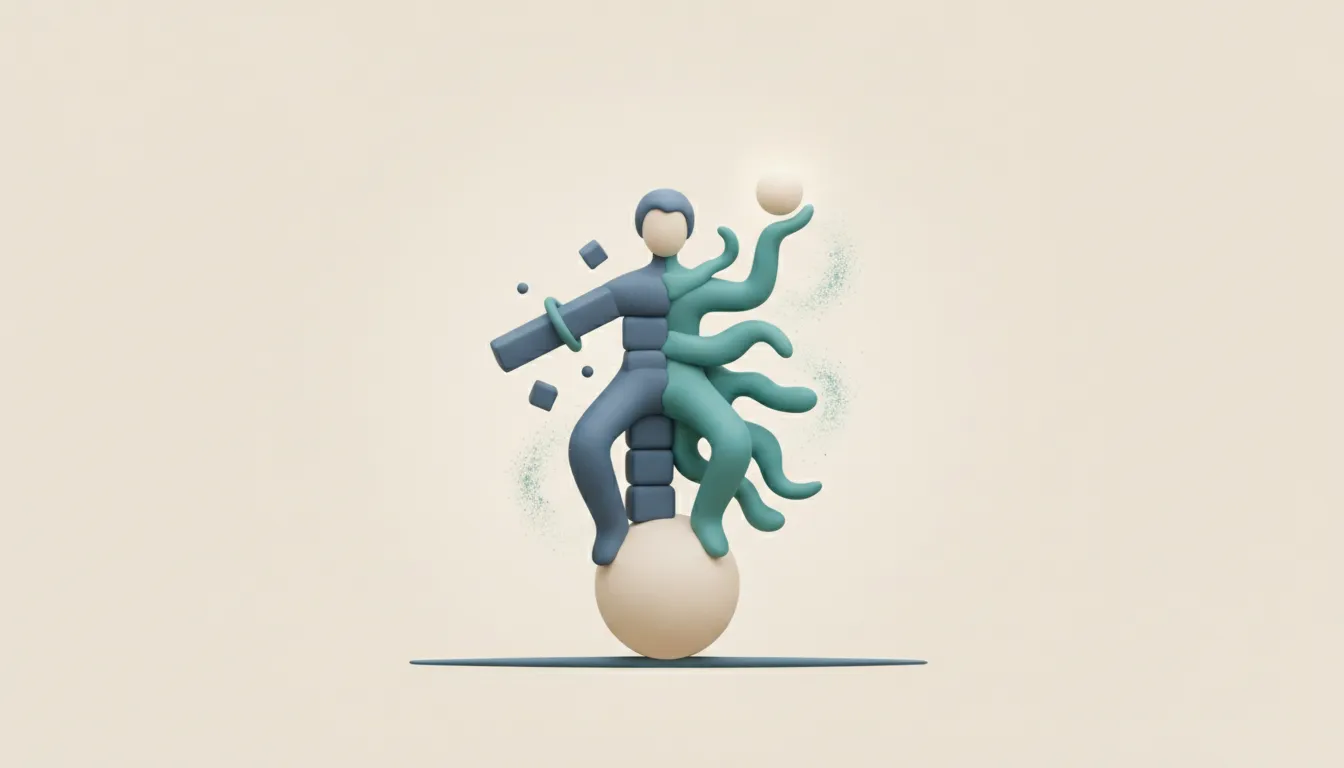
Why AuDHD Brains Oscillate Between Focus Modes

If you've ever found yourself locked into a task with terrifying intensity — only to have your attention ripped away by something entirely irrelevant, against your will — you're not experiencing inconsistency. You're experiencing two neurological networks staging a hostile takeover of each other.

FMRI research has illuminated a phenomenon unique to AuDHD: two competing network signatures running simultaneously. Autistic brains show hyper-connectivity within focused attention networks, particularly when processing high-interest tasks. This produces the deep lock-in that autistic people know well — the world narrows, time distorts, and the task becomes everything. ADHD brains, by contrast, show under-connectivity in the sustained attention networks, with a default mode network that refuses to quiet down, constantly broadcasting unrelated thoughts, environmental stimuli, and the sudden urgent conviction that you need to look up the migration patterns of Arctic terns right now.

Rommelse et al. (2017) identified shared genetic variants in dopamine and serotonin pathways affecting default mode network connectivity in co-occurring autism and ADHD. What this means in practice is that the AuDHD brain isn't simply combining two attention styles — it's running two competing architectures that alternately dominate, neither fully in control.

The dopamine paradox at the heart of this is worth understanding. Autistic reward circuits are highly selective: they accept specific, meaningful stimulation — the special interest, the deep dive, the pattern finally completing itself. ADHD circuits are non-selective and starving: they'll accept almost any stimulation just to bring dopamine to a bearable level. When these two systems coexist, you get a brain that swings between autistic lock-in (when the autistic reward system wins) and ADHD restless scanning (when ADHD urgency breaks through). Neither state is chosen. Both are neurologically authentic.

From the outside, observers see a person who 'can concentrate when they want to.' This is one of the most damaging misreadings of AuDHD. What they're seeing is not selective motivation or inconsistent effort — they're seeing the unpredictable outcome of two network states competing for dominance. You don't choose which system wins any more than you choose your heart rate.

The reframe that matters: this oscillation, as disruptive as it is to navigate, produces something neither neurotype achieves alone. The switch from autistic depth to ADHD breadth and back creates unexpected connections. Experts in their field who suddenly see the system from outside it. Artists who zoom in on texture then back out to structure. The tug-of-war is real — and it is also generative.

Why AuDHD People Build Then Abandon Systems

Somewhere in your life there is a beautiful, abandoned system. Maybe it's a colour-coded notebook with carefully designed sections you used for exactly eleven days. Maybe it's a productivity app with a three-tier tagging structure that took four hours to configure and was opened twice. Maybe it's a physical filing system that is now mostly a surface for other things.

This is not a character flaw. This is the AuDHD executive double-bind in action, and it is one of the most reliable features of this neurological profile.

Here is what happens. The autistic brain has a profound drive toward structure and predictability. In conditions of uncertainty or chaos, the autistic nervous system experiences genuine distress — the kind that motivates action. So the AuDHD person does what their autistic brain does brilliantly: they design a comprehensive, logical, beautifully organised system to impose order on the chaos. The planning phase is satisfying in exactly the way autistic brains find satisfying — pattern creation, rule-making, completeness.

Then the ADHD brain encounters the completed system. And here is the problem: the puzzle is solved. The novelty is gone. The system works, which means using it is now a routine task rather than a creative challenge. For the ADHD brain, which depends on novelty and interest to maintain engagement, a working system is intrinsically less compelling than a system that needs building. The dopamine that fuelled construction has nowhere to go once construction is complete.

What follows is a particular AuDHD grief: you watch your own infrastructure decay. The system still exists. You know it works. You built it yourself and can see its logic. But initiating its use requires overcoming ADHD initiation paralysis — starting a familiar, non-novel task with no urgency — while simultaneously overcoming autistic task-switching difficulty, because you were doing something else and now you have to stop. Two gatekeepers, both demanding justification you cannot provide.

The practical path forward is not more discipline — it's structural novelty. Systems that have variety built into them. Routines with choice points. Planners that change format weekly. Organisation systems where the maintenance itself contains enough variety to trigger ADHD engagement. The goal is not to make yourself use the perfect system. It's to design an imperfect system that your ADHD brain finds interesting enough to keep using.

The AuDHD Routine-Novelty Paradox

You want routine. You genuinely do. The predictability of knowing what comes next, the comfort of familiar sequences, the low cognitive load of not having to navigate new territory — your autistic nervous system finds these things genuinely regulating. Disruption to routine is not mere inconvenience; it activates real distress.

And you want novelty. Genuinely, urgently, neurologically. The new idea, the unexplored direction, the change of scene, the different approach — your ADHD brain requires these to maintain the dopamine levels that make engagement possible. Without novelty, routine becomes a kind of slow cognitive suffocation.

These are not contradictions. They are two valid, neurologically grounded needs — they simply don't naturally harmonise, and the environment rarely accommodates both simultaneously.

The neurochemistry involved is genuinely interesting. Serotonin, closely associated with autistic comfort needs, supports sameness, predictability, and low-arousal stability. Dopamine, the primary currency of ADHD motivation, is driven by novelty, surprise, and reward anticipation. The optimal states for each system pull in opposite directions: the autistic nervous system regulates best with serotonin-supporting sameness; the ADHD system activates best with dopamine-driving novelty. When both systems need regulating simultaneously, the person can find themselves apparently unable to make any choice — not because they're indecisive, but because every option violates one system's requirements.

From the outside, this looks like contradiction or confusion. People describe AuDHD individuals as 'hard to please' or 'inconsistent in what they want.' This framing is wrong and unhelpful. The person knows exactly what they want — they want routine AND novelty, predictability AND stimulation. The problem is that the environment usually offers one or the other.

The concept of structured novelty emerges from this understanding. Not random change (overwhelming to the autistic system) and not pure repetition (deadening to the ADHD system), but variation within predictable frameworks. The same breakfast, but a rotating menu within a fixed category. The same work time, but different tasks within an established structure. The same social format, but new content within familiar roles. This is not a compromise — it is the actual optimal state for an AuDHD nervous system, and building it deliberately is a legitimate life design strategy.

The AuDHD Social Energy Paradox

You arrive at a social gathering and something clicks. Someone mentions a topic that connects to three things you've been thinking about, and suddenly you're talking — fast, animated, enthusiastic, making connections out loud, asking follow-up questions before you've finished the previous ones. Your ADHD social drive is fully activated: the novelty of new conversation, the dopamine of engagement, the interest-fuelled momentum of a good exchange.

And then, sometimes mid-sentence, sometimes a few minutes later, the wall arrives.

The autistic nervous system has been processing the entire social environment in parallel the whole time: the sensory input of multiple conversations, the volume, the unpredictable turn-taking, the unspoken social rules requiring continuous monitoring, the effort of tracking tone and facial expression and what everyone's status relationship to everyone else is. This processing is not optional and it is not free. It runs at significant neurological cost, and when the cost has exceeded available resources, shutdown isn't a choice — it's a circuit breaker.

What makes AuDHD social dynamics particularly complex is the double masking load. Autistic individuals in social settings are typically masking autistic traits — suppressing stimming, monitoring communication style, tracking and meeting neurotypical social expectations. ADHD individuals are simultaneously managing impulsivity — the interrupting, the tangents, the volume control, the not saying the unexpected thing that just appeared in working memory. AuDHD individuals are doing both simultaneously, from the same finite executive resource pool. The cognitive overhead is measurable and it is higher than either condition requires alone.

The sudden disappearance that confuses people — the enthusiastic conversationalist who vanishes without apparent reason — is not rudeness, mood instability, or social rejection. It is the autistic nervous system executing an emergency resource allocation decision. The social engagement budget has been spent, and continuing would mean accessing reserves that don't exist.

Oxytocin and dopamine interactions add another layer. Social bonding releases oxytocin, which the ADHD system finds genuinely rewarding. But the sensory and social processing demands of extended interaction deplete the dopamine available for emotional regulation, making the experience increasingly costly even while it remains appealing. This is why the AuDHD person can simultaneously want to stay and need to leave — both responses are neurologically accurate.

Why AuDHD Focus Feels Like Roulette

On Tuesday, you wrote twelve thousand words without looking up. On Wednesday, you couldn't start a single paragraph. On Friday you were back, locked in, producing work that genuinely surprised you. The same person. The same task. The same desk. Different outcome every time.

This is not inconsistency as a character trait. This is trait fluctuation — the normal, predictable-in-its-unpredictability pattern of AuDHD attention, and it is one of the most reliable reasons for late diagnosis.

Autistic monotropic focus — the tendency to channel cognitive resources into a single interest or topic with great depth — is a genuine attention superpower when it aligns with what needs doing. When an AuDHD person's autistic interest focus is activated on a relevant task, the result is the kind of deep, sustained, high-quality output that makes neurotypicals ask what your secret is. The answer is that your autistic attention architecture just happened to align with something you're actually supposed to be doing.

But monotropism doesn't take requests. It activates on its own conditions — interest, meaning, pattern-recognition reward — not on the basis of external importance or deadlines. When monotropic focus is not activated, the ADHD system is the dominant driver, and it brings with it all the characteristic attention dysregulation: difficulty initiating, distraction from irrelevant stimuli, attention pulled by more interesting targets mid-task.

Antshel et al. (2016) documented compounded executive function challenges in AuDHD that exceed the sum of either condition alone. This compounding is visible in focus specifically: autistic task-switching difficulty (resistance to moving on from a focus state) combines with ADHD initiation paralysis (resistance to entering a focus state), creating a pattern where getting in and getting out of productive focus are both harder than they would be with either condition alone.

The 'inconsistency' label is one of the more damaging things that gets attached to AuDHD people. It implies unreliability of character when what's actually operating is neurological trait fluctuation. Clinicians who don't understand co-occurrence often read the variable presentation as 'subclinical' — not severe enough on any given day to meet criteria. This is why average AuDHD diagnosis comes significantly later than single-condition diagnosis. The conditions mask each other, and the fluctuation reads as stability.

Dual Network Conflict in AuDHD

Neuroimaging has given us a window into what makes AuDHD brains structurally distinct from either autism or ADHD alone. The picture that emerges is not of two conditions simply co-occurring — it is of two network architectures actively competing for control.

In autism, researchers consistently find hyper-connectivity within local neural networks — particularly those supporting detailed, focused processing. This means that when an autistic brain engages with a task, the relevant network activates with unusual intensity and maintains that activation. The flip side is reduced connectivity between distant brain regions, which is why task-switching and contextual flexibility can be harder.

In ADHD, the pattern is essentially the opposite: under-connectivity in the sustained attention networks, with a hyperactive default mode network that refuses to deactivate during task performance. The default mode — the network that generates mind-wandering, self-referential thought, and the impulse to check what time it is — should quiet down when you're trying to focus. In ADHD, it doesn't reliably do so.

In AuDHD, both patterns are present. The brain's sustained attention system is under-connected (ADHD signature), but when attention does lock in, it hyper-connects and becomes difficult to shift (autistic signature). The default mode is overactive at baseline (ADHD), but when specific interests are engaged, the whole attention architecture reroutes toward them with unusual intensity (autism). The result is a brain that swings between two extreme states rather than resting in a flexible middle.

Rommelse et al. (2017) identified that shared genetic variants in dopamine and serotonin pathways — particularly those regulating synaptic transmission in attention networks — underlie both conditions. This isn't coincidental co-occurrence. The same genetic architecture produces both network signatures, which is why 50-70% of autistic people also meet ADHD criteria. They share a root.

Practically, this means that attention interventions designed for one neurotype often partially work and partially backfire for AuDHD. Strategies that strengthen sustained attention (ADHD interventions) can intensify monotropic lock-in (autistic challenge). Strategies that support task-switching (autistic interventions) can remove the anchor that keeps ADHD attention on the right channel. Effective support has to account for both architectures simultaneously.

The AuDHD Dopamine Paradox

Dopamine is the brain's signal for 'this matters, pay attention, keep going.' It is the neurochemical backbone of motivation, focus, reward learning, and the ability to sustain effort on things that aren't immediately enjoyable. When dopamine signalling works typically, the brain can generate engagement with important tasks, build habits through reward association, and maintain motivation across the flat middle of any long project.

In ADHD, baseline dopamine is lower than typical. The ADHD brain is chronically under the threshold needed to engage sustained attention networks without external stimulation. This is why novelty, urgency, interest, and challenge activate ADHD brains reliably — they all produce dopamine surges that temporarily bring the system above threshold. Without these activators, the ADHD brain is essentially searching for any stimulus that will provide enough dopamine signal to function. It is, neurochemically, hungry.

In autism, the dopamine system operates differently in reward circuits. Rather than a generalised hunger for stimulation, the autistic dopamine system is highly selective. It responds intensely to specific stimuli — particularly those connected to special interests, meaningful patterns, or predictable environments — and generates significantly less reward signal for stimuli that don't meet its criteria. This selectivity is part of what creates special interest engagement (extremely high dopamine for the right input) and difficulty with routine tasks (very low dopamine for inputs that don't resonate).

Hartman et al. (2016) demonstrated that the dopaminergic profile in comorbid autism-ADHD is distinct from either condition alone — not simply an average of the two, but a unique configuration. The AuDHD dopamine system is simultaneously hungry (ADHD baseline deficit) and selective (autistic reward circuit specificity). It needs stimulation constantly and can only accept a narrow range of it.

The practical consequences of this are significant. Standard ADHD dopamine-boosting strategies — novelty, gamification, varying the environment — may not work if the novel elements don't meet autistic selectivity criteria. Standard autistic special interest engagement — leaning into deep focus on preferred topics — may not resolve the ADHD background hunger for general stimulation. The solution requires both: high-stimulation engagement within interest-specific domains, building dopamine from the autistic system while also satisfying ADHD novelty requirements. This is genuinely harder to engineer than either alone, and understanding why makes it less confusing and more tractable.

The Executive Double Bottleneck

Executive function is the set of cognitive processes that govern goal-directed behaviour: initiating tasks, switching between them, holding information in working memory, suppressing irrelevant impulses, and monitoring progress. When executive function works reliably, it is largely invisible — the brain handles task transitions and starts automatically, without conscious effort.

In ADHD, executive function fails at the entry point. Initiation is the primary bottleneck: starting a task, particularly a low-interest or routine task, requires overcoming a significant neurological barrier. The ADHD brain's dopamine-driven motivation system doesn't fire reliably for tasks that lack sufficient interest, urgency, or novelty. The person knows what needs doing. They cannot make themselves begin. This is not procrastination as moral failing — it is initiation paralysis as neurological phenomenon.

In autism, executive function fails at the exit point. Task-switching — the cognitive flexibility to disengage from a current activity and redirect to a new one — is significantly impaired in autistic profiles. Once engaged with a task, particularly one that has activated monotropic focus, redirecting requires overcoming genuine cognitive resistance. Interruption to a task in progress can be experienced as distressing, not merely inconvenient. The autistic brain, when focused, does not want to stop.

In AuDHD, both bottlenecks are active simultaneously. Beginning a new task requires defeating ADHD initiation paralysis (the entry gate refuses to open) while simultaneously disengaging from whatever is currently happening (the autistic exit gate also refuses to open). This double bottleneck is why AuDHD people can spend extended periods in a transition state: neither doing the task they need to start nor continuing the task they were doing. Both gates are locked from the inside.

Antshel et al. (2016) documented that executive function challenges in AuDHD exceed the sum of what either condition would predict independently — a compounding, not additive, effect. This compounding appears to result from the two bottlenecks interfering with each other's compensatory strategies. ADHD management strategies that use urgency to trigger initiation can overwhelm the autistic system's need for gradual transition. Autistic management strategies that use predictable task sequences can remove the novelty that ADHD needs to initiate engagement.

The double bottleneck is real, it is documented, and it is not a sign of insufficient effort. Understanding it reframes the experience: forty minutes staring at an email is not laziness. It is two neurological gates, both locked, with keys that don't work for each other.