सामाजिक बेचैनी (Social Anxiety) | AskSheldon
सामाजिक बेचैनी (Social Anxiety)

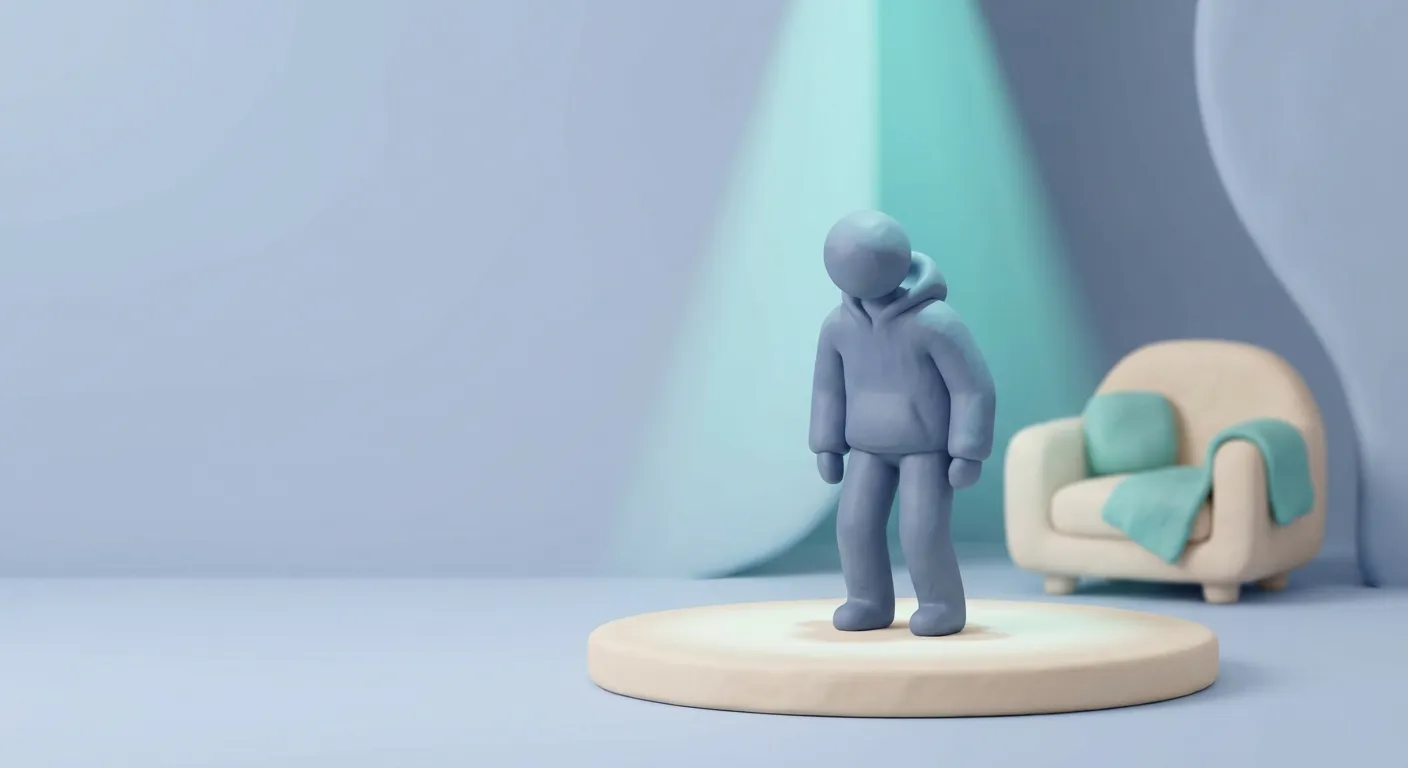
सामाजिक चिंता क्या है?

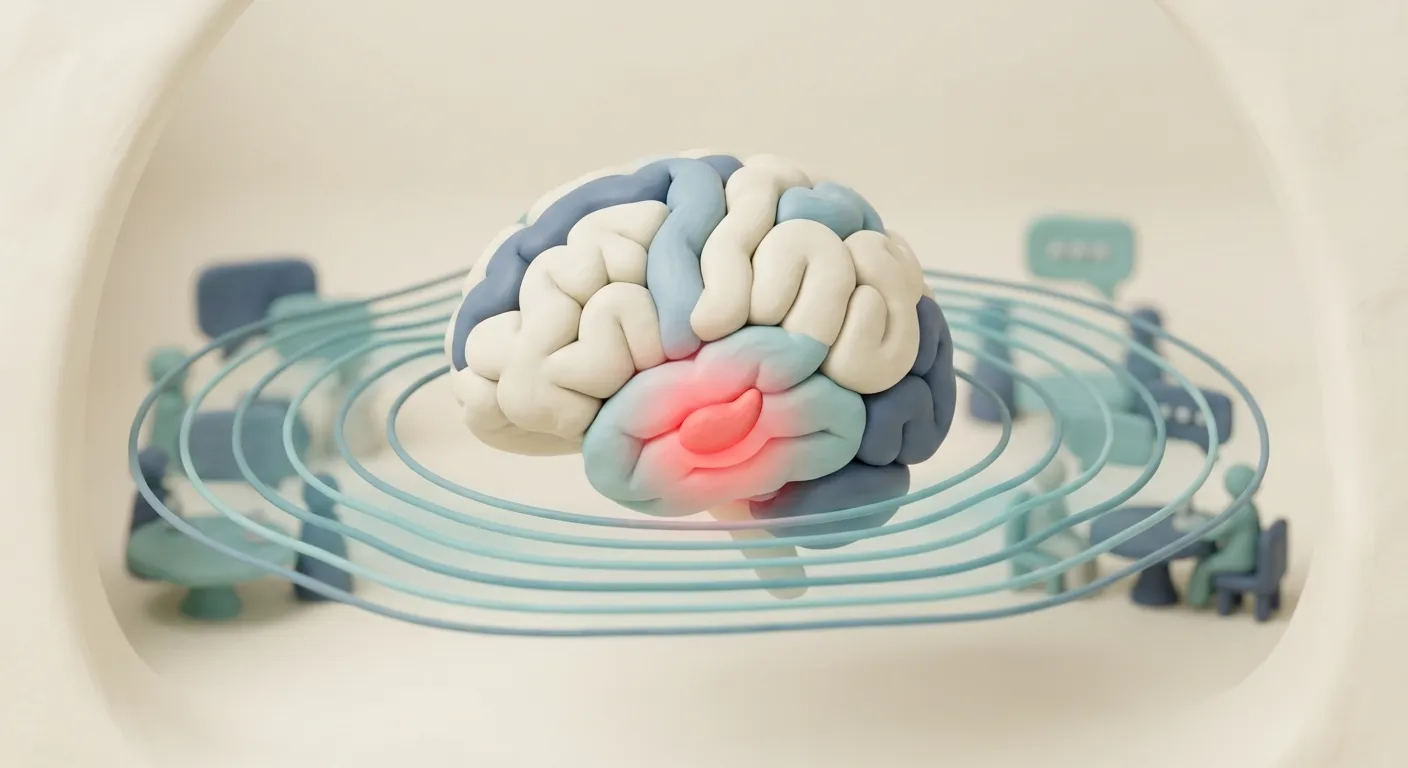
Social anxiety disorder (SAD) is characterized by persistent fear of social evaluation linked to differences in brain networks that process threat and social cues. Key areas like the amygdala (fear center) show heightened activity, while prefrontal regions that regulate emotions may function differently.

1 in 14affected लोग
7%प्रचलन
सामान्य IQ रेंज

सामाजिक चिंता कैसे दिखता है?

  • Leaving events early when tension builds
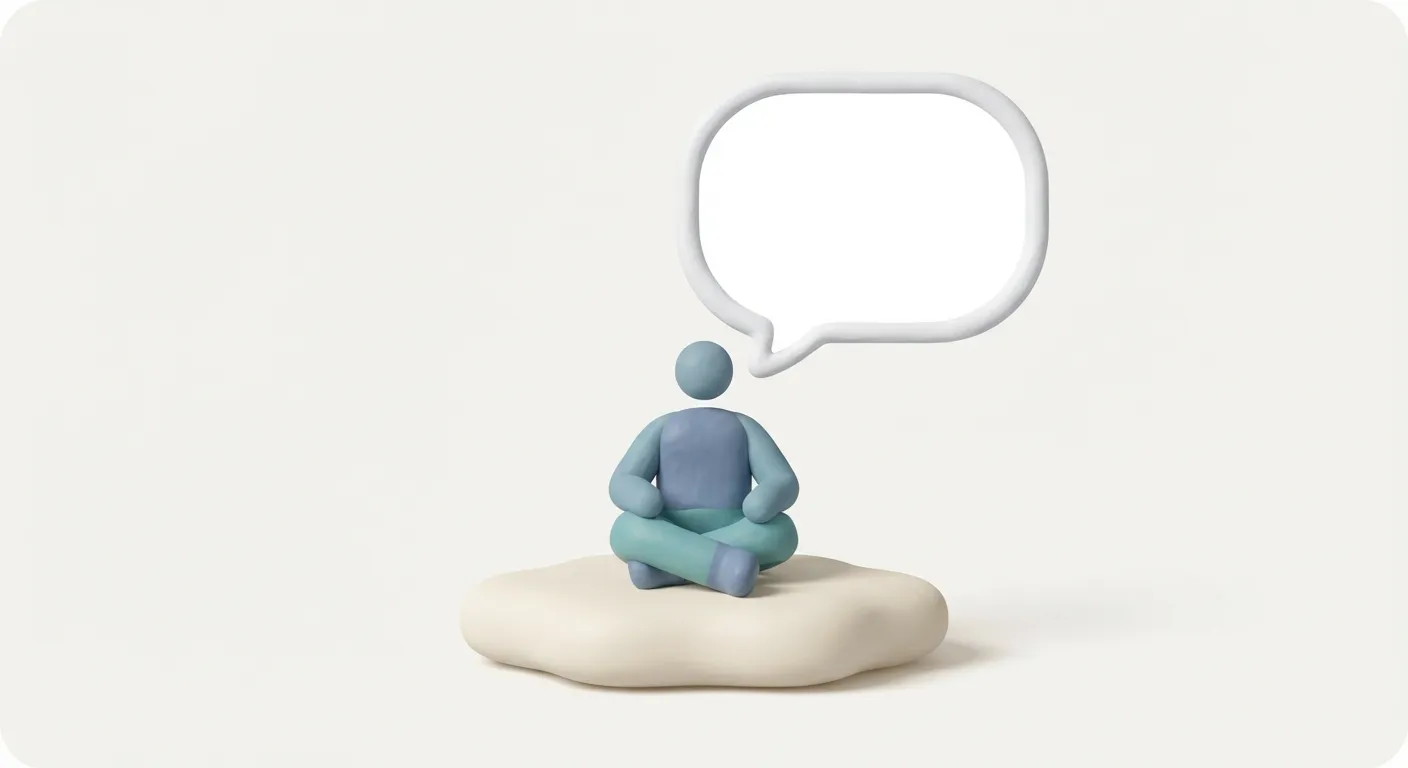
  • Speaking minimally despite wanting to join in
  • Sweating or trembling during routine interactions
  • Declining invitations involving unfamiliar people
  • Rehearsing conversations before and replaying them after

सामाजिक चिंता के types

  • Performance-Specific(~40%)
  • Generalized(~60%)

सामाजिक चिंता के बारे में आम सवाल

Can social anxiety be cured completely?

While

Why do physical symptoms feel uncontrollable?

The amygdala activates the sympathetic nervous system before conscious awareness. This evolutionary survival mechanism bypasses rational thought, causing immediate physical reactions to perceived social threats.

Content DSM-5 criteria और current clinical literature के अनुसार reviewed है। यह page educational purposes के लिए है और medical advice नहीं है। Diagnosis या treatment के लिए किसी qualified healthcare professional से मिलें।

सामाजिक बेचैनी (Social Anxiety)

सामाजिक बेचैनी

क्या यह मुझ पर लागू होता है?

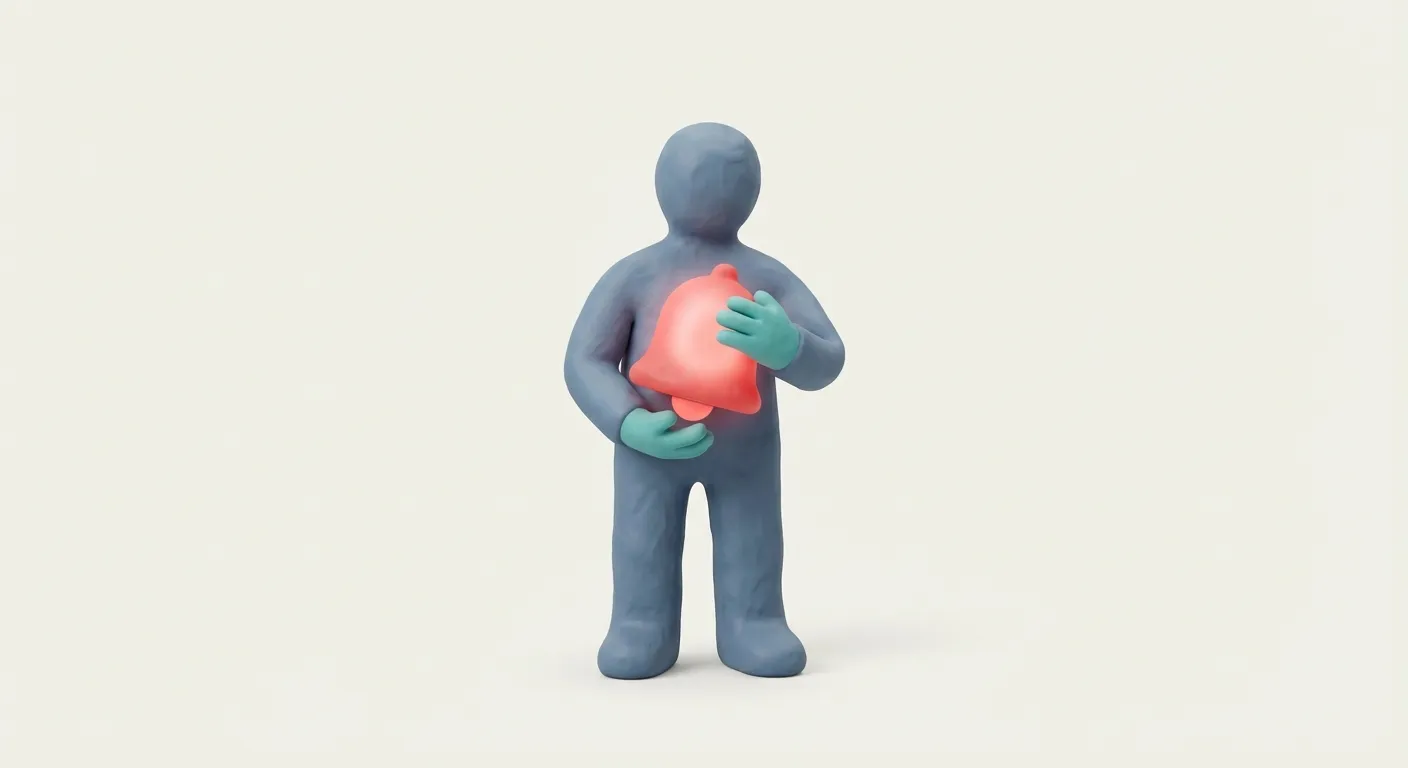
सामाजिक बेचैनी (Social Anxiety)Audio जल्द आएगा

हम इस condition के लिए audio guide बना रहे हैं। जब यह आए तो notification पाएँ।

यह actually क्या है?

Social anxiety disorder (SAD) is characterized by persistent fear of social evaluation linked to differences in brain networks that process threat and social cues. Key areas like the amygdala (fear center) show heightened activity, while prefrontal regions that regulate emotions may function differently. These neurobiological differences amplify perceived social risks beyond actual threats.

यह brain की wiring में अंतर है, character flaw नहीं।

तेज़ अनुमान

आपको क्या लगता है 14 में से कितने लोगों को यह है?

अपना अनुमान लगाने के लिए icons tap करें।

Social Anxiety Disorder is associated with measurable neurological differences including 30% greater amygdala reactivity to social cues and reduced prefrontal-amygdala connectivity compared to non-anxious controls.

Neuropsychopharmacology
Tap to Start Myth Busting

बाहर से कैसा दिखता है vs. अंदर से कैसा लगता है

देखे गए behavior के पीछे का lived experience

Leaving events early when tension builds — The Emergency Exit
अंदर देखने के लिए टैप करें

दूसरों को क्या दिखता है

Leaving events early when tension builds

The Emergency Exit
वापस पलटने के लिए टैप करें

अंदर से

The Emergency Exit

The tension hit a threshold and my body demanded escape. Staying felt physically dangerous, even though nothing actually happened.

Speaking minimally despite wanting to join in — The Silent Want
अंदर देखने के लिए टैप करें

दूसरों को क्या दिखता है

Speaking minimally despite wanting to join in

The Silent Want
वापस पलटने के लिए टैप करें

अंदर से

The Silent Want

I have things to say. But the moment I consider speaking, my throat closes and my mind goes blank. The want and the wall coexist.

Sweating or trembling during routine interactions — The Physical Alarm
अंदर देखने के लिए टैप करें

दूसरों को क्या दिखता है

Sweating or trembling during routine interactions

The Physical Alarm
वापस पलटने के लिए टैप करें

अंदर से

The Physical Alarm

My hands are shaking over small talk. Racing heart, sweat — my body declares emergencies in situations others find completely normal.

Declining invitations involving unfamiliar people — The Pre-Rejection
अंदर देखने के लिए टैप करें

दूसरों को क्या दिखता है

Declining invitations involving unfamiliar people

The Pre-Rejection
वापस पलटने के लिए टैप करें

अंदर से

The Pre-Rejection

I declined because I already lived through the worst-case scenario in my head. The imagined humiliation felt real enough to avoid.

Rehearsing conversations before and replaying them after — The Replay Loop
अंदर देखने के लिए टैप करें

दूसरों को क्या दिखता है

Rehearsing conversations before and replaying them after

The Replay Loop
वापस पलटने के लिए टैप करें

अंदर से

The Replay Loop

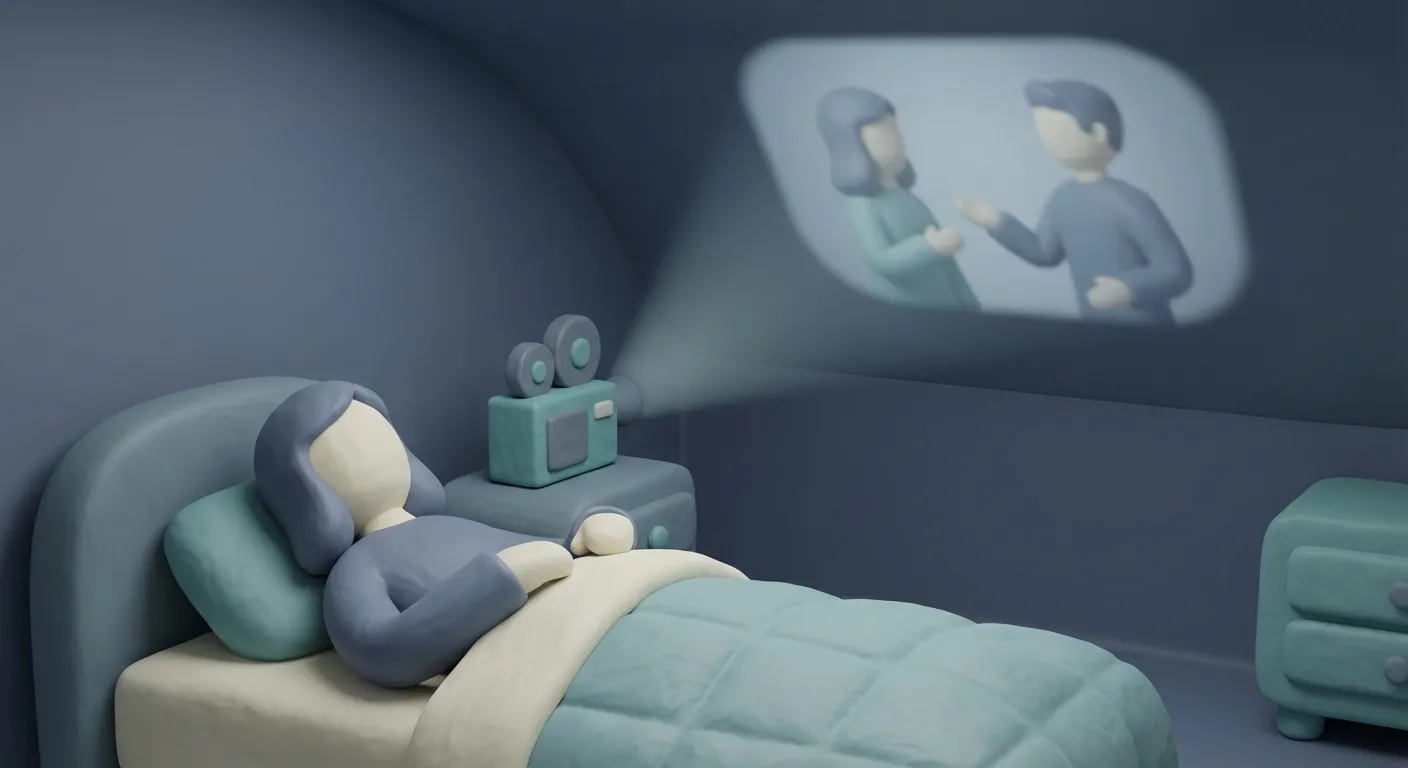
The conversation ended hours ago but my brain won't stop cataloging every perceived mistake. I'm editing a film that's already screened.

People with SAD show heightened reward circuit activation when imagining positive social connection. The desire for connection is neurologically intact — often heightened — while fear of evaluation prevents acting on it.

Social Cognitive and Affective Neuroscience
Tap to Start Myth Busting

Types of सामाजिक बेचैनी (Social Anxiety)

Performance-Specific: Fear focused on observable activities — public speaking, eating in front of others, performing. Casual conversations might feel fine. Your sensorimotor regions activate specifically during performance tasks, not all social contact.
प्रकार 1~40%

Performance-Specific

Fear focused on observable activities — public speaking, eating in front of others, performing. Casual conversations might feel fine. Your sensorimotor regions activate specifically during performance tasks, not all social contact.

Fear of observable performance
Normal casual interactions
Specific neural activation patterns
Often responds well to beta-blockers
Generalized: Pervasive fear across most social contexts. Not just stage fright — ordering coffee, answering phones, entering rooms. Your amygdala has broader hyperactivity and reduced prefrontal regulation across all social situations.
प्रकार 2~60%

Generalized

Pervasive fear across most social contexts. Not just stage fright — ordering coffee, answering phones, entering rooms. Your amygdala has broader hyperactivity and reduced prefrontal regulation across all social situations.

Fear across most social contexts
Broader amygdala hyperactivity
Often co-occurs with depression
Benefits most from combined therapy + medication

SSRIs increase BDNF and hippocampal neurogenesis. Approximately 60% of patients who achieve remission maintain treatment gains after discontinuation — evidence of structural neural change, not symptom masking.

Archives of General Psychiatry
Tap to Start Myth Busting

विज्ञान: SOCIAL-ANXIETY

The "Why" Behind the "What"

यह शर्म नहीं है। यह तंत्रिकाजीवविज्ञान है।

अति संवेदनशील रडार: आपका एमिग्डाला सिर्फ वास्तविक खतरों पर ही प्रतिक्रिया नहीं करता, बल्कि सामाजिक मूल्यांकन को लेकर भी यह सामान्य दिमाग की तुलना में 30% अधिक तीव्रता से प्रतिक्रिया करता है। यहां तक कि तटस्थ चेहरे भी खतरे के रूप में समझे जाते हैं। एक नजर भी निर्णय बन जाती है। एक ठहराव अस्वीकृति में बदल जाता है।
खतरे का पता लगाना

अति संवेदनशील रडार

आपका एमिग्डाला सिर्फ वास्तविक खतरों पर ही प्रतिक्रिया नहीं करता, बल्कि सामाजिक मूल्यांकन को लेकर भी यह सामान्य दिमाग की तुलना में 30% अधिक तीव्रता से प्रतिक्रिया करता है। यहां तक कि तटस्थ चेहरे भी खतरे के रूप में समझे जाते हैं। एक नजर भी निर्णय बन जाती है। एक ठहराव अस्वीकृति में बदल जाता है।

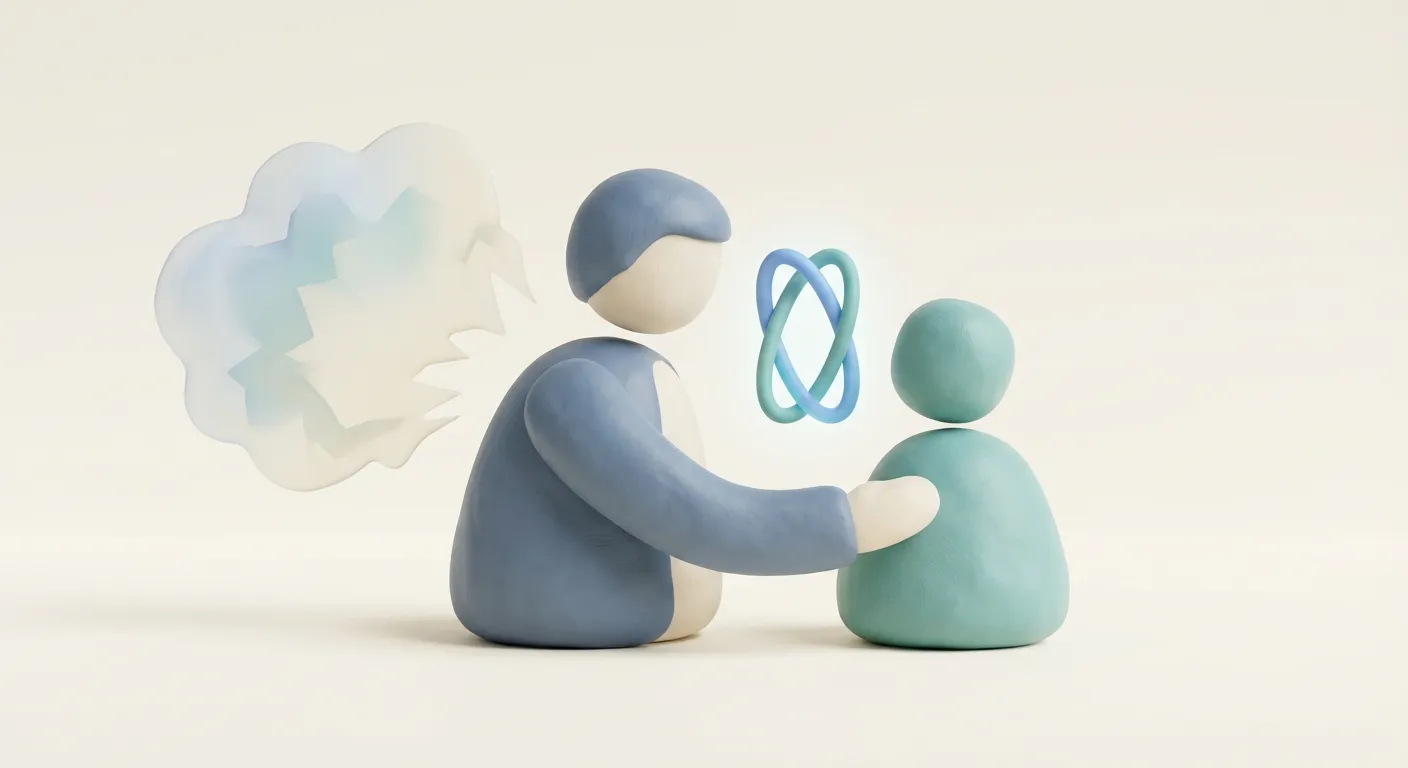
चाहत-भय का युद्ध: सामाजिक चिंता से ग्रस्त लोगों में जुड़ाव की कल्पना करने पर अक्सर इनाम की तीव्र इच्छा जागृत होती है—वे इसे कम नहीं, बल्कि और अधिक चाहते हैं। लेकिन साथ ही साथ अतिसक्रिय भय प्रणाली जुड़ाव के हर प्रयास को खतरे में बदल देती है। मस्तिष्क अपने ही भीतर से युद्ध कर रहा होता है।
तंत्रिका संघर्ष

चाहत-भय का युद्ध

सामाजिक चिंता से ग्रस्त लोगों में जुड़ाव की कल्पना करने पर अक्सर इनाम की तीव्र इच्छा जागृत होती है—वे इसे कम नहीं, बल्कि और अधिक चाहते हैं। लेकिन साथ ही साथ अतिसक्रिय भय प्रणाली जुड़ाव के हर प्रयास को खतरे में बदल देती है। मस्तिष्क अपने ही भीतर से युद्ध कर रहा होता है।

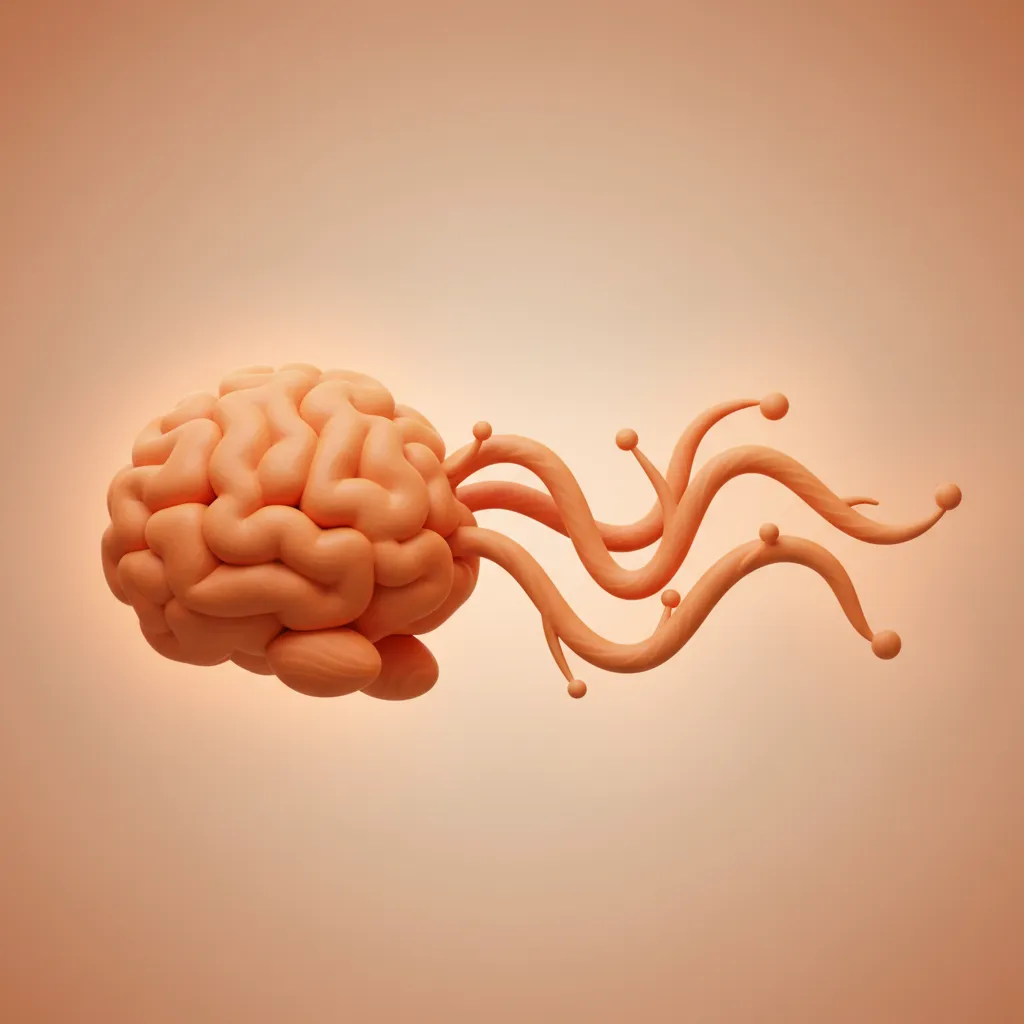
पुनःसंयोजित मस्तिष्क: सबसे महत्वपूर्ण बात यह है: जिस मस्तिष्क ने डरना सीख लिया है, वह डरना छोड़ भी सकता है। सामाजिक चिंता के लिए सीबीटी (संचारी चिकित्सा) उपचार के बाद प्रीफ्रंटल-एमिग्डाला कनेक्टिविटी को 18% तक बढ़ाती है और एमिग्डाला सक्रियता को 40-60% तक कम करती है। इस प्रकार, मस्तिष्क के संवेदी तंत्र को पुनः समायोजित किया जा सकता है।
न्यूरोप्लास्टिसिटी

पुनःसंयोजित मस्तिष्क

सबसे महत्वपूर्ण बात यह है: जिस मस्तिष्क ने डरना सीख लिया है, वह डरना छोड़ भी सकता है। सामाजिक चिंता के लिए सीबीटी (संचारी चिकित्सा) उपचार के बाद प्रीफ्रंटल-एमिग्डाला कनेक्टिविटी को 18% तक बढ़ाती है और एमिग्डाला सक्रियता को 40-60% तक कम करती है। इस प्रकार, मस्तिष्क के संवेदी तंत्र को पुनः समायोजित किया जा सकता है।

सामाजिक धुआँ डिटेक्टर: आपके दिमाग ने घर के सामाजिक हिस्से में एक स्मोक डिटेक्टर लगा रखा है, और यह अधिकतम संवेदनशीलता पर सेट है। टोस्ट? अलार्म। मोमबत्ती? अलार्म। रसोई के पास कोई सांस ले रहा है? पूरा अलार्म बजने लगता है। यह खराब नहीं है - यह अपना काम बहुत अच्छे से कर रहा है। लक्ष्य इसे हटाना नहीं है। लक्ष्य इसे इस तरह से रीकैलिब्रेट करना है कि यह केवल वास्तविक आग लगने पर ही बजे।
तंत्र

सामाजिक धुआँ डिटेक्टर

आपके दिमाग ने घर के सामाजिक हिस्से में एक स्मोक डिटेक्टर लगा रखा है, और यह अधिकतम संवेदनशीलता पर सेट है। टोस्ट? अलार्म। मोमबत्ती? अलार्म। रसोई के पास कोई सांस ले रहा है? पूरा अलार्म बजने लगता है। यह खराब नहीं है - यह अपना काम बहुत अच्छे से कर रहा है। लक्ष्य इसे हटाना नहीं है। लक्ष्य इसे इस तरह से रीकैलिब्रेट करना है कि यह केवल वास्तविक आग लगने पर ही बजे।

Linked to amygdala hyperactivation, reduced prefrontal regulation, and altered serotonin signalling in social evaluation circuits.

Avoidance behaviours are the primary maintenance mechanism for SAD. Exposure therapy reduces amygdala activation by 40-60% post-treatment by providing disconfirming data the avoidance prevents.

Journal of Anxiety Disorders
Tap to Start Myth Busting
Restricted Access

Scientific Deep Dive

Explore Myths to Unlock

Earn 5 Insight Points

Illustration for Deep Dive fact 1
1 / 15

Can therapy actually change my brain?

Yes, visibly. A 2024 neuroimaging study showed CBT increased connectivity between the prefrontal cortex and amygdala by 18%, literally growing new

Unlock Answer
Two Sides of the Coin

सिक्के के दोनों पहलू

हर न्यूरोलॉजिकल अंतर व्यापार-नापसंद के साथ आता है। वह विशेषता जो एक संदर्भ में संघर्ष का कारण बनती है, दूसरे में प्रतिभा पैदा करती है।

The Evaluation Loop

Your brain scores every social interaction in real-time and retroactively. It never gives you higher than a C minus, regardless of actual performance.

Avoidance Gravity

Every situation you avoid reinforces the neural pathway that says 'that was dangerous.' Avoidance feels like relief but it's actually your fear getting stronger.

Meta-Anxiety

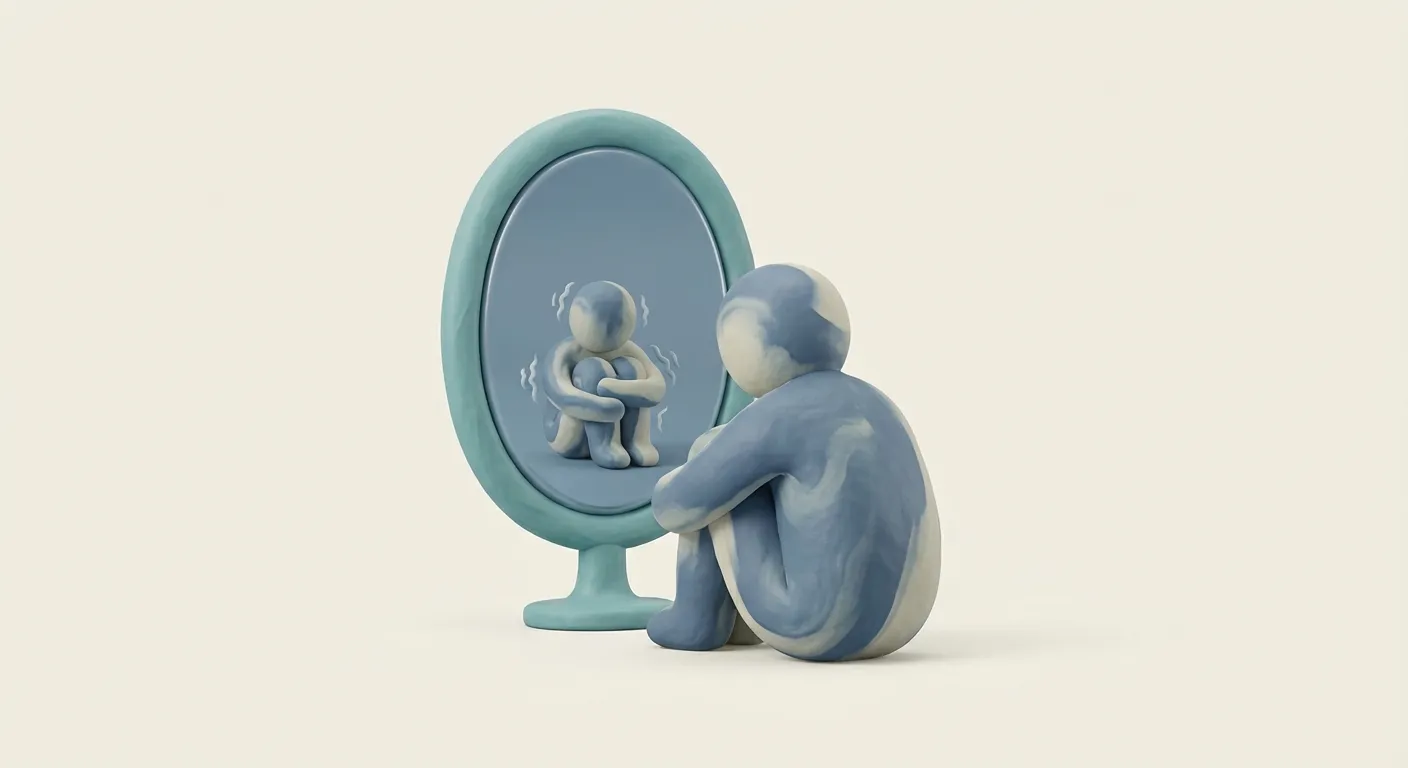
Being anxious about being visibly anxious. The sweating makes you more anxious about the sweating. Your anxiety has anxiety.

The WHO ranks Social Anxiety Disorder among the top 10 causes of disability worldwide. Functional impairment is comparable to chronic physical conditions including cardiovascular disease.

World Health Organization
Tap to Start Myth Busting

Community की आवाज़ें

असली अनुभव

It

Community Member
22

I

Community Member
39

The

Community Member
16

Phone calls are a special kind of hell. I need to script

Community Member
33

Medication lowered the background noise of

Community Member
50

I

Community Member
27

क्या लगता है आपको सामाजिक बेचैनी (Social Anxiety) हो सकता है?

हमारा clinical-grade screening assessment लें। 5 मिनट से कम लगेगा और instant insights मिलेंगे।

Success के लिए Rewiring

खुद को fix करने की कोशिश बंद करें। एक ऐसा support system बनाना शुरू करें जो आपके brain के साथ काम करे, उसके खिलाफ नहीं।

Therapy

  • Cognitive Behavioural Therapy (CBT)
    Gold-standard treatment. Targets thought patterns and avoidance behaviours. 40-60% amygdala activation reduction documented post-treatment.
  • Exposure and Response Prevention
    Systematic confrontation of feared social situations without safety behaviours. Provides amygdala with corrective learning.
  • Acceptance and Commitment Therapy (ACT)
    Teaches psychological flexibility — defusing from anxious thoughts and acting toward values despite discomfort.
  • Compassion-Focused Therapy
    Specifically addresses the shame and self-criticism that often accompany social anxiety, building self-compassion as a regulatory resource.

Medication

  • SSRIs (Sertraline, Escitalopram)
    First-line pharmacological treatment. Reduces amygdala baseline reactivity via serotonin modulation. 4-8 weeks for full effect.
  • SNRIs (Venlafaxine)
    Also first-line for SAD. Targets both serotonin and norepinephrine systems. Particularly useful with comorbid depression.
  • Beta-Blockers (Propranolol)
    Block adrenaline receptors, reducing peripheral physical symptoms. Most useful for performance-specific SAD (presentations, exams).
  • Pregabalin
    GABA modulator with evidence for generalised SAD. May be considered when SSRIs are insufficient or poorly tolerated.

Lifestyle

  • Aerobic Exercise
    Regular cardio reduces baseline amygdala reactivity and HPA axis activation. 30 minutes 3x/week shows anxiety-reducing effects comparable to low-dose medication in some studies.
  • Sleep Hygiene
    Sleep deprivation amplifies amygdala reactivity significantly. Consistent sleep schedule is a non-negotiable foundation for anxiety management.
  • Caffeine Reduction
    Caffeine directly stimulates the sympathetic nervous system. High caffeine intake is physiologically indistinguishable from pre-anxiety arousal and can trigger anxiety loops.
  • Social Exposure Practice
    Deliberately scheduling small, manageable social interactions — not to 'push through' but to provide the amygdala with regular corrective data.

Supplements

  • Inositol
    A naturally occurring carbohydrate with evidence from RCTs for anxiety reduction, possibly via serotonin receptor sensitisation. Consult doctor.
  • Magnesium Glycinate
    Supports GABA function and reduces cortisol reactivity. Commonly deficient in people with chronic anxiety. Consult doctor.
  • Probiotics (L. rhamnosus)
    Gut-brain axis research shows specific probiotic strains can reduce amygdala reactivity via vagal signalling. Emerging but promising. Consult doctor.
  • Ashwagandha (KSM-66)
    Adaptogenic herb with cortisol-reducing properties in some RCTs. May reduce HPA axis hyperreactivity underlying chronic anxiety. Consult doctor.

Environment

  • Reduce Safety Behaviours Gradually
    Identify and systematically reduce the avoidance strategies that maintain anxiety — sitting near exits, over-preparing, avoiding eye contact.
  • Low-Stimulation Recovery Spaces
    After social demands, allow genuine recovery time in low-stimulation environments. Rest is not avoidance — it is sustainable management.
  • Build Predictable Social Structures
    Regular social commitments with familiar people reduce the uncertainty component of social anxiety. Predictability lowers threat assessment.
  • Digital Socialising as Bridge
    Text-based and asynchronous communication can build social confidence and relationships that support in-person exposure practice.

Body

  • Diaphragmatic Breathing
    Slow, deep belly breathing activates the parasympathetic system and directly counteracts the sympathetic activation driving physical anxiety symptoms.
  • Progressive Muscle Relaxation
    Systematic tension-and-release of muscle groups teaches the body to recognise and release the physical holding patterns of anxiety.
  • Cold Water Exposure
    Brief cold water on the face activates the dive reflex and parasympathetic response, providing rapid heart rate reduction during acute anxiety.
  • Mindful Body Scanning
    Non-judgmental attention to physical anxiety sensations — building tolerance for discomfort rather than fleeing it. Reduces meta-anxiety over time.

आपके brain के लिए tools

इस neurotype के लिए बने — generic wellness नहीं

सभी देखें
FAQ

अक्सर पूछे जाने वाले सवाल

Terms की Glossary

साथ में होने वाली Conditions

Neurodivergent conditions अक्सर साथ आती हैं। Co-occurrence समझने से पूरी picture बनती है।

और जानने के लिए किसी भी condition पर click करें। Co-occurrence percentages peer-reviewed research से हैं।

वैज्ञानिक संदर्भ

  1. American Psychiatric Association. (2022). Diagnostic and Statistical Manual of Mental Disorders (5th ed., text rev.).
  2. Stein, M. B., & Stein, D. J. (2008). Social anxiety disorder. The Lancet, 371(9618), 1115-1125.
  3. Liebowitz, M. R. (1987). Social phobia. Modern Problems of Pharmacopsychiatry, 22, 141-173.
  4. Furmark, T., et al. (2002). Common changes in cerebral blood flow after treatment with citalopram and cognitive-behavioral therapy in patients with social phobia. Archives of General Psychiatry, 59(5), 425-433.
  5. National Institute for Health and Care Excellence. (2013). Social anxiety disorder: recognition, assessment and treatment. NICE guideline CG159.
  6. Heimberg, R. G., et al. (2010). Cognitive-behavioral therapy for social anxiety disorder: Current status and future directions. Psychiatric Clinics of North America, 33(4), 839-855.
  7. Kessler, R. C., et al. (2005). Prevalence, severity, and comorbidity of 12-month DSM-IV disorders. Archives of General Psychiatry, 62(6), 617-627.
  8. World Health Organization. (2017). Depression and Other Common Mental Disorders: Global Health Estimates.
  9. Baldwin, D. S., et al. (2014). Evidence-based pharmacological treatment of anxiety disorders, post-traumatic stress disorder and obsessive-compulsive disorder: A revision. Journal of Psychopharmacology, 28(5), 403-439.
  10. Clark, D. M. (2001). A cognitive perspective on social phobia. In W. R. Crozier & L. E. Alden (Eds.), International handbook of social anxiety. Wiley.

Your awareness of others is a gift of connection. You are worthy of being seen.

आप अब तक survive कर चुके हैं। सोचो जब आप अपने brain से लड़ना बंद कर दें तो क्या कर सकते हो।

Why Social Anxiety Triggers the Emergency Exit

You're at a party, a work event, a family dinner. Everything is technically fine. Nobody is being unkind. And yet, at some point, your body issues what feels like a non-negotiable command: leave. Now. Not in ten minutes. Now.

This is not irrational. It is not drama. It is your amygdala — the brain's threat-detection centre — doing exactly what it was built to do. The problem is that it's doing it in the wrong context.

In the context of social anxiety, the amygdala has learned to classify social evaluation as a threat on the same tier as physical danger. When your nervous system detects that you are being observed, judged, or evaluated — even benignly — it activates the same survival pathway it would use if you were being chased. Your sympathetic nervous system floods your body with adrenaline and cortisol. Your heart rate spikes. Your muscles tense. Blood moves away from your digestive system toward your large muscle groups, because your body is preparing to run.

Your body is not making a mistake. It is doing its job flawlessly. The issue is that the threat your body is responding to — social rejection, humiliation, negative evaluation — has been tagged at the neurological level as a survival emergency. This is because, evolutionarily speaking, it once was. Being excluded from the group, being publicly shamed, being rejected by your social unit — in ancestral environments, these were genuine survival threats. Your brain hasn't fully updated its threat taxonomy to distinguish between 'people might judge me' and 'I might die'.

Leaving the situation provides immediate relief. The adrenaline drops. The tension dissipates. Your nervous system returns to baseline. This is why the emergency exit feels so compelling — because it genuinely works, in the short term. The sympathetic nervous system activation stops, and your body registers: 'escaping worked.'

The problem is what happens next. Each time you escape, your brain records the experience as confirmation that the social situation was dangerous. The threat pathway is reinforced. The threshold for triggering it gets lower. The relief of escape becomes part of the learning, which makes future exits more likely.

Exposure therapy works precisely by interrupting this loop. By staying in the situation past the point of peak anxiety — not endlessly, but long enough for the amygdala to receive updated data — the brain can begin to revise its threat classification. The amygdala is plastic. It can learn that the evaluation wasn't fatal. But it needs repeated, uncollapsed exposures to update what it knows.

  • The urge to leave is driven by real sympathetic nervous system activation — your body is genuinely responding to a perceived threat, not performing.
  • Evolutionary legacy means social rejection was historically a survival threat — your amygdala hasn't fully updated its threat taxonomy.
  • Leaving provides genuine short-term relief, which reinforces the neural pathway and makes future exits more likely.
  • Exposure therapy works by giving the amygdala enough time in the feared situation to update its threat classification — not by forcing endurance, but by providing new data.

The Neural Science Behind Going Silent When You Want to Speak

There's a particularly frustrating feature of social anxiety that doesn't get talked about enough: the people who experience it most acutely are often the ones who most want to connect. They're not indifferent to the conversation. They're not disinterested in the people around them. They have opinions, observations, jokes, questions. And they cannot get them out.

This is not shyness. Shyness is discomfort with social interaction. The silent want is something more specific: a simultaneous intense desire to participate and an intense fear of the consequences of participation.

What's happening neurologically is a conflict between two powerful systems. The first is the brain's social reward circuitry — the nucleus accumbens, the ventral striatum, the systems that generate the genuine pleasure of being understood, heard, and connected. People with social anxiety often show heightened activation in these reward circuits when they imagine positive social connection. They want it more intensely, not less.

The second system is the threat-response network — the amygdala, the anterior cingulate cortex, the insula — which has flagged social evaluation as dangerous. The moment you consider speaking, the threat-detection system activates. Your prefrontal cortex, which is normally the brain's speech planner, gets flooded with threat signals that interfere with its function. Broca's area — the brain region responsible for speech production — shows reduced activation under acute amygdala arousal. Your mind doesn't just go blank by chance. The neural circuitry that generates coherent speech is being suppressed by a competing neural process that considers the act of speaking dangerous.

This produces the cruel double bind: want more, do less. The desire to speak is real. The blockage is also real. Neither is fabricated. They coexist in the same nervous system at the same moment.

Understanding this reframes the silence. It is not coldness. It is not arrogance. It is not a lack of interest. It is two equally powerful neural systems running in direct opposition, with the threat-response system winning through sheer neurochemical volume. The long-term treatment goal — through CBT, exposure, and sometimes medication — is not to remove the want, but to reduce the threat-detection threshold enough that the want can finally reach its destination.

  • Social anxiety brains often show heightened reward activation when imagining connection — the desire to speak is real and neurochemically powerful.
  • Broca's area, responsible for speech production, shows reduced activation under acute amygdala arousal — the mind going blank is neurological, not performative.
  • The silent want is a conflict between two strong neural systems, not indifference — the silence doesn't mean the person doesn't care.
  • Therapy targets the threat-detection threshold, not the desire itself — the goal is to let the want reach its destination.

Why Your Body Declares Emergencies in Normal Situations

Your palms are sweating ordering a coffee. Your voice is shaking explaining something you know perfectly well. Your heart is hammering in your chest during a completely normal conversation. And here's the brutal extra layer: you know it's irrational. You know nothing bad is happening. You know there's no actual threat. And yet your body will not be convinced.

This is the sympathetic nervous system doing what it does: responding to a perceived threat signal with full physiological mobilization. The amygdala sends an emergency broadcast, and your body's stress response hardware fires on all cylinders — adrenaline release, increased heart rate, vasodilation in large muscle groups, reduced blood flow to the extremities (causing cold hands), increased sweat gland activity, altered breathing patterns.

The physical symptoms aren't the real problem. They're actually a normal stress response doing its job. The real problem is that they become a second source of threat. This is called meta-anxiety — anxiety about anxiety — and it's one of the most challenging mechanisms in social anxiety disorder.

Here's how the loop works: You enter a social situation. Your amygdala fires a threat signal. Your body responds with visible symptoms — shaking, sweating, blushing. You notice the visible symptoms. Your amygdala now adds them to the threat calculation: 'people can see I'm anxious, which means they'll judge me more, which makes the situation more dangerous.' This increases the amygdala's alarm signal. Which increases the physical symptoms. Which are now more visible. Which intensifies the perceived threat. The body and the mind escalate each other in a feedback loop that can be deeply distressing.

Understanding this loop matters because it suggests a different intervention point: rather than trying to stop the physical symptoms directly (which is often impossible under acute amygdala activation), the most effective interventions target the cognitive interpretation of those symptoms. The physical alarm doesn't need to be switched off. It needs to be reframed from 'evidence of danger' to 'evidence of anxiety, which is uncomfortable but not dangerous.' This cognitive defusion — separating the sensation from the catastrophic interpretation — is a core target of both CBT and Acceptance and Commitment Therapy for social anxiety.

The trembling hands are real. They are also not evidence that you are failing.

  • Physical symptoms are a normal sympathetic nervous system response — the problem isn't the symptoms themselves, but the threat interpretation attached to them.
  • Meta-anxiety — anxiety about visible anxiety symptoms — creates a self-amplifying loop that escalates both the fear and the physical response.
  • CBT targets the cognitive interpretation of symptoms, not the symptoms themselves — reframing the physical alarm as uncomfortable-but-not-dangerous breaks the loop.
  • Visible trembling or sweating doesn't mean others are judging as harshly as the anxious brain predicts — research consistently shows others notice far less than we think.

The Brain Science of Anticipatory Anxiety and Pre-Rejection

You received the invitation. You considered it. Your brain started running simulations. You saw yourself arriving alone, not knowing what to say, standing awkwardly while groups formed around you. You saw the moment someone smiled politely and moved away. You felt the heat of imagined embarrassment so vividly that by the time you sent the 'sorry, can't make it' reply, your brain had already lived through the entire disaster.

This is anticipatory anxiety, and it is one of the most structurally clever and most destructive features of social anxiety disorder.

The human brain has an extraordinary capacity for mental simulation. The same neural networks that process lived experience also activate during imagined experience — the same regions that respond to real pain respond to anticipated pain; the same circuits that process real embarrassment activate when you simulate future embarrassment. For the brain, vividly imagined catastrophe and lived catastrophe are processed through overlapping systems.

In social anxiety, this simulation capacity becomes hyper-activated in social contexts. Threat-relevant scenarios are generated with disproportionate detail and emotional intensity. The pre-rejection — the imagined snub, the simulated awkward silence, the rehearsed conversation that went wrong — is neurologically processed as a real event. Your amygdala fires in response to the simulation. Your body stress-response activates. The relief of declining the invitation is then real physiological relief from a real amygdala alarm.

Avoidance reinforces the fear pathway in two ways. First, it confirms the implicit belief that the situation was genuinely dangerous (the avoided situation was never tested, so the catastrophic prediction was never disconfirmed). Second, it strengthens the neural pathway that connects 'unfamiliar social situation → catastrophic outcome → avoidance → relief.' Each declined invitation trains the brain more deeply in this loop.

Gradual exposure therapy — the systematic approach of confronting feared situations in a controlled, hierarchical way — works as neural retraining. By exposing the simulation to reality, the brain's prediction machinery receives corrective data. The unfamiliar social situation happened, and it wasn't as catastrophic as simulated. The amygdala updates its model. Slowly, the threshold for catastrophic prediction rises, and the pre-rejection loses some of its neurological grip.

The pre-rejection is not cowardice. It is the brain taking a simulation too seriously.

  • Anticipatory anxiety activates overlapping neural networks with lived experience — the imagined disaster is neurologically processed as nearly real.
  • Avoidance prevents the brain from receiving disconfirming data, which means catastrophic predictions remain unchallenged and get stronger.
  • Declining invitations provides real physiological relief from a real amygdala alarm — the relief reinforces the avoidance loop.
  • Gradual exposure works as neural retraining by giving the brain's prediction machinery corrective information it cannot access through avoidance.

Post-Event Processing: The Replay Loop's Neuroscience

You're lying in bed at 2am. The interaction ended six hours ago. You said something slightly awkward in the middle of an otherwise completely normal exchange. Your brain has now replayed it seventeen times, adding detail each pass. The slight pause before their reply has become evidence of offence. The way they changed the subject is now conclusive proof that you ruined everything. You are the editor of a film that has already been shown to no audience that will ever see it again.

This is called post-event processing, and it is one of the most diagnostically specific features of social anxiety disorder — common enough that researchers use its presence as a clinical marker.

The neural architecture behind it involves the default mode network (DMN) — the set of interconnected brain regions that activate during self-referential thought, mind-wandering, and autobiographical memory retrieval. In the socially anxious brain, the DMN shows hyperactivity in the period following social interactions, driving an involuntary review process in which the interaction is reconstructed, analysed for threat-relevant information, and re-experienced.

Critically, this post-event processing is not neutral. It is systematically biased toward negative interpretation. Negativity bias — the brain's general tendency to weight negative information more heavily than positive — is amplified in the socially anxious brain's retrospective analysis. Moments that others would discard as unremarkable are retained, dwelt upon, and interpreted through the lens of threat. The brain isn't deliberately catastrophising — it is running a security review using threat-detection software that has been calibrated to flag everything.

The rehearsal loop before the event serves a parallel but complementary function: it is the brain's attempt to pre-compute social threat and prepare defences. The social script gets rehearsed until every potential failure point has been addressed. This provides a sense of control, but it also primes the amygdala with threat-relevant content before the interaction has begun.

Both loops — anticipatory rehearsal and post-event replay — maintain social anxiety over time because they keep the threat-detection system in continuous activation even outside the feared situations. The anxious brain is never truly 'off duty' from social evaluation.

Cognitive restructuring techniques target both loops: teaching the brain to challenge the interpretation of remembered events, to test predictions against outcomes, and to practice intentional reallocation of attention away from the replay track.

  • Post-event processing is a clinically recognized feature of social anxiety — the replay loop is specific to the condition, not general rumination.
  • The default mode network shows hyperactivity after social interactions in socially anxious brains, driving involuntary retrospective review.
  • The replay is systematically negatively biased — the socially anxious brain's security review flags unremarkable moments as threatening.
  • Both rehearsal and replay keep the threat-detection system in continuous activation, maintaining anxiety even when no social interaction is occurring.

एमिग्डाला का अति संवेदनशील रडार: एसएडी में खतरे का पता लगाने का तंत्रिका विज्ञान

At the centre of social anxiety disorder's neurobiology is a single, measurable fact: the amygdala — the brain's threat-detection hub — is more reactive in people with social anxiety than in those without it, and the difference is not subtle.

Functional neuroimaging studies consistently find that the amygdala of people with social anxiety disorder shows approximately 30% greater activation in response to social threat cues than in non-anxious controls. More significantly, this heightened response is not limited to genuinely threatening social stimuli. The socially anxious amygdala shows elevated reactivity to neutral faces — expressions that carry no objectively threatening content — which get processed through the same neural pathway as genuinely hostile faces. The radar isn't just more sensitive. It's classifying neutral signals as threatening.

This hyperreactivity is linked to reduced connectivity between the amygdala and the prefrontal cortex — specifically the medial and ventromedial prefrontal cortex, which under normal conditions provides top-down regulation of amygdala responses. In well-regulated anxiety systems, the prefrontal cortex acts as a kind of rational override: 'this isn't actually dangerous, stand down.' In social anxiety disorder, this regulatory connection is weaker, meaning the amygdala's alarm signals travel upward to consciousness with less filtering and less modulation.

The result is a pervasive experience of social evaluation as physically dangerous. Entering a room, speaking in a group, being looked at, being introduced to someone new — all of these trigger an amygdala response that the prefrontal cortex is insufficiently resourced to regulate. The experience of fear in these situations is not performed. It is generated by a real neurological system doing its job.

Two neurotransmitter systems are particularly implicated. Serotonin — which modulates threat sensitivity and is the primary target of SSRI medications for SAD — plays a key role in calibrating the amygdala's baseline reactivity. Lower serotonergic tone in the amygdala and prefrontal cortex is associated with higher threat sensitivity. GABA — the brain's primary inhibitory neurotransmitter — also shows reduced activity in social anxiety, contributing to the overall pattern of disinhibited threat response.

The clinical implication is important: this isn't a cognitive error that can be corrected by telling someone to think positively. The hyperreactive amygdala is a neurological reality that requires neurologically active interventions — whether through medication that adjusts serotonin tone, or through repeated exposure that creates new inhibitory learning in the amygdala itself.

  • सामाजिक चिंता से ग्रसित लोगों में एमिग्डाला सामाजिक खतरे के संकेतों के प्रति लगभग 30% अधिक प्रतिक्रियाशीलता दिखाता है - जिसमें खतरे के रूप में वर्गीकृत तटस्थ चेहरे भी शामिल हैं।
  • प्रीफ्रंटल-एमीग्डाला कनेक्टिविटी में कमी का मतलब है कि मस्तिष्क की तर्कसंगत ओवरराइड प्रणाली अलार्म सिग्नल को पर्याप्त रूप से नियंत्रित नहीं कर सकती है।
  • सेरोटोनिन और GABA प्रमुख न्यूरोट्रांसमीटर सिस्टम हैं जो इसमें शामिल हैं - SSRIs आधारभूत खतरे के प्रति संवेदनशीलता को कम करने के लिए सेरोटोनिन स्तर को लक्षित करते हैं।
  • भय की प्रतिक्रिया तंत्रिका तंत्र द्वारा उत्पन्न होती है, न कि संज्ञानात्मक रूप से चुनी जाती है - हस्तक्षेपों को केवल तर्कसंगत स्तर पर ही नहीं, बल्कि तंत्रिका स्तर पर भी काम करना चाहिए।

चाहत-भय का युद्ध: सामाजिक चिंता के मूल में तंत्रिका संबंधी संघर्ष

One of the most counterintuitive findings in social anxiety neuroscience is this: people with social anxiety disorder don't want less social connection than neurotypical people. They often want more. The reward circuits that respond to imagined social acceptance — the ventral striatum, the nucleus accumbens, the dopaminergic pathways associated with social reward — show heightened activation in social anxiety when positive connection is simulated.

The problem is that these reward circuits don't operate in isolation. They run concurrently with the threat-detection system, and in social anxiety, the threat system is significantly more powerful. So what you get is a brain running two competing programs simultaneously: 'I want this connection' and 'this connection attempt is dangerous.' The fear doesn't mean the wanting is absent. It means the wanting is constantly being overridden.

This neural conflict has been documented in imaging studies examining brain responses to social approach and avoidance tasks. Participants with social anxiety show elevated nucleus accumbens activation (reward anticipation) when presented with cues of potential social approval — confirming that the social motivation system is intact and active. Simultaneously, they show elevated amygdala activation (threat response) when considering the act of pursuing that approval. The result is what researchers describe as a 'motivational conflict' state, in which approach motivation and avoidance motivation are simultaneously strong.

This understanding fundamentally reframes the behaviour of social avoidance. It is not the absence of social motivation. It is what happens when social motivation collides with a more powerful threat response, and the threat response wins. The person who declines invitations, who stays quiet in groups, who avoids eye contact — is not indifferent to connection. They are losing a war they didn't choose to fight.

The clinical implications extend to treatment. If social anxiety were simply about low social motivation, the solution might be to increase motivation. But the real target is the asymmetry: reducing the strength of the threat response so that the social reward signal can compete more effectively. This is why exposure therapy (reducing threat response through new learning) and SSRIs (reducing baseline amygdala reactivity) are complementary — both aim to shift the balance toward the already-existing reward motivation that the fear has been suppressing.

Knowing that the wanting is real and neurologically present can itself be therapeutic. The isolation that comes with social anxiety is real. But it is not evidence of not caring about people. It is evidence of caring deeply while being trapped in a system that makes approach feel life-threatening.

  • सामाजिक चिंता से ग्रस्त मस्तिष्क सकारात्मक सामाजिक जुड़ाव की कल्पना करते समय पुरस्कार परिपथ की सक्रियता में वृद्धि दर्शाता है - जुड़ाव की इच्छा बरकरार रहती है, अक्सर और भी तीव्र हो जाती है।
  • एक साथ होने वाली अत्यधिक सक्रिय खतरे की प्रतिक्रिया एक प्रेरक संघर्ष पैदा करती है जहां दृष्टिकोण प्रेरणा और बचाव प्रेरणा दोनों ही दृढ़ता से सक्रिय हो जाती हैं।
  • सामाजिक अलगाव, सामाजिक इच्छा की अनुपस्थिति का परिणाम नहीं है, बल्कि खतरे की व्यवस्था द्वारा लगातार संघर्ष में जीत हासिल करने का परिणाम है।
  • प्रभावी उपचार खतरे के प्रति प्रतिक्रिया की तीव्रता को कम करके प्रेरक संतुलन को बदल देता है - न कि पहले से मौजूद इच्छा को उत्पन्न करने का प्रयास करके।

न्यूरोप्लास्टिसिटी और रिकवरी: सामाजिक रूप से चिंतित मस्तिष्क को पुनः संयोजित किया जा सकता है

The most important thing neuroscience has to say about social anxiety disorder is that the brain which learned to over-respond to social threat can learn to respond differently. Not perfectly. Not instantly. But measurably, demonstrably, sustainably.

The evidence for neuroplastic change following effective treatment for social anxiety is among the most compelling in clinical neuroscience. Multiple neuroimaging studies have examined the brains of people with social anxiety disorder before and after cognitive-behavioural therapy, and the findings are consistent: treatment produces real, measurable changes in the neural circuits that maintain the disorder.

The most reliably documented finding is a reduction in amygdala hyperreactivity. Studies using fMRI show that amygdala activation in response to social threat cues decreases by approximately 40-60% following successful CBT, moving toward the range typically seen in non-anxious controls. This is not a statistical artefact. It is a change in how a specific brain region responds to a specific class of stimuli.

Equally important is the change in prefrontal-amygdala connectivity. Pre-treatment, the socially anxious brain shows reduced connectivity between the prefrontal cortex and amygdala — meaning the regulatory system that should be dampening the alarm is underperforming. Post-treatment, connectivity in this pathway increases by approximately 18%. The brain has effectively built a stronger regulatory road between the two regions.

What is happening at the cellular level is inhibitory learning. The amygdala does not erase fear memories. It never actually forgets. What happens through repeated exposure to the feared stimulus in the absence of the predicted catastrophe is that new inhibitory neurons form new pathways that suppress the original fear response. The original learning coexists with the new learning — but the new learning becomes the default. This is why relapse can occur under stress (the old pathway is still there, it just loses the competition to the new one), and it is also why treatment gains tend to be durable when the new learning is well-established.

SSRI medications produce complementary neuroplastic effects. By increasing synaptic serotonin availability, SSRIs reduce baseline amygdala reactivity and support the conditions for new learning. Neuroimaging studies show that SSRIs increase hippocampal neurogenesis — the growth of new neurons in the memory-forming hippocampus — which may support the formation of new inhibitory memories. Around 60% of patients who achieve remission with SSRI treatment maintain their gains after discontinuation, suggesting that medication, like CBT, can produce lasting neural change rather than just symptom suppression.

The brain is not fixed. It was shaped by experience, and it can be reshaped by experience. The fear was learned. It can, with effort and the right tools, be unlearned.

  • सीबीटी उपचार के बाद सामाजिक खतरे के संकेतों के जवाब में एमिग्डाला की सक्रियता को 40-60% तक कम कर देता है - यह एक मापने योग्य तंत्रिका संबंधी परिवर्तन है, न कि केवल लक्षणों का प्रबंधन।
  • Prefrontal-amygdala connectivity increases by approximately 18% following effective CBT, strengthening the brain's top-down regulatory system.
  • परिवर्तन का तंत्र विलोपन नहीं बल्कि निरोधात्मक अधिगम है: नए तंत्रिका मार्ग मूल भय प्रतिक्रिया को मिटाने के बजाय उसे दबा देते हैं।
  • एसएसआरआई हिप्पोकैम्पल न्यूरोजेनेसिस सहित न्यूरोप्लास्टिक परिवर्तन में सहायक होते हैं; लगभग 60% रोगियों में दवा बंद करने के बाद भी लाभ बरकरार रहता है।

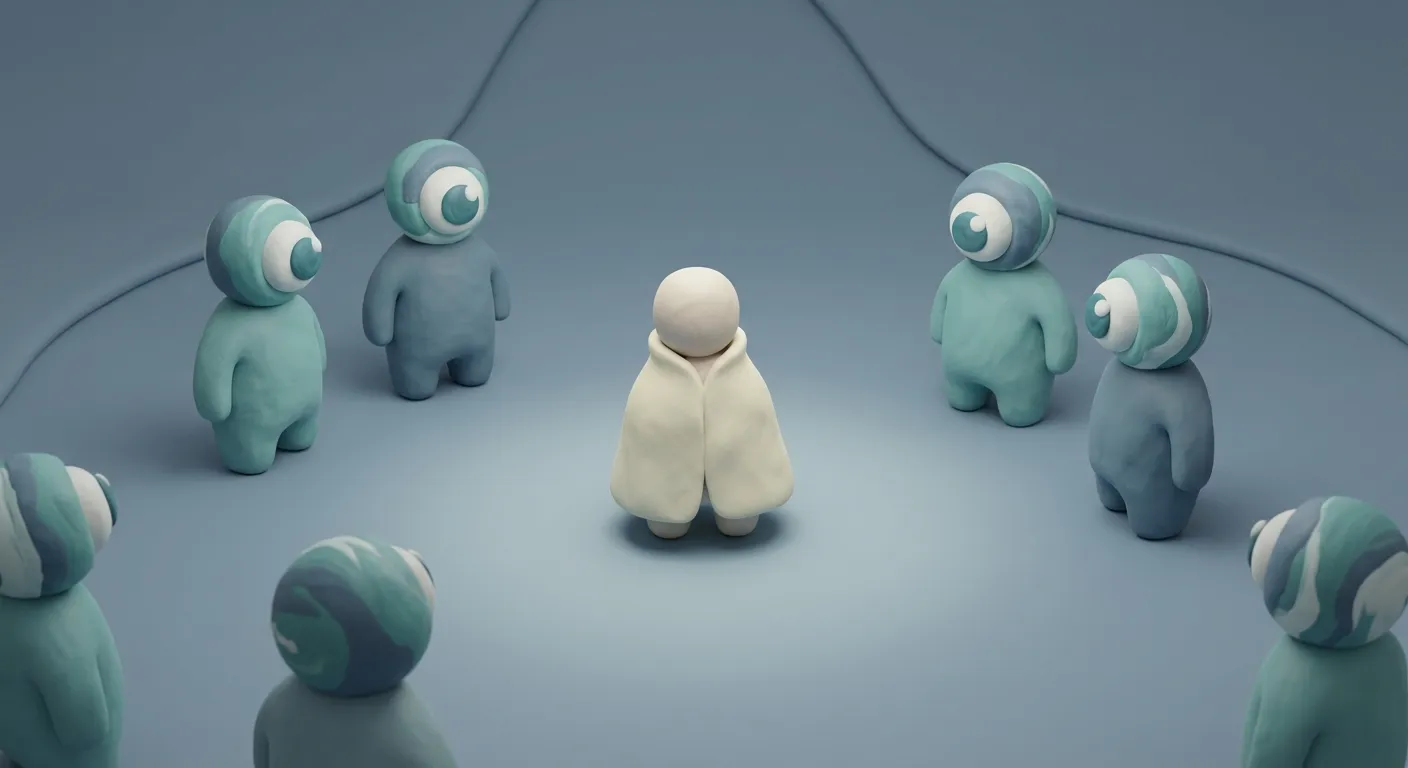
Why Social Anxiety Triggers the Emergency Exit

You're at a party, a work event, a family dinner. Everything is technically fine. Nobody is being unkind. And yet, at some point, your body issues what feels like a non-negotiable command: leave. Now. Not in ten minutes. Now.

This is not irrational. It is not drama. It is your amygdala — the brain's threat-detection centre — doing exactly what it was built to do. The problem is that it's doing it in the wrong context.

In the context of social anxiety, the amygdala has learned to classify social evaluation as a threat on the same tier as physical danger. When your nervous system detects that you are being observed, judged, or evaluated — even benignly — it activates the same survival pathway it would use if you were being chased. Your sympathetic nervous system floods your body with adrenaline and cortisol. Your heart rate spikes. Your muscles tense. Blood moves away from your digestive system toward your large muscle groups, because your body is preparing to run.

Your body is not making a mistake. It is doing its job flawlessly. The issue is that the threat your body is responding to — social rejection, humiliation, negative evaluation — has been tagged at the neurological level as a survival emergency. This is because, evolutionarily speaking, it once was. Being excluded from the group, being publicly shamed, being rejected by your social unit — in ancestral environments, these were genuine survival threats. Your brain hasn't fully updated its threat taxonomy to distinguish between 'people might judge me' and 'I might die'.

Leaving the situation provides immediate relief. The adrenaline drops. The tension dissipates. Your nervous system returns to baseline. This is why the emergency exit feels so compelling — because it genuinely works, in the short term. The sympathetic nervous system activation stops, and your body registers: 'escaping worked.'

The problem is what happens next. Each time you escape, your brain records the experience as confirmation that the social situation was dangerous. The threat pathway is reinforced. The threshold for triggering it gets lower. The relief of escape becomes part of the learning, which makes future exits more likely.

Exposure therapy works precisely by interrupting this loop. By staying in the situation past the point of peak anxiety — not endlessly, but long enough for the amygdala to receive updated data — the brain can begin to revise its threat classification. The amygdala is plastic. It can learn that the evaluation wasn't fatal. But it needs repeated, uncollapsed exposures to update what it knows.

The Neural Science Behind Going Silent When You Want to Speak

There's a particularly frustrating feature of social anxiety that doesn't get talked about enough: the people who experience it most acutely are often the ones who most want to connect. They're not indifferent to the conversation. They're not disinterested in the people around them. They have opinions, observations, jokes, questions. And they cannot get them out.

This is not shyness. Shyness is discomfort with social interaction. The silent want is something more specific: a simultaneous intense desire to participate and an intense fear of the consequences of participation.

What's happening neurologically is a conflict between two powerful systems. The first is the brain's social reward circuitry — the nucleus accumbens, the ventral striatum, the systems that generate the genuine pleasure of being understood, heard, and connected. People with social anxiety often show heightened activation in these reward circuits when they imagine positive social connection. They want it more intensely, not less.

The second system is the threat-response network — the amygdala, the anterior cingulate cortex, the insula — which has flagged social evaluation as dangerous. The moment you consider speaking, the threat-detection system activates. Your prefrontal cortex, which is normally the brain's speech planner, gets flooded with threat signals that interfere with its function. Broca's area — the brain region responsible for speech production — shows reduced activation under acute amygdala arousal. Your mind doesn't just go blank by chance. The neural circuitry that generates coherent speech is being suppressed by a competing neural process that considers the act of speaking dangerous.

This produces the cruel double bind: want more, do less. The desire to speak is real. The blockage is also real. Neither is fabricated. They coexist in the same nervous system at the same moment.

Understanding this reframes the silence. It is not coldness. It is not arrogance. It is not a lack of interest. It is two equally powerful neural systems running in direct opposition, with the threat-response system winning through sheer neurochemical volume. The long-term treatment goal — through CBT, exposure, and sometimes medication — is not to remove the want, but to reduce the threat-detection threshold enough that the want can finally reach its destination.

Why Your Body Declares Emergencies in Normal Situations

Your palms are sweating ordering a coffee. Your voice is shaking explaining something you know perfectly well. Your heart is hammering in your chest during a completely normal conversation. And here's the brutal extra layer: you know it's irrational. You know nothing bad is happening. You know there's no actual threat. And yet your body will not be convinced.

This is the sympathetic nervous system doing what it does: responding to a perceived threat signal with full physiological mobilization. The amygdala sends an emergency broadcast, and your body's stress response hardware fires on all cylinders — adrenaline release, increased heart rate, vasodilation in large muscle groups, reduced blood flow to the extremities (causing cold hands), increased sweat gland activity, altered breathing patterns.

The physical symptoms aren't the real problem. They're actually a normal stress response doing its job. The real problem is that they become a second source of threat. This is called meta-anxiety — anxiety about anxiety — and it's one of the most challenging mechanisms in social anxiety disorder.

Here's how the loop works: You enter a social situation. Your amygdala fires a threat signal. Your body responds with visible symptoms — shaking, sweating, blushing. You notice the visible symptoms. Your amygdala now adds them to the threat calculation: 'people can see I'm anxious, which means they'll judge me more, which makes the situation more dangerous.' This increases the amygdala's alarm signal. Which increases the physical symptoms. Which are now more visible. Which intensifies the perceived threat. The body and the mind escalate each other in a feedback loop that can be deeply distressing.

Understanding this loop matters because it suggests a different intervention point: rather than trying to stop the physical symptoms directly (which is often impossible under acute amygdala activation), the most effective interventions target the cognitive interpretation of those symptoms. The physical alarm doesn't need to be switched off. It needs to be reframed from 'evidence of danger' to 'evidence of anxiety, which is uncomfortable but not dangerous.' This cognitive defusion — separating the sensation from the catastrophic interpretation — is a core target of both CBT and Acceptance and Commitment Therapy for social anxiety.

The trembling hands are real. They are also not evidence that you are failing.

The Brain Science of Anticipatory Anxiety and Pre-Rejection

You received the invitation. You considered it. Your brain started running simulations. You saw yourself arriving alone, not knowing what to say, standing awkwardly while groups formed around you. You saw the moment someone smiled politely and moved away. You felt the heat of imagined embarrassment so vividly that by the time you sent the 'sorry, can't make it' reply, your brain had already lived through the entire disaster.

This is anticipatory anxiety, and it is one of the most structurally clever and most destructive features of social anxiety disorder.

The human brain has an extraordinary capacity for mental simulation. The same neural networks that process lived experience also activate during imagined experience — the same regions that respond to real pain respond to anticipated pain; the same circuits that process real embarrassment activate when you simulate future embarrassment. For the brain, vividly imagined catastrophe and lived catastrophe are processed through overlapping systems.

In social anxiety, this simulation capacity becomes hyper-activated in social contexts. Threat-relevant scenarios are generated with disproportionate detail and emotional intensity. The pre-rejection — the imagined snub, the simulated awkward silence, the rehearsed conversation that went wrong — is neurologically processed as a real event. Your amygdala fires in response to the simulation. Your body stress-response activates. The relief of declining the invitation is then real physiological relief from a real amygdala alarm.

Avoidance reinforces the fear pathway in two ways. First, it confirms the implicit belief that the situation was genuinely dangerous (the avoided situation was never tested, so the catastrophic prediction was never disconfirmed). Second, it strengthens the neural pathway that connects 'unfamiliar social situation → catastrophic outcome → avoidance → relief.' Each declined invitation trains the brain more deeply in this loop.

Gradual exposure therapy — the systematic approach of confronting feared situations in a controlled, hierarchical way — works as neural retraining. By exposing the simulation to reality, the brain's prediction machinery receives corrective data. The unfamiliar social situation happened, and it wasn't as catastrophic as simulated. The amygdala updates its model. Slowly, the threshold for catastrophic prediction rises, and the pre-rejection loses some of its neurological grip.

The pre-rejection is not cowardice. It is the brain taking a simulation too seriously.

Post-Event Processing: The Replay Loop's Neuroscience

You're lying in bed at 2am. The interaction ended six hours ago. You said something slightly awkward in the middle of an otherwise completely normal exchange. Your brain has now replayed it seventeen times, adding detail each pass. The slight pause before their reply has become evidence of offence. The way they changed the subject is now conclusive proof that you ruined everything. You are the editor of a film that has already been shown to no audience that will ever see it again.

This is called post-event processing, and it is one of the most diagnostically specific features of social anxiety disorder — common enough that researchers use its presence as a clinical marker.

The neural architecture behind it involves the default mode network (DMN) — the set of interconnected brain regions that activate during self-referential thought, mind-wandering, and autobiographical memory retrieval. In the socially anxious brain, the DMN shows hyperactivity in the period following social interactions, driving an involuntary review process in which the interaction is reconstructed, analysed for threat-relevant information, and re-experienced.

Critically, this post-event processing is not neutral. It is systematically biased toward negative interpretation. Negativity bias — the brain's general tendency to weight negative information more heavily than positive — is amplified in the socially anxious brain's retrospective analysis. Moments that others would discard as unremarkable are retained, dwelt upon, and interpreted through the lens of threat. The brain isn't deliberately catastrophising — it is running a security review using threat-detection software that has been calibrated to flag everything.

The rehearsal loop before the event serves a parallel but complementary function: it is the brain's attempt to pre-compute social threat and prepare defences. The social script gets rehearsed until every potential failure point has been addressed. This provides a sense of control, but it also primes the amygdala with threat-relevant content before the interaction has begun.

Both loops — anticipatory rehearsal and post-event replay — maintain social anxiety over time because they keep the threat-detection system in continuous activation even outside the feared situations. The anxious brain is never truly 'off duty' from social evaluation.

Cognitive restructuring techniques target both loops: teaching the brain to challenge the interpretation of remembered events, to test predictions against outcomes, and to practice intentional reallocation of attention away from the replay track.

एमिग्डाला का अति संवेदनशील रडार: एसएडी में खतरे का पता लगाने का तंत्रिका विज्ञान

At the centre of social anxiety disorder's neurobiology is a single, measurable fact: the amygdala — the brain's threat-detection hub — is more reactive in people with social anxiety than in those without it, and the difference is not subtle.

Functional neuroimaging studies consistently find that the amygdala of people with social anxiety disorder shows approximately 30% greater activation in response to social threat cues than in non-anxious controls. More significantly, this heightened response is not limited to genuinely threatening social stimuli. The socially anxious amygdala shows elevated reactivity to neutral faces — expressions that carry no objectively threatening content — which get processed through the same neural pathway as genuinely hostile faces. The radar isn't just more sensitive. It's classifying neutral signals as threatening.

This hyperreactivity is linked to reduced connectivity between the amygdala and the prefrontal cortex — specifically the medial and ventromedial prefrontal cortex, which under normal conditions provides top-down regulation of amygdala responses. In well-regulated anxiety systems, the prefrontal cortex acts as a kind of rational override: 'this isn't actually dangerous, stand down.' In social anxiety disorder, this regulatory connection is weaker, meaning the amygdala's alarm signals travel upward to consciousness with less filtering and less modulation.

The result is a pervasive experience of social evaluation as physically dangerous. Entering a room, speaking in a group, being looked at, being introduced to someone new — all of these trigger an amygdala response that the prefrontal cortex is insufficiently resourced to regulate. The experience of fear in these situations is not performed. It is generated by a real neurological system doing its job.

Two neurotransmitter systems are particularly implicated. Serotonin — which modulates threat sensitivity and is the primary target of SSRI medications for SAD — plays a key role in calibrating the amygdala's baseline reactivity. Lower serotonergic tone in the amygdala and prefrontal cortex is associated with higher threat sensitivity. GABA — the brain's primary inhibitory neurotransmitter — also shows reduced activity in social anxiety, contributing to the overall pattern of disinhibited threat response.

The clinical implication is important: this isn't a cognitive error that can be corrected by telling someone to think positively. The hyperreactive amygdala is a neurological reality that requires neurologically active interventions — whether through medication that adjusts serotonin tone, or through repeated exposure that creates new inhibitory learning in the amygdala itself.

चाहत-भय का युद्ध: सामाजिक चिंता के मूल में तंत्रिका संबंधी संघर्ष

One of the most counterintuitive findings in social anxiety neuroscience is this: people with social anxiety disorder don't want less social connection than neurotypical people. They often want more. The reward circuits that respond to imagined social acceptance — the ventral striatum, the nucleus accumbens, the dopaminergic pathways associated with social reward — show heightened activation in social anxiety when positive connection is simulated.

The problem is that these reward circuits don't operate in isolation. They run concurrently with the threat-detection system, and in social anxiety, the threat system is significantly more powerful. So what you get is a brain running two competing programs simultaneously: 'I want this connection' and 'this connection attempt is dangerous.' The fear doesn't mean the wanting is absent. It means the wanting is constantly being overridden.

This neural conflict has been documented in imaging studies examining brain responses to social approach and avoidance tasks. Participants with social anxiety show elevated nucleus accumbens activation (reward anticipation) when presented with cues of potential social approval — confirming that the social motivation system is intact and active. Simultaneously, they show elevated amygdala activation (threat response) when considering the act of pursuing that approval. The result is what researchers describe as a 'motivational conflict' state, in which approach motivation and avoidance motivation are simultaneously strong.

This understanding fundamentally reframes the behaviour of social avoidance. It is not the absence of social motivation. It is what happens when social motivation collides with a more powerful threat response, and the threat response wins. The person who declines invitations, who stays quiet in groups, who avoids eye contact — is not indifferent to connection. They are losing a war they didn't choose to fight.

The clinical implications extend to treatment. If social anxiety were simply about low social motivation, the solution might be to increase motivation. But the real target is the asymmetry: reducing the strength of the threat response so that the social reward signal can compete more effectively. This is why exposure therapy (reducing threat response through new learning) and SSRIs (reducing baseline amygdala reactivity) are complementary — both aim to shift the balance toward the already-existing reward motivation that the fear has been suppressing.

Knowing that the wanting is real and neurologically present can itself be therapeutic. The isolation that comes with social anxiety is real. But it is not evidence of not caring about people. It is evidence of caring deeply while being trapped in a system that makes approach feel life-threatening.

न्यूरोप्लास्टिसिटी और रिकवरी: सामाजिक रूप से चिंतित मस्तिष्क को पुनः संयोजित किया जा सकता है

The most important thing neuroscience has to say about social anxiety disorder is that the brain which learned to over-respond to social threat can learn to respond differently. Not perfectly. Not instantly. But measurably, demonstrably, sustainably.

The evidence for neuroplastic change following effective treatment for social anxiety is among the most compelling in clinical neuroscience. Multiple neuroimaging studies have examined the brains of people with social anxiety disorder before and after cognitive-behavioural therapy, and the findings are consistent: treatment produces real, measurable changes in the neural circuits that maintain the disorder.

The most reliably documented finding is a reduction in amygdala hyperreactivity. Studies using fMRI show that amygdala activation in response to social threat cues decreases by approximately 40-60% following successful CBT, moving toward the range typically seen in non-anxious controls. This is not a statistical artefact. It is a change in how a specific brain region responds to a specific class of stimuli.

Equally important is the change in prefrontal-amygdala connectivity. Pre-treatment, the socially anxious brain shows reduced connectivity between the prefrontal cortex and amygdala — meaning the regulatory system that should be dampening the alarm is underperforming. Post-treatment, connectivity in this pathway increases by approximately 18%. The brain has effectively built a stronger regulatory road between the two regions.

What is happening at the cellular level is inhibitory learning. The amygdala does not erase fear memories. It never actually forgets. What happens through repeated exposure to the feared stimulus in the absence of the predicted catastrophe is that new inhibitory neurons form new pathways that suppress the original fear response. The original learning coexists with the new learning — but the new learning becomes the default. This is why relapse can occur under stress (the old pathway is still there, it just loses the competition to the new one), and it is also why treatment gains tend to be durable when the new learning is well-established.

SSRI medications produce complementary neuroplastic effects. By increasing synaptic serotonin availability, SSRIs reduce baseline amygdala reactivity and support the conditions for new learning. Neuroimaging studies show that SSRIs increase hippocampal neurogenesis — the growth of new neurons in the memory-forming hippocampus — which may support the formation of new inhibitory memories. Around 60% of patients who achieve remission with SSRI treatment maintain their gains after discontinuation, suggesting that medication, like CBT, can produce lasting neural change rather than just symptom suppression.

The brain is not fixed. It was shaped by experience, and it can be reshaped by experience. The fear was learned. It can, with effort and the right tools, be unlearned.