Monotropism
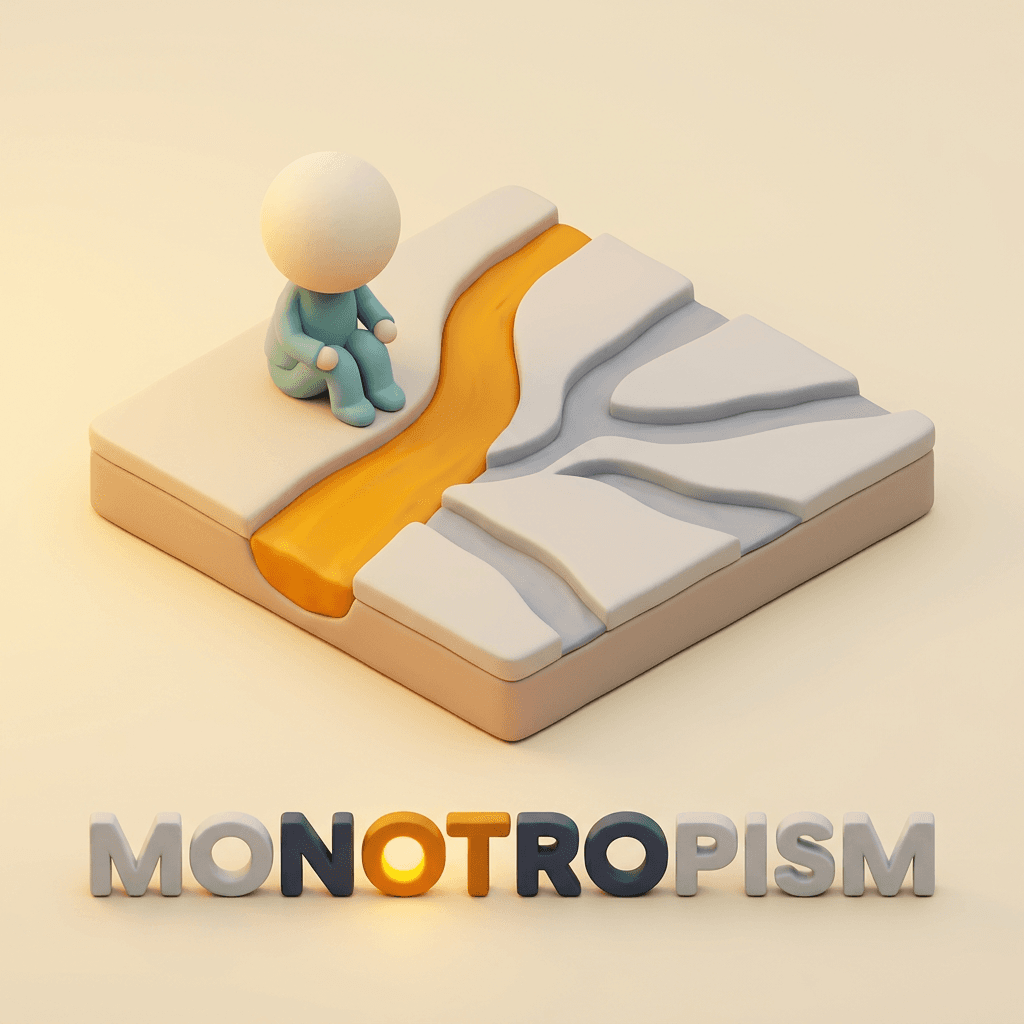
A way of understanding autism as a brain that pours deep, intense attention into fewer things at a time — a tunnel, not a deficit.
A cognitive style where attention is drawn strongly to a small number of interests at a time, rather than being spread across many things. Proposed as a core feature of autism. Explains both the intense focus on special interests and the difficulty switching between tasks. The opposite of polytropism (attention spread across many things simultaneously).
How it works
In monotropism, your attention system allocates resources intensely to a small number of interests or tasks. This creates deep focus and expertise but makes switching between topics or demands genuinely costly. It's a cognitive style, not a limitation — and it explains many autistic traits better than 'deficit' models.
Think of it like
It's like a powerful torch beam — brilliantly bright where it points, but the rest of the room stays dark until you move it.
What it feels like
When you're in your interest, everything clicks and flows. When you're pulled away, it feels like being ripped out of a dream. The depth of your focus is your gift and your vulnerability.
Proposed by Dr Dinah Murray, Dr Wenn Lawson, and Mike Lesser.