Cerebellum
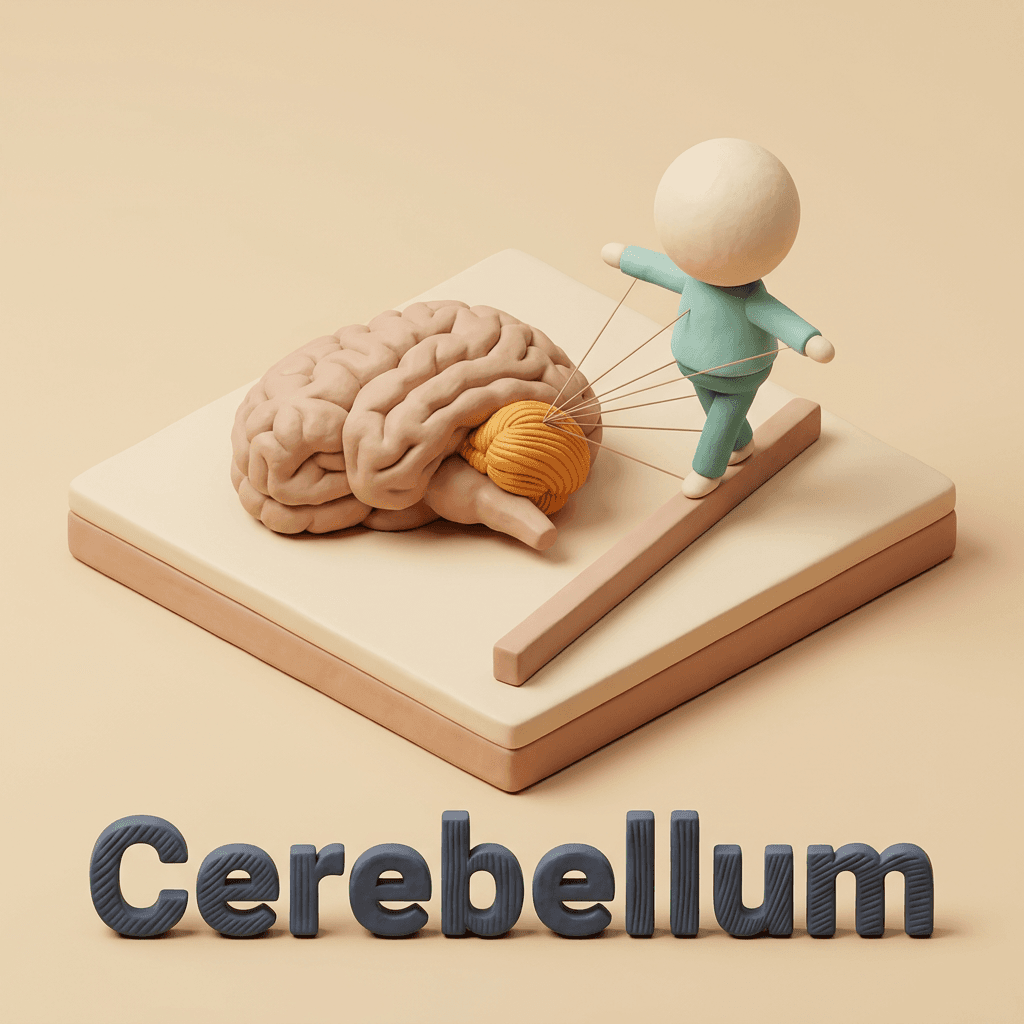
The walnut-shaped region at the back of your brain that quietly coordinates your balance, timing, and even your emotions.
The walnut-shaped region at the back base of the brain that coordinates timing, balance, and the fine-tuning of movement. It is the body's "autocorrect" for physical action. In dyspraxia and autism, the cerebellum may work differently, contributing to challenges with coordination and the automatic sequencing of physical tasks.
How it works
Your brain uses the cerebellum as a fine-tuning center, adjusting the timing and flow of movements, thoughts, and feelings. It compares what you intended to do with what actually happened, then sends quick corrections. When its wiring develops differently, coordination, focus, or social reading can feel less automatic.
Think of it like
It's like a behind-the-scenes conductor of an orchestra, keeping all the instruments in time — if the conductor's signals change, the music feels different.
What it feels like
You might feel clumsy, mistimed, or a beat off from people around you, even when you're trying hard. Your internal conductor just works with a different rhythm.