Troubles dissociatifs | AskSheldon
Troubles dissociatifs

Qu`est-ce que Troubles dissociatifs ?

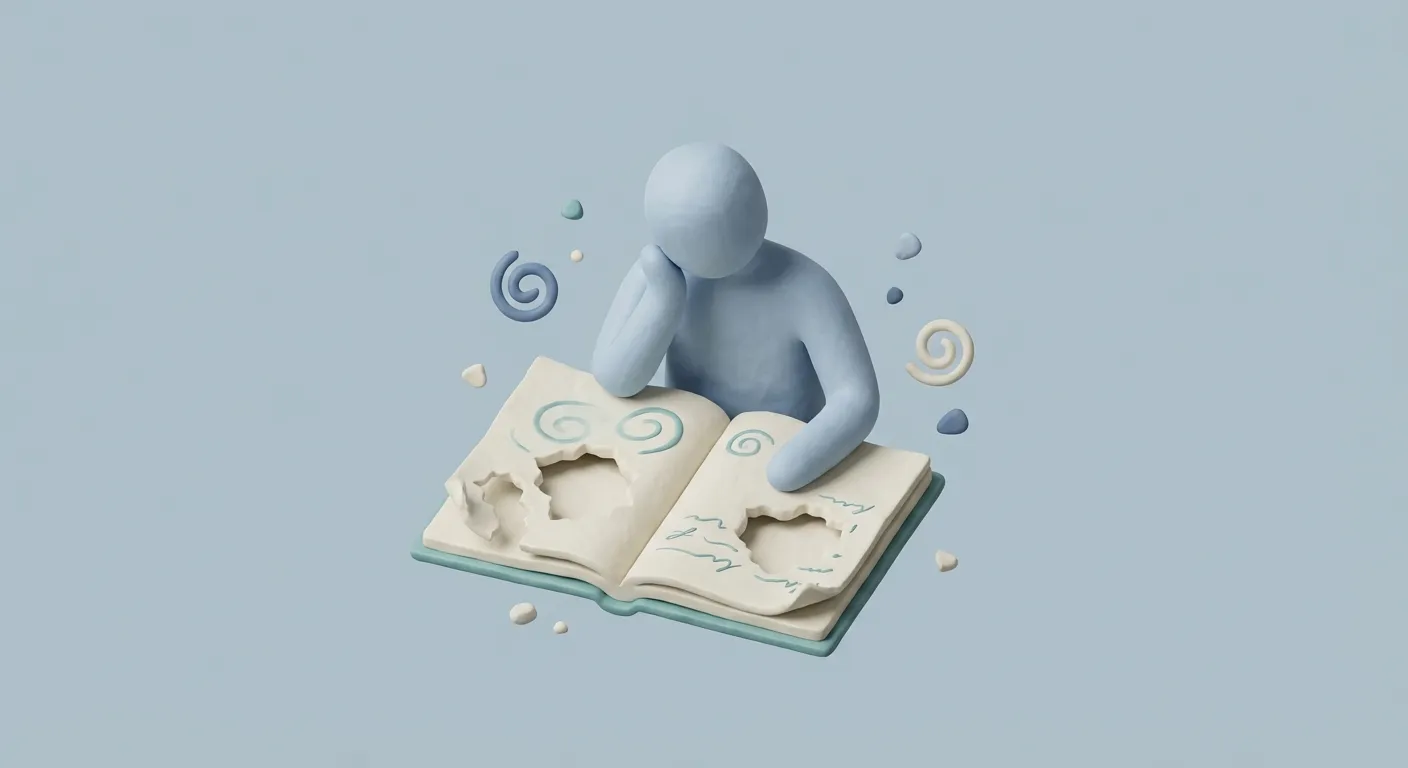
Les troubles dissociatifs surviennent lorsque le cerveau compartimente les expériences pour faire face à un stress insupportable, souvent lié à un traumatisme infantile. Ce mécanisme de survie protège temporairement la conscience, mais perturbe l'intégration des souvenirs et la perception de soi à long terme.

1 in 50personnes concernées
2%prévalence
Plage de QI normale

Comment Troubles dissociatifs se manifeste-t-il ?

  • Subtle shifts in voice, posture, or handwriting
  • Skills appearing and disappearing inexplicably
  • Finding unfamiliar items or evidence of actions you don't remember
  • Being called names you don't recognise
  • Staring blankly or appearing unresponsive mid-conversation

Types de Troubles dissociatifs

  • Trouble dissociatif de l'identité (TDI)(~1.5%)
  • Other Specified Dissociative Disorder(~35%)
  • Depersonalization/Derealization(~35%)
  • Dissociative Amnesia(~28%)

Questions fréquentes sur Troubles dissociatifs

Is DID the same as 'multiple personality disorder'?

Dissociative Identity Disorder (DID) was previously called Multiple Personality Disorder. The name was changed in 1994 because 'multiple personalities' misrepresents the condition — it's not about having separate, complete personalities, but about fragmented identity states with varying degrees of separateness and amnesia. The internal experience is more like different aspects of one self with walls between them, rather than entirely separate people.

Can someone with DID function in daily life?

Yes — and many do, for years, without a diagnosis. High functionality is actually one of the reasons DID is frequently misdiagnosed or missed. The adaptive function of the dissociative structure often allows apparently normal daily functioning while keeping overwhelming material compartmentalised. Diagnosis often comes during a crisis when the system's ability to maintain that functional separation breaks down.

Contenu examiné par rapport aux critères du DSM-5 et à la littérature clinique actuelle. Cette page est à des fins éducatives et ne constitue pas un avis médical. Consultez un·e professionnel·le de santé qualifié·e pour un diagnostic ou un traitement.

Troubles dissociatifs

Troubles dissociatifs

Dissociative Disorders

Est-ce que c'est moi ?

Troubles dissociatifsAudio bientôt disponible

Nous préparons un guide audio pour cette condition. Soyez notifié·e à sa sortie.

Qu`est-ce que c`est vraiment ?

Les troubles dissociatifs surviennent lorsque le cerveau compartimente les expériences pour faire face à un stress insupportable, souvent lié à un traumatisme infantile. Ce mécanisme de survie protège temporairement la conscience, mais perturbe l'intégration des souvenirs et la perception de soi à long terme. La neuro-imagerie révèle une activité altérée dans le cortex cingulaire postérieur et une connectivité perturbée entre les régions cérébrales émotionnelles et cognitives.

C`est une différence dans le câblage du cerveau, pas un défaut de caractère.

Estimation rapide

Combien de personnes sur 50 penses-tu que ça concerne ?

Appuie sur les icônes pour faire ton estimation.

Dissociative disorders affect 2-3% of the population — comparable to bipolar disorder and schizophrenia combined. These are well-documented, diagnosable conditions with established clinical criteria in both the ICD-11 and DSM-5.

Journal of Trauma & Dissociation
Tap to Start Myth Busting

Comment ça paraît vs. comment ça se ressent

L`expérience vécue derrière le comportement observé

Subtle shifts in voice, posture, or handwriting — The Switch Blur
Appuyez pour voir de l'intérieur

Ce que les autres voient

Subtle shifts in voice, posture, or handwriting

The Switch Blur
Appuyez pour retourner

De l'intérieur

The Switch Blur

Something shifted but I can't pinpoint when. My voice sounds different, my handwriting changed — pieces of me rearranging without my permission.

Skills appearing and disappearing inexplicably — The Skill Gap
Appuyez pour voir de l'intérieur

Ce que les autres voient

Skills appearing and disappearing inexplicably

The Skill Gap
Appuyez pour retourner

De l'intérieur

The Skill Gap

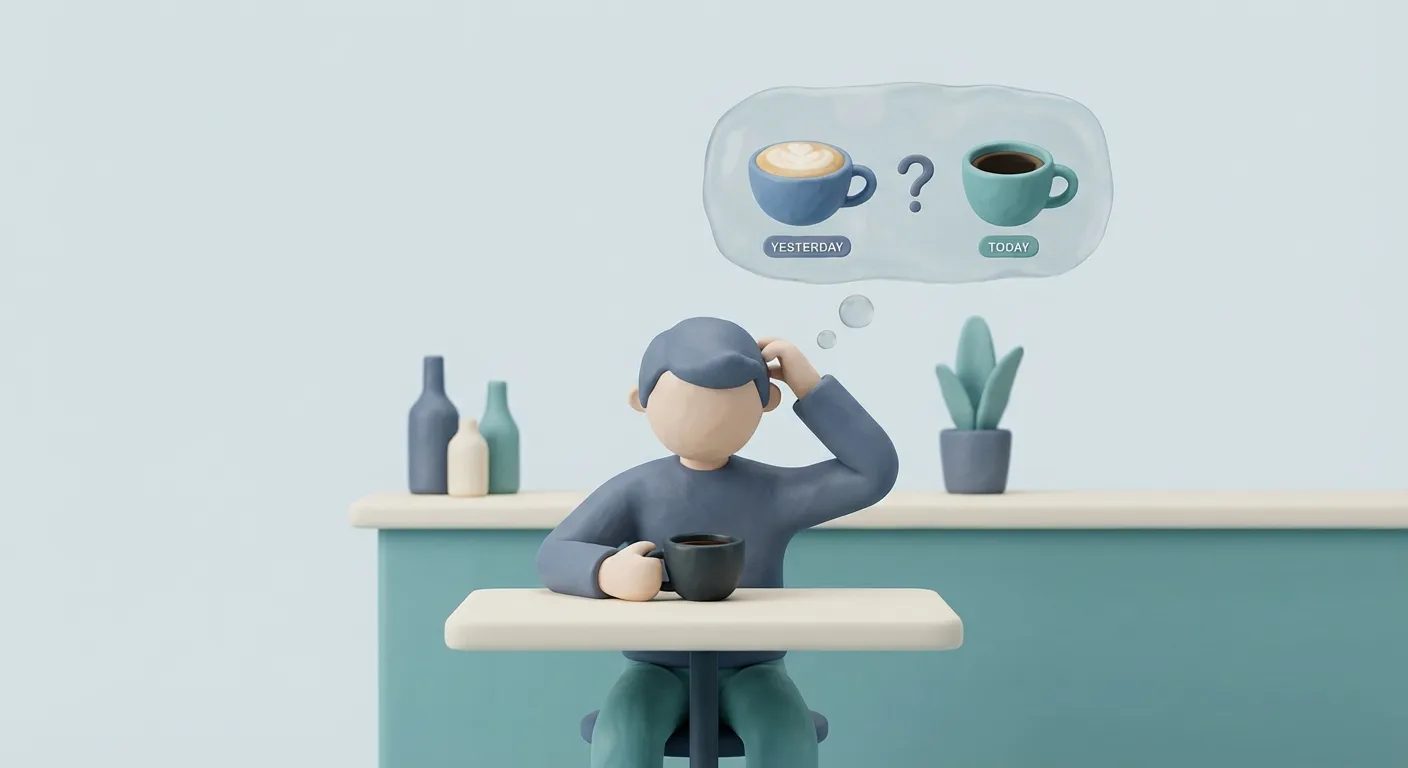
Yesterday I could do this. Today I genuinely can't. The skill isn't gone — it's behind a wall I can't currently access.

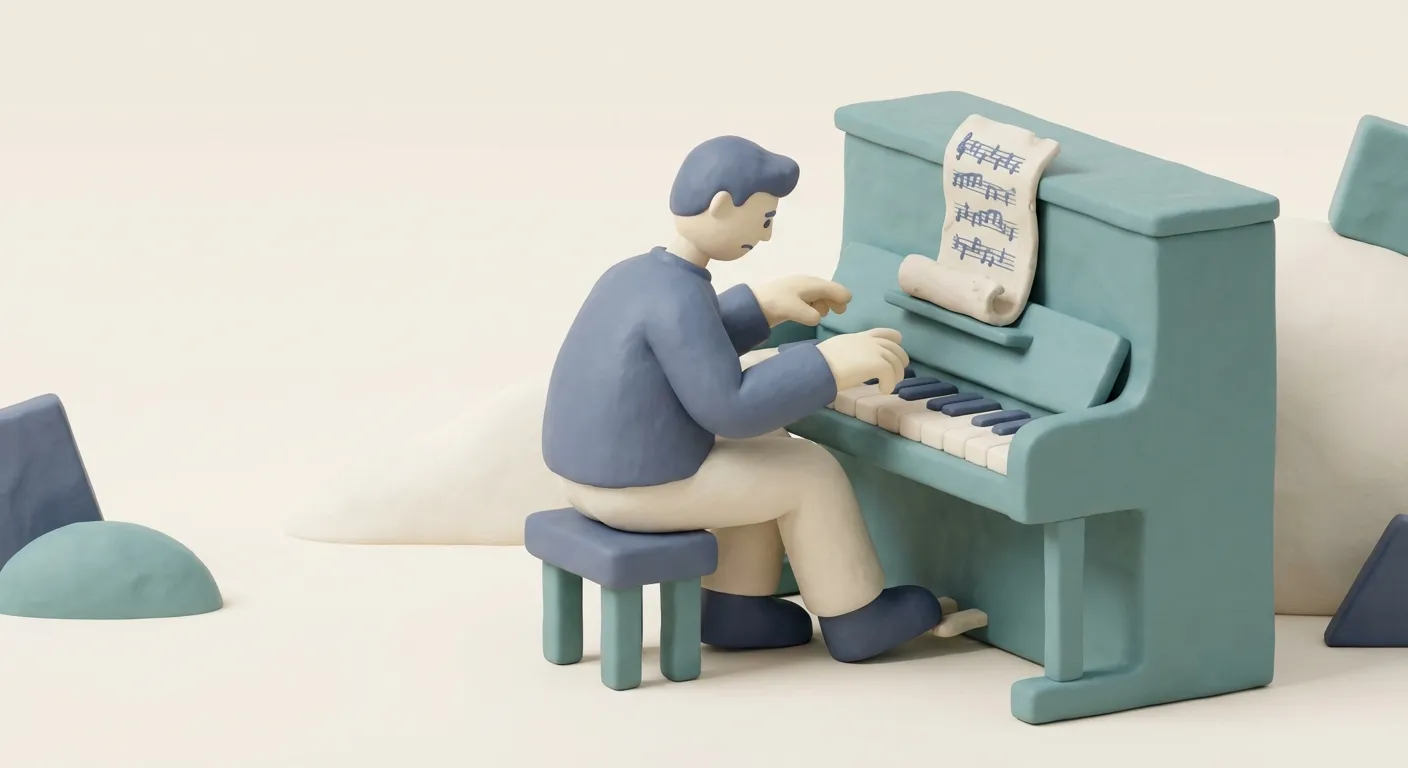
Finding unfamiliar items or evidence of actions you don't remember — The Lost Time
Appuyez pour voir de l'intérieur

Ce que les autres voient

Finding unfamiliar items or evidence of actions you don't remember

The Lost Time
Appuyez pour retourner

De l'intérieur

The Lost Time

Hours I can't account for. Purchases I don't remember making. Evidence of a life I was living but can't recall.

Being called names you don't recognise — The Wrong Name
Appuyez pour voir de l'intérieur

Ce que les autres voient

Being called names you don't recognise

The Wrong Name
Appuyez pour retourner

De l'intérieur

The Wrong Name

Someone calls me by a name that isn't mine — but apparently I introduced myself that way. Parts of me have names I haven't consciously chosen.

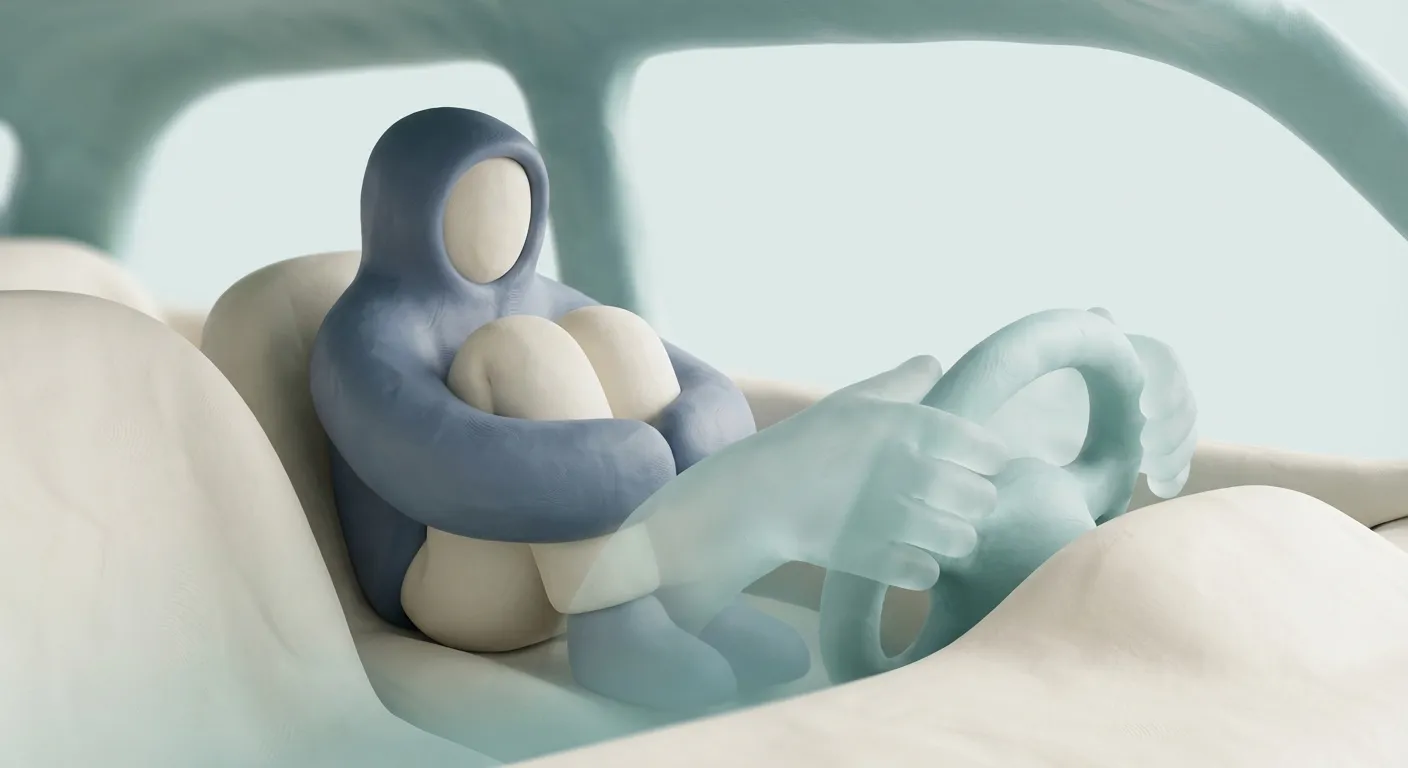
Staring blankly or appearing unresponsive mid-conversation — The Departure
Appuyez pour voir de l'intérieur

Ce que les autres voient

Staring blankly or appearing unresponsive mid-conversation

The Departure
Appuyez pour retourner

De l'intérieur

The Departure

I'm still here but I've gone somewhere else inside. The world went muffled and distant because staying fully present exceeded my capacity.

Identity states in DID show measurably different neurophysiological profiles — documented differences in EEG patterns, regional blood flow, and even optometric prescriptions between states. This neurological evidence rules out voluntary fabrication.

Research
Tap to Start Myth Busting

Types of Troubles dissociatifs

Trouble dissociatif de l'identité (TDI): Votre cerveau a créé des états d'identité distincts, chacun avec ses propres schémas d'activation neuronale. Non pas des « personnalités multiples » comme le dépeint Hollywood, mais plutôt des barrières entre les aspects de la conscience, construites pour la survie et qui persistent encore aujourd'hui.
Type 1~1.5%

Trouble dissociatif de l'identité (TDI)

Votre cerveau a créé des états d'identité distincts, chacun avec ses propres schémas d'activation neuronale. Non pas des « personnalités multiples » comme le dépeint Hollywood, mais plutôt des barrières entre les aspects de la conscience, construites pour la survie et qui persistent encore aujourd'hui.

Distinct identity states with different characteristics
Significant amnesia between states
Internal voices or communication between parts
Variable presentation day to day
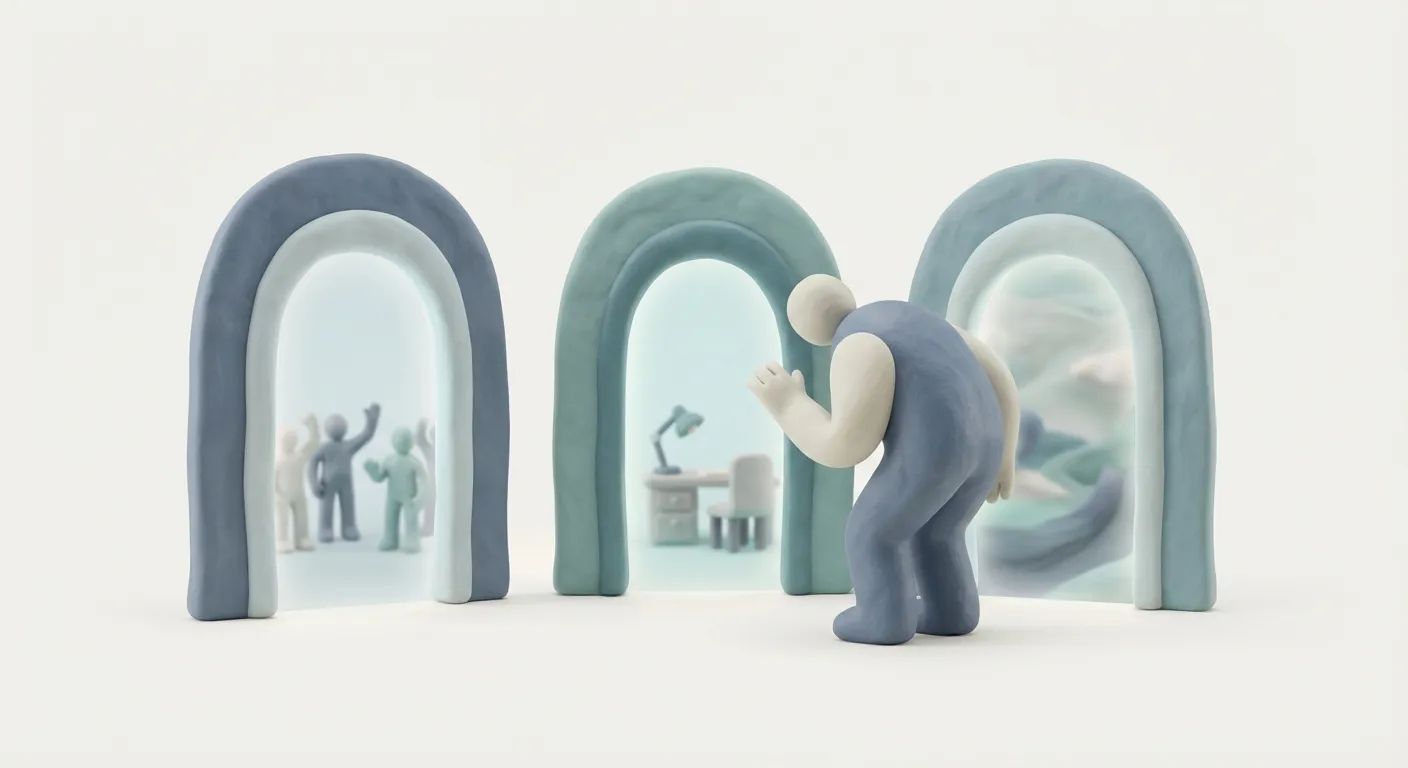
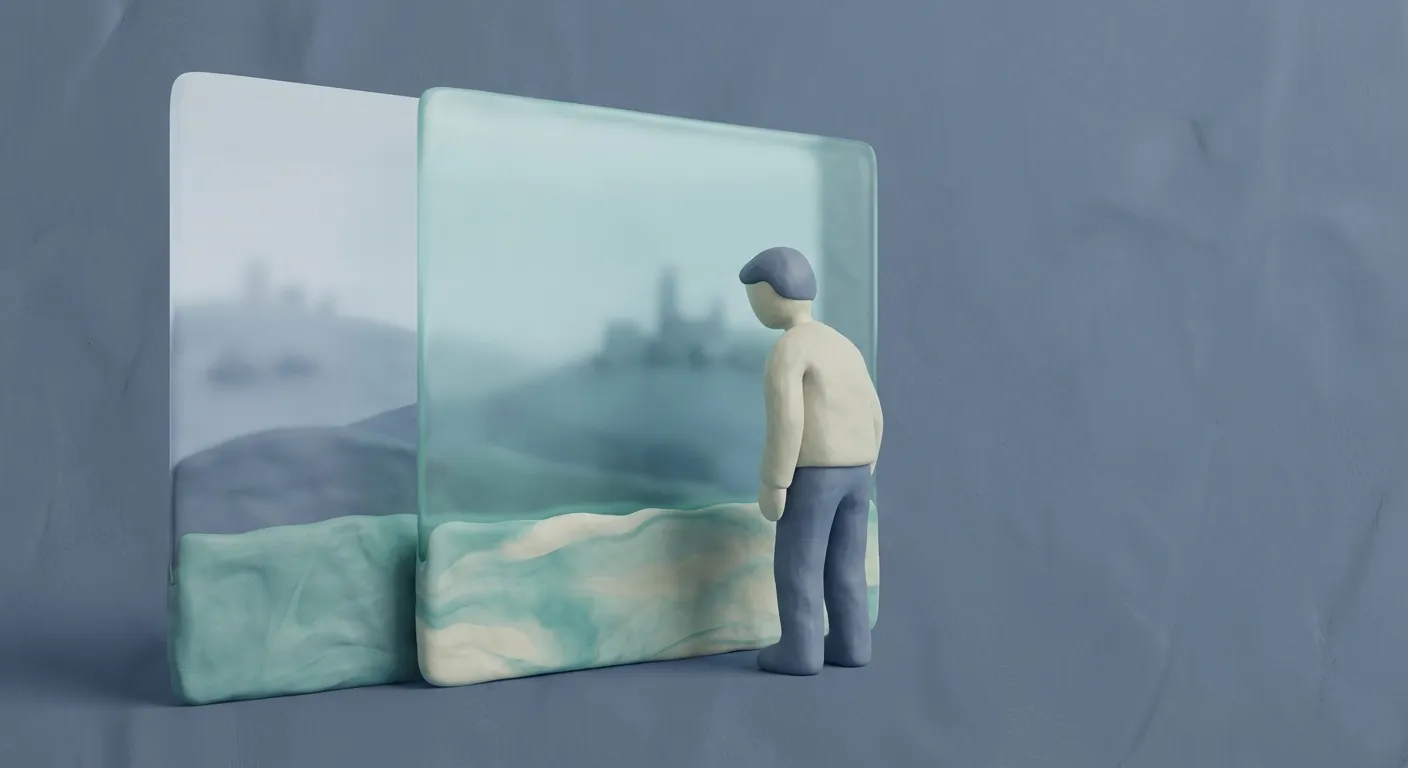
Other Specified Dissociative Disorder: Partial identity separation with blended emotional memories. The walls are there but not as solid — more like frosted glass than concrete. You may hear internal voices or feel shifts without full switches.
Type 2~35%

Other Specified Dissociative Disorder

Partial identity separation with blended emotional memories. The walls are there but not as solid — more like frosted glass than concrete. You may hear internal voices or feel shifts without full switches.

Partial identity separation without full switching
Emotional memories that don't fully belong to one state
Internal voices without distinct identity states
Chronic depersonalization without full DID criteria
Depersonalization/Derealization: The world looks fake, or you feel like you're watching yourself from outside. Linked to overactive parietal lobe self-monitoring — your brain is over-observing its own experience.
Type 3~35%

Depersonalization/Derealization

The world looks fake, or you feel like you're watching yourself from outside. Linked to overactive parietal lobe self-monitoring — your brain is over-observing its own experience.

Feeling detached from your own body or thoughts
The world feeling unreal, dreamlike, or distant
Watching yourself from outside (depersonalization)
Persistent or episodic — often triggered by stress or anxiety
Dissociative Amnesia: Stress-induced cortisol surges that disrupt hippocampal memory consolidation. Not 'forgetting' — your brain actively prevented the memory from forming or accessing it, as a protective measure.
Type 4~28%

Dissociative Amnesia

Stress-induced cortisol surges that disrupt hippocampal memory consolidation. Not 'forgetting' — your brain actively prevented the memory from forming or accessing it, as a protective measure.

Gaps in autobiographical memory not explained by ordinary forgetting
Inability to recall traumatic or stressful events
Occasional fugue states with travel and identity confusion
Memory gaps that coexist with intact procedural memory

People with DID and OSDD often go undiagnosed for 6-12 years because switching between identity states is typically subtle and internal — not the dramatic 'Jekyll and Hyde' presentation shown in media.

Research
Tap to Start Myth Busting

La science de DISSOCIATIVE-DISORDERS

The "Why" Behind the "What"

Ce n'est pas de l'imagination. C'est de l'architecture de survie.

L'architecte de la survie: undefined
Compartimentation neuronale

L'architecte de la survie

L'ancienne défense: undefined
Théorie polyvagale

L'ancienne défense

Le chemin de la réunification: undefined
Neuroplasticité

Le chemin de la réunification

90-95% of DID cases are linked to severe, repeated childhood trauma. The dissociative response is a survival mechanism — the developing brain compartmentalises overwhelming experience when no escape is possible.

Research
Tap to Start Myth Busting
Restricted Access

Scientific Deep Dive

Explore Myths to Unlock

Earn 5 Insight Points

Illustration for Deep Dive fact 1
1 / 5

Is my

Neurologically, yes. fMRI shows that different identity states activate distinct neural networks. It

Unlock Answer
Two Sides of the Coin

Deux facettes d`une même médaille

Chaque différence neurologique s`accompagne de compromis. Le même trait qui cause des difficultés dans un contexte crée de la brillance dans un autre.

The Memory Gaps

Lost time and unexplained evidence of actions you don't remember. Finding yourself somewhere without knowing how you arrived. Discovering conversations, purchases, or creations that are yours but that you have no access to.

The Capacity Fluctuation

Skills available one day, genuinely inaccessible the next. The frustration of inconsistency that others interpret as laziness or manipulation but is a direct consequence of state-dependent memory and compartmentalised skill encoding.

The Presence Challenge

Difficulty staying fully present and connected in relationships and daily life. The world going muffled or distant without warning. Feeling perpetually one step removed from your own experience.

Phase-oriented trauma therapy for DID shows significant symptom reduction in 70%+ of patients. Longitudinal studies demonstrate reduced dissociative episodes, improved daily functioning, and integration of identity states over 2-5 years of treatment.

European Journal of Psychotraumatology
Tap to Start Myth Busting

Voix de la communauté

Expériences réelles

We are not

Community Member
22

Losing time feels like someone ripped pages out of your diary while you weren

Community Member
39

Communication between us is the key. When the

Community Member
16

Dissociation isn

Community Member
33

I

Community Member
50

Healing isn

Community Member
27

Tu penses peut-être avoir Troubles dissociatifs ?

Fais notre évaluation de dépistage de qualité clinique. Ça prend moins de 5 minutes et te donne des informations instantanées.

Se recâbler pour réussir

Arrête d`essayer de te réparer. Commence à construire un système de soutien qui fonctionne avec ton cerveau, pas contre lui.

Sensory Anchoring

    The Internal Journal

      Predictability Architecture

        The Titration Approach

          Informed Alliance

            Phase-Based Therapy

              Outils pour ton cerveau

              Conçus pour ce neurotype — pas du bien-être générique

              Voir tout
              FAQ

              Questions fréquemment posées

              Glossaire des termes

              Conditions co-occurrentes

              Les conditions neurodivergentes voyagent souvent ensemble. Comprendre la co-occurrence aide à construire un tableau complet.

              Cliquez sur n`importe quelle condition pour en savoir plus. Les pourcentages de co-occurrence proviennent de recherches évaluées par des pairs.

              Your mind built safe houses. You can now build a home.

              Tu as survécu jusqu`ici. Imagine ce que tu peux faire quand tu arrêtes de te battre contre ton propre cerveau.

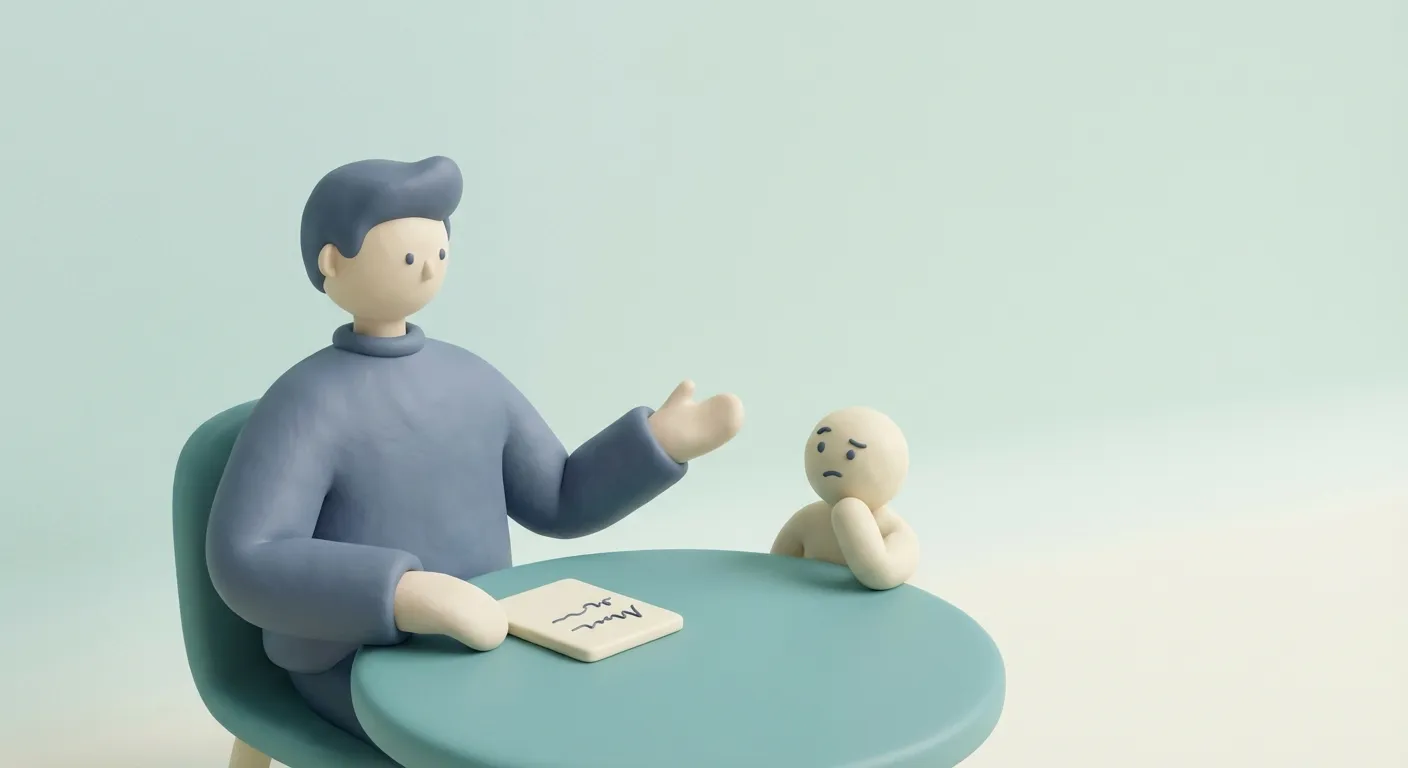
              When the Self Rearranges Without Notice

              If you've ever looked at your own handwriting and not recognised it, heard a recording of your voice and felt it belonged to a stranger, or been told you sat differently, moved differently, or spoke differently — and had no memory of making any choice to change — you are not imagining things. You are experiencing one of the most documented features of dissociative identity structures: the shift.

              The shift is not a performance. It's not attention-seeking. Neuroimaging research shows that when identity states transition in people with DID and OSDD, there are measurable changes in regional cerebral blood flow, alterations in EEG patterns, and documented differences in autonomic nervous system responses. Different identity states can have different dominant hand preferences, different pain thresholds, different visual acuity, and different allergic responses — findings that cannot be explained by suggestion alone.

              The subjective experience of the switch blur is often one of the most disorienting aspects of dissociative disorders. Unlike the dramatic instantaneous swaps depicted in film, real transitions are often gradual, partial, and internally confusing. You may feel yourself 'getting quiet' or 'going foggy' without understanding what's happening. You may come back into awareness and notice you're somewhere unexpected, that your body is positioned differently, that there are objects near you that feel unfamiliar.

              For many people, the switch blur creates profound shame, particularly when others notice it. The most important reframe available is this: the switch is not a failure of self-control. It is the brain's compartmentalisation mechanism activating — the same mechanism that protected you when full presence was too dangerous to sustain. The walls between states were built because they were needed.

              Recovery doesn't mean eliminating the shift. It means developing enough communication and co-awareness between states that the transitions feel less like loss and more like a relay — parts of you handing off rather than disappearing. This is achievable, and people do it.

              • Shifts in voice, posture, and handwriting are documented neurological events — measurable in brain imaging and autonomic responses.
              • Transitions between identity states are often gradual and internally confusing, not dramatic as depicted in media.
              • The switch mechanism was built as protection — it activated when full presence was too threatening to sustain.
              • Recovery involves developing co-awareness between states, not eliminating the switch itself.

              When Abilities Live Behind Walls

              Imagine being fluent in a language on Tuesday and finding yourself unable to produce a single sentence from it on Wednesday. Imagine being a skilled typist who on a particular afternoon types like they've never seen a keyboard. Imagine losing the ability to drive, to cook a meal you've made hundreds of times, to read music you've played for years — and then having it return, unbidden, days or weeks later.

              This is state-dependent memory and skill access in action. It is one of the most functionally disruptive and least understood features of dissociative disorders, and it generates enormous shame because it looks, from the outside, like laziness, manipulation, or exaggeration.

              Memory and learned skills are not stored in a single location in the brain. They are encoded within networks of neural activation that were active at the time of learning. Episodic memories carry emotional and sensory context that influenced their encoding. Procedural skills are linked to the physiological and psychological state in which they were practised and consolidated. When the brain is compartmentalised into distinct identity states, those states can have differential access to these networks.

              This means that a skill learned primarily in one identity state may be genuinely inaccessible when a different state is dominant — not because the skill was lost, but because the neural pathway to it is behind a wall that the current state cannot open. The skill is still there. The person still exists. But the routing is blocked.

              The fluctuation in capacity is real. It is neurological. It is not performance. One of the most helpful reframes for people living with this is to stop trying to force access through effort (which rarely works and increases distress) and instead to develop a collaborative internal relationship with the state that holds the skill — to ask, rather than demand. Over time, as internal communication develops, these gaps tend to narrow.

              • Skills and memories are encoded within neural networks linked to the state in which they were learned — different identity states can have genuinely different access.
              • The fluctuation in capacity is neurological and documented — not performance, laziness, or exaggeration.
              • Forcing access through effort typically increases distress without restoring the skill.
              • Internal communication and collaboration between states tends to narrow capacity gaps over time.

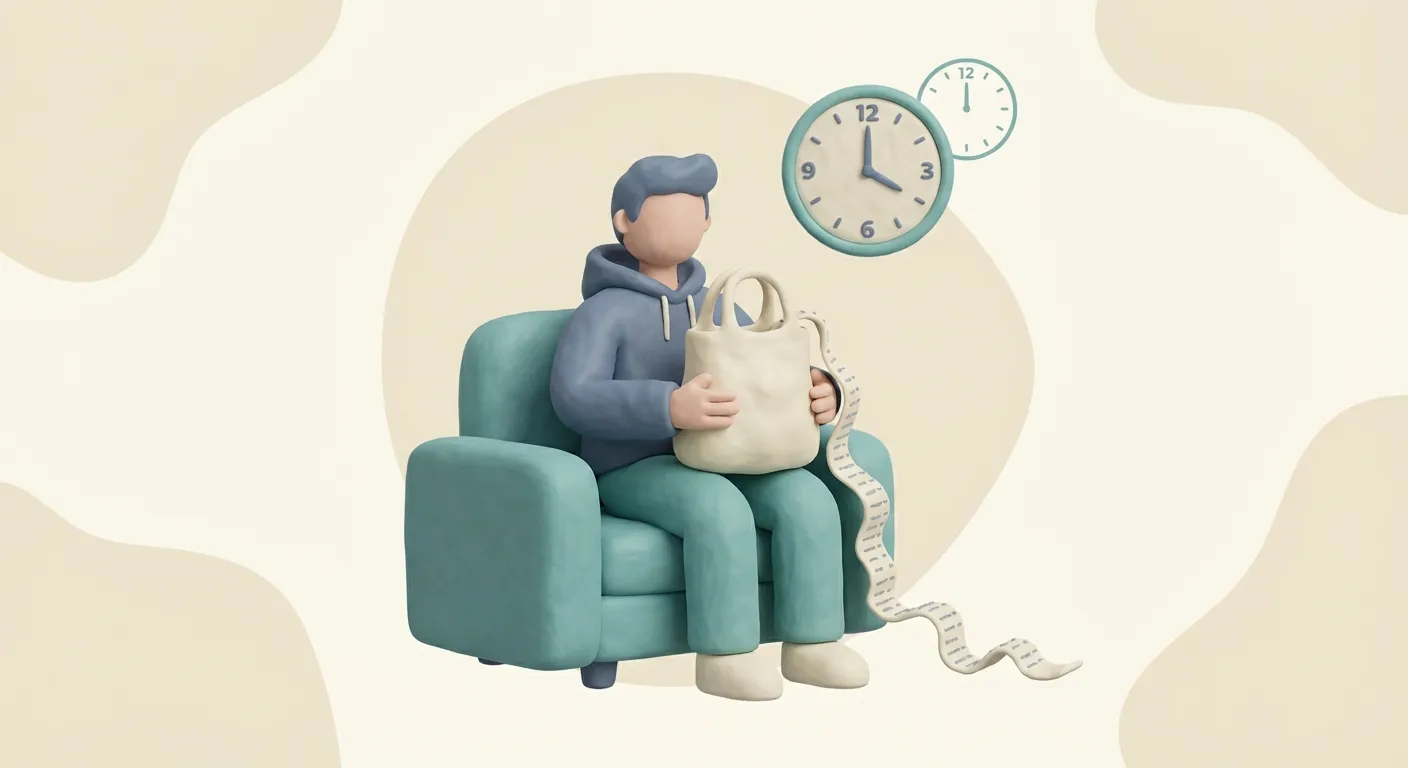
              The Hours That Belong to Someone Else

              There's a particular horror to finding evidence of your own life that you can't account for. The shopping bag by the door with things you didn't choose. The text message conversation you apparently had with someone. The half-eaten meal you have no memory of making. The notebook entry in handwriting you recognise as yours but with words you didn't write.

              Dissociative amnesia — whether it occurs as part of DID, OSDD, or as its own condition — operates through a specific neurobiological mechanism. During periods of high stress or when an identity state transition has occurred, the hippocampus's normal process of consolidating short-term experience into long-term memory is disrupted. The activity happened. Your body was present. But the memory encoding process was blocked, interrupted, or routed to a different state that doesn't currently have access to conscious awareness.

              Lost time is one of the most frightening experiences reported by people with dissociative disorders, not just because of the gaps themselves, but because of what those gaps imply about safety, continuity, and trust in one's own mind. Many people feel a deep shame about the lost time — as if they are responsible for something they were not present for.

              It is important to understand that the lost time is not moral failure. You were not 'gone' in the sense of being absent — parts of you were present and functioning. Those parts may have been doing things that served a purpose in the moment, things that made sense given their particular experience and history. The gaps are a symptom of compartmentalisation, not evidence of carelessness or irresponsibility.

              Building a shared internal diary or log — a journal that different states can contribute to — is one of the most practical tools people use to reduce the disorientation of lost time. Over time, as co-consciousness develops, the gaps tend to shrink.

              • Lost time occurs when hippocampal memory consolidation is disrupted during transitions between identity states — the activity happened, but memory encoding was blocked.
              • Finding evidence of actions you don't remember is one of the most common and frightening experiences of dissociative disorders.
              • The lost time is not moral failure — parts of you were present and functioning, even if current consciousness can't access those memories.
              • Shared journaling and building co-consciousness between states are practical tools for reducing the disorientation of lost time.

              Names That Belong to Parts of You

              Identity is partly linguistic. We use names as anchors — both for ourselves and for how others locate us in social space. When someone calls you a name you don't recognise as your own, the experience is deeply disorienting. And when you discover that you apparently gave that person this name yourself, in a conversation you don't remember, the disorientation deepens into something more complicated.

              Identity states in DID and OSDD frequently have their own names — sometimes names they chose or were given in childhood, sometimes names that emerged over time as a way for the internal system to navigate and communicate. These names are not random. They often carry specific history, specific functions, specific emotional weights. A part may have a different name because it formed at a different age, in a different context, as a response to a different set of demands.

              From the outside, being told you introduced yourself as someone else looks bizarre and potentially alarming. From the inside, the discovery that you apparently did this can generate profound confusion and shame. Neither of these responses is the most useful frame.

              A more useful frame: the identity state that introduced itself by that name was doing something that made sense to it. It may have been more comfortable in that moment, more present, more capable of the interaction that was required. It used a name that felt true to it. The fact that you — the state currently reading this — don't recognise that name doesn't mean it's not yours in some important sense. It belongs to part of the same system you belong to.

              Many people with DID and OSDD develop an internal mapping practice — learning the names, ages, and roles of the different parts of their system, not to perform them publicly, but to understand themselves. This mapping, done with a skilled trauma therapist, is often the beginning of genuine integration.

              • Identity states in DID and OSDD frequently have their own names, often reflecting their specific history, function, and emotional context.
              • Being called a name you don't recognise is disorienting from both inside and outside — neither 'bizarre' nor 'broken' is the useful frame.
              • The state that introduced itself was doing something that made sense to it — this is part of the compartmentalisation system, not irresponsibility.
              • Internal mapping — learning the names and roles of different parts — is often the beginning of genuine integration work.

              When Present Is Too Much

              If you've been in a conversation and suddenly found yourself watching it from a distance — as if you're behind glass, or inside a diving bell, or watching from several feet above your own body — you know what the departure feels like. The words are still happening. The sounds are still arriving. But something essential has retreated. The full-bandwidth connection to the present moment has narrowed to something barely perceptible.

              This is depersonalisation and derealisation in action — and it can occur as a standalone condition, as part of dissociative disorders, or as a response to overwhelming sensory and emotional input in any of the dissociative presentations. Neuroimaging has identified specific correlates: hyperactivation of the prefrontal cortex combined with dampening of the amygdala and limbic system. The brain is essentially over-regulating its emotional response to the point of numbing — trading aliveness for safety.

              From the outside, the departure looks like zoning out, distraction, rudeness, or checked-out behaviour. The person staring blankly mid-conversation isn't being rude. They are experiencing a neurological response to input that their nervous system has assessed — often unconsciously, based on past experience — as exceeding what it can safely process while remaining present.

              This is the polyvagal shutdown response in practice. The dorsal vagal branch of the autonomic nervous system engages when fight or flight is not available, or when the system has been chronically overwhelmed. The result is a conservation mode — heart rate drops, responsiveness decreases, the window of full awareness contracts.

              Coming back from a departure isn't always immediate or voluntary. Grounding techniques — particularly those involving physical sensation, breath, or temperature — can help signal safety to the nervous system and widen the window of tolerance back open. The departure is protection. The goal is not to eliminate it but to gradually expand the conditions under which protection isn't needed.

              • The departure is a neurologically documented response — hyperactivated prefrontal cortex plus limbic dampening — not rudeness or inattention.
              • It represents the polyvagal dorsal vagal shutdown: a conservation response when the nervous system assesses the present as exceeding safe capacity.
              • Sensory grounding — physical sensation, breath, temperature — can help signal safety and widen the window of tolerance.
              • The goal is not to eliminate the departure mechanism but to gradually expand the conditions under which it isn't activated.

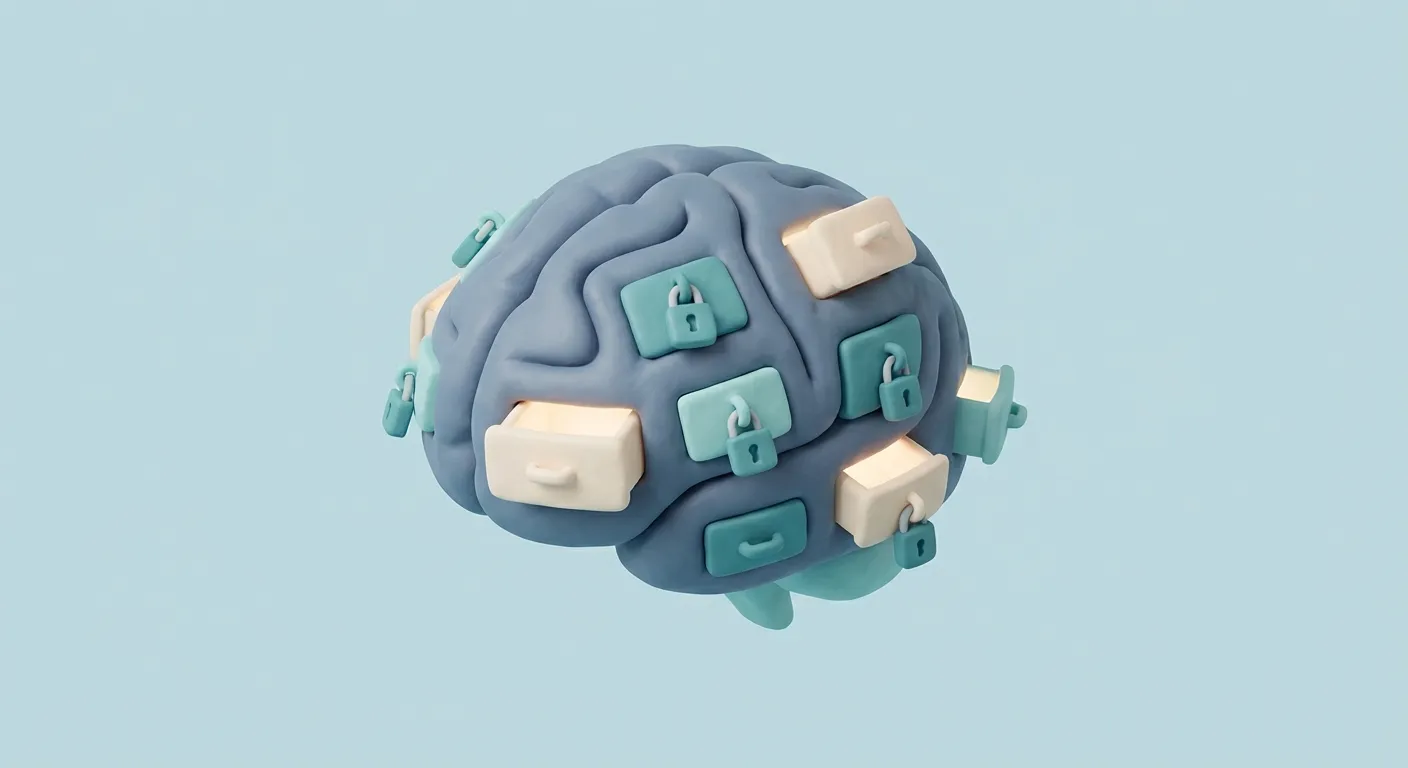
              Comment le cerveau construit des murs

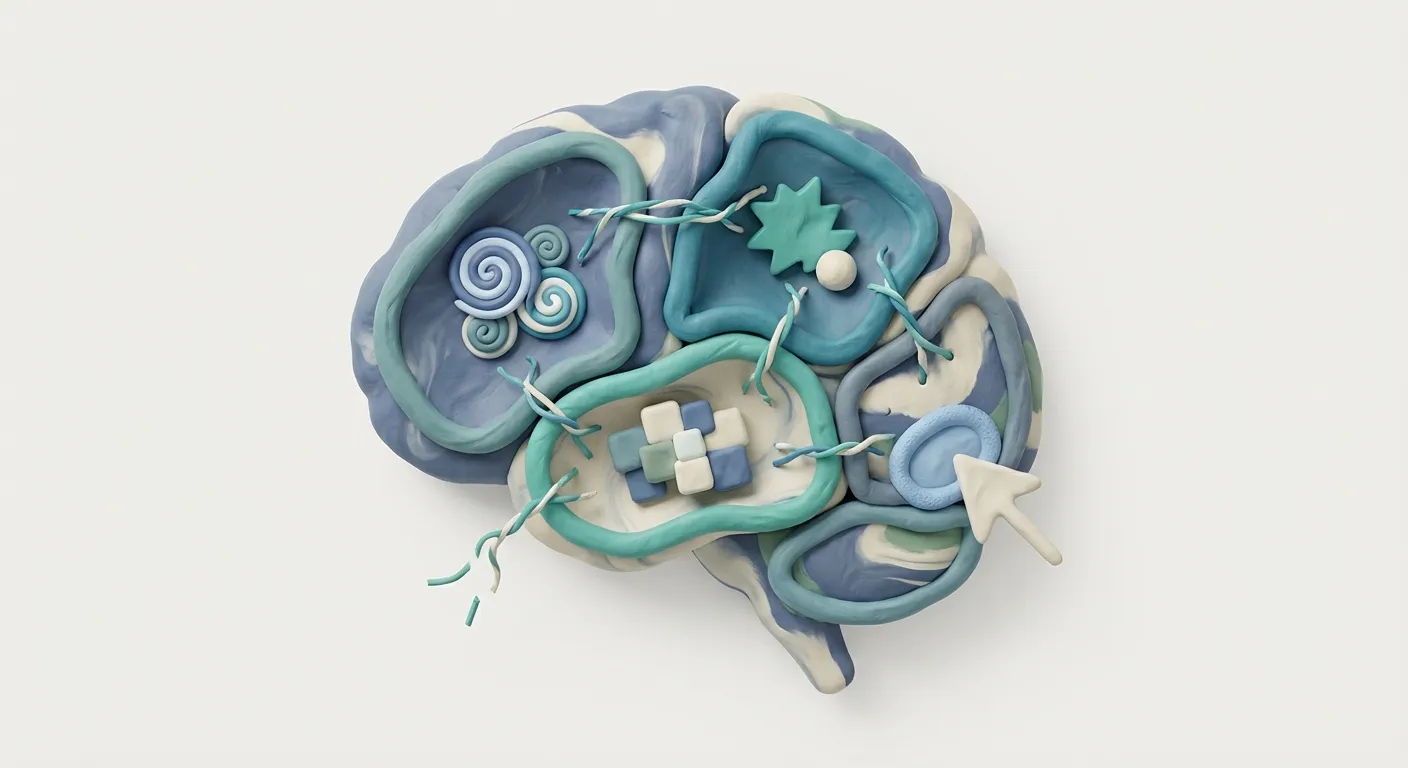
              The posterior cingulate cortex sits at the crossroads of the brain's default mode network — the system responsible for self-referential processing, autobiographical memory, and the sense of continuous identity over time. In people with dissociative disorders, neuroimaging consistently shows altered metabolism and reduced functional connectivity in this region, particularly between the posterior cingulate and the prefrontal cortex, and between emotional processing areas and cognitive control regions.

              What this means in practical terms is that the normal integration of experience — the process by which different aspects of the self are held together in a coherent 'I' — is disrupted. The brain's architecture for self-continuity is not operating in the same way as in a non-dissociative brain.

              This is not a defect that appeared from nowhere. The compartmentalisation is a learned architecture — an extraordinary feat of neural adaptation to circumstances in which maintaining full integration of experience would have been unbearable or unsafe. When a child experiences repeated overwhelming stress without the support structures needed to process and contain it, the developing brain — which is extraordinarily plastic — can literally wire itself to separate the overwhelming experience from the functional self. This is not a conscious choice. It is an adaptive response that happens below the level of voluntary control.

              The structural theory of dissociation (Onno van der Hart and colleagues) describes this as the division of the personality into an Apparently Normal Part (ANP) — which manages daily functioning — and one or more Emotional Parts (EPs) — which hold the traumatic material. The walls between them are maintained by phobia of traumatic memories and by the autonomic responses triggered when those memories are approached.

              Understanding the architecture is the first step to working with it rather than against it.

              • La neuroimagerie révèle une activité altérée du cortex cingulaire postérieur et une connectivité perturbée entre les régions cérébrales émotionnelles et cognitives dans les troubles dissociatifs.
              • La compartimentation est une architecture neuronale acquise — une réponse adaptative à un stress intense, et non un défaut.
              • La théorie structurale de la dissociation décrit des parties apparemment normales (fonction quotidienne) et des parties émotionnelles (matériel traumatique) séparées par des parois protectrices.
              • Comprendre l'architecture est la base pour travailler avec elle — non pas la traverser de force, mais construire des ponts.

              Quand le système nerveux se met en veille pour survivre

              Stephen Porges's Polyvagal Theory provides one of the most useful neurobiological frameworks for understanding dissociation. The theory describes three hierarchical states of the autonomic nervous system, each evolved at a different point in evolutionary history and each activated in response to different threat assessments.

              The first is the social engagement system — the myelinated ventral vagal pathway, which supports connection, communication, and co-regulation with others. This is the state of safety.

              The second is the sympathetic activation state — fight or flight. When the nervous system assesses threat that social engagement cannot resolve, it mobilises the body for action: elevated heart rate, increased muscle tension, heightened alertness.

              The third — and evolutionarily oldest — is the dorsal vagal shutdown. This system evolved in ancient vertebrates as a last-resort survival strategy: when threat is inescapable and neither connection nor fight-or-flight is viable, the nervous system shuts down. Heart rate drops. Metabolic activity decreases. Consciousness narrows. In animals, this manifests as playing dead. In humans, it manifests as the freeze response, numbness, depersonalisation, and dissociation.

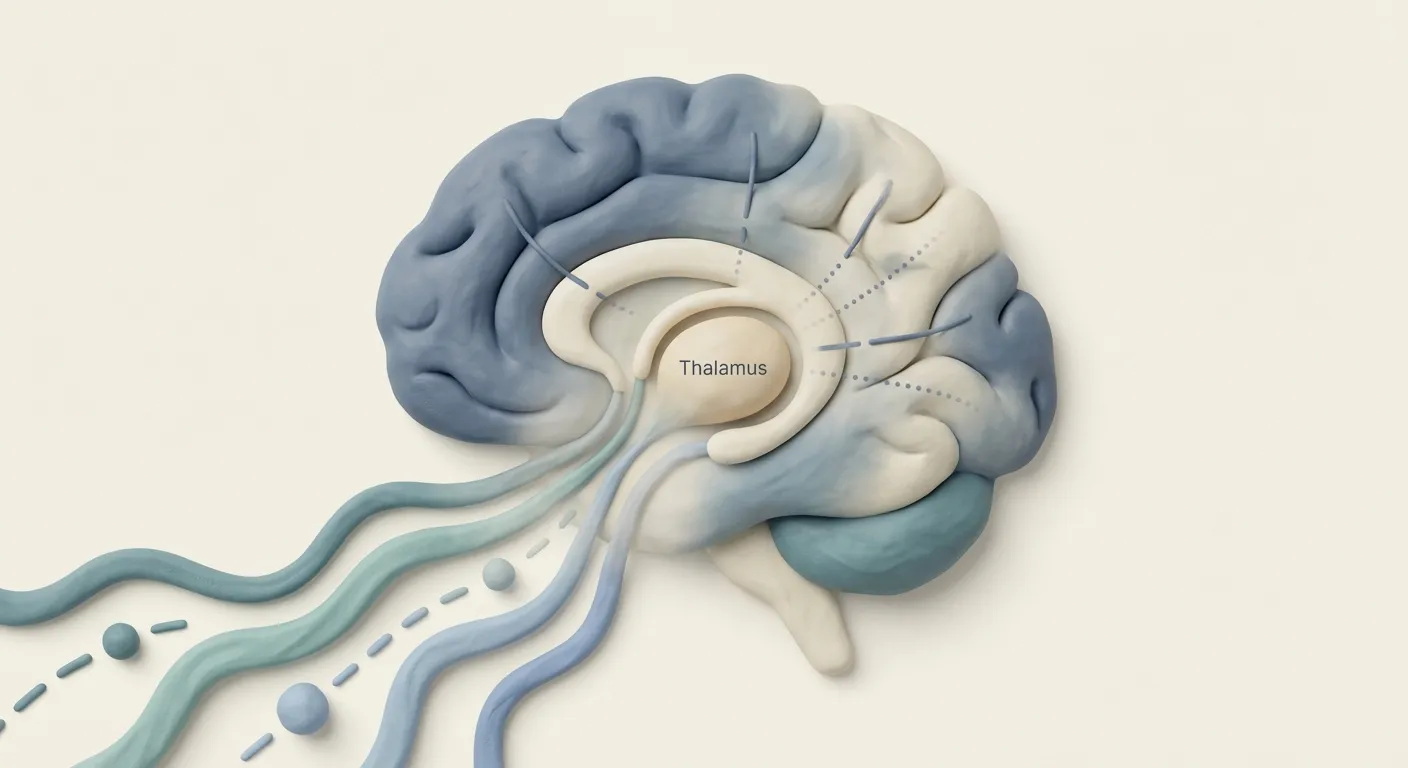
              The thalamus plays a critical role in this process. Under extreme stress, thalamic gating — the thalamus's function of integrating and routing sensory input — becomes disrupted. Sensory information stops being processed and bound into coherent experience. What reaches consciousness is fragmented, muffled, or absent. This is not malfunction. This is the most ancient protective system in the vertebrate brain doing exactly what it evolved to do.

              Dissociation is, at its neurobiological root, the dorsal vagal shutdown applied to psychological experience. The organism assessed that remaining fully present was not survivable. The nervous system responded accordingly.

              • L’arrêt vagal dorsal — le plus ancien état autonome de l’histoire de l’évolution — sous-tend la base neurobiologique de la dissociation.
              • La perturbation du contrôle thalamique en cas de stress extrême empêche l'intégration des informations sensorielles en une expérience cohérente, provoquant engourdissement et dépersonnalisation.
              • La dissociation est la stratégie de survie de dernier recours du système nerveux, lorsque ni la connexion ni la réaction de combat ou de fuite ne sont possibles.
              • Il s'agit d'un mécanisme de protection ancien, conservé au cours de l'évolution — ni dysfonctionnement, ni faiblesse, ni imagination.

              Le cerveau qui a construit des murs peut aussi construire des ponts.

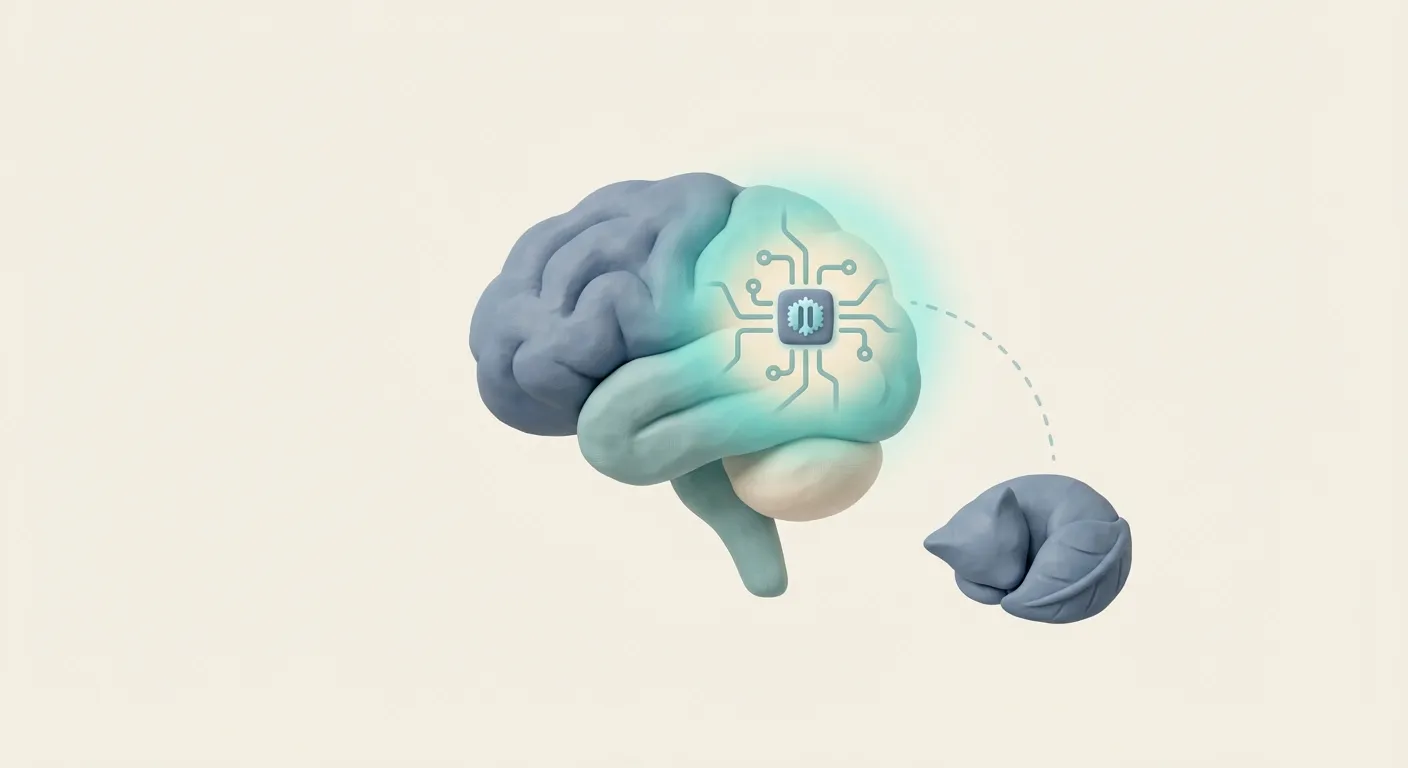
              The same neuroplasticity that allowed the developing brain to build compartmentalisation as a survival response can, under the right conditions, support the gradual building of integration. This is not a theoretical hope. It is documented in neuroimaging studies tracking the brain before and after successful treatment of dissociative disorders.

              One of the most promising lines of research involves neurofeedback — a technique that provides real-time feedback on EEG or fMRI activity, allowing people to learn to self-regulate specific neural patterns. Studies examining neurofeedback for dissociative disorders, including a 2019 meta-analysis by Reiter and colleagues, showed approximately 62% improvement in dissociative symptom severity after neurofeedback protocols targeting posterior cingulate and default mode network connectivity. The brain was not just reporting different symptoms — it was showing measurably different patterns of activation.

              Trauma-focused therapies — EMDR, Internal Family Systems (IFS), Sensorimotor Psychotherapy, Phase-Based Trauma Treatment — work in ways that are increasingly understood through a neuroplasticity lens. EMDR's bilateral stimulation appears to engage the brain's natural memory reconsolidation mechanisms, allowing traumatic memories to be processed and integrated without being re-traumatising. IFS works by building cooperative relationships between identity states — not eliminating parts, but facilitating communication and reducing the phobic avoidance between them.

              Integration does not mean merger. This is an important clinical distinction. The goal of treatment for DID and OSDD is not to collapse all identity states into one undifferentiated self — a goal that many people find threatening and that clinical experience suggests is not necessary for full functioning. Integration means increasing co-consciousness, reducing amnesia barriers, building internal communication, and allowing the system to function more collaboratively. The rooms of the building can remain, but the doors can open.

              Recovery is real. People do it. The brain that was plastic enough to build the walls is plastic enough to build the bridges.

              • Les études de neurofeedback montrent une amélioration d'environ 62 % de la gravité des symptômes dissociatifs, avec des schémas d'activation neuronale sensiblement différents après le traitement.
              • L’EMDR, l’IFS et la psychothérapie sensorimotrice agissent par le biais de mécanismes de neuroplasticité, facilitant la reconsolidation de la mémoire et réduisant l’évitement phobique entre les états.
              • L’intégration ne signifie pas la fusion — l’objectif clinique est la co-conscience et la communication interne, et non la fusion des états identitaires en un seul.
              • La neuroplasticité qui a permis de construire les murs peut aussi permettre de construire les ponts — la guérison est non seulement possible, mais elle est documentée.

              When the Self Rearranges Without Notice

              If you've ever looked at your own handwriting and not recognised it, heard a recording of your voice and felt it belonged to a stranger, or been told you sat differently, moved differently, or spoke differently — and had no memory of making any choice to change — you are not imagining things. You are experiencing one of the most documented features of dissociative identity structures: the shift.

              The shift is not a performance. It's not attention-seeking. Neuroimaging research shows that when identity states transition in people with DID and OSDD, there are measurable changes in regional cerebral blood flow, alterations in EEG patterns, and documented differences in autonomic nervous system responses. Different identity states can have different dominant hand preferences, different pain thresholds, different visual acuity, and different allergic responses — findings that cannot be explained by suggestion alone.

              The subjective experience of the switch blur is often one of the most disorienting aspects of dissociative disorders. Unlike the dramatic instantaneous swaps depicted in film, real transitions are often gradual, partial, and internally confusing. You may feel yourself 'getting quiet' or 'going foggy' without understanding what's happening. You may come back into awareness and notice you're somewhere unexpected, that your body is positioned differently, that there are objects near you that feel unfamiliar.

              For many people, the switch blur creates profound shame, particularly when others notice it. The most important reframe available is this: the switch is not a failure of self-control. It is the brain's compartmentalisation mechanism activating — the same mechanism that protected you when full presence was too dangerous to sustain. The walls between states were built because they were needed.

              Recovery doesn't mean eliminating the shift. It means developing enough communication and co-awareness between states that the transitions feel less like loss and more like a relay — parts of you handing off rather than disappearing. This is achievable, and people do it.

              When Abilities Live Behind Walls

              Imagine being fluent in a language on Tuesday and finding yourself unable to produce a single sentence from it on Wednesday. Imagine being a skilled typist who on a particular afternoon types like they've never seen a keyboard. Imagine losing the ability to drive, to cook a meal you've made hundreds of times, to read music you've played for years — and then having it return, unbidden, days or weeks later.

              This is state-dependent memory and skill access in action. It is one of the most functionally disruptive and least understood features of dissociative disorders, and it generates enormous shame because it looks, from the outside, like laziness, manipulation, or exaggeration.

              Memory and learned skills are not stored in a single location in the brain. They are encoded within networks of neural activation that were active at the time of learning. Episodic memories carry emotional and sensory context that influenced their encoding. Procedural skills are linked to the physiological and psychological state in which they were practised and consolidated. When the brain is compartmentalised into distinct identity states, those states can have differential access to these networks.

              This means that a skill learned primarily in one identity state may be genuinely inaccessible when a different state is dominant — not because the skill was lost, but because the neural pathway to it is behind a wall that the current state cannot open. The skill is still there. The person still exists. But the routing is blocked.

              The fluctuation in capacity is real. It is neurological. It is not performance. One of the most helpful reframes for people living with this is to stop trying to force access through effort (which rarely works and increases distress) and instead to develop a collaborative internal relationship with the state that holds the skill — to ask, rather than demand. Over time, as internal communication develops, these gaps tend to narrow.

              The Hours That Belong to Someone Else

              There's a particular horror to finding evidence of your own life that you can't account for. The shopping bag by the door with things you didn't choose. The text message conversation you apparently had with someone. The half-eaten meal you have no memory of making. The notebook entry in handwriting you recognise as yours but with words you didn't write.

              Dissociative amnesia — whether it occurs as part of DID, OSDD, or as its own condition — operates through a specific neurobiological mechanism. During periods of high stress or when an identity state transition has occurred, the hippocampus's normal process of consolidating short-term experience into long-term memory is disrupted. The activity happened. Your body was present. But the memory encoding process was blocked, interrupted, or routed to a different state that doesn't currently have access to conscious awareness.

              Lost time is one of the most frightening experiences reported by people with dissociative disorders, not just because of the gaps themselves, but because of what those gaps imply about safety, continuity, and trust in one's own mind. Many people feel a deep shame about the lost time — as if they are responsible for something they were not present for.

              It is important to understand that the lost time is not moral failure. You were not 'gone' in the sense of being absent — parts of you were present and functioning. Those parts may have been doing things that served a purpose in the moment, things that made sense given their particular experience and history. The gaps are a symptom of compartmentalisation, not evidence of carelessness or irresponsibility.

              Building a shared internal diary or log — a journal that different states can contribute to — is one of the most practical tools people use to reduce the disorientation of lost time. Over time, as co-consciousness develops, the gaps tend to shrink.

              Names That Belong to Parts of You

              Identity is partly linguistic. We use names as anchors — both for ourselves and for how others locate us in social space. When someone calls you a name you don't recognise as your own, the experience is deeply disorienting. And when you discover that you apparently gave that person this name yourself, in a conversation you don't remember, the disorientation deepens into something more complicated.

              Identity states in DID and OSDD frequently have their own names — sometimes names they chose or were given in childhood, sometimes names that emerged over time as a way for the internal system to navigate and communicate. These names are not random. They often carry specific history, specific functions, specific emotional weights. A part may have a different name because it formed at a different age, in a different context, as a response to a different set of demands.

              From the outside, being told you introduced yourself as someone else looks bizarre and potentially alarming. From the inside, the discovery that you apparently did this can generate profound confusion and shame. Neither of these responses is the most useful frame.

              A more useful frame: the identity state that introduced itself by that name was doing something that made sense to it. It may have been more comfortable in that moment, more present, more capable of the interaction that was required. It used a name that felt true to it. The fact that you — the state currently reading this — don't recognise that name doesn't mean it's not yours in some important sense. It belongs to part of the same system you belong to.

              Many people with DID and OSDD develop an internal mapping practice — learning the names, ages, and roles of the different parts of their system, not to perform them publicly, but to understand themselves. This mapping, done with a skilled trauma therapist, is often the beginning of genuine integration.

              When Present Is Too Much

              If you've been in a conversation and suddenly found yourself watching it from a distance — as if you're behind glass, or inside a diving bell, or watching from several feet above your own body — you know what the departure feels like. The words are still happening. The sounds are still arriving. But something essential has retreated. The full-bandwidth connection to the present moment has narrowed to something barely perceptible.

              This is depersonalisation and derealisation in action — and it can occur as a standalone condition, as part of dissociative disorders, or as a response to overwhelming sensory and emotional input in any of the dissociative presentations. Neuroimaging has identified specific correlates: hyperactivation of the prefrontal cortex combined with dampening of the amygdala and limbic system. The brain is essentially over-regulating its emotional response to the point of numbing — trading aliveness for safety.

              From the outside, the departure looks like zoning out, distraction, rudeness, or checked-out behaviour. The person staring blankly mid-conversation isn't being rude. They are experiencing a neurological response to input that their nervous system has assessed — often unconsciously, based on past experience — as exceeding what it can safely process while remaining present.

              This is the polyvagal shutdown response in practice. The dorsal vagal branch of the autonomic nervous system engages when fight or flight is not available, or when the system has been chronically overwhelmed. The result is a conservation mode — heart rate drops, responsiveness decreases, the window of full awareness contracts.

              Coming back from a departure isn't always immediate or voluntary. Grounding techniques — particularly those involving physical sensation, breath, or temperature — can help signal safety to the nervous system and widen the window of tolerance back open. The departure is protection. The goal is not to eliminate it but to gradually expand the conditions under which protection isn't needed.

              Comment le cerveau construit des murs

              The posterior cingulate cortex sits at the crossroads of the brain's default mode network — the system responsible for self-referential processing, autobiographical memory, and the sense of continuous identity over time. In people with dissociative disorders, neuroimaging consistently shows altered metabolism and reduced functional connectivity in this region, particularly between the posterior cingulate and the prefrontal cortex, and between emotional processing areas and cognitive control regions.

              What this means in practical terms is that the normal integration of experience — the process by which different aspects of the self are held together in a coherent 'I' — is disrupted. The brain's architecture for self-continuity is not operating in the same way as in a non-dissociative brain.

              This is not a defect that appeared from nowhere. The compartmentalisation is a learned architecture — an extraordinary feat of neural adaptation to circumstances in which maintaining full integration of experience would have been unbearable or unsafe. When a child experiences repeated overwhelming stress without the support structures needed to process and contain it, the developing brain — which is extraordinarily plastic — can literally wire itself to separate the overwhelming experience from the functional self. This is not a conscious choice. It is an adaptive response that happens below the level of voluntary control.

              The structural theory of dissociation (Onno van der Hart and colleagues) describes this as the division of the personality into an Apparently Normal Part (ANP) — which manages daily functioning — and one or more Emotional Parts (EPs) — which hold the traumatic material. The walls between them are maintained by phobia of traumatic memories and by the autonomic responses triggered when those memories are approached.

              Understanding the architecture is the first step to working with it rather than against it.

              Quand le système nerveux se met en veille pour survivre

              Stephen Porges's Polyvagal Theory provides one of the most useful neurobiological frameworks for understanding dissociation. The theory describes three hierarchical states of the autonomic nervous system, each evolved at a different point in evolutionary history and each activated in response to different threat assessments.

              The first is the social engagement system — the myelinated ventral vagal pathway, which supports connection, communication, and co-regulation with others. This is the state of safety.

              The second is the sympathetic activation state — fight or flight. When the nervous system assesses threat that social engagement cannot resolve, it mobilises the body for action: elevated heart rate, increased muscle tension, heightened alertness.

              The third — and evolutionarily oldest — is the dorsal vagal shutdown. This system evolved in ancient vertebrates as a last-resort survival strategy: when threat is inescapable and neither connection nor fight-or-flight is viable, the nervous system shuts down. Heart rate drops. Metabolic activity decreases. Consciousness narrows. In animals, this manifests as playing dead. In humans, it manifests as the freeze response, numbness, depersonalisation, and dissociation.

              The thalamus plays a critical role in this process. Under extreme stress, thalamic gating — the thalamus's function of integrating and routing sensory input — becomes disrupted. Sensory information stops being processed and bound into coherent experience. What reaches consciousness is fragmented, muffled, or absent. This is not malfunction. This is the most ancient protective system in the vertebrate brain doing exactly what it evolved to do.

              Dissociation is, at its neurobiological root, the dorsal vagal shutdown applied to psychological experience. The organism assessed that remaining fully present was not survivable. The nervous system responded accordingly.

              Le cerveau qui a construit des murs peut aussi construire des ponts.

              The same neuroplasticity that allowed the developing brain to build compartmentalisation as a survival response can, under the right conditions, support the gradual building of integration. This is not a theoretical hope. It is documented in neuroimaging studies tracking the brain before and after successful treatment of dissociative disorders.

              One of the most promising lines of research involves neurofeedback — a technique that provides real-time feedback on EEG or fMRI activity, allowing people to learn to self-regulate specific neural patterns. Studies examining neurofeedback for dissociative disorders, including a 2019 meta-analysis by Reiter and colleagues, showed approximately 62% improvement in dissociative symptom severity after neurofeedback protocols targeting posterior cingulate and default mode network connectivity. The brain was not just reporting different symptoms — it was showing measurably different patterns of activation.

              Trauma-focused therapies — EMDR, Internal Family Systems (IFS), Sensorimotor Psychotherapy, Phase-Based Trauma Treatment — work in ways that are increasingly understood through a neuroplasticity lens. EMDR's bilateral stimulation appears to engage the brain's natural memory reconsolidation mechanisms, allowing traumatic memories to be processed and integrated without being re-traumatising. IFS works by building cooperative relationships between identity states — not eliminating parts, but facilitating communication and reducing the phobic avoidance between them.

              Integration does not mean merger. This is an important clinical distinction. The goal of treatment for DID and OSDD is not to collapse all identity states into one undifferentiated self — a goal that many people find threatening and that clinical experience suggests is not necessary for full functioning. Integration means increasing co-consciousness, reducing amnesia barriers, building internal communication, and allowing the system to function more collaboratively. The rooms of the building can remain, but the doors can open.

              Recovery is real. People do it. The brain that was plastic enough to build the walls is plastic enough to build the bridges.