Why Synesthetic Perception Is Not Imagination
When someone with grapheme-colour synaesthesia tells you that the number 7 is green, they are not describing an aesthetic preference, a metaphor, or a memory from childhood. They are reporting a genuine perceptual experience that happens automatically, involuntarily, and with remarkable consistency every single time they encounter that number.
This is the part that confuses most people: synaesthesia is not a choice. You cannot decide to stop seeing A as red any more than you can decide to stop seeing the sky as blue. The experience is pre-cognitive — it happens before conscious thought has a chance to intervene. This is what distinguishes genuine synaesthesia from simple association or imagination. An association is something you can notice or not notice, summon or dismiss. A synesthetic percept arrives on its own terms, unbidden, every time.
The scientific evidence for this is substantial. Test-retest studies — where synesthetes are asked to report their pairings years apart, without warning or preparation — show consistency rates above 90%. If someone is making this up or confabulating rich associations, you would not see that level of accuracy. Neuroimaging studies, including fMRI and EEG, show measurable cross-activation: when a grapheme-colour synesthete sees the letter A, the visual cortex areas responsible for colour perception activate, even when the letter itself is presented in black. This is physical, measurable, real.
Living with a perceptual experience that most people around you do not share creates a particular kind of social complexity. Many synesthetes spend years — sometimes decades — assuming that everyone sees the same things. It simply doesn't occur to them that their experience is unusual, because it is so automatic and so consistently present that it feels like basic reality. When they discover that other people's A is just... black, or just a shape, the revelation can be genuinely disorienting.
There is also the question of what to say to people. Describing synesthetic perception to someone who doesn't experience it often produces skepticism, dismissal, or the frustrating suggestion that you're imagining things or seeking attention. The person describing it is not confused. Their nervous system is doing something measurably different. The challenge is explaining an extra sensory channel to someone who has never had access to that channel.
- Synesthetic perception is automatic and involuntary — it cannot be switched off by choice or effort.
- Test-retest consistency above 90% across years proves the experience is not confabulation or imagination.
- fMRI shows physical cross-activation of colour-processing regions when synesthetes see letters — this is measurable neuroscience.
- Many synesthetes spend years not realising their perception is unusual, because it feels like basic reality.
Synesthetic Conflict: When the World Gets the Colours Wrong
Imagine if every time you saw a stop sign, it was bright blue. Not just surprising — genuinely uncomfortable. A persistent low-level wrongness that you cannot tune out or rationalise away, because the mismatch isn't aesthetic, it's perceptual. This is something like what a grapheme-colour synesthete experiences when they encounter the word 'orange' printed in blue ink, or a company logo whose name has a clear colour but whose visual branding uses a different one entirely.
This is sometimes called synesthetic conflict or the synesthetic Stroop effect, and it's one of the most rigorous experimental tools for verifying synaesthesia. In the classic Stroop test, neurotypical people are slower to name the ink colour of a word when the word itself names a different colour — for example, saying 'red' when the word RED is printed in blue. Synesthetes show a dramatically enhanced version of this effect, because they're experiencing a conflict not just between word meaning and ink colour, but between the word's synesthetic colour and the ink colour. Two competing colour signals, processed simultaneously, creating genuine perceptual friction.
For grapheme-colour synesthetes, this kind of conflict appears regularly in daily life in ways that can be difficult to explain to others. Certain names feel wrong because the person's hair is the wrong colour for their name. Certain brand logos create discomfort because the logo colour doesn't match the colour of the brand name's letters. Reading text in colours that conflict with the synesthetic colours of the letters takes measurably longer and feels actively uncomfortable.
This is not pickiness, hypersensitivity in a pejorative sense, or an aesthetic preference. It is the predictable consequence of having an additional perceptual channel that is involuntarily activated and that sometimes produces signals conflicting with the external world. The cognitive friction is real, measurable in reaction time studies, and not something the synesthete can simply choose to ignore.
Understanding this helps reframe what can look like disproportionate reactions to minor things. The logo isn't just a design choice that someone dislikes. It is a stimulus that is triggering two conflicting perceptual signals simultaneously, every time it is seen.
- Synesthetic conflict occurs when an external colour clashes with a synesthetic colour — producing genuine perceptual friction, not aesthetic preference.
- The synesthetic Stroop effect is measurable in reaction time studies and is one of the main scientific tools for verifying synaesthesia.
- Conflict between synesthetic and real-world colours slows processing and creates persistent discomfort that cannot be rationalised away.
- What looks like an oversensitive reaction to branding or colour choices often reflects a real perceptual mismatch with an extra sensory channel.
How Synaesthesia Enhances Memory
Memory works better when information is encoded across multiple sensory channels. This is why memory champions use techniques like the method of loci — attaching information to vivid spatial and sensory imagery — to store and retrieve extraordinary amounts of data. Synesthetes, through no particular effort or technique, are already doing a version of this with every word, number, and sound they encounter.
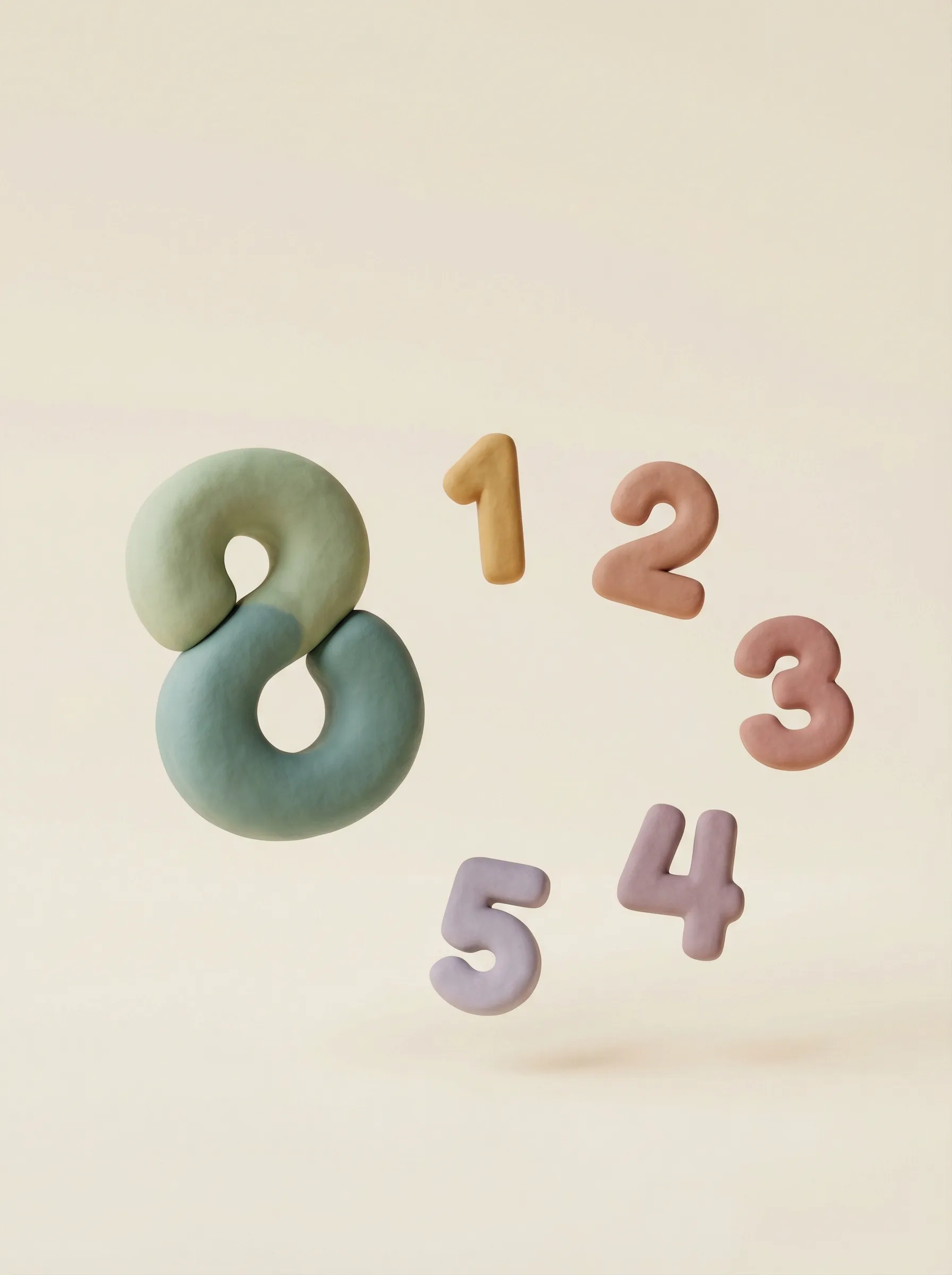
For a grapheme-colour synesthete, a phone number isn't just a sequence of abstract digits. It's a colour sequence — a palette with a particular character, rhythm, and sometimes emotional tone. The number 7395 might be a journey from lime green through dark navy to ochre and then back to something clean and pale. This encoding happens automatically. The synesthete doesn't have to deliberately attach a colour mnemonic to the number. The cross-activation does it for them.
Research comparing synesthetes to matched non-synesthetes on standardised memory tasks consistently finds that synesthetes outperform on tasks involving the synesthetic domains. Grapheme-colour synesthetes show significantly enhanced memory for strings of letters and numbers. Spatial sequence synesthetes show enhanced memory for temporal information — dates, schedules, sequences of events. Chromesthetes often show heightened musical memory. The enhancement is domain-specific: the extra encoding hook only helps where it's applied.
What's particularly interesting is that this memory advantage is largely automatic. Synesthetes don't need to deliberately invoke a mnemonic technique. The extra layer of encoding is built into their perceptual system. Every letter they read has its colour. Every number in a sequence contributes its hue to the pattern. The result is that certain types of information — particularly the kinds of sequential, symbol-based information that synesthetic associations attach to — leave richer, more retrieval-friendly traces in memory.
This doesn't mean synesthetes have universally superior memories — the advantage is specific to domains where their particular synesthetic associations are active. But within those domains, the multi-sensory encoding that synaesthesia produces creates a genuine and measurable memory advantage. The brain is doing extra work at the encoding stage that pays off at the retrieval stage.
- Synaesthesia creates automatic multi-sensory encoding — information is tagged with colour, texture, or spatial position without deliberate effort.
- Research consistently shows domain-specific memory advantages in synesthetes — enhanced recall for letters, numbers, sequences, or music depending on type.
- The memory benefit is automatic, not a learned technique — the extra encoding layer is built into the perceptual system.
- This is the neurological basis for the 'number as colour gradient' experience — each digit contributes a sensory tag that aids retrieval.
Spatial Sequence Synaesthesia: When Time Has a Location
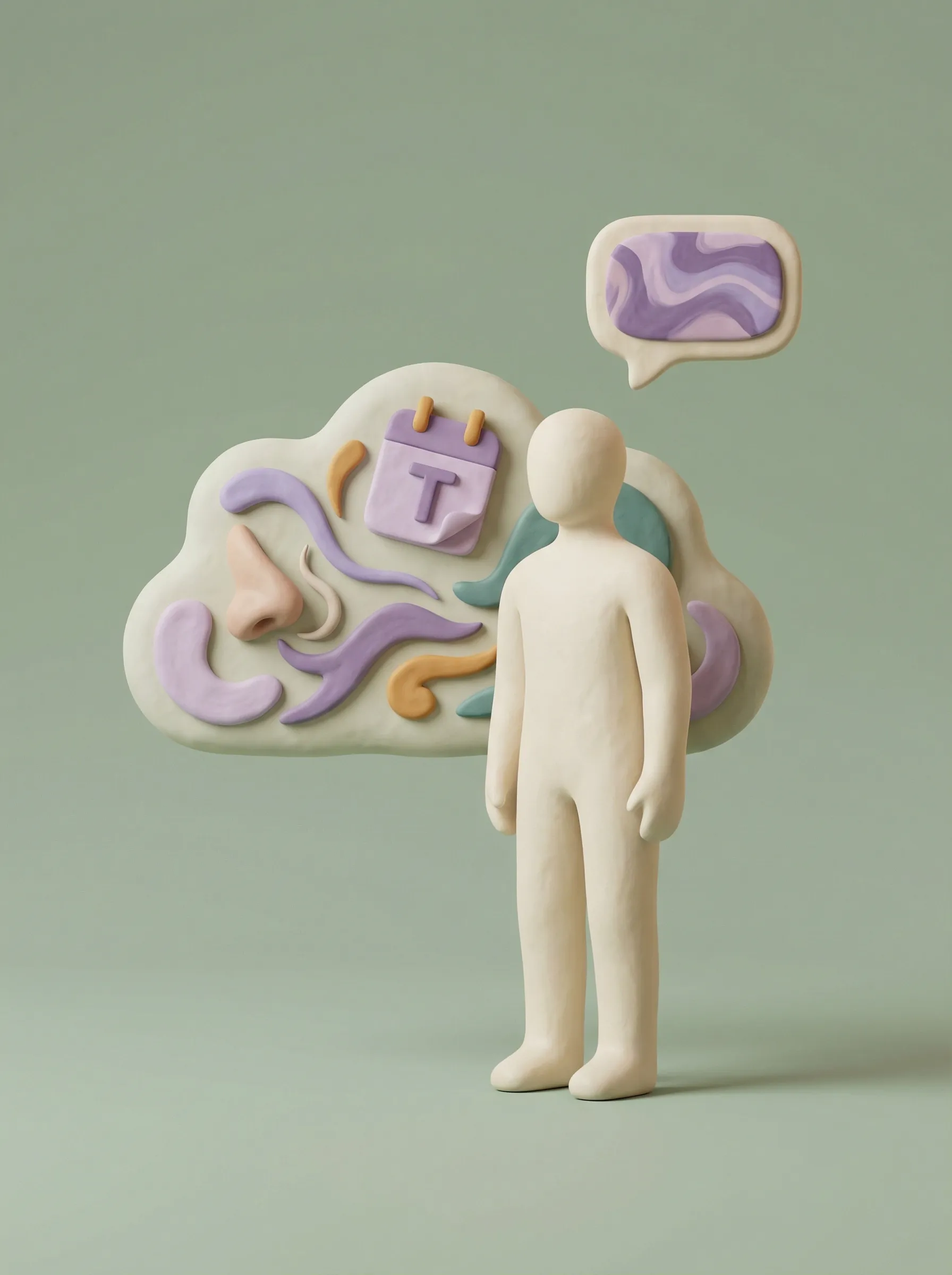
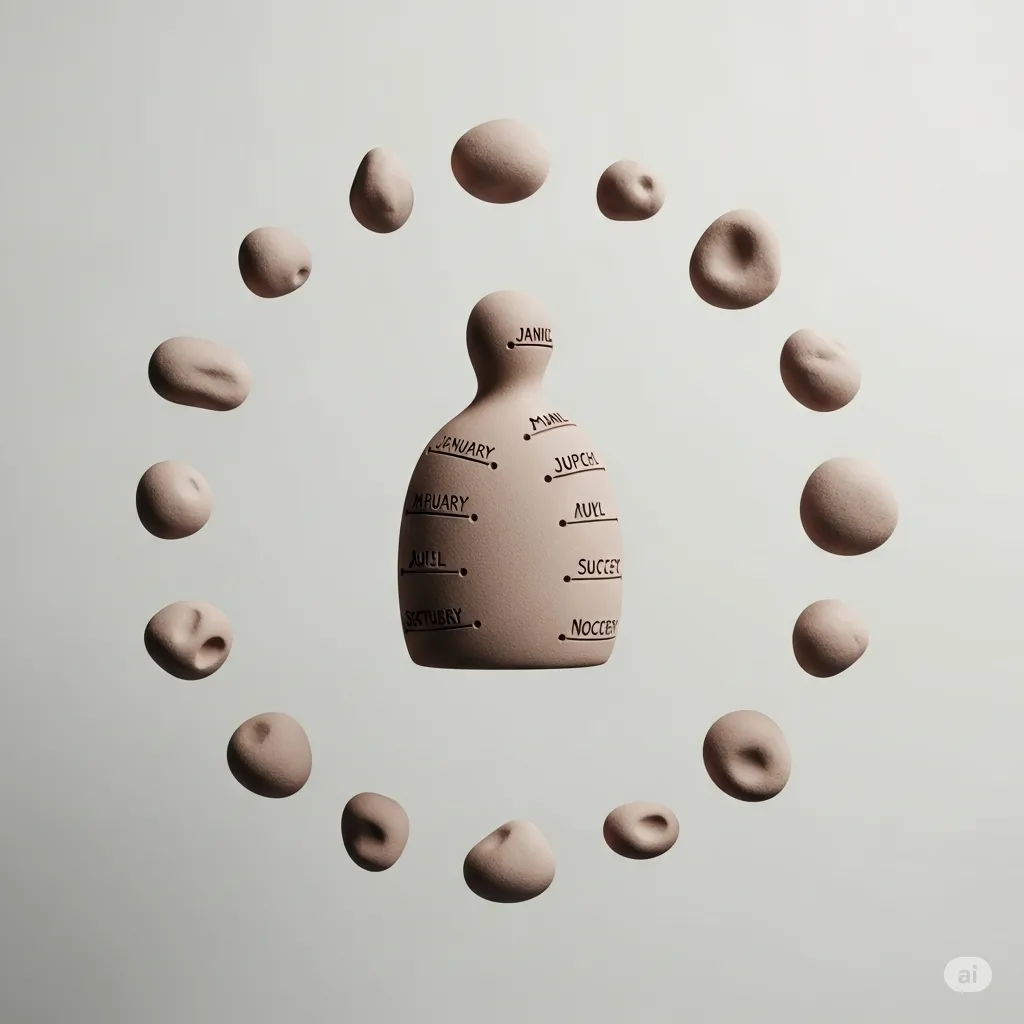
For most people, the days of the week are an abstract sequence — a mental list that exists somewhere in conceptual space without any particular physical character. For people with spatial sequence synaesthesia, it's different. Tuesday has a location. It might be slightly to the right and at shoulder height. Thursday might be further away, at a slight diagonal. The months of the year might form an oval or a ribbon that wraps around the body in a specific configuration, always oriented the same way, always with the same proportions between months.
This is not a metaphor or a habit of thought. It's a perceptual experience as consistent and automatic as any other synesthetic phenomenon. When asked to point to where 'last year' is, spatial sequence synesthetes will consistently gesture in a particular direction — and if asked again months later without warning, they'll gesture in the same direction. The spatial layout is stable.
Spatial sequence synaesthesia extends beyond time. Numbers typically occupy positions along a line or curve that may twist, bend, or change angle at certain values. The number 10 might be at the end of a straight horizontal stretch; 11 might begin a new line heading in a different direction. Alphabet letters often have positions. Historical years and decades may form patterns that extend into the distance or wrap around in loops.
This means that temporal reasoning — figuring out how far apart two dates are, estimating durations, navigating schedules — involves literal spatial reasoning for spatial sequence synesthetes. They can navigate time by moving through a mental space rather than counting abstract units. This often produces advantages: scheduling and planning can be done visually by examining the space of the calendar layout; historical timelines can be recalled by walking through their mental spatial equivalent.
The challenge arises in environments where time is presented in abstract or linear formats that don't match the synesthete's internal spatial layout. Certain calendar apps, timeline representations, or scheduling formats may feel actively wrong — like being forced to navigate a familiar city using a map that has all the streets in the wrong places.
- Spatial sequence synaesthesia gives time, numbers, and sequences physical locations in 3D space — stable, consistent, and as automatic as any other percept.
- Synesthetes can literally point to where 'last Tuesday' or 'next March' is — and will point to the same place when tested years later.
- Temporal reasoning often involves spatial navigation for these synesthetes, which can create genuine advantages in planning and historical recall.
- Calendar formats or timeline tools that don't match the internal spatial layout can feel actively disorienting or wrong.
Sensory Overload in Synaesthesia: When More Becomes Too Much
For non-synesthetes, a noisy party is loud. Lots of simultaneous sound, competing conversations, music underneath it all. It can be tiring, particularly for introverts, but the primary channel of overload is auditory.
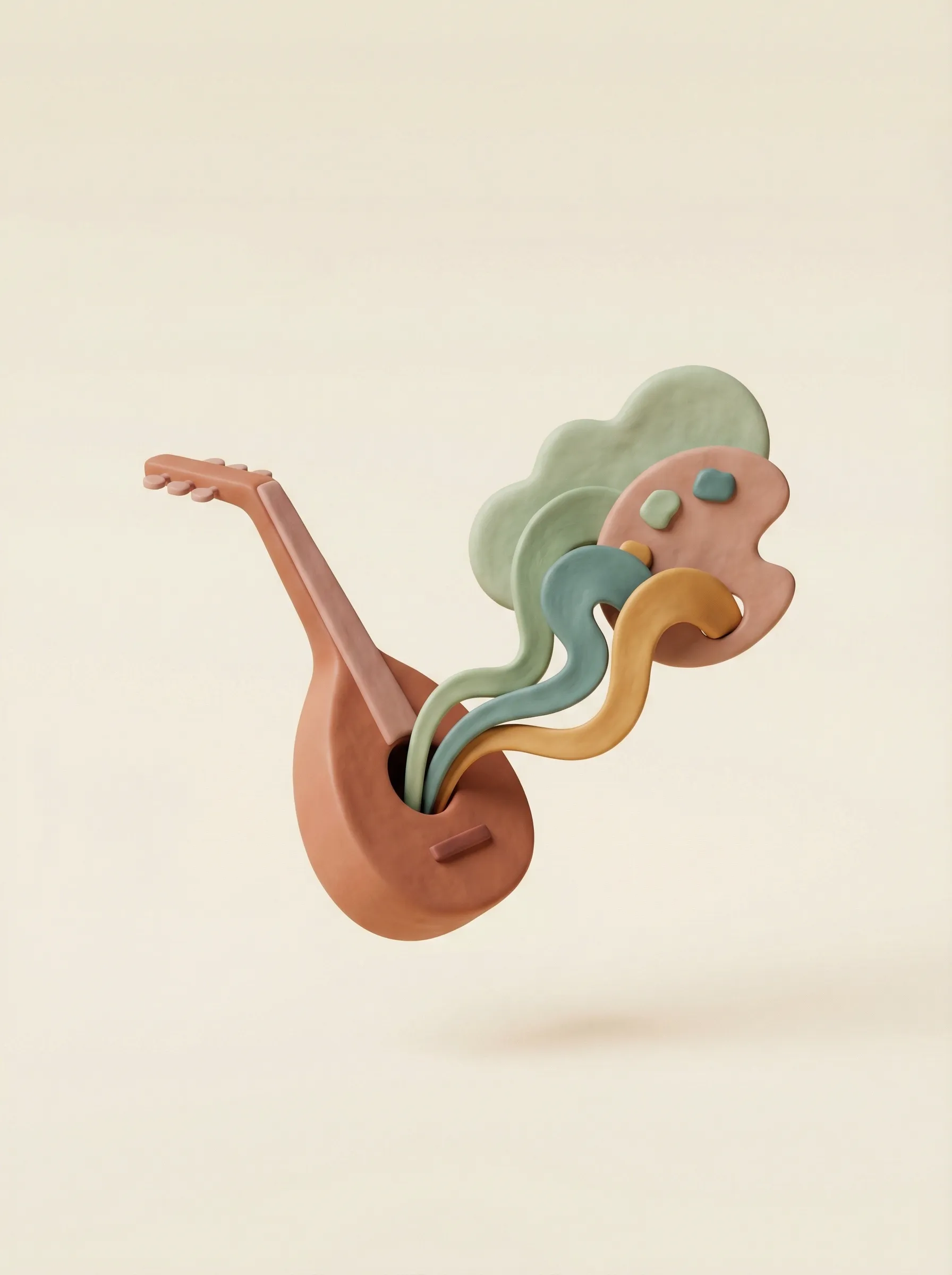
For a chromesthete — someone whose sounds trigger visual experiences — the same party is loud AND visually overwhelming simultaneously. Every voice produces its own colour or shape. The music creates shifting visual textures that pulse in time with the beat. The combination of multiple simultaneous sounds creates multiple simultaneous visual signals, all competing for processing. The party is not just auditory overload; it is a genuine multi-sensory event, happening across more channels than most people in the room are processing.
This is the hidden cost of multi-sensory encoding. The same connections that create richer perception in calm environments create richer chaos in chaotic ones. When input is complex, synesthetic input is even more complex, because every piece of sensory data spawns additional cross-modal responses. The synesthete is processing more.
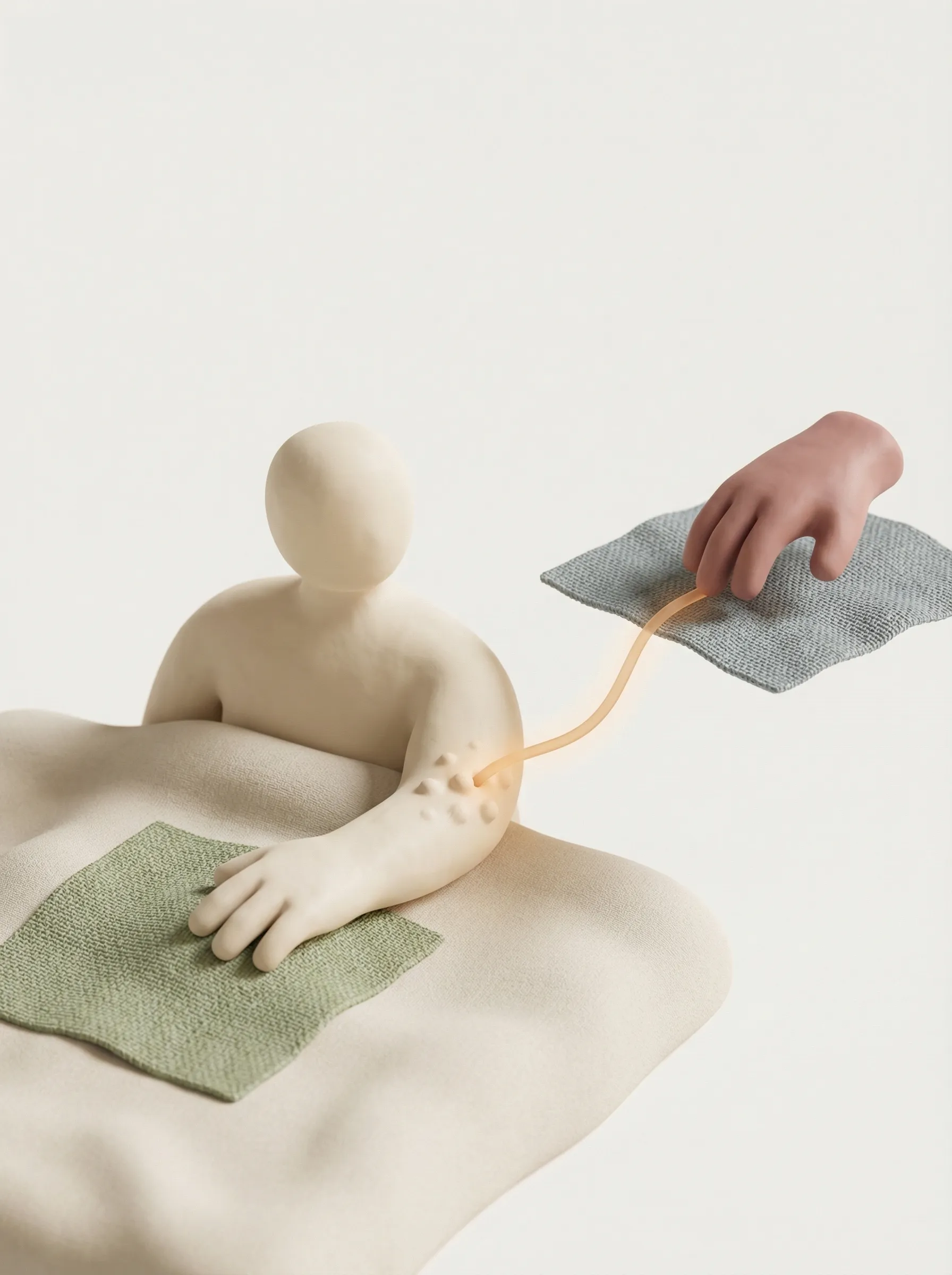
For mirror-touch synesthetes in crowded environments, the overload dimension is somatic rather than visual. Every incidental bump, brush, or observed contact between other people activates sensory responses in the synesthete's own body. A crowded tube carriage or a busy market isn't just physically proximate — it's a continuous stream of tactile activations, experienced in the synesthete's own somatosensory cortex, without the contextual anchoring that comes from directly experiencing the touch.
Understanding this matters for how synesthetes and the people around them interpret overwhelm. Wanting to leave a party early, finding certain environments unbearably stimulating, or needing more recovery time than seems proportionate to the activity — these responses make complete sense when you understand that the synesthete is processing an objectively larger sensory load than non-synesthetes in the same room. The threshold for overload is lower because the input volume is genuinely higher.
- Synesthetic overload is real: noisy environments produce multiple simultaneous cross-modal signals, not just the single auditory channel non-synesthetes experience.
- Chromesthetes in loud spaces receive both auditory and visual overload simultaneously — the processing load is objectively higher than for non-synesthetes.
- Mirror-touch synesthetes in crowds experience somatic activation from observed contacts — their body is registering input their skin is not receiving.
- Disproportionate-seeming responses to stimulating environments often reflect a genuinely larger sensory load, not hypersensitivity as a personality trait.
Cross-Activation: The Neuroscience of Synesthetic Perception
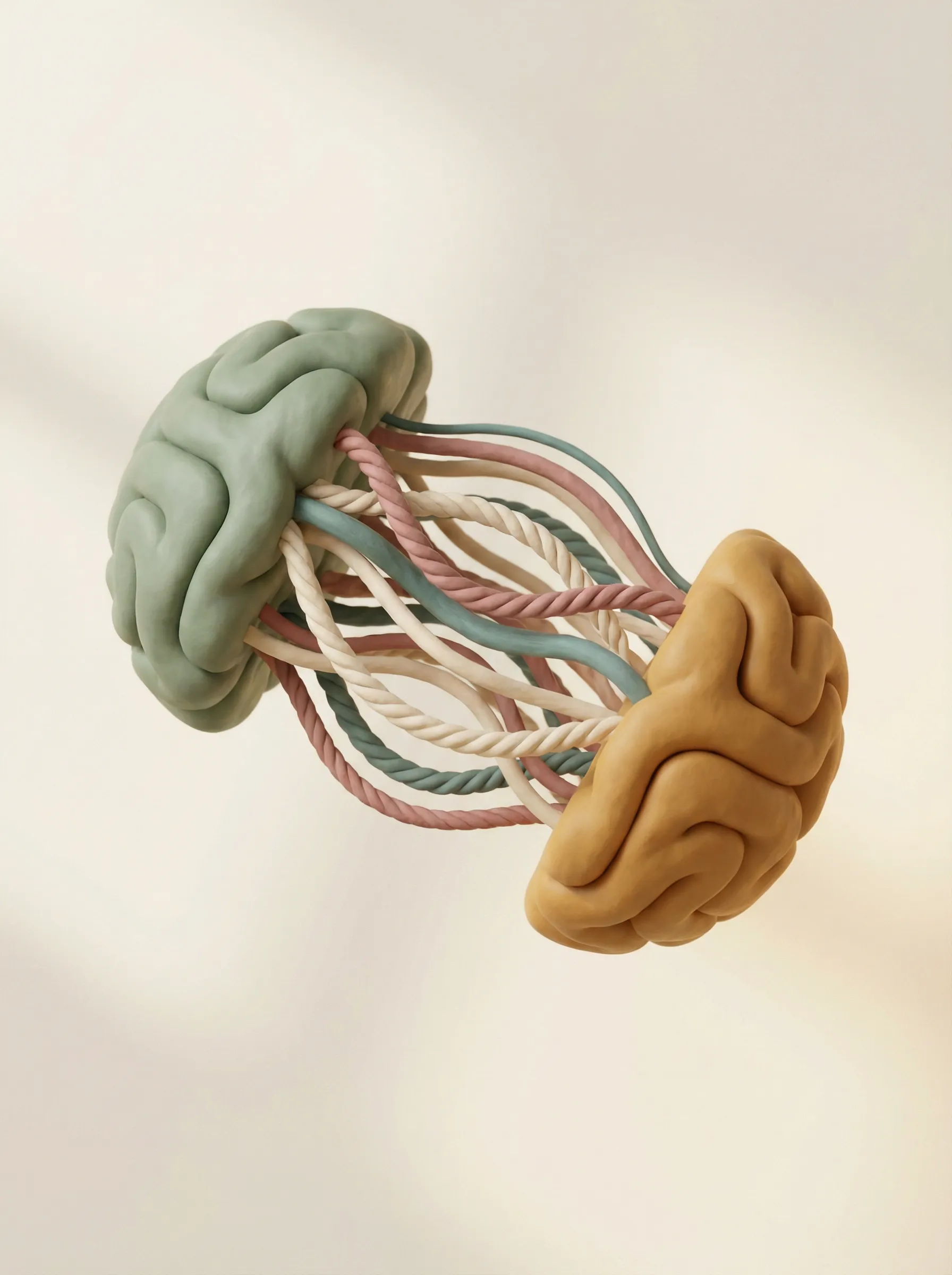
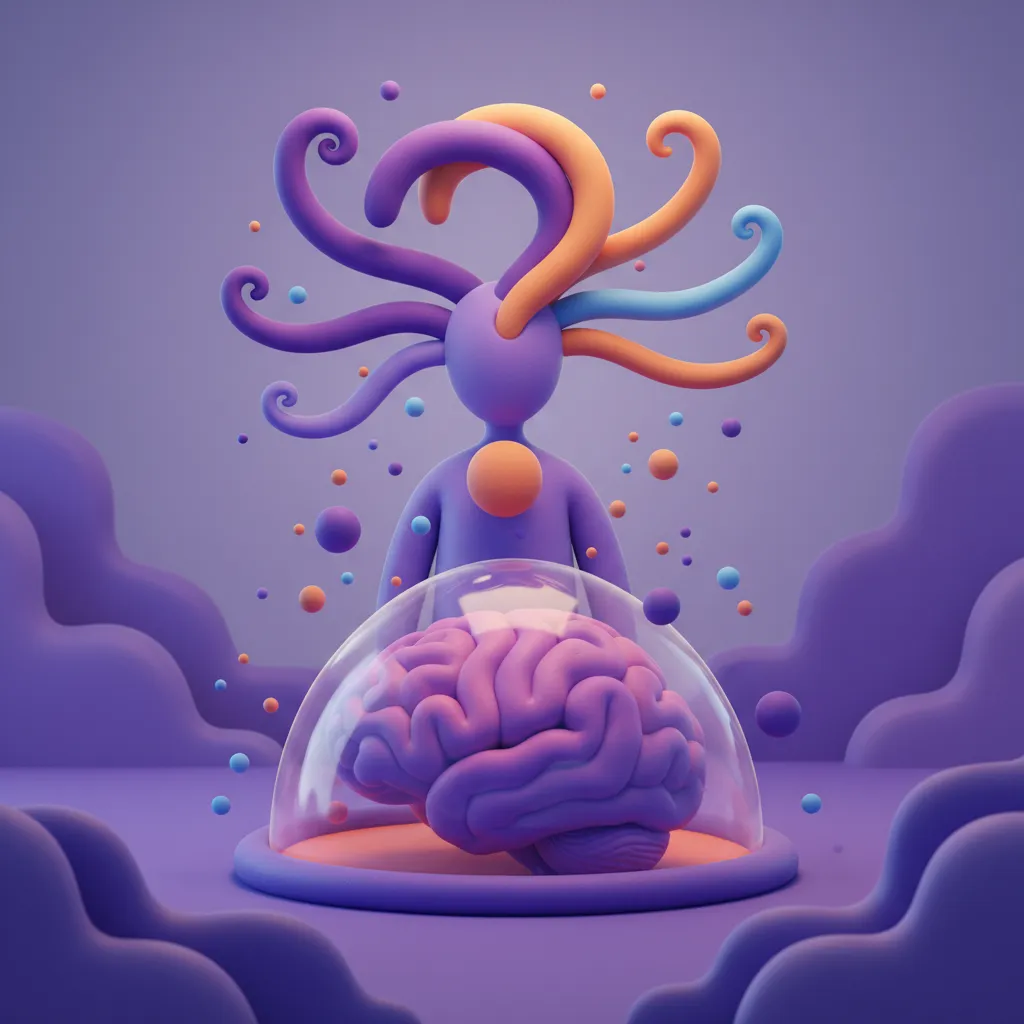
The most widely accepted neurological explanation for synaesthesia is cross-activation — the idea that in synesthetic brains, activity in one sensory processing region directly triggers activity in an adjacent sensory region, through connections that persist beyond the developmental pruning that most brains undergo.
In the case of grapheme-colour synaesthesia, the relevant regions are particularly well-studied. The region of the temporal lobe that processes written letters and numbers (the visual word form area, sometimes called the grapheme area) sits in close anatomical proximity to V4 and V8, the cortical regions involved in processing colour. In most adult brains, these regions are functionally distinct — activating a letter doesn't significantly activate colour regions. In grapheme-colour synesthetes, it does. fMRI studies consistently show that when a synesthete reads a black letter, the colour-processing regions of their visual cortex activate in a way that doesn't happen for non-synesthetes reading the same letter.
This cross-activation is not subtle and it is not a statistical artefact. The signal in colour-processing cortex when a synesthete encounters a grapheme is measurably above baseline, measurably consistent across presentations, and measurably correlated with the specific colour the synesthete reports for that grapheme. The neuroscience matches the phenomenology.
The developmental story is also important. The human brain undergoes extensive synaptic pruning during childhood — a process of eliminating excess neural connections to refine and specialise brain circuits. This pruning is generally adaptive, allowing the brain to become more efficient by reducing cross-talk between specialised regions. The leading hypothesis for synaesthesia is that this pruning is less complete in synesthetic brains, either because of genetic variants that affect pruning processes or because of differences in the timing or extent of development. The result is that connections between sensory regions that are eliminated in most brains remain functional in synesthetic brains, creating the anatomical substrate for cross-activation.
This is why synaesthesia is considered a neurodevelopmental variant rather than a disorder or a learned skill. The architecture is different from early in life, not damaged or acquired later. The brain simply developed with more connections between certain sensory processing regions, and those connections do what connections always do — they carry signals.
- fMRI shows measurable activation of colour-processing cortex (V4/V8) when synesthetes encounter graphemes — even presented in black ink.
- Cross-activation explains why synesthetic perception is automatic: it's driven by structural connectivity, not conscious association.
- Synaesthesia likely arises from reduced synaptic pruning during development, leaving connections between sensory regions that most brains eliminate.
- This is a neurodevelopmental variant — the brain's architecture developed differently from early life, not a disorder acquired later.
Cross-Activation: The Neuroscience of Synesthetic Perception
The most widely accepted neurological explanation for synaesthesia is cross-activation — the idea that in synesthetic brains, activity in one sensory processing region directly triggers activity in an adjacent sensory region, through connections that persist beyond the developmental pruning that most brains undergo.
In the case of grapheme-colour synaesthesia, the relevant regions are particularly well-studied. The region of the temporal lobe that processes written letters and numbers (the visual word form area, sometimes called the grapheme area) sits in close anatomical proximity to V4 and V8, the cortical regions involved in processing colour. In most adult brains, these regions are functionally distinct — activating a letter doesn't significantly activate colour regions. In grapheme-colour synesthetes, it does. fMRI studies consistently show that when a synesthete reads a black letter, the colour-processing regions of their visual cortex activate in a way that doesn't happen for non-synesthetes reading the same letter.
This cross-activation is not subtle and it is not a statistical artefact. The signal in colour-processing cortex when a synesthete encounters a grapheme is measurably above baseline, measurably consistent across presentations, and measurably correlated with the specific colour the synesthete reports for that grapheme. The neuroscience matches the phenomenology.
The developmental story is also important. The human brain undergoes extensive synaptic pruning during childhood — a process of eliminating excess neural connections to refine and specialise brain circuits. This pruning is generally adaptive, allowing the brain to become more efficient by reducing cross-talk between specialised regions. The leading hypothesis for synaesthesia is that this pruning is less complete in synesthetic brains, either because of genetic variants that affect pruning processes or because of differences in the timing or extent of development. The result is that connections between sensory regions that are eliminated in most brains remain functional in synesthetic brains, creating the anatomical substrate for cross-activation.
This is why synaesthesia is considered a neurodevelopmental variant rather than a disorder or a learned skill. The architecture is different from early in life, not damaged or acquired later. The brain simply developed with more connections between certain sensory processing regions, and those connections do what connections always do — they carry signals.
- fMRI shows measurable activation of colour-processing cortex (V4/V8) when synesthetes encounter graphemes — even presented in black ink.
- Cross-activation explains why synesthetic perception is automatic: it's driven by structural connectivity, not conscious association.
- Synaesthesia likely arises from reduced synaptic pruning during development, leaving connections between sensory regions that most brains eliminate.
- This is a neurodevelopmental variant — the brain's architecture developed differently from early life, not a disorder acquired later.
Perceptual Consistency: The Scientific Standard for Synaesthesia
One of the earliest and most persistent challenges facing synaesthesia research was the sceptic's objection: how do you know they're not just making it up, or confabulating vivid associations from childhood? The answer, it turns out, is elegantly simple — you test them twice.
The consistency test is the foundational behavioural diagnostic for synaesthesia. A researcher presents a synesthete with a large set of graphemes and records their reported colour associations. Months or years later — without warning, without the synesthete having any opportunity to rehearse — the same graphemes are presented again. Genuine synesthetes report the same colours with extraordinary reliability: test-retest consistency rates above 90% are consistently found in peer-reviewed studies. People asked to fake synaesthesia, or people trying to memorise colour-letter associations without genuine cross-activation, score far lower — typically below 40% on the same tests.
This consistency is not just a pass/fail metric. It reflects something fundamental about the nature of the experience. Perceptual experiences are consistent because they are generated by stable neural hardware. The colour-processing response to a particular grapheme is consistent in a genuine synesthete because it is produced by stable cross-activation pathways — the same structural connections producing the same signal every time. Association-based responses, imagination-based responses, and deliberately memorised mappings are all much less consistent because they depend on memory retrieval, which is inherently variable.
The consistency finding has been replicated across multiple research groups, multiple populations, multiple synesthetic types, and multiple time intervals ranging from days to decades. In some longitudinal studies, the associations appear essentially fixed for life — a grapheme that was a particular shade of red in childhood is often the same shade of red in adulthood, decades later.
This is also why synaesthesia researchers now use computer-based colour-matching paradigms alongside verbal reporting — they can measure not just whether the synesthete reports 'red' for A, but exactly which shade of red, with a precision that makes the consistency finding even more striking. The brain isn't just generating a rough category. It's generating a specific, stable perceptual response.
- Test-retest consistency above 90% over years is the gold-standard behavioural proof that synesthetic experience is perceptual, not imaginative.
- Non-synesthetes asked to fake synaesthesia score below 40% on consistency tests — the gap is large and reliably replicable.
- Consistency across decades in longitudinal studies suggests some synesthetic associations are essentially fixed for life.
- Modern colour-matching paradigms show that synesthetes reproduce not just colour categories but specific shades — the precision of the response matches the precision of genuine perception.
The Genetics of Synaesthesia: Why It Runs in Families
If you have synaesthesia, there is a meaningful probability that someone in your immediate family does too — though they may never have mentioned it, because it's only recently become widely known that synaesthesia exists as a named and researched phenomenon rather than just an unusual personal quirk.
Family studies have consistently found that synaesthesia clusters in families at rates far above population prevalence. In one of the most rigorous early studies, researchers found that more than 40% of first-degree relatives of synesthetes also had synaesthesia — compared to approximately 4% in the general population. The pattern of inheritance doesn't follow a simple dominant or recessive Mendelian model, which suggests that multiple genes are involved and that the trait is influenced by a combination of genetic variants rather than a single mutation.
Genetic research into synaesthesia has identified several candidate gene regions, including variants in genes involved in axonal growth and guidance — the biological processes that determine how neurons make connections during brain development. This aligns neatly with the cross-activation and reduced-pruning hypotheses: if the genes that govern how connections form and are eliminated during development differ in synesthetes, you would expect to see persistent cross-modal connectivity as an outcome.
It's worth noting that synaesthesia is not evenly distributed across types within families. A family might have multiple synesthetes, but each family member might have a different type — one grapheme-colour, one spatial sequence, one chromesthete. This suggests that what is inherited is not a specific synesthetic association pattern, but rather a general predisposition toward cross-modal connectivity. The specific form that connectivity takes may depend on which sensory regions happen to be anatomically proximate and which develop the most persistent cross-connections in a given individual.
The genetic basis also matters for understanding synaesthesia in the context of other neurodevelopmental traits. Synaesthesia shows elevated co-occurrence with autism, ADHD, and high sensory sensitivity — all conditions with their own genetic architectures involving neural connectivity. The overlap suggests shared underlying mechanisms in how certain genotypes affect the development of neural wiring.
- More than 40% of first-degree relatives of synesthetes also have synaesthesia — ten times the population prevalence.
- The inheritance pattern is complex, involving multiple genes, not a single dominant or recessive variant.
- Candidate genes include those involved in axonal guidance — the processes that determine how neural connections form and persist.
- What is inherited appears to be a general predisposition to cross-modal connectivity, not a specific synesthetic pattern — each family member may have a different type.