Autism vs OCD: How to Tell Them Apart (and Why So Many Adults Have Both)
Autistic routines and OCD compulsions look identical from the outside. From the inside, they are completely different experiences. This guide explains how clinicians tell the two apart, why they so often coexist, and what each diagnosis changes about the support you receive.
This page is a clinical education resource, not a diagnostic tool. It references DSM-5-TR criteria (APA 2022) and peer-reviewed research. Speak with a qualified clinician for personal assessment.
Same routines, different reasons

Picture two adults, each eating the same lunch every single day. A ham and cheese sandwich, same bread, same plate, same side of the table, 12:30pm without exception.
The first person is autistic. The same lunch is genuinely good. The texture is predictable. The sensory experience is comfortable. Choosing something different requires effort that most people do not realise they are expending every time they scan a menu, consider options, and manage the uncertainty of whether the new thing will be tolerable. The same lunch removes that effort. It is not a problem to be solved. It is a working solution.
The second person has OCD. They do not particularly enjoy the sandwich. They eat it because an intrusive thought has told them, with complete conviction, that if they eat something else, something terrible will happen to someone they love. The thought is distressing. It does not feel like it belongs to them. It feels like a demand. Eating the sandwich relieves the anxiety temporarily. Tomorrow the demand will return. The sandwich is not comfort. It is a hostage situation.
From the outside, the behaviour is identical. A clinician watching both people eat lunch would see the same observable act: an adult who always eats the same thing and becomes distressed when routine is disrupted. This is why autism and OCD are so commonly confused, and why so many adults spend years receiving the wrong treatment, or receiving treatment for one condition when they actually have both.
If your OCD treatment has not worked, or your autism diagnosis does not fully account for intrusive, distressing thoughts that feel alien to your sense of self, this page is written for you. It may also be relevant if you have been told you have autistic burnout and are trying to understand whether an OCD element is contributing to the exhaustion.
The internal experience is the discriminator. And it is exactly what a thorough, neuroaffirming assessment is designed to explore.
What autism actually is

Autism is a neurodevelopmental condition. That means it is not acquired in adulthood and it is not caused by a traumatic event. It is present from birth as a difference in how the brain is wired, and it is lifelong. The DSM-5-TR (APA 2022) characterises autism as persistent differences in social communication and interaction, alongside restricted or repetitive patterns of behaviour, interests, or activities, with these features present from the early developmental period.
What this looks like in practice varies enormously. An autistic person might find social interaction draining because reading implicit social rules requires conscious processing that other people do automatically. They might have a sensory profile that makes certain sounds, textures, lights, or smells overwhelming. They often have deep, specific areas of interest that bring genuine pleasure and expertise. They may rely on routines and predictable environments to regulate their nervous system.
These traits are not disorders in themselves. In supportive environments, autistic routines and sameness preferences are adaptive and regulating. The autism community increasingly understands this as brain difference, not deficit, and the research base supports this framing. Autistic people are more likely to experience co-occurring anxiety, depression, and OCD not because autism causes those conditions, but because living in a world not designed for autistic brains is genuinely stressful.
The key feature for distinguishing autism from OCD is that autistic behaviours tend to be ego-syntonic: they feel like part of the self, they are often pleasurable or regulating, and they are present from earliest childhood in the developmental record.
What OCD actually is
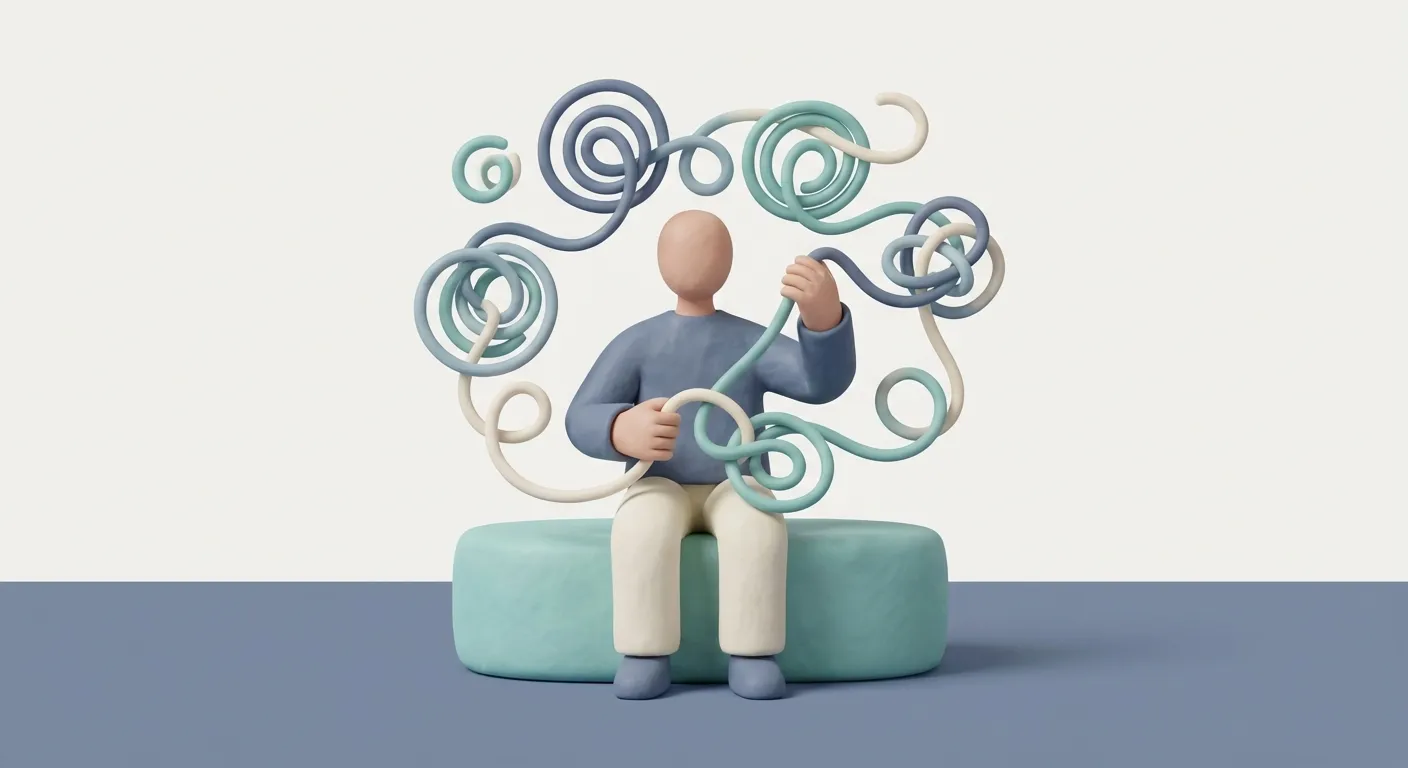
Obsessive-Compulsive Disorder is an anxiety-spectrum condition characterised by obsessions and compulsions. The DSM-5-TR (APA 2022) defines obsessions as recurrent, persistent thoughts, urges, or images that are experienced as intrusive and unwanted, and that cause marked anxiety or distress. The person attempts to ignore, suppress, or neutralise these thoughts. The compulsions are repetitive behaviours or mental acts performed in response to the obsession, aimed at reducing distress or preventing a feared outcome.
OCD obsessions typically cluster around identifiable themes: contamination and illness, fear of harm to self or others, symmetry and "just right" feelings, intrusive sexual or religious thoughts, and existential doubt. The content of the obsession matters less than its quality: it arrives unbidden, it feels wrong or alien, and it insists on a response.
The compulsive behaviour performs the same function for an OCD brain that an autistic routine performs for an autistic brain: it reduces an aversive state. But the mechanism is entirely different. OCD compulsions are driven by fear. They provide relief, not comfort. The relief is temporary. The obsessive cycle resumes. Over time, compulsions can expand to cover more and more territory, consuming hours of the day in some presentations.
The key feature for differential diagnosis is that OCD behaviours are ego-dystonic: the person recognises the obsessive thoughts as products of their own mind, but they do not feel like a genuine part of the self. They feel like an imposition. A clinician asking "if you could keep this part of yourself or remove it entirely, which would you choose?" will typically receive different answers from an autistic adult (who often would keep their routines) and an adult with OCD (who typically wants the intrusive thoughts gone).
The shared surface (and why this is so confusing)
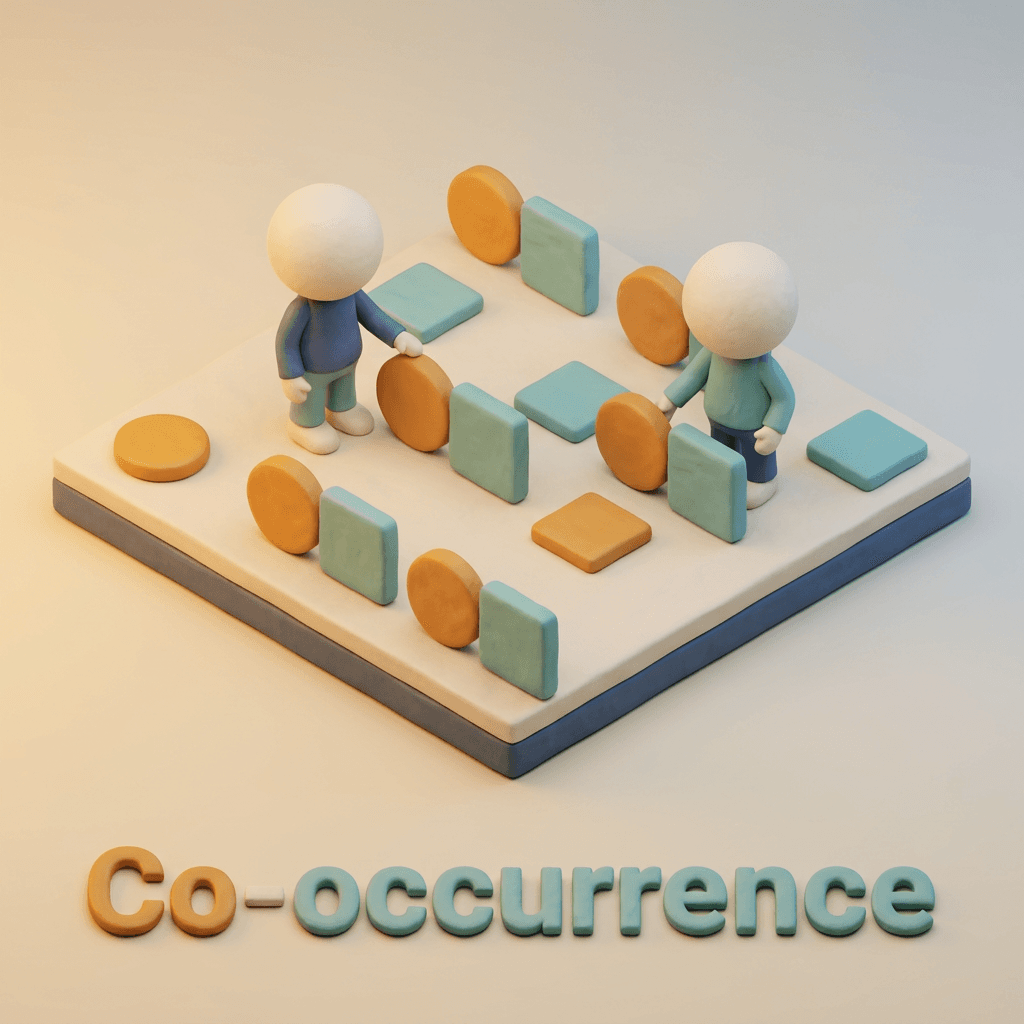
The diagnostic confusion is entirely understandable when you list what the two conditions share at the surface level. Both can involve repetitive behaviours that appear ritualistic to an observer. Both can feature strong preferences for sameness and predictable routines. Both can produce intense distress when routines are disrupted or interrupted. Both can involve ordering, arranging, or symmetry behaviours. Both can feature contamination concerns.
A brief clinical interview conducted without a full developmental history can easily produce a false positive in either direction. This is especially true for adults who have masked their autistic traits across years of social adaptation, or whose OCD has organised itself around themes that overlap with common autistic traits (contamination, symmetry, "just right" sensory experiences).
The surface-level overlap is real. The conditions are not the same. And the treatment implications of getting this wrong are significant.
How clinicians actually tell them apart
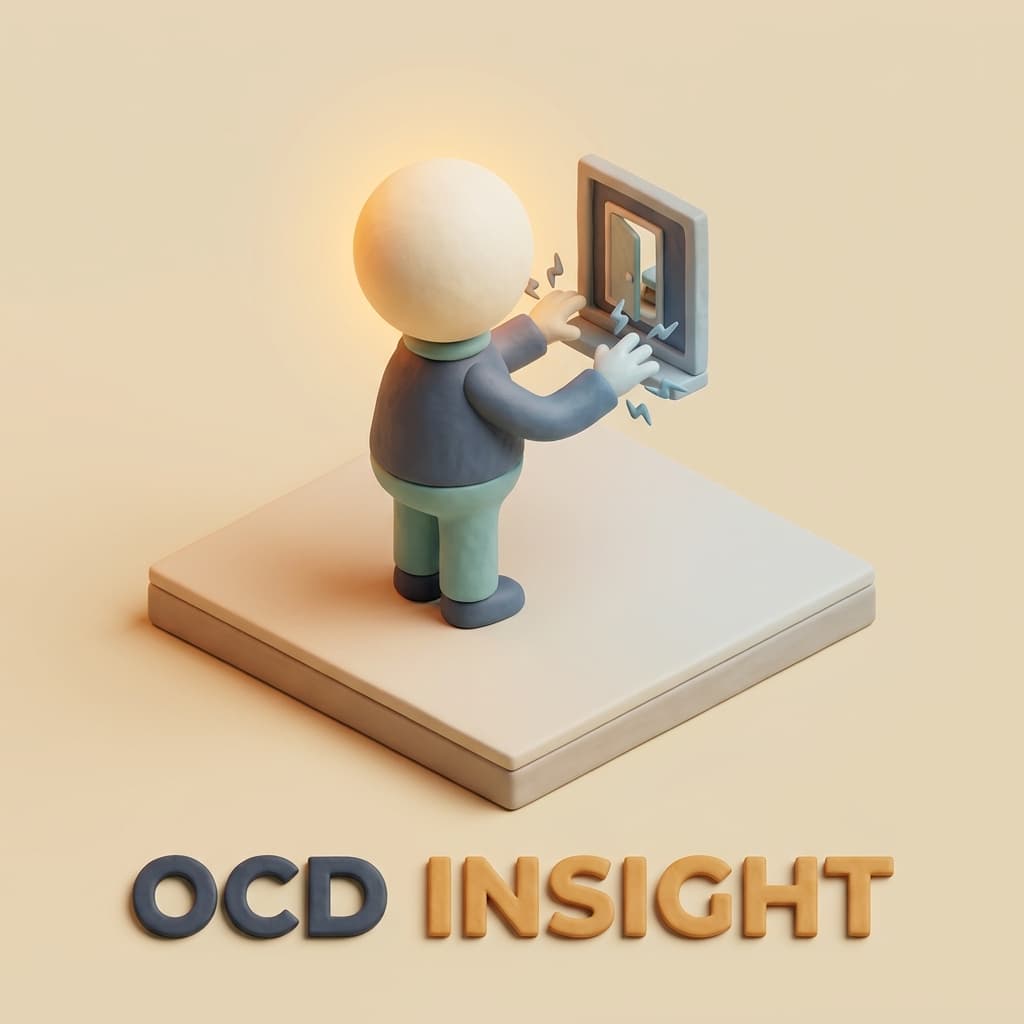
A well-trained clinician familiar with both conditions uses a set of discriminating questions. None of these is definitive in isolation. Together, they build a picture that is usually clear.
1. Ego-syntonic vs ego-dystonic
Autistic routines feel like part of the self. They are consistent with the person's identity and values. OCD compulsions feel like impositions from an alien force. They are experienced as unwanted, even when the person complies with them. Asking directly, "if you could keep this part of yourself or remove it entirely, which would you choose?" often discriminates quickly and clearly.
2. What drives the behaviour
Autistic routines and sameness preferences are typically driven by sensory comfort and emotional regulation. The same lunch is good because the texture is known and the choice fatigue is removed. OCD compulsions are driven by anxiety: the behaviour is performed to prevent a feared catastrophe or to neutralise an intrusive thought. The driver, not the behaviour itself, is what the clinician is trying to identify.
3. Joy or relief
Autistic special interests and routines typically bring genuine pleasure. An autistic adult who talks about their special interest lights up. The engagement is intrinsically rewarding. OCD rituals do not bring joy. They bring temporary relief from anxiety. When the ritual is complete, the person does not feel happy: they feel less afraid, briefly. This distinction in emotional tone is often detectable in a clinical conversation.
4. Childhood onset and developmental pattern
Autism is present from the earliest developmental period. A thorough developmental history will find evidence of the social-communication and sensory profile well before school age, even if it was not identified. OCD typically emerges in late childhood, adolescence, or young adulthood. It sometimes follows a identifiable trigger or stressor. A clinician reviewing childhood photos, school reports, and parental recollections is partly looking for this temporal distinction.
5. Content and theme
OCD obsessions cluster around recognisable themes: contamination and illness, harm to self or others, religious or sexual intrusive thoughts, symmetry, and doubt. These themes are often distressing precisely because they violate the person's values. Autistic special interests are typically intrinsically interesting topics that the person has chosen: trains, mathematics, a specific television series, a historical period. The content of what the brain returns to is a useful signal.
6. What happens when the routine is broken
When an autistic adult's routine is disrupted, what typically follows is sensory or emotional overload: overwhelm, shutdown, meltdown, or the exhaustion of having to improvise without the regulatory scaffolding the routine provided. When an OCD compulsion cannot be completed, what typically follows is an intrusive-thought spike and escalating anxiety about the feared consequence. Both are distressing. The quality of the distress differs.
Ready to explore further?
Take a free screening, chat with Sheldon, or explore 30+ neurotypes in depth.
What it looks like when you have both
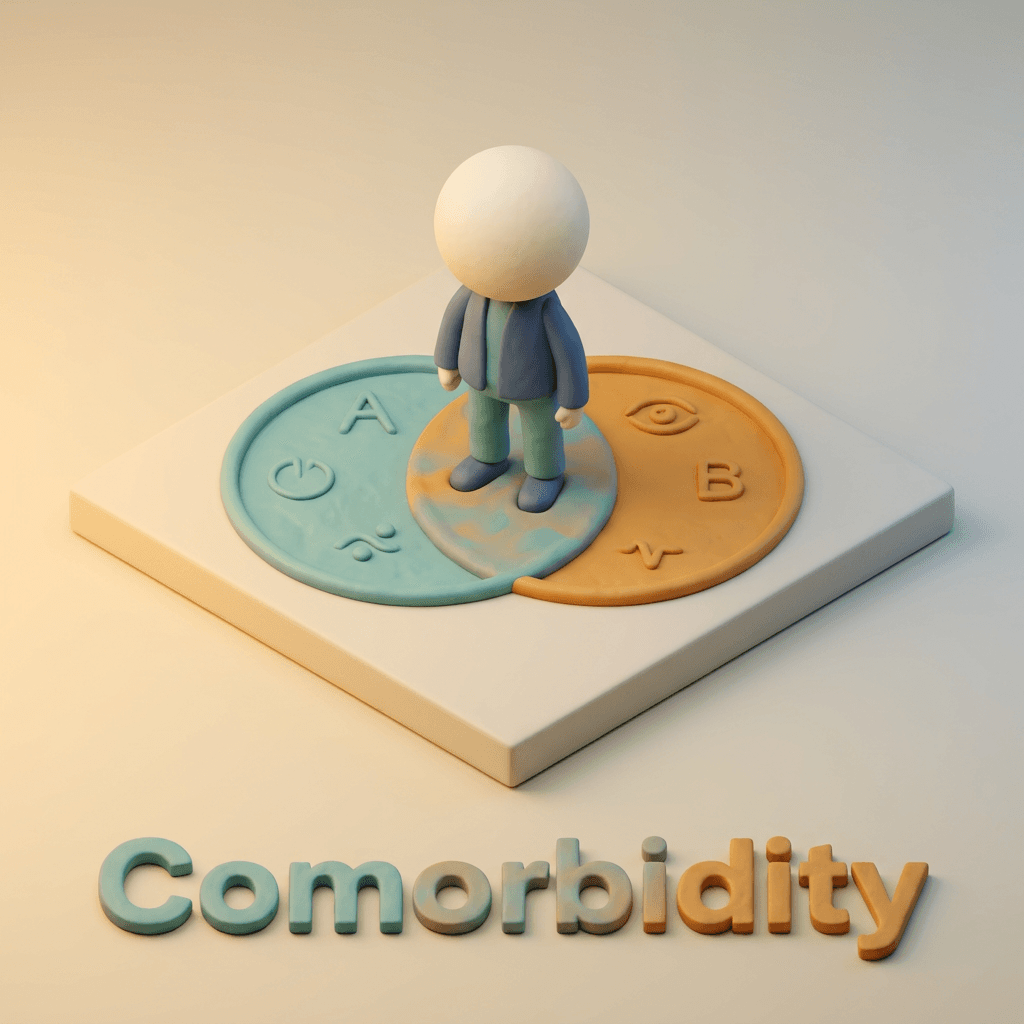
Co-occurring autism and OCD is common enough that it should be on the table as a default possibility in any assessment of an adult who presents with one of the two diagnoses and is not responding to standard treatment. Meier et al (2015) estimated co-occurrence at 17-37% in autistic adults, which is several times the general-population OCD rate of around 2-3%.
The clinical picture when both are present is often one of layered distress. The OCD compulsions can interfere with the autistic regulatory routines. For example, an autistic adult who uses a specific morning routine to regulate before a demanding day may find that OCD has colonised that routine, extending it with compulsive checking or repeated actions that consume the regulating time rather than providing it. The routine that was once helpful becomes a source of anxiety in itself.
Adults with both conditions also frequently report years of confusion about their own internal experience. Autistic masking that many adults have learned can obscure the ego-dystonic quality of OCD symptoms. The OCD anxiety can be mistaken for autistic distress tolerance difficulties. Without a clinician who is genuinely familiar with both conditions, these adults often receive treatment for one and not the other.
This is also relevant if you have explored ADHD vs anxiety, another common diagnostic confusion: many adults have ADHD, autism, and OCD together, and disentangling what is driving distress requires a thorough assessment of all three possibilities simultaneously.
Treatment differences

Getting the differential right matters clinically because the interventions are different, and applying the wrong one can be actively unhelpful.
For autism
Autism is not a disorder to be treated away. Support focuses on reducing barriers and building capacity in ways the autistic person finds genuinely useful. This includes sensory accommodations, neuroaffirming therapy that works with the brain rather than against it, community and peer connection with other autistic people, and sometimes medication for co-occurring conditions such as anxiety or depression. The goal is reduced distress and increased quality of life, not neurotypical conformity.
For OCD
The gold-standard treatment for OCD is Exposure and Response Prevention (ERP), a specific form of cognitive behavioural therapy in which the person is gradually exposed to the feared situation while resisting the compulsive response. ERP has a strong evidence base and can produce significant and lasting symptom reduction. SSRIs (a class of antidepressants) are also first-line for OCD in many presentations, often used alongside ERP. Standard anxiety management or general counselling is typically not sufficient for OCD.
For both together
When autism and OCD coexist, ERP remains appropriate for the OCD component, but it needs thoughtful adaptation. Standard ERP protocols can be sensorily punishing for autistic clients. Contamination exposure tasks that involve deliberate sensory flooding, for instance, may produce autistic sensory overload rather than OCD-specific anxiety reduction, which muddies the therapeutic process. Neuroaffirming clinicians adapt the pace, the sensory parameters, the communication style, and the way they explain the rationale, so that the ERP targets the OCD without compounding autistic distress. There is also emerging work on neuroaffirming adaptations of CBT-OCD specifically designed for autistic adults. All decisions about treatment belong with you and a clinician who knows both conditions.
Frequently asked questions
Can autism be misdiagnosed as OCD?
Yes, and frequently. Autistic routines, sensory-driven contamination concerns (where the issue is texture or smell, not feared illness), and special-interest deep-dives can look like OCD obsessions and compulsions to a clinician unfamiliar with autism. The discriminator is whether the behaviour is regulating (autism) or anxiety-driven (OCD).
Can OCD be misdiagnosed as autism?
Less commonly, but it happens. OCD-driven social withdrawal (avoidance of feared contamination or intrusive thoughts in social settings) can look like autistic social difficulty. The discriminator is the early-developmental social-communication pattern that defines autism.
Can you have both autism and OCD?
Yes. Co-occurrence rates between autism and OCD are estimated at 17-37% (Meier et al, 2015), several times the general-population rate. The two are separate diagnoses, and both can require their own treatment approach.
Is autistic "liking sameness" the same as OCD?
No. Autistic preference for sameness is usually regulating, sometimes joyful, and feels like part of the self. OCD compulsions are anxiety-driven, ego-dystonic (the person experiences them as imposed by their disorder), and rarely bring joy. The internal experience is the discriminator.
Does ERP work for autistic adults with OCD?
ERP can be highly effective for autistic adults with OCD when adapted thoughtfully. Standard ERP can be sensorily punishing for autistic clients (e.g., contamination ERP that floods the sensory system). Neuroaffirming clinicians adapt the pace, sensory components, and communication style. Most autistic adults with OCD do well with adapted ERP.
Should SSRIs be prescribed differently for autistic adults with OCD?
Possibly. There is some evidence that autistic adults can be more sensitive to side effects and may need lower starting doses with slower titration. The decision belongs with a prescriber who understands both autism and OCD.
How do I know which one I have?
A qualified clinician familiar with both conditions is the right route. The internal experience (regulating vs anxiety-driven), the developmental history, and the content of the obsessions or special interests are all discriminating factors. A thorough assessment screens for both.
Start your journey with AskSheldon
Free tools to explore, screen, and understand your neurodivergent mind.
Built by neurodivergent minds. 30+ conditions explored. Always free.
Sources
- American Psychiatric Association. (2022). Diagnostic and statistical manual of mental disorders (5th ed., text revision). APA Publishing.
- Meier, S. M., Petersen, L., Schendel, D. E., Mattheisen, M., Mortensen, P. B., and Mors, O. (2015). Obsessive-compulsive disorder and autism spectrum disorders: Longitudinal and offspring risk. PLOS ONE, 10(11), e0141703. https://doi.org/10.1371/journal.pone.0141703
- National Institute for Health and Care Excellence. (2005, updated 2019). Obsessive-compulsive disorder and body dysmorphic disorder: Treatment (CG31). NICE.
- Rutherford, M., McKenzie, K., Johnson, T., Catchpole, C., O'Hare, A., McClure, I., Forsyth, K., O'Brien, G., and Murray, A. (2016). Gender ratio in a clinical population sample, age of diagnosis and duration of assessment in children and adults with autism spectrum disorder. Autism, 20(5), 628-634.